

The 500-day campaign in Hue achieved many initial results
After nearly a month of implementation, the "500-day campaign to intensify the search, collection, and identification of the remains of fallen soldiers" in Hue has achieved many positive results, from the search and collection of remains to the sampling of remains and the mobilization of information from society.
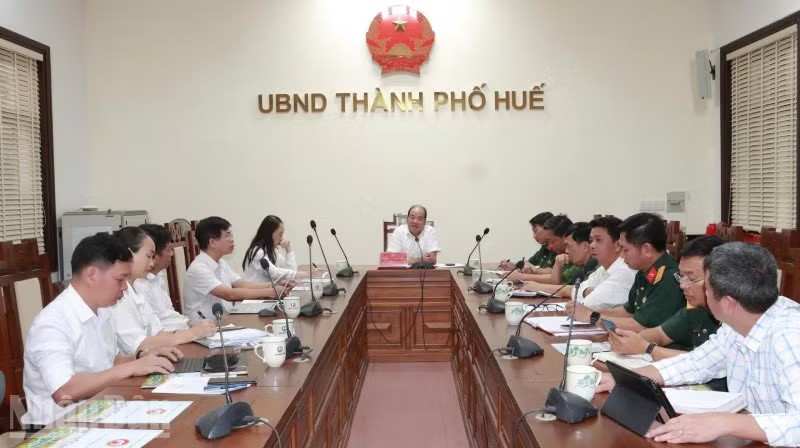
At the campaign progress review meeting, Vice Chairman of the Hue City People's Committee Nguyen Van Manh requested that departments, agencies, and localities continue to strictly adhere to the directives of the Central Government and the city; strengthen coordination to overcome difficulties, accelerate implementation progress, and strive to complete 100% of the work of collecting remains of martyrs at 42 cemeteries in the area by August 2026.
During the 2025-2026 dry season, the 192nd Search and Recovery Team recovered 8 remains of fallen soldiers in Laos and 2 remains of fallen soldiers in Hue City. Notably, the Steering Committee applied ground-penetrating radar to survey areas suspected of containing mass graves at Cua Chanh Tay and Xuan 68 Street (Phu Xuan Ward). The survey results revealed areas of geological disturbance at depths of 1 to 2.2 meters, providing a scientific basis for further verification and the development of search and recovery plans in the future.
According to the Steering Committee for the search, collection, and identification of the remains of fallen soldiers, the city has so far received 33 pieces of information from within the country, including many reports of mass graves with an estimated capacity of 310 to 358 fallen soldiers; and has also received an additional 54 pieces of information about the graves of fallen soldiers in neighboring Laos.
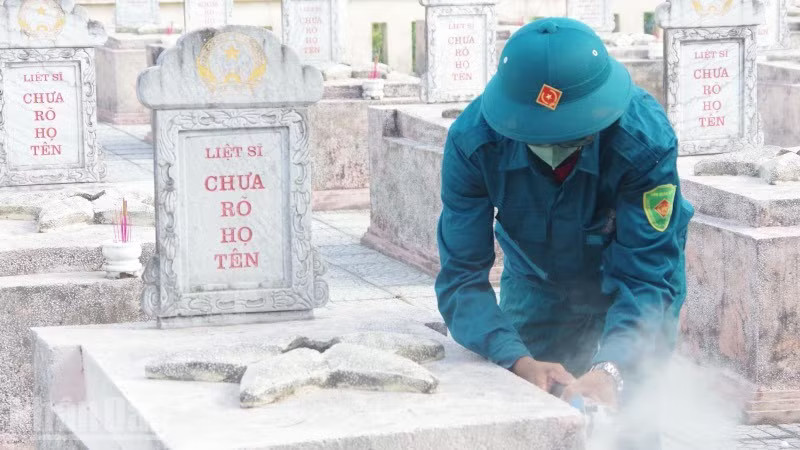
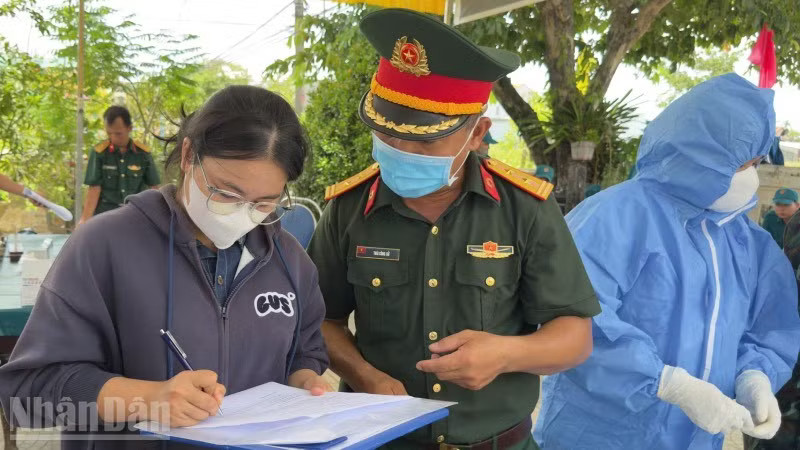
Alongside the repatriation efforts, digital transformation and DNA sampling are also being implemented simultaneously. The city has put into operation software for managing information on the remains of fallen soldiers, serving to manage and update the progress of the entire campaign.As of July 22nd, authorities had excavated 4,523 out of 7,283 graves at 42 martyrs' cemeteries, achieving 62.1% of the plan; selected 2,319 graves that met the criteria for sample collection, and handed over 1,681 skeletal remains samples to the Vietnam Academy of Science and Technology for DNA testing. To date, sample collection has been completed at 25 out of 42 cemeteries.
Besides the achievements, the Steering Committee also frankly acknowledged some difficulties such as the low results of searching for and collecting remains domestically. Many remains have decomposed after many years, making it difficult to select samples that meet the standards for DNA testing. Some cemeteries have been upgraded multiple times; the solid structure of the graves makes excavation and sample collection difficult.
According to Vice Chairman of the People's Committee of Ho Chi Minh City, Nguyen Van Manh, in the coming time, units need to continue focusing their efforts on accelerating the progress of sample collection, completing the database, standardizing records, creating search maps, and intensifying searches in areas with abundant information about martyrs' graves, especially areas suspected of containing mass graves. This is identified as a political task with profound humanitarian significance, contributing to gradually identifying the remains of martyrs and bringing them back to their families and hometowns.