

Excavation of a mass grave of martyrs on Truong Chinh Street, Quang Ngai
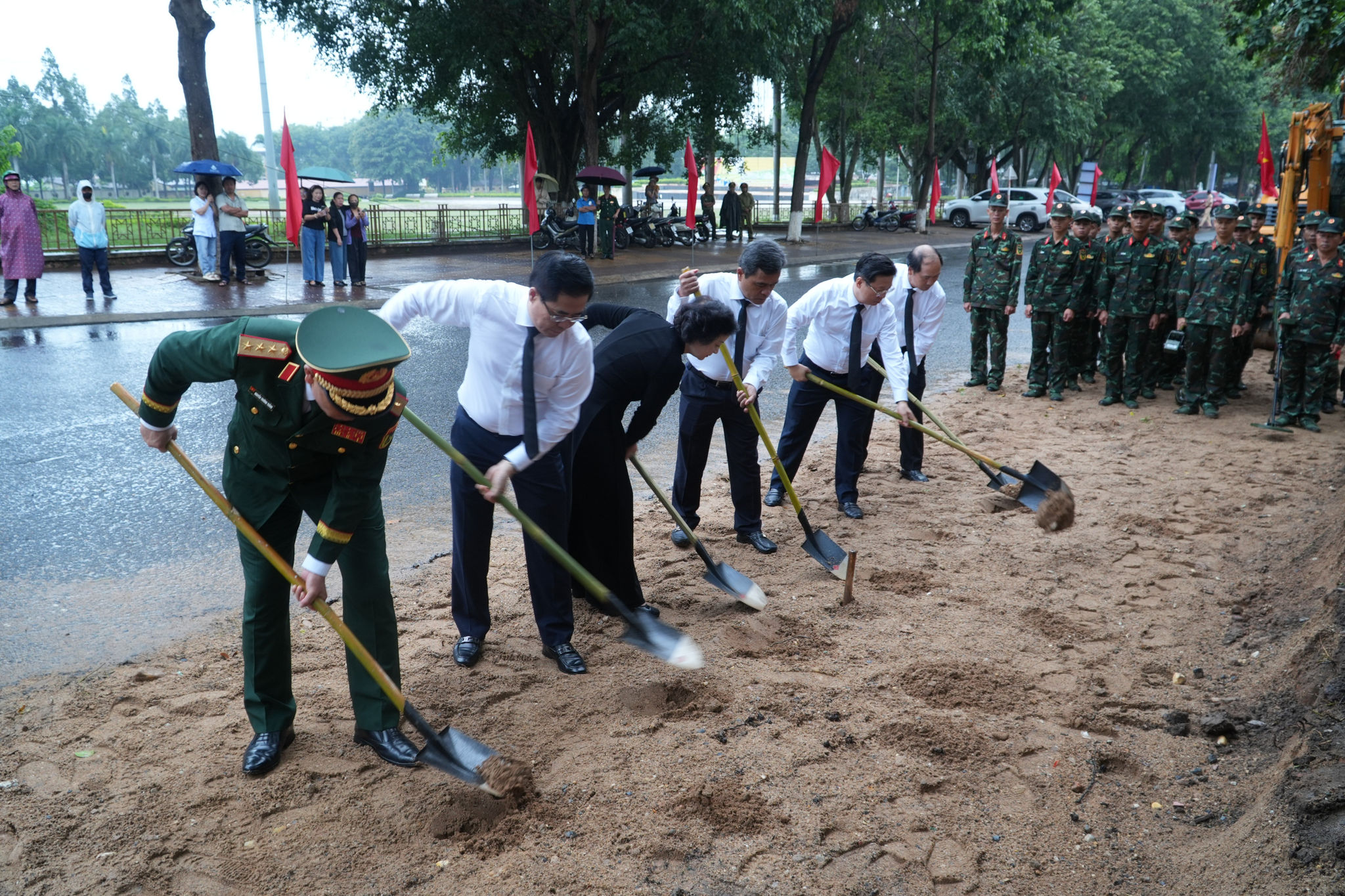
On the morning of June 5th, in the Truong Chinh street area of Dak Cam and Kon Tum wards, Quang Ngai province, the National Steering Committee for the Search, Collection, and Identification of the Remains of Martyrs held a ceremony to lay flowers and incense and commenced the excavation, search, and collection of martyrs' remains. This is an important step in finding and bringing back the heroic martyrs who sacrificed their lives during the Tet Offensive of 1968 to their comrades and hometowns.
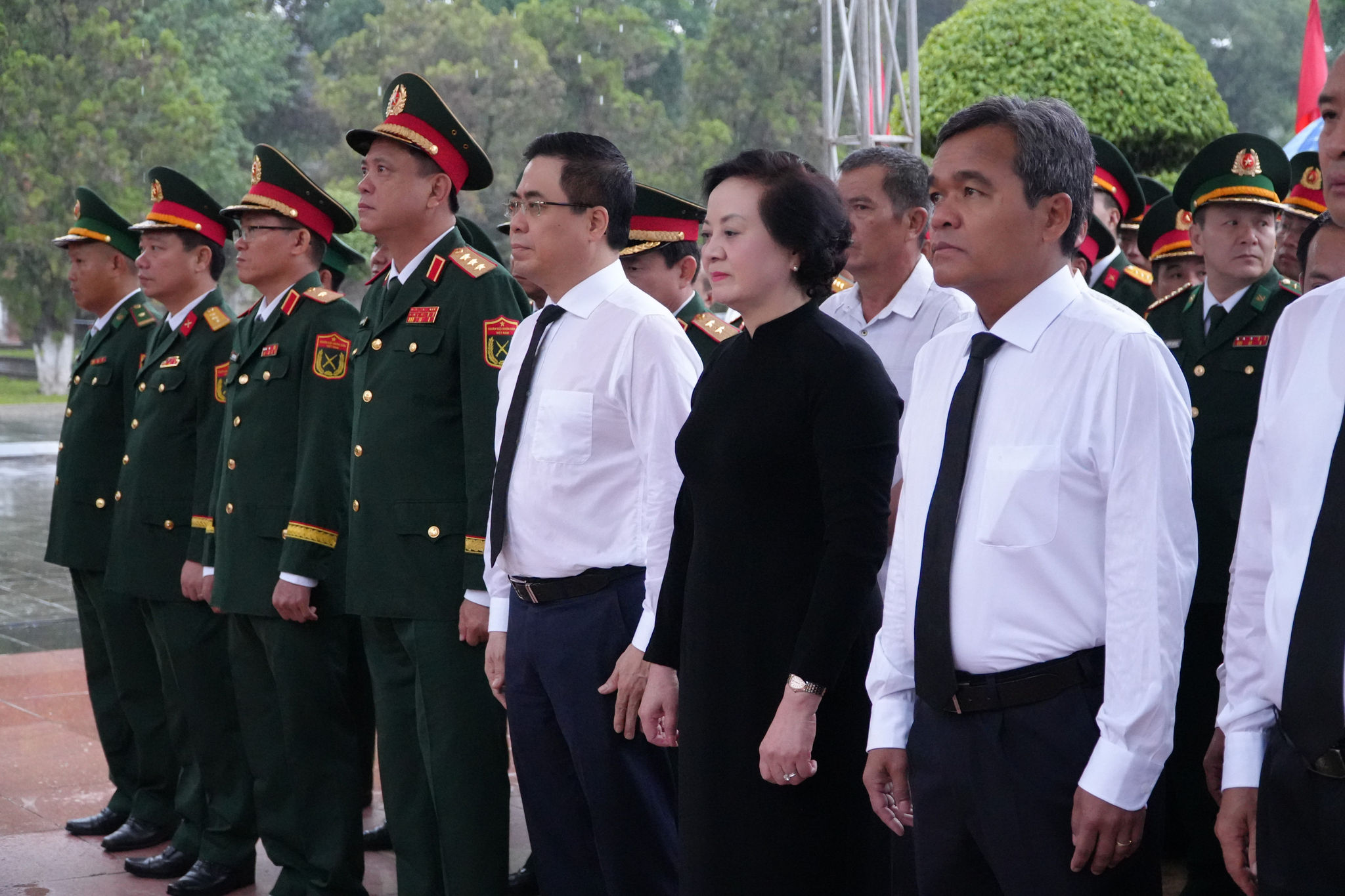
Attending the ceremony were: Secretary of the Central Committee of the Communist Party of Vietnam, Head of the National Steering Committee for the Search, Collection and Identification of the Remains of Martyrs, Deputy Prime Minister Pham Thi Thanh Tra ; Member of the Central Committee of the Communist Party of Vietnam, Deputy Minister of National Defense, Lieutenant General Nguyen Truong Thang; Member of the Central Committee of the Communist Party of Vietnam, Deputy Head of the Central Propaganda and Mass Mobilization Department Tran Thanh Lam; Member of the Central Committee of the Communist Party of Vietnam, Secretary of the Quang Ngai Provincial Party Committee Ho Van Nien; Member of the Central Committee of the Communist Party of Vietnam, Chairman of the Quang Ngai Provincial People's Committee Nguyen Hoang Giang, along with leaders of central and provincial ministries, departments and agencies.
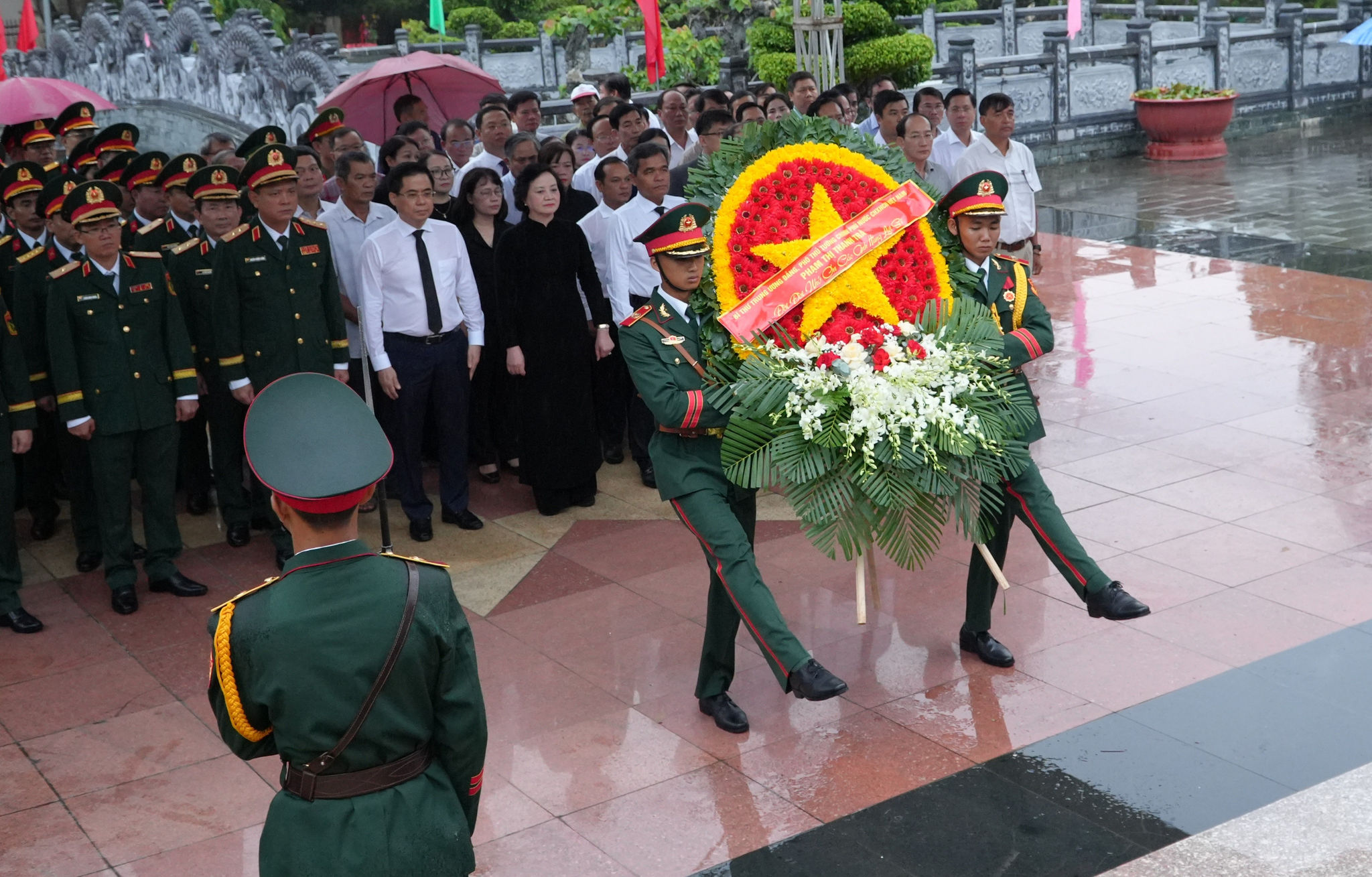
Before commencing their mission, delegates laid wreaths and offered incense to commemorate the heroic martyrs at the Dak Cam Ward Martyrs' Cemetery. At the ceremony, Deputy Prime Minister Pham Thi Thanh Tra presented gifts to Team K53, which is carrying out the task of searching for and collecting the remains of martyrs; she also encouraged the officers and soldiers to strive to overcome difficulties and not miss any clues during the search process.
The Deputy Prime Minister also requested the authorities of Dak Cam and Kon Tum wards to continue supporting and creating the most favorable conditions for the search work; and for experts from the University of Science (Vietnam National University Ho Chi Minh City) to fully apply scientific and technical achievements to serve the survey, search, and collection of the remains of martyrs.
According to Y Ngoc, Standing Vice Chairman of the Provincial People's Committee and Head of the Steering Committee for the search, collection, and identification of the remains of martyrs in Quang Ngai province, the task is to complete the excavation and exploration to bring the remains of the heroic martyrs of Regiment 24A/Front B3, Special Forces Battalion 406, and Infantry Battalion 304 who died during the Tet Offensive and Uprising of 1968 back to their comrades and hometowns.
The search area is located along Truong Chinh Street, spanning several complex segments and directly affecting the underground infrastructure as well as the property and buildings of residents in the two wards of Dak Cam and Kon Tum. However, the preparation process received the consensus and support of the local people, creating favorable conditions for the implementation of the task.
Three ancient kilns dating back to the 2nd-3rd centuries AD, along with numerous traces of ancient settlements, have been discovered by archaeologists during excavations at the Chau Sa ancient citadel site (Quang Ngai).
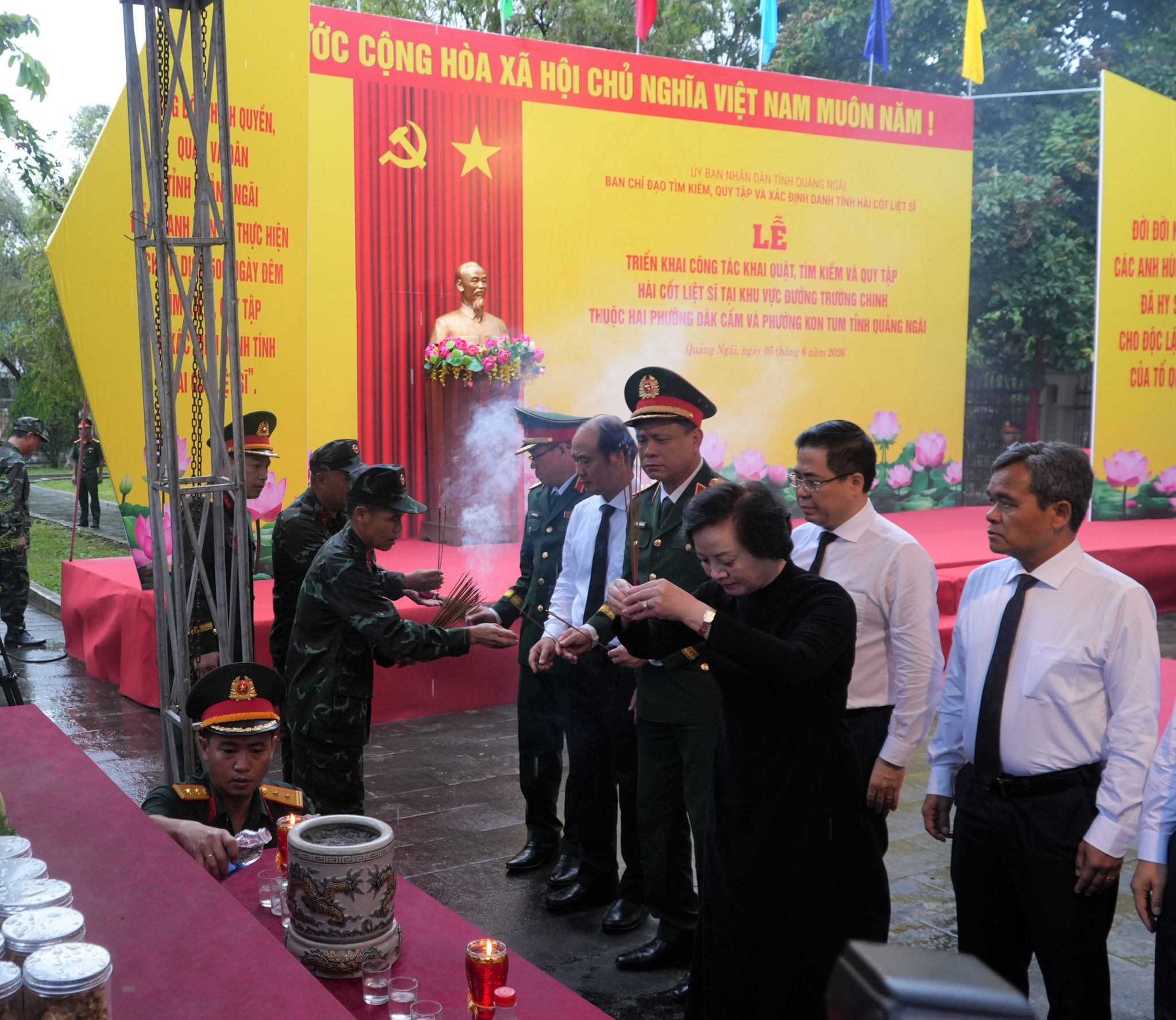
To ensure the highest efficiency in the search and repatriation efforts, the Standing Vice Chairman of the Quang Ngai Provincial People's Committee requested the Provincial Military Command to play a leading role, directly commanding Team K53 in bomb and mine clearance and excavation work. The process must adhere to the principle of "doing what is certain, tackling easier tasks first, then more difficult ones, with caution and meticulousness," ensuring absolute safety for participating forces and demonstrating respect for the heroic martyrs.
In addition, local authorities are required to continue maintaining working groups to support people, carrying out compensation and land clearance work openly and transparently; coordinating to ensure security and order, traffic flow management, and site protection throughout the implementation process. Relevant departments and agencies must closely coordinate in extracting records, appraising artifacts, and guiding information dissemination about the significance of the campaign.
According to the Quang Ngai Provincial Military Command, before conducting the excavation, the unit coordinated with experts from the University of Natural Sciences to conduct a geophysical survey using ground-penetrating radar (GPR) technology. This technology allows for the detection of anomalies in the geological structure beneath the surface, helping to identify suspicious locations related to burial pits or artifacts still lying underground.
The Provincial Steering Committee divided the search operation into two phases. The first phase focused on an open area of approximately 900m² northeast of the Martyrs' Cemetery in Dak Cam ward and the section of Truong Chinh road from house number 206 to house number 282. After surveying and identifying the suspected location, layers of soil will be removed using mechanical equipment; if biological evidence or related artifacts are found, the engineering corps and Team K53 will conduct manual excavation, carefully sifting through each layer of soil. The next phase will expand the survey along both sides of Truong Chinh road, where there is existing urban infrastructure and more complex deployment conditions.
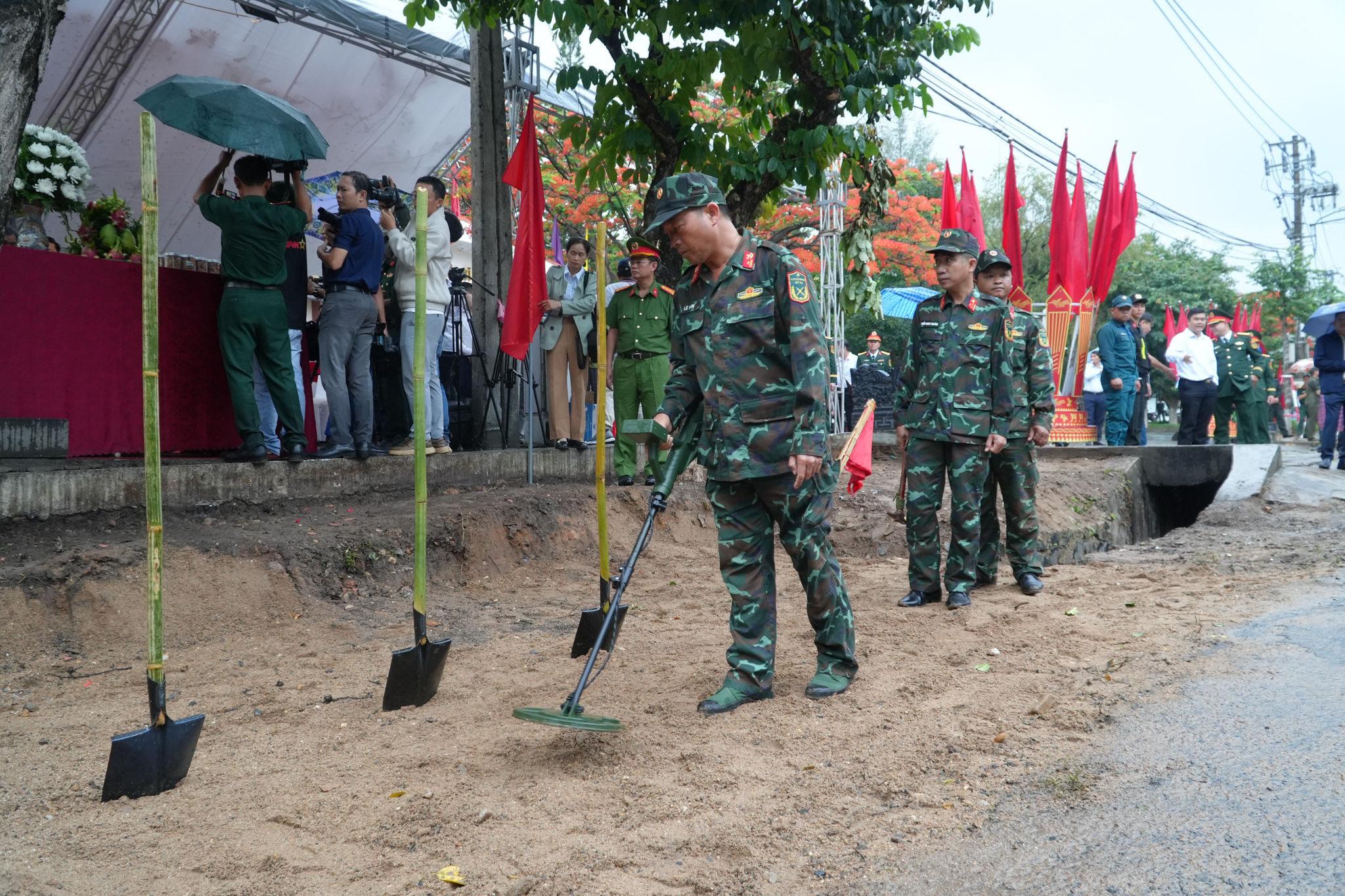
Authorities discovered 10 unexploded bombs, ammunition, and other explosive devices left over from the war scattered throughout Dong Son commune (Quang Ngai province). All of these explosives were subsequently collected, transported, and safely disposed of.
Previously, on May 29th, the Steering Committee 515 of Military Region 5, in coordination with the Steering Committee 515 of Quang Ngai province, held a verification workshop and unanimously concluded that there is sufficient scientific and practical basis to proceed with the search and collection of the remains of fallen soldiers in the Truong Chinh road area.
Verification results indicate that this may be a mass burial site for approximately 70-90 officers and soldiers of Battalion 4, Regiment 24A/B3, along with other cooperating forces, who perished in the battle on February 2, 1968. Through the verification process, the Quang Ngai Provincial Military Command has determined that there are still about 30-50 remains of fallen soldiers that need to be searched for and collected in this area.