

Vietnamese steelmakers find growth momentum despite export challenges
Vietnam's crude steel output is forecast to reach 27 million tonnes in 2026, up 10% year-on-year. Finished steel production is projected at 33 million tonnes, with domestic consumption of 28 million tonnes and exports of 6 million tonnes. Steel imports are expected to decline, signaling improving domestic production capacity and the growing bite of market management and trade remedy measures.
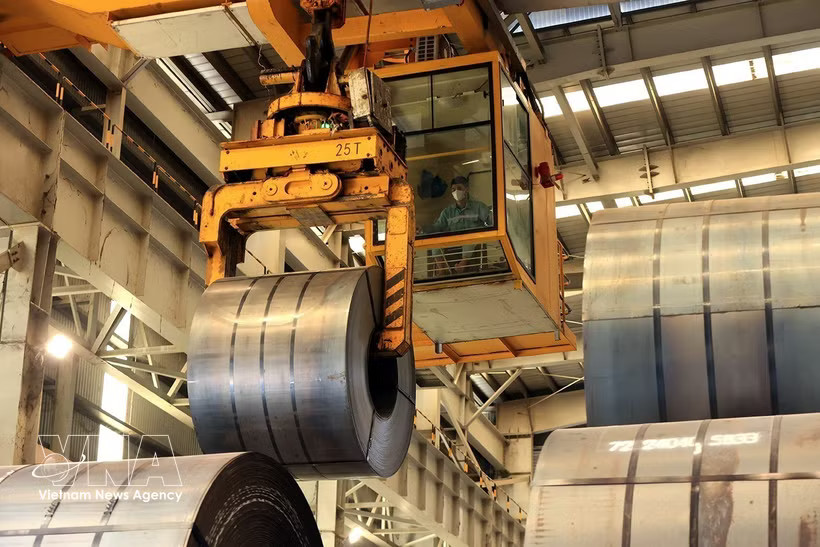
Vietnamese steelmakers are contending with a triple blow of mounting trade barriers, tougher green production mandates and persistent global market turbulence. A manufacturing rebound, public investment-led domestic demand and a drive to sharpen competitiveness are nonetheless giving the industry space to sustain its growth trajectory.
Tariff barrage hits shipments
Steel exports have been under pressure since the start of the year as chronic global overcapacity keeps fueling protectionism in key markets.
The US has slapped duties as high as 50% on some steel products under the Trade Expansion Act’s Section 232, while Vietnam remains a frequent target of trade remedy probes and tighter rules on origin, quality and technical standards.
As a result, Vietnamese mills are now grappling not just with market share erosion but mounting pressure to bolster compliance paperwork, tighten supply chain management and raise their ability to meet customer requirements. Simultaneously, greenhouse gas reduction mandates and the Carbon Border Adjustment Mechanism (CBAM) have become essential for entry into major export markets.
The squeeze is especially acute as steel is among the sectors covered by the European Union’s CBAM. Failing to overhaul production technology, clamp down on emissions and deliver transparent carbon reporting could strip the industry of its competitive edge in its traditional high-value export destinations.
The industry is also exposed to wild swings in imported raw materials such as iron ore and scrap steel. Continued volatility in input costs, freight and exchange rates, and geopolitical risks could materially dent production efficiency and earnings.
Deputy General Director of Vietnam Steel Corporation (VNSteel) Pham Cong Thao said the 2026 outlook remains positive, propped up by steady domestic demand. VNSteel is targeting aggressive growth while maintaining its industry-leading role and contributing to the country’s double-digit economic expansion goal.
To do that, VNSteel is channeling investment into quality steel products to gradually displace imports, particularly those serving national defence-security and strategic industrial segments where domestic involvement is still thin. It is also tightening corporate governance and wringing maximum value from internal resources under the Politburo’s Resolution 79-NQ/TW on state-owned economic sector development, while driving targeted investment to lift productivity, quality and business efficiency.
According to the Vietnam Steel Association (VSA), crude steel production hit an estimated 14.8 million tonnes in the first half, a 21.2% year-on-year jump, while steel consumption climbed 13.1% to about 17.9 million tonnes, providing a sturdy base for growth.
Exports, however, totalled just 1.79 million tonnes, down 4.8% from a year earlier, underscoring uneven global demand, fluctuating steel prices and an ever-tightening web of trade restrictions.
Forging a green-fueled expansion
The VSA forecast that Vietnam's crude steel output could reach 27 million tonnes in 2026, up 10% year-on-year. Finished steel production is projected at 33 million tonnes, with domestic consumption of 28 million tonnes and exports of 6 million tonnes. Steel imports are expected to decline, signaling improving domestic production capacity and the growing bite of market management and trade remedy measures.
VSA Chairman Nghiem Xuan Da said the industry must fortify the domestic market against cheap, low-quality imports and unfair competition. He called for tighter quality control rules for imported steel, including mandatory compliance with Vietnamese standards before products can reach the domestic market, to level the playing field.
Steelmakers must also fast-track their green transition and digital transformation, pouring capital into energy-efficient technology, resource optimisation and emissions cuts. At the same time, they need rigorous adherence to rules of origin and greater transparency across raw material sourcing and supply chains to dodge anti-circumvention trade probes and burnish their reputation in export markets.
On the policy front, the State should beef up early warning systems and market forecasting while giving enterprises more firepower to fight trade remedy cases. It must keep upgrading technical standards and steel product regulations and roll out stable, long-term investment policies consistent with Vietnam’s international commitments.
Speaking at a recent conference on supercharging exports to achieve double-digit growth, Minister of Industry and Trade Le Manh Hung said the ministry would continue reviewing regulations and consulting enterprises and industry associations to further slash red tape, cut costs and smooth the path for production and trade.
It will redouble efforts to squeeze maximum advantage from free trade agreements, fuel sustainable export growth and reinforce trade remedy early warning for firms. At the same time, it will work hand-in-hand with ministries and agencies to unpick market obstacles, ignite industrial development, raise localisation rates and build more resilient, self-reliant domestic supply chains, thus sharpening the international competitiveness of Vietnamese goods, he added./.