

Vietnam’s stock market offers new platform, new connections
In the first seven months of 2026, capital raised through share offerings totalled 113.92 trillion VND, up 43.41%, while funds raised through public offerings of bonds, international bonds and convertible bonds reached 52.15 trillion VND, up 160.64%.
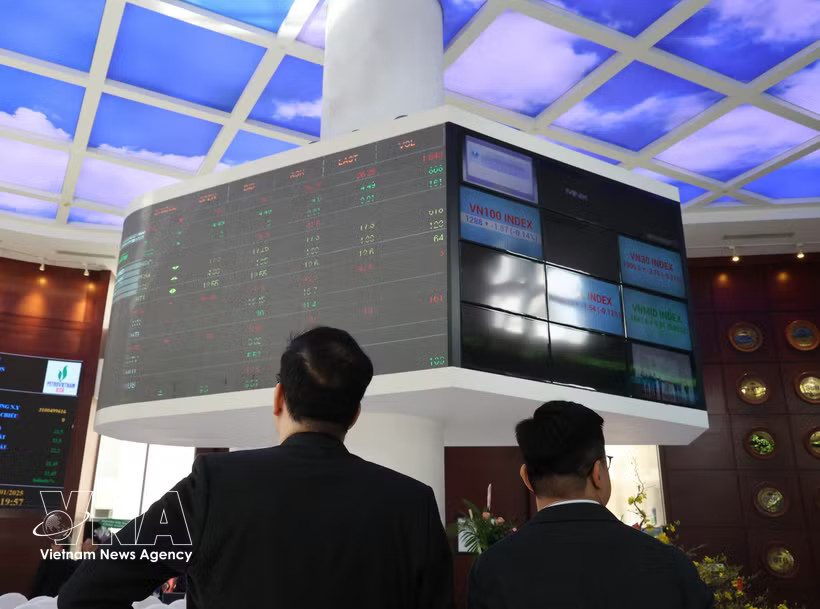
After 30 years of development of the securities sector and more than 26 years since the official launch of the stock market, Vietnam’s securities market has made significant progress in scale, structure, infrastructure and international integration, gradually becoming an important channel for medium- and long-term capital mobilisation for the economy.
Vietnam’s stock market and milestone of secondary emerging market status
On November 28, 1996, the Government issued Decree No. 75/CP establishing the State Securities Commission (SSC), marking the beginning of the 30-year development journey of the sector. On July 11, 1998, Decree No. 48/1998/ND-CP on securities and the securities market was promulgated, providing an important legal foundation for the market’s establishment and operation. The Ho Chi Minh City Securities Trading Centre (now Ho Chi Minh City Stock Exchange – HOSE) and Hanoi Securities Trading Centre (now Hanoi Stock Exchange – HNX) were subsequently established.
On July 28, 2000, the first stock trading session was held at the HOSE, marking a major milestone in bringing Vietnam’s stock market into operation.
From a very small starting point, the market has expanded alongside the development of a market-oriented economy and Vietnam’s international economic integration. While there were only two listed companies in 2000, with market capitalisation equivalent to about 0.2% of GDP, by the end of 2025 more than 1,600 companies had been listed or registered for trading on HOSE, HNX and UPCoM. The combined capitalisation of the stock and bond markets was equivalent to nearly 100% of GDP.
As of the end of July, stock market capitalisation on the three exchanges stood at 10.15 quadrillion VND (390.8 billion USD), equivalent to 79.1% of 2025 GDP. The listed bond market comprised 483 issues worth 2.84 quadrillion VND, or 22.1% of GDP. The number of investor accounts reached 13.43 million, equivalent to 13.2% of the population.
The market’s capital mobilisation capacity has also improved. In the first seven months of 2026, capital raised through share offerings totalled 113.92 trillion VND, up 43.41%, while funds raised through public offerings of bonds, international bonds and convertible bonds reached 52.15 trillion VND, up 160.64%.
Market infrastructure has been modernised, notably with the KRX securities information technology system coming into operation in May 2025, providing a technological foundation for enhanced transaction processing capacity and new products and services.
A significant milestone in international integration came on September 18, when the Ministry of Finance, SSC and FTSE Russell held a conference marking Vietnam’s official inclusion in the FTSE Russell Global Equity Index Series. The upgrade of Vietnam’s market from Frontier to Secondary Emerging Market status officially took effect on September 21.
Vietnam – a rendezvous for Asian securities markets
From September 30 to October 3, Hanoi will host the 31st Asia Securities Forum Annual General Meeting (ASF AGM 31). This marks the first time Vietnam has hosted the event.
Established in 1995, ASF now brings together 30 member organisations from 23 countries and territories across Asia and Oceania. The annual meeting provides a platform to share market developments, management experience and emerging trends in regional capital markets.
This year’s agenda will focus on international capital flows, ESG standards, green finance, digital transformation and artificial intelligence (AI). A dedicated session, “Investing in Vietnam – Rising in a New Era,” will examine capital mobilisation and the role of the stock market in mobilising resources for the economy.
The event is expected to strengthen exchanges and experience sharing while creating new connections between Vietnam’s capital market and regional and international financial institutions./.