

Vietnam advances business connectivity among CPTPP, ASEAN and EU
As 2026 CPTPP Chair, Vietnam is promoting closer links between the CPTPP, ASEAN and the EU. While the CPTPP offers high-standard trade commitments, ASEAN brings dynamic growth and manufacturing capacity, and the EU owns market potential, capital, technology and innovation.
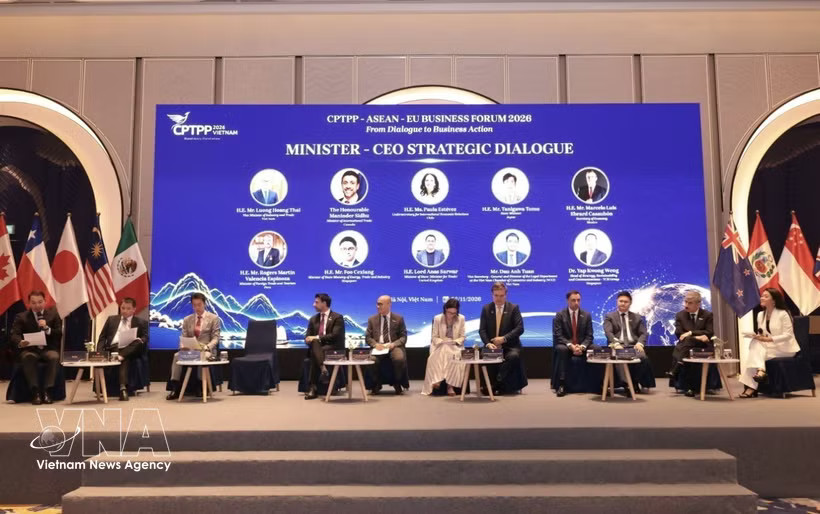
Stronger business links, streamlined trade procedures and more resilient supply chains were at the heart of the 2026 CPTPP–ASEAN–EU Business Forum, which opened in Hanoi on November 26, bringing together government officials and business leaders from the three regions.
Under the theme “From dialogue to business action”, the forum sought to turn trade commitments into concrete business opportunities, investment partnerships and cross-border cooperation.
Deputy Minister of Industry and Trade Luong Hoang Thai said the Comprehensive and Progressive Agreement for Trans-Pacific Partnership (CPTPP), the Association of Southeast Asian Nations (ASEAN) and the European Union (EU) has complementary strengths that can unlock significant growth potential. While the CPTPP offers high-standard trade commitments, ASEAN brings dynamic growth and manufacturing capacity, and the EU owns market potential, capital, technology and innovation.
As 2026 CPTPP Chair, Vietnam is promoting closer links between the three regions and practical business engagement. The forum builds on a CPTPP dialogue with business leaders held in Ho Chi Minh City in July, elevating discussions to ministerial level and expanding participation to ASEAN and the EU.
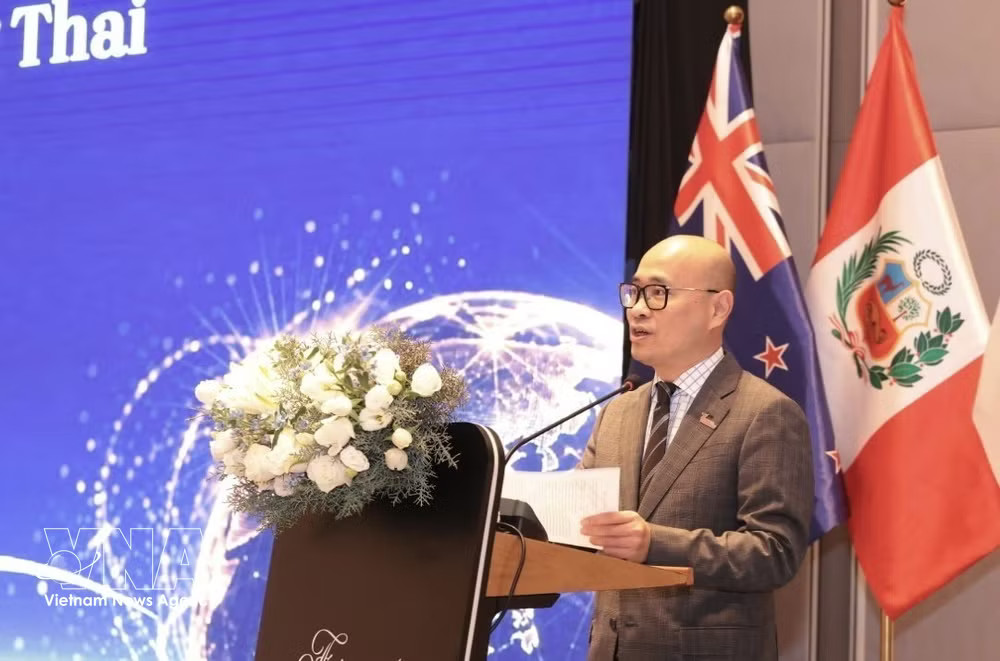
Deputy Minister of Industry and Trade Luong Hoang Thai addresses the event. (Photo: VNA)
Thai outlined four priorities: expanding market access through effective use of free trade agreements (FTAs) and lower compliance costs; developing diversified and resilient supply chains; making green transition and digital transformation key growth drivers; and strengthening public-private partnerships. He said the Hanoi Business Action Package 2026 will help turn business recommendations into concrete cooperation.
European Commissioner for Trade and Economic Security Maroš Šefčovič stressed that government-level cooperation must deliver tangible results for businesses, particularly through business-to-business partnerships and signed contracts. The EU, which has the world's largest FTA network covering more than half of the global population, is also seeking to deepen trade ties with ASEAN, including through digital trade, green technology and resilient supply chains.
Philippine Secretary of Trade and Industry Ma. Cristina A. Roque said businesses need reliable partners, suppliers, investors and access to new markets, while governments should create conditions for companies to invest confidently and expand operations.
From the corporate perspective, VinFast Global Market Expansion Manager Kariyanto Hardjosoemarto highlighted predictable market access, stronger local supplier networks and integrated green mobility ecosystems as key to international expansion. He called for more predictable certification and approval procedures, noting that regulatory delays could disrupt product launches and investment plans.
VinFast's manufacturing investments in India and Indonesia in 2025 also offer opportunities to connect with local component makers, logistics providers and technical service suppliers, creating room for small and medium-sized enterprises to join global value chains.
Warrick Antony Cleine, Chairman of the British Business Group Vietnam and CEO of KPMG Vietnam, called for simpler non-tariff measures, citing persistent obstacles involving rules of origin, repeated product inspections and manual customs procedures. He also advocated mutual recognition of professional qualifications, easier movement of skilled workers and clearer rules for digital trade and data.
Meanwhile, Alif Arif Iskandar A. Wahab, Principal & Director of Malaysia's VERITAS Architects, pointed to fragmented professional and green-building certification systems as barriers to cross-border projects. He proposed mutual recognition of qualifications and green standards, faster approval procedures for cross-border investments, particularly in industry and data centres, and multidisciplinary design consortia to streamline project delivery.
The discussions underscored a shared message: stronger regional integration must go beyond trade agreements to deliver lower business costs, smoother market access and tangible investment and commercial partnerships./.