

Turning sound policies into quality projects, strong enterprises, new value chains, high-quality jobs and new capabilities for the nation
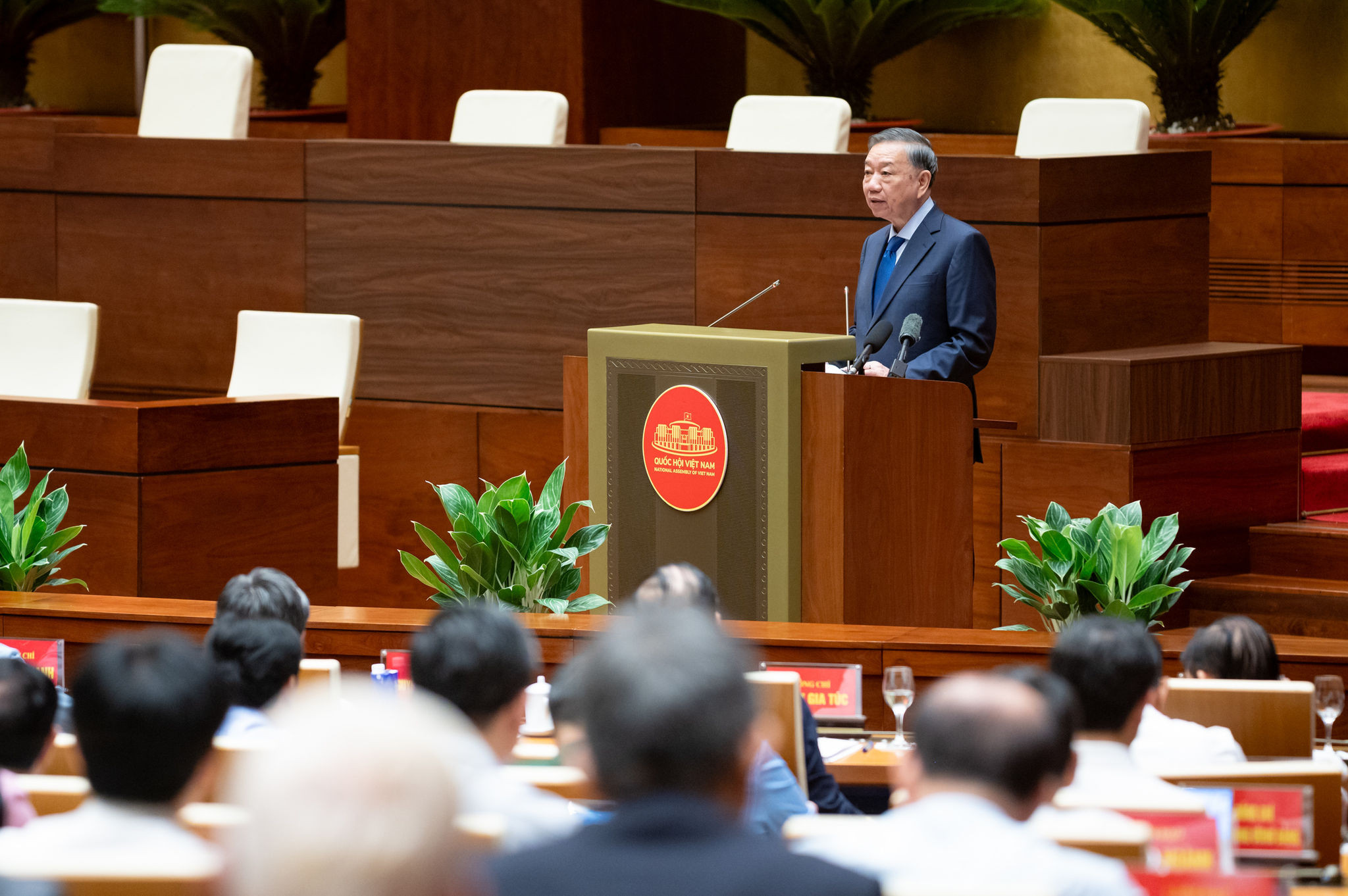
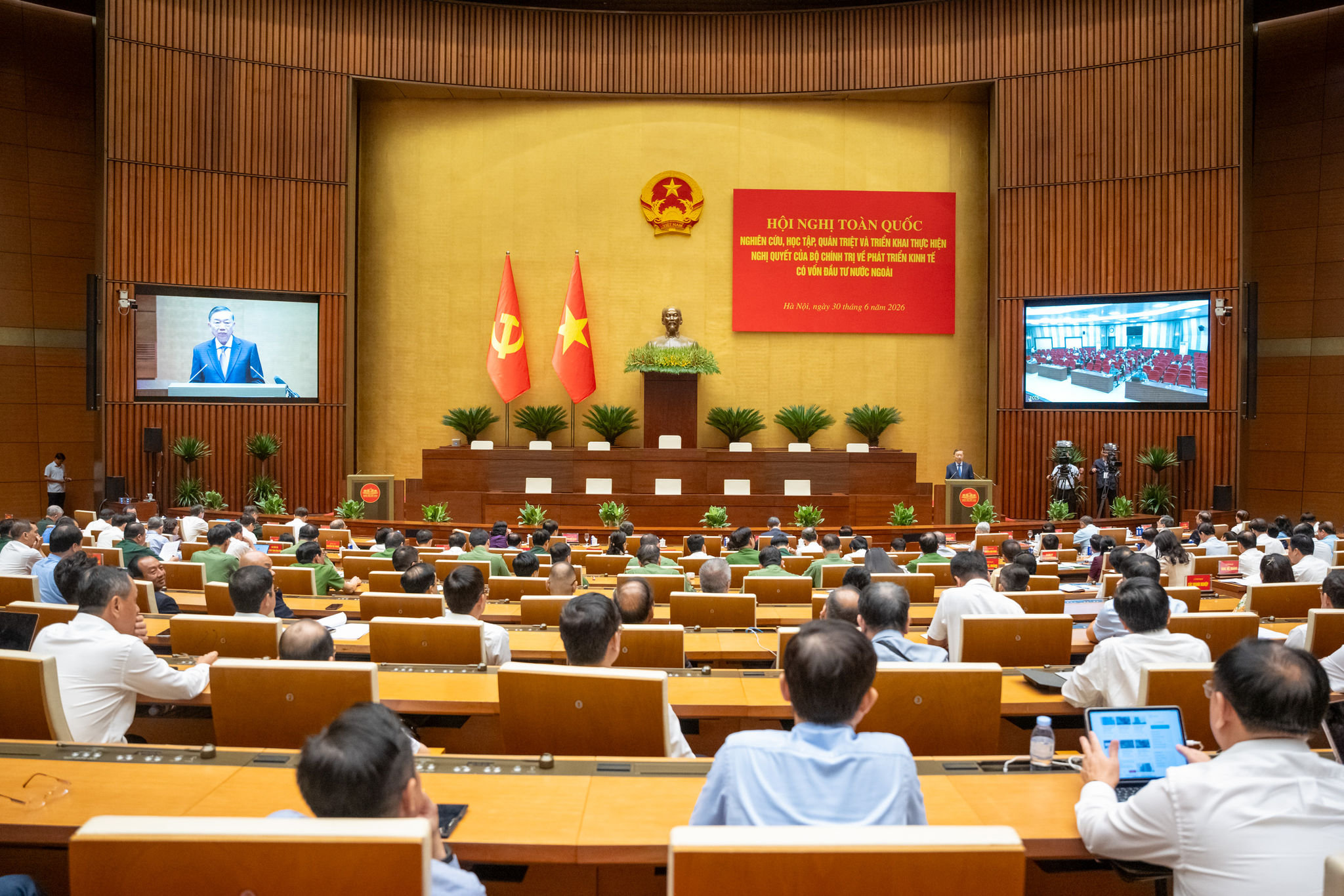
On the morning of June 30, the Politburo held a nationwide conference to study, disseminate and implement Resolution No. 10-NQ/TW dated June 8, 2026 of the Politburo on the development of the foreign-invested economic sector. Party General Secretary and State President To Lam attended and delivered a keynote speech at the conference. The People’s Deputies Newspaper respectfully introduces the full text of the speech by Party General Secretary and State President To Lam.
Distinguished leaders and former leaders of the Party, State, National Assembly, Government and the Vietnam Fatherland Front;
Leaders of Party committees at all levels; leaders of central ministries, sectors and localities;
Distinguished Party members, veteran revolutionaries, people nationwide, and representatives of the business community attending the conference,
We have listened to the Standing Deputy Prime Minister’s presentation on the core contents of Resolution No. 10 and heard a number of insightful presentations.
I highly appreciate the thorough preparation by relevant agencies during the drafting of the Resolution. I acknowledge the dedicated and responsible contributions made at today’s conference, as well as the attention and interest shown by Party members, officials, the business community, investors and people nationwide in following this important event.
Resolution No. 10, issued by the Politburo on June 8, 2026, regarding the development of the foreign-invested economic sector, was formulated based on a review of nearly 40 years of implementing the Party’s policy of opening up and attracting foreign investment.
This Resolution reflects a shift in development thinking. It is no longer simply about opening the door to receive capital flows, but about proactively selecting and effectively utilizing international resources to build national competitiveness.
After listening to feedback from localities, sectors and international partners, I have come to recognize even more clearly that capital is important, but capital alone is not enough. We also need foreign technologies, which is clearly reflected in the Resolution.
Since the Law on Foreign Investment was enacted in 1987, through numerous amendments, consolidation and improvements to investment legislation, Vietnam has gradually completed its market-oriented economic institutions, expanded international integration and created an increasingly open, transparent and stable investment environment.
This process has transformed Vietnam from a closed economy with limited capital resources and heavy dependence on international assistance into a highly open economy deeply integrated into regional and global markets.
From a time when international trade accounted for only a small share of the economy in the late 1980s, Vietnam has now become an important link in global production and trade networks, with total import-export turnover exceeding 180% of GDP, while foreign-invested enterprises account for around 75% of exports.
The foreign-invested economic sector has made significant contributions to economic growth, exports, industrialization, employment creation, technology absorption and the adoption of modern management practices.
Today, Vietnam stands in a different position.
The question is no longer how to attract more foreign capital. Instead, we must answer a more challenging question: how can we effectively utilize foreign resources to enhance domestic capacity, technological capability, competitiveness and economic self-reliance?
We must frankly recognize the limitations in attracting and utilizing FDI:
- The localization rate remains low. Linkages with domestic enterprises, technology transfer, research and development, and high-quality human resource training have not yet reached expectations.
- Many foreign-invested projects remain focused mainly on processing and assembly, relying heavily on land, low-skilled labour and inexpensive energy, while applying lower environmental standards or depending substantially on incentives. Such projects have not yet created sufficient new capabilities for the economy.
- Some localities continue to compete for investment mainly based on the number of projects, land, tax and fee incentives, rather than focusing on land-use efficiency, energy conservation, budget contributions, technology transfer, domestic enterprise development, environmental protection and economic security. Many regions remain underdeveloped in attracting foreign investment, such as the Mekong Delta, Central Highlands and northern mountainous areas.
To address these limitations, Resolution No. 10 sets much higher goals and requirements: the development of the foreign-invested economic sector must be closely linked with strengthening strategic autonomy, production capacity, technological capability and the competitiveness of the economy.
By 2030, Vietnam aims to become one of ASEAN’s leading countries in terms of investment and business environment, competitiveness, innovation capacity, quality of public services and ability to attract high-quality foreign investment projects.
At the same time, the Resolution sets out many other specific targets.
Achieving these ambitious goals requires a deep understanding of the Resolution’s contents and stronger, faster and more substantive action in our approach to foreign investment.
This means:
- We must proactively approach, select, guide and effectively utilize international capital flows to strengthen national capabilities.
- The effectiveness of investment attraction must be measured by productivity and quality of capital, technological level, high-quality employment creation, training of Vietnamese engineers and managers, integration of domestic enterprises into supply chains, creation of added value and participation in innovation activities in Vietnam.
- Investment attraction should not be organized merely according to administrative boundaries, but based on industrial clusters, value chains, industrial ecosystems, innovation networks and inter-regional development spaces.
- We must not compete by lowering standards or trading away the environment, resources, social welfare and economic security for short-term growth. Instead, we must compete through high-quality institutions, modern infrastructure, skilled human resources, low compliance costs, professional public services and a stable, predictable business environment.
It is important to emphasize that the implementation of Resolution No. 10 is closely linked with the Resolution of the 14th National Party Congress and the Politburo’s strategic resolutions, particularly Resolution No. 68 on private sector development and Resolution No. 79 on the development of the state-owned economic sector.
The goal of attracting foreign investment today is to transform these resources into capabilities of the Vietnamese economy.
To achieve this, domestic private enterprises must have opportunities to participate, learn and gradually move upward in global value chains. The state-owned sector must invest in and lead strategic and foundational areas, creating infrastructure and development space for other economic sectors.
The three economic sectors must not develop separately, but cooperate and create synergy within a common development strategy.
The global minimum tax (GMT) policy no longer allows countries to offer generous tax incentives, especially when seeking to attract global multinational corporations.
Several ASEAN countries have accelerated efforts to attract projects in semiconductors, data, artificial intelligence, electronics, clean energy and international finance, with notable success in countries such as Singapore, Indonesia, Malaysia and Thailand.
Vietnam needs to invest effectively in infrastructure, clean energy, institutional quality improvement, policy credibility, workforce skills development, intellectual property protection, capital market development and the quality of supplier ecosystems.
On this basis, I request all levels, sectors and localities to focus on implementing eight key tasks:
First, unify awareness and strongly renew thinking on foreign investment.
The foreign-invested economic sector is an important component of the national economy, cooperating, competing fairly and developing alongside the state sector, private sector and cooperative economy.
We must create favourable conditions for investors with strong capabilities, advanced technologies, responsibility and long-term commitments to successfully invest and operate in Vietnam.
At the same time, we must strictly screen projects and reject outdated technologies, energy-intensive projects, inefficient land use, potential pollution risks, transfer pricing, tax evasion, origin fraud or risks to national defence, security, data and critical infrastructure.
Second, improve institutions toward stability, transparency, predictability and compatibility with international practices.
Ministries and sectors must review and synchronize regulations related to investment, business activities and markets. We must resolutely address overlapping and contradictory regulations, cumbersome procedures and inconsistent interpretations among agencies and localities.
Investors should not have to go through too many administrative layers or spend excessive time and costs to implement lawful projects.
State agencies must make a strong transition from a management mindset to one of development facilitation, modern governance and service-oriented administration.
It is not only about processing procedures faster, but also about helping investors anticipate policies, clearly understand prospects and feel confident in making long-term investments.
Third, move away from input-based incentives and replace them with support based on output results and the fulfillment of commitments.
Projects applying advanced technologies, investing in research and development, contributing to green transformation and digital transformation, training Vietnamese workers, utilizing domestic suppliers, transferring technology, saving land and energy, and reducing emissions must receive appropriate support.
Conversely, projects that are delayed, waste land resources, cause pollution, engage in transfer pricing, violate the law or fail to fulfill commitments must be strictly handled.
Depending on the severity of violations, incentives may be withdrawn, land recovered or projects terminated if necessary.
Fourth, strongly develop domestic industrial ecosystems and establish substantive linkages between FDI enterprises and Vietnamese businesses.
This is a central task of Resolution No. 10.
Ministries, sectors and localities must not only invite foreign corporations to invest, but also simultaneously strengthen the capacity of Vietnamese enterprises to become their suppliers.
It is necessary to build databases of suppliers, enhance connections between FDI enterprises and domestic firms, and support Vietnamese businesses in improving management capabilities, technical standards, financial capacity, traceability, intellectual property protection and digital transformation.
FDI enterprises should announce procurement needs, technical standards, localization roadmaps and cooperation opportunities.
Large corporations investing in Vietnam must accompany the development of supporting industries, train suppliers, share standards, transfer knowledge and create opportunities for domestic enterprises to participate more deeply in global value chains.
Fifth, develop high-quality human resources as a decisive condition.
Without a strong workforce of engineers, experts, technicians and capable managers, Vietnam cannot attract and retain high-tech projects, nor can it move from processing and assembly toward designing, researching and producing high-value products and services.
Localities with industrial parks, economic zones and high-tech zones must proactively cooperate with educational institutions, research institutes and businesses to provide training aligned with the needs of industries, clusters and strategic projects.
Conditions must be created for Vietnamese people to gradually assume technical, managerial, research, design and supply-chain operation positions in FDI enterprises.
Sixth, invest more strongly in strategic infrastructure and infrastructure serving the new economy.
To attract large-scale, high-tech projects, data centres, research centres, international financial centres, free trade zones or modern manufacturing facilities, Vietnam must have reliable electricity supplies, clean energy, seaports, airports, expressways, railways, digital infrastructure, eco-industrial parks and a high-quality living environment for experts and workers.
Infrastructure must be considered the foundation of national competitiveness.
Localities cannot continue developing fragmented and scattered industrial parks without connectivity, worker housing, social services, vocational training or linkages with domestic enterprises.
Seventh, fundamentally innovate investment promotion activities.
Vietnam must move away from broad and scattered approaches and instead engage strategically, with careful preparation when working with individual corporations, groups of corporations, investment funds and strategic partners.
It is necessary to clearly identify target partners, priority industries, project locations and required preparations regarding land, electricity, infrastructure, human resources, policies and suppliers.
Authorities must accompany investors from the stage of initial exploration through project implementation, operation and expansion.
Post-licensing support must be strengthened, obstacles facing existing projects removed, and investors encouraged to expand investment and retain profits for reinvestment rather than transferring them abroad.
The capacity of investment promotion agencies at both central and local levels must be restructured and improved.
Eighth, develop a modern capital market to attract long-term, stable and responsible indirect investment flows.
Resolution No. 10 is not only about FDI but also requires the development of capital markets, upgrading the securities market, expanding investment funds, building international financial centres and establishing free trade zones.
Vietnam must not only be a place where factories are located, but also become a destination for mobilizing and allocating capital, while providing financial, technological and innovation services for the region.
This process must be closely linked with financial security, system safety, information transparency, investor protection and control of risks related to capital flows, money laundering, speculation and market manipulation.
Distinguished delegates and guests,
Resolution No. 10 will only become effective when it is implemented decisively, substantively and with results as the measure of success.
Each ministry and sector must develop a specific action programme with clear tasks, timelines and responsibilities.
Each locality must formulate an investment attraction strategy aligned with its planning, advantages, development conditions and regional connectivity potential.
No locality should pursue the same types of projects simply because others are doing so. Not every locality needs to develop seaports, airports, data centres or high-tech zones without considering planning, resources, infrastructure and comparative advantages.
Comprehensive planning, clear assignment and decentralization, together with effective coordination, are essential.
The central government should provide strategic direction, improve institutions, coordinate regional development, screen major projects and supervise implementation.
Localities should be proactive and creative, but must not compete by disrupting planning, lowering standards or sacrificing long-term interests.
A set of criteria must be developed to evaluate the effectiveness of the foreign-invested economic sector by industry and locality.
Attention should be paid to statistics and evaluation of foreign investment projects in terms of technological level, added value, linkages with domestic enterprises, land use, budget contributions, human resource training and environmental performance.
The evaluation of officials, agencies and localities in investment attraction must also be based on these criteria.
Distinguished foreign investors in Vietnam,
Thank you for choosing our Vietnam as your second home, for living and working in Vietnam, and for investing in Vietnam.
You have responded very positively to our Resolution No. 10, although it was only issued on June 8, 2026 — just 22 days ago — and is officially being implemented today.
I have listened to your remarks, and especially to those of many other investors who have not yet spoken here. However, I can already feel that this Resolution responds to the needs and addresses some of the recommendations raised by foreign investors currently operating in Vietnam.
Thank you for your practical proposals for implementation.
I request the Government, the Ministry of Finance, the Ministry of Industry and Trade, the Ministry of Agriculture and Environment, the Ministry of Science and Technology, and local authorities to coordinate programmes to study and implement recommendations from foreign investors.
We warmly welcome your continued investment in Vietnam and your cooperation for shared development and harmonized benefits.
We are committed to creating the most favourable environment possible for foreign investors to do business, work and live safely and successfully in Vietnam.
Distinguished delegates and guests,
We are entering a new stage of development with a new mindset and a new position.
Vietnam will not attract investment at any cost. Instead, we must become a country with a strategy, clear choices, strong screening capacity and the ability to accompany quality investors in creating new value together.
We welcome foreign investors who come to Vietnam for long-term business, comply with laws, respect the legitimate interests of workers, communities and the nation, share technologies, train human resources, develop domestic enterprises and enhance Vietnam’s position in global value chains.
The spirit of Resolution No. 10 is clear:
Foreign investment attraction is not intended to replace domestic capabilities, but to strengthen them and enhance self-reliance.
It is not merely about achieving rapid growth, but about sustainable, inclusive and high-quality development.
I call upon the entire political system, the business community and domestic and foreign investors to uphold the highest sense of responsibility, innovation and creativity, and to work together with determination to bring the Resolution to life — transforming sound policies into quality projects, strong enterprises, new value chains, high-quality jobs and new capabilities for the nation.
This is the most practical way to continue writing a new chapter in Vietnam’s process of reform, integration and development, and to accelerate the country’s journey toward becoming a developed, high-income nation by 2045.
Thank you very much.
*The headline was provided by The People’s Deputies Newspaper.