

The voters’ ballots must be carried forward through legislative quality, effective oversight, and timely, sound decisions that meet the country’s development needs
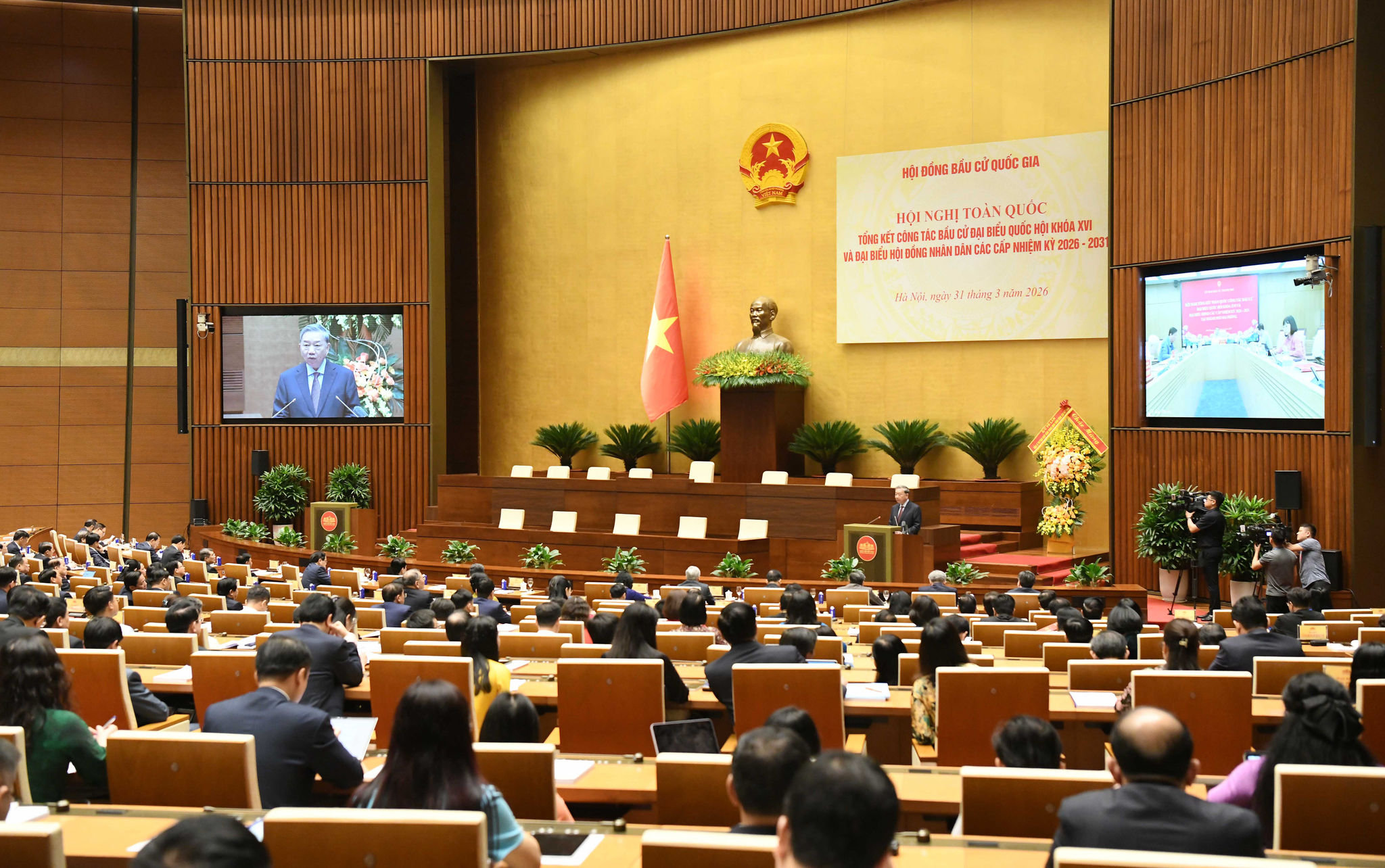
On the afternoon of March 31, the National Election Council held a nationwide conference to review the election of deputies to the 16th National Assembly and People’s Councils at all levels for the 2026–2031 term. General Secretary To Lam attended and delivered a keynote address at the conference. The People's Deputies Newspaper respectfully introduces the full text of General Secretary ’s speech.
.png)
Dear leaders of the Party, the State, and the Vietnam Fatherland Front,
Dear members of the National Election Council,
Dear comrades,
The election of deputies to the 16th National Assembly and People’s Councils at all levels for the 2026–2031 term, held on March 15, 2026, was a great success. Shortly after the election, on March 19, 2026, I published an article that provided a comprehensive assessment of the election and shared my reflections on the responsibilities of those elected by the people. At today’s conference, I would like to highlight several additional points.
Regarding the success of this election, there are five notable achievements.
First and foremost, the most outstanding feature of this election was the broad, responsible, and confident participation of voters nationwide. According to reports, 76,198,214 out of 76,423,940 registered voters cast their ballots, achieving a turnout rate of 99.70%—the highest ever recorded. Notably, no constituency was required to hold a re-election; all 500 National Assembly deputies were elected in full, and People’s Councils at the provincial and commune levels nationwide were also elected in accordance with regulations. These figures reflect not only effective organization but, more importantly, political trust, civic consciousness, and the people’s sense of ownership of the State and our political system.
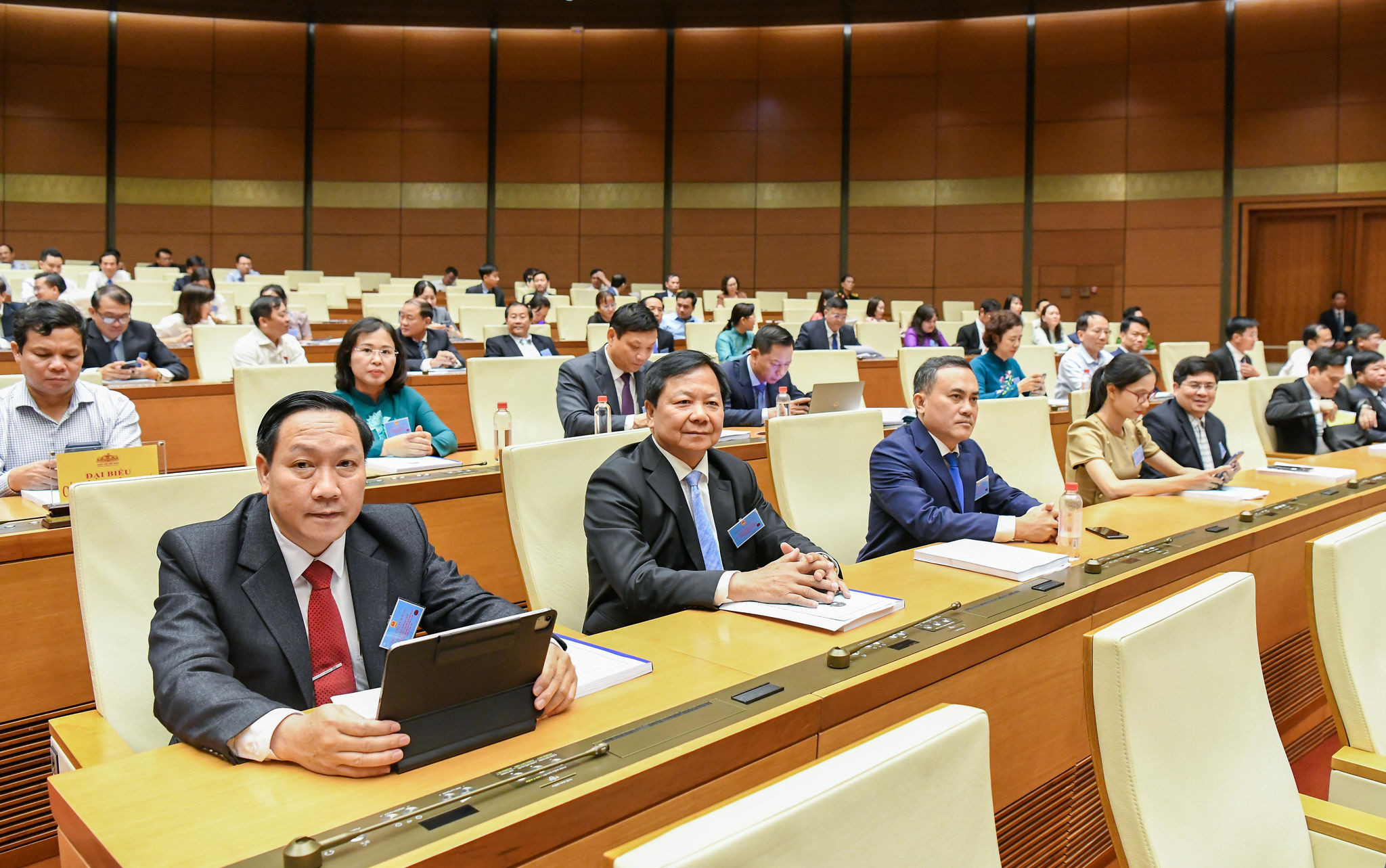
The second achievement lies in the improved quality, composition, and representativeness of elected deputies. The proportion of full-time National Assembly deputies is expected to reach 40%, the highest in history. The 16th National Assembly includes 150 women deputies, accounting for 30%; 76 deputies from ethnic minority groups, accounting for 15.2%; 18 non-Party members, accounting for 3.6%; and 33 deputies under the age of 40, accounting for 6.6%. Particularly noteworthy is that, for the first time in the history of Vietnam’s National Assembly, there is a deputy from the Ơ Đu ethnic group. These outcomes are deeply meaningful, reflecting progress on two fronts simultaneously: improving the quality of deputies while ensuring inclusiveness and representativeness within the country’s highest organ of state power.
The third achievement was the early, systematic, unified, and rigorous preparation carried out from the central level down to localities. Prior to election day, the National Election Council issued all 27 legal documents required by law, along with 14 resolutions and guidance documents, and an additional 34 technical guidance materials for local authorities. From consultation and candidate nomination procedures to voter registration, polling station organization, inspection, supervision, communications, and security arrangements, every stage was conducted according to schedule in a coordinated and consistent manner. This thorough preparation created a solid foundation for a successful nationwide election.
The fourth achievement was a clear advance in digital transformation and the application of technology in election administration. Technological platforms were deployed comprehensively, enabling information to be transmitted quickly, accurately, and securely. The use of the National Population Database and the VNeID digital identity application in voter management improved efficiency, accuracy, and transparency throughout the entire process. In addition, the National Election Council’s electronic portal and multilingual election information website provided strong support for public communication, helping voters access official, comprehensive, and timely information.
The fifth achievement was the maintenance of political security and social order throughout the election process. Complaints, denunciations, and petitions related to the election were received and handled promptly in accordance with regulations. The number of complaints was lower than in the previous term, and no serious incidents or unusual situations occurred that could have affected election results. This demonstrates the proactive, professional, and highly responsible efforts of the entire political system, functional forces, and election bodies at all levels.
From these results, we can draw five very important lessons.
First, it is essential to ensure centralized, unified, and consistent leadership while fully mobilizing the responsibility of the entire political system. The election benefited from the close, unified, and timely direction of the Party Central Committee, the Politburo, the Secretariat, and the National Election Council, as well as coordinated action among central agencies and proactive engagement by Party committees, authorities, the Fatherland Front, and mass organizations at every locality and grassroots level. Experience shows that where Party leadership is strong, authorities act decisively, and relevant forces coordinate closely, election work is conducted seriously, orderly, lawfully, and effectively. This once again confirms that successful elections depend fundamentally on unified leadership and direction from the center to the grassroots, combined with initiative, creativity, and a strong sense of responsibility throughout the political system.
Second, personnel work must be prepared thoroughly, democratically, lawfully, and always with the common interest in mind. The quality of elected deputies determines the quality of the National Assembly and People’s Councils. Therefore, every stage—from consultation, nomination, verification, publication of candidate lists, voter meetings, voting, to vote counting—must be conducted openly, transparently, rigorously, and objectively. A successful election is not merely one that fills all seats; more importantly, it must select individuals who truly possess integrity, competence, courage, practical capability, and a spirit of service to the people.
Third, the people must remain at the center of the entire election process. The record-high voter turnout was not achieved solely through effective organization but also because voters felt respected, well informed, and provided with the most favorable conditions to exercise their civic rights. The organization of early voting in 217 special polling areas across 11 localities reflected the determination to ensure that no voter was left outside the nation’s democratic festival. This is a valuable lesson in inclusiveness and in safeguarding meaningful voting rights for all citizens, regardless of location or circumstances.
Fourth, information and communication efforts must move ahead of events and undergo strong innovation in both content and methods. In an era of rapidly developing digital media, if official information does not reach people quickly, clearly, and effectively, information gaps can easily be filled by misinformation or unverified reports. This election demonstrated that when direct grassroots communication is effectively combined with digital platforms, population data systems, technological applications, and diverse media channels, public outreach, guidance, and social consensus can be significantly strengthened.
Fifth—and most importantly—the success of an election is truly complete only when it is transformed into effective performance during the new term. The voters’ ballots do not end on election day; they must be carried forward through legislative quality, effective oversight, and timely, sound decisions that meet the country’s development needs in the new era. For this reason, the responsibilities of the 16th National Assembly and every elected deputy are immense. They must swiftly translate voters’ trust into action, into legislative achievements, into effective oversight, and into practical policies that serve the people and advance national development.
Dear comrades,
The election held on March 15, 2026, has left a significant legacy: the convergence of the Party’s will, the people’s aspirations, and the nation’s development ambitions. This success resulted from careful preparation, close leadership, coordinated action across the entire political system, and above all, the sense of responsibility demonstrated by tens of millions of Vietnamese voters.
Building on this success, we must recognize more deeply than ever that the 16th National Assembly and the People’s Councils at all levels for the 2026–2031 term must be institutions of renewal, action, effectiveness, closeness to the people, and service to the people. Every elected deputy must always remember that behind them stand the trust, expectations, and hopes of voters. Every decision of the National Assembly, every oversight activity, and every law enacted must be directed toward the highest goal: serving the Fatherland, serving the people, and creating new momentum for the country’s rapid and sustainable development.
With that confidence, I firmly believe that the lessons drawn from this election will continue to be inherited, promoted, and further refined in the years ahead. They will also serve as a solid foundation for the 16th National Assembly to successfully fulfill its responsibilities before the Party, the People, and history.
Thank you, comrades.
*Headline assigned by the People’s Deputies Newspaper.