

The 100-year vision for the future must continue to reflect the aspirations of the Vietnamese nation for development
On the afternoon of June 17, at the Party Central Committee Headquarters, Party General Secretary and State President To Lam, Head of the Steering Committee for the Review of the 100-year Party leadership of the Vietnamese revolution (1930–2030), the orientation for national development leadership over the next 100 years (2030–2130), and the review of 40 years implementing the Platform on national construction during the transitional period toward socialism (the Steering Committee), chaired a meeting of the Standing Board of the Steering Committee. The People’s Deputies Newspaper respectfully introduces the concluding remarks delivered by Party General Secretary and State President To Lam at the meeting.
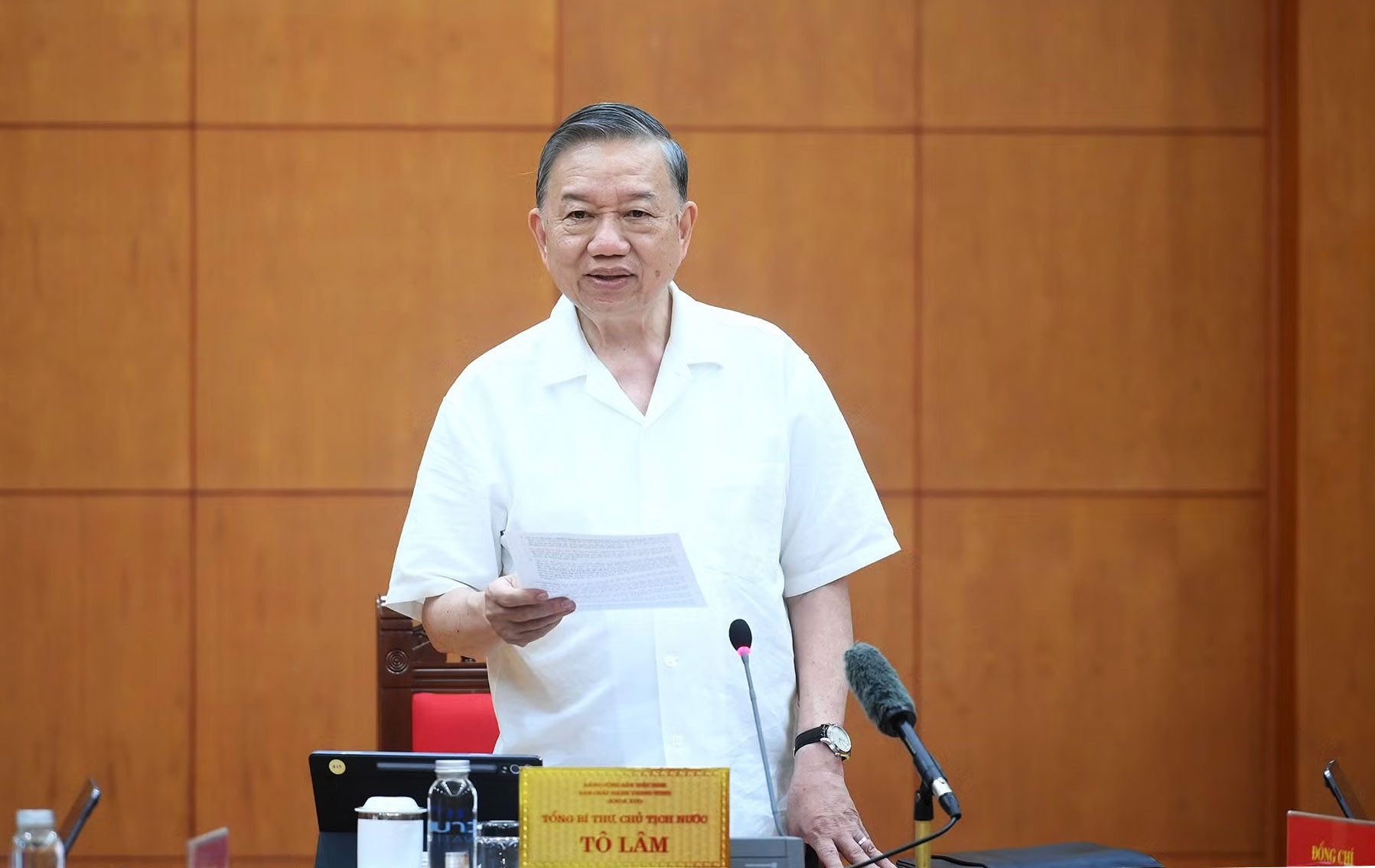
Comrades of the Standing Board of the Steering Committee,
Comrades attending the meeting,
After a serious, scientific and effective working session, the meeting of the Standing Board of the Steering Committee for the review of the 100-year Party leadership of the Vietnamese revolution (1930–2030), the orientation for leading national development over the next 100 years (2030–2130), and the review of 40 years implementing the Platform on national construction during the transitional period toward socialism has successfully completed the agenda.
The opinions expressed at the meeting demonstrated a high sense of responsibility toward a particularly important task of the Party. I highly appreciate the preparation, research and contributions of all comrades. In particular, I recognize the tremendous efforts of the Editorial Team, the standing body of the Steering Committee – the Ho Chi Minh National Academy of Politics, the Central Theoretical Council, and relevant agencies in urgently preparing documents for today’s meeting.
Given the limited time, the large volume of work, the broad scope of the review, and the very high political, theoretical and practical requirements, the initial drafts of the documents have been developed, especially the completion of two detailed outlines, which represents a highly commendable effort. The documents have closely followed the direction of the Party Central Committee, initially establishing the framework of contents, major orientations, and issues requiring further study, serving as a foundation for the Standing Board of the Steering Committee to discuss, provide feedback and guide further refinement.
These are only initial results, but they are extremely important. From these initial outcomes, we now have a basis to better identify the direction, approach, methodology and tasks that need to be carried out in the coming period.
However, many issues still require further revision, supplementation, elevation and completion in terms of guiding ideology, structure, methodology, expression and persuasiveness. The immediate goal is to further complete the documents before seeking opinions from the Party Central Committee. Therefore, I request the Editorial Team to fully, seriously and thoroughly absorb the opinions of members of the Standing Board of the Steering Committee; based on that foundation, urgently revise and finalize the documents with an open-minded, scientific and responsible spirit, without avoiding difficult issues and without being satisfied with initial achievements.
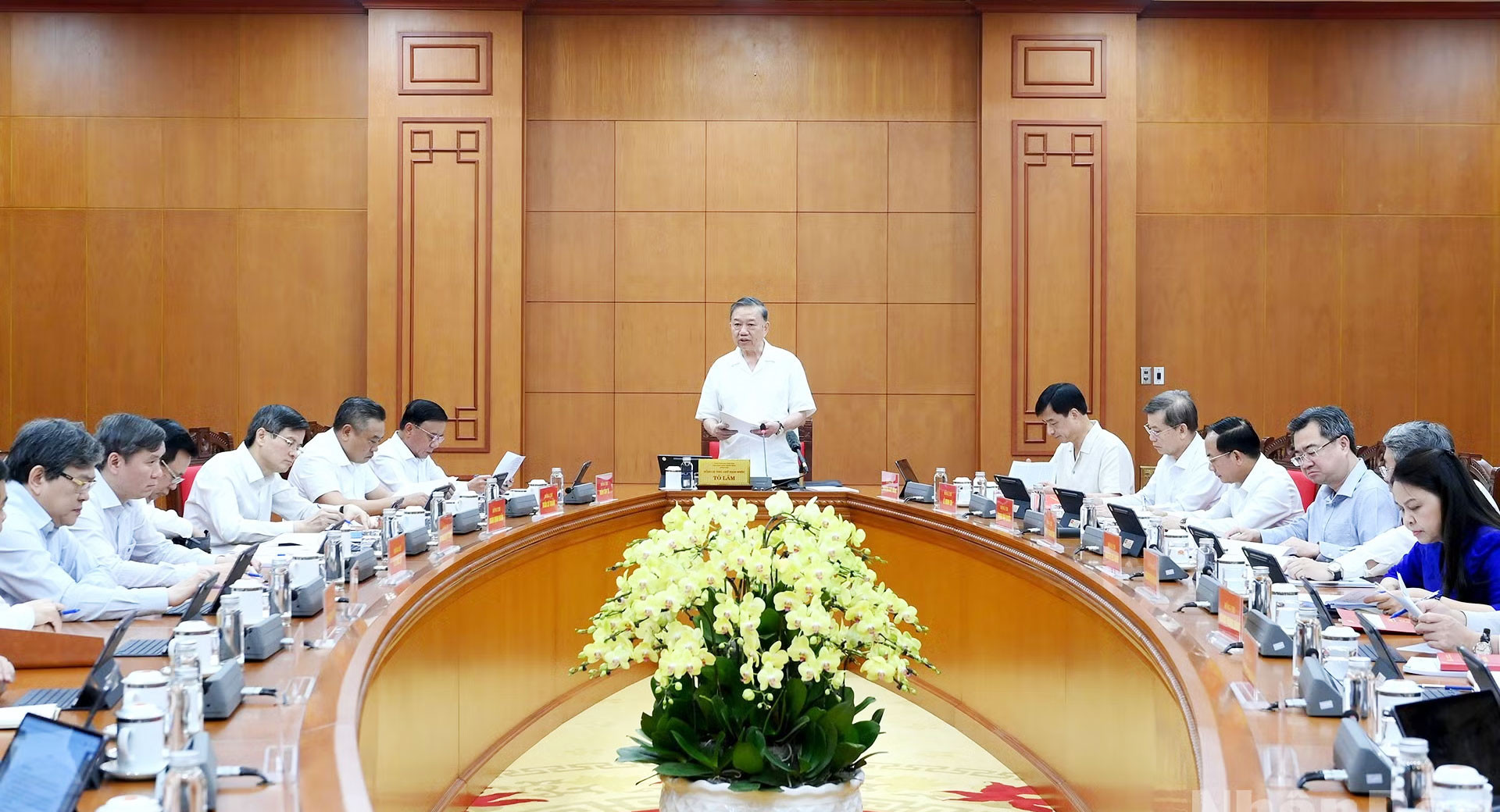
Based on the opinions raised by comrades, I would like to highlight seven key points that need to be thoroughly understood.
First, it is necessary to firmly grasp the guiding viewpoints, requirements and methodology of the review.
The review of the 100-year Party leadership of the Vietnamese revolution is a task of particularly important significance. The review must be firmly based on historical facts, respect history and originate from history; however, it must not stop at simply retelling history or listing events in a chronological manner.
More importantly, from history, it must draw out major issues, conclusions, lessons and overarching principles; thereby clarifying more deeply the path of the Vietnamese revolution, the Party’s leadership role, the strength of the people, the great national unity bloc, and the future development of the nation.
This review must create new value, new contributions and new awareness compared with previous reviews. If it merely compiles existing materials, combines old reports, and rewrites them in a new format, it will not meet the requirements.
It must answer the question: After this review, in what ways has the Party’s theoretical understanding developed more deeply over 100 years? In what ways has the country’s development path become clearer? Which lessons have been generalized at a higher level? Which theoretical issues have been supplemented and creatively developed? What vision and strategic orientations for the next 100 years can be established with solid foundations and convincing arguments?
Second, it is necessary to clarify the relationship between the review of 100 years of Party leadership of the Vietnamese revolution and the review of 40 years implementing the Platform on national construction during the transitional period toward socialism.
These are two major areas of work, closely interconnected but not identical, and they cannot be separated.
As I have previously discussed with comrades, the review of 100 years of Party leadership covers the entire historical journey of the Party’s establishment, leadership of the revolution, national construction and development, defense of the Fatherland, leadership of the renewal process, and socialist construction.
The review of 40 years implementing the Platform focuses on a particularly important aspect, associated with the process of understanding, supplementing and developing the Party’s line on national construction during the transitional period toward socialism.
Therefore, it is necessary to clearly determine how these two contents should be combined. They should not be conducted separately and mechanically in parallel, nor should they be merged in a way that obscures the core focus of each report.
The review of 40 years implementing the Platform must be placed within the broader flow of the 100-year Party leadership of the Vietnamese revolution, while at the same time focusing on evaluating the implementation of the goals, directions and tasks outlined in the Platform.
It must clarify which contents of the Platform have been proven correct by practice, which contents need further supplementation and development, and which new issues require theory to move ahead, anticipate and provide guidance, thereby deepening understanding of socialism and the path toward socialism in Vietnam.
Third, the review must emphasize the great achievements achieved during the 100 years of Party leadership of the Vietnamese revolution.
These include achievements in the struggle for national independence and reunification; building and defending the Fatherland; carrying out the renewal process; socio-economic development; building a socialist rule-of-law state; promoting socialist democracy; ensuring national defense and security; expanding foreign relations and international integration; and enhancing Vietnam’s position and prestige in the international arena.
It must clarify the historical significance, contemporary value, theoretical value and practical value of these achievements; highlighting the historical stature of accomplishments that have transformed the destiny of the nation, changed the country’s position and strengthened people’s confidence.
At the same time, the review must honestly acknowledge limitations, shortcomings, unsuccessful aspects, lessons learned and bottlenecks that need to be addressed.
Mentioning shortcomings is not to diminish achievements. The key is to apply a scientific, objective, dialectical and historically specific approach; correctly assessing the nature, causes and significance of each issue.
Only in this way can lessons from the past help improve the Party’s leadership and governance capacity in the future.
Fourth, the review must clarify the core and consistent issues throughout the 100 years of Party leadership of the Vietnamese revolution.
These include: how the Party led the country through historical turning points; the choices and persistence in the development path; handling the relationship between strategic objectives and specific tactics; promoting the strength of the people and national unity; combining national strength with the strength of the times; Party building and rectification, renewing leadership methods and improving governing capacity; protecting independence, sovereignty, unity and territorial integrity; maintaining political stability and building foundations for national development.
The review must answer why the Party has been able to lead the Vietnamese revolution from one victory to another under extremely difficult and complex conditions.
At the same time, it must highlight lessons of a law-like nature, such as steadfastly pursuing the goal of national independence and socialism; continuously innovating while maintaining principles; considering the people as the foundation; building a comprehensively strong and clean Party; and correctly handling major relationships.
These lessons must be distilled and generalized at a theoretical level, avoiding vague and familiar assessments that lack sufficient guidance.
Fifth, special attention must be given to defining the vision and orientations for national development leadership over the next 100 years.
This is an extremely difficult task. Reviewing the past is already challenging, but forecasting and orienting the future is much more difficult.
The future always contains uncertainties. The world is changing rapidly. Science and technology, innovation, digital transformation, artificial intelligence, the data economy and the green economy are continuously creating profound changes. Strategic adjustments and competition among major powers are becoming increasingly complex. Traditional and non-traditional security challenges are intertwined.
Therefore, defining a vision and orientations for leading national development over the next 100 years cannot be based on subjective aspirations alone. It must be grounded in theoretical foundations, practical foundations, scientific foundations, forecasting methods and long-term strategic thinking.
The 100-year vision for the future must continue to reflect the aspirations of the Vietnamese nation for development.
It must answer major questions: What kind of developed country does Vietnam aspire to become in the coming century? What foundations must be preserved? What new drivers of development are needed? What breakthroughs must be identified? What risks must be addressed? What values must be protected and promoted?
The vision must combine the height of aspiration, the depth of theory, close alignment with national realities and global trends, and enhanced capacity for implementation.
Sixth, alongside professional content, great attention must be paid to organization and implementation.
The workload is enormous, the requirements are very high and time is moving quickly. Therefore, without effective organization, it will be difficult to ensure progress and quality.
I request that the review groups begin immediately and not wait for one another. Each group must proactively develop plans, clearly define products, deadlines, responsible individuals, coordination mechanisms and milestones for each stage.
Progress must be regularly reviewed, obstacles promptly addressed, approaches adjusted when necessary, and high-quality interim outputs ensured so that the preparation of the final report will not become passive or overloaded at the end.
Seventh, special importance must be attached to documents, data, historical witnesses and valuable sources of information.
A 100-year review cannot rely solely on administrative reports. It must mobilize the intellectual contributions of the entire Party, research institutions, scientists, experts, practitioners, historical witnesses, veteran revolutionaries and generations of leaders and managers throughout different periods.
These are invaluable sources of knowledge, experience and documentation.
Some historical issues can only be clarified by combining archival materials with the memories of witnesses, scientific research, practical experience and objective, multi-dimensional analysis.
It is necessary to effectively utilize historical archives, databases, existing research works, domestic and international archival documents, and thematic, sectoral and local reviews.
For documents where conditions permit, appropriate mechanisms should be studied for access, declassification and use in accordance with regulations to serve the review process.
This work must be carried out seriously, strictly and scientifically, ensuring both confidentiality requirements and research needs, while clarifying historical issues that require conclusions.
Issues that are already clear must be firmly affirmed. Issues where different opinions remain must be thoroughly researched and analyzed. Issues requiring conclusions must have solid foundations before conclusions are drawn.
Difficult issues must not be avoided; however, conclusions must not be rushed, simplistic or subjective.
Historical conclusions must have foundations, methodology and responsibility; conclusions must serve to unify awareness, strengthen confidence and protect the Party’s ideological foundation.
Comrades,
I request the Editorial Team and relevant agencies to urgently implement the next steps. They must fully absorb the opinions of members of the Standing Board of the Steering Committee; review the entire structure of the documents; clearly identify issues requiring immediate revision, issues requiring further in-depth study, and issues requiring consultation with competent authorities.
The documents must be carefully prepared for consultation with the Steering Committee and the Politburo before submission to the Party Central Committee.
We must make every effort to produce a review work truly commensurate with the 100-year history of the Party’s leadership of the Vietnamese revolution and with the aspirations for national development over the next 100 years.
Thank you very much.
*Headline set by The People’s Deputies Newspaper.