

Swiftly bringing two resolutions to life, creating clear transformations, contributing to building a rapidly developing, sustainable, independent, self-reliant and resilient Vietnam in the New Era
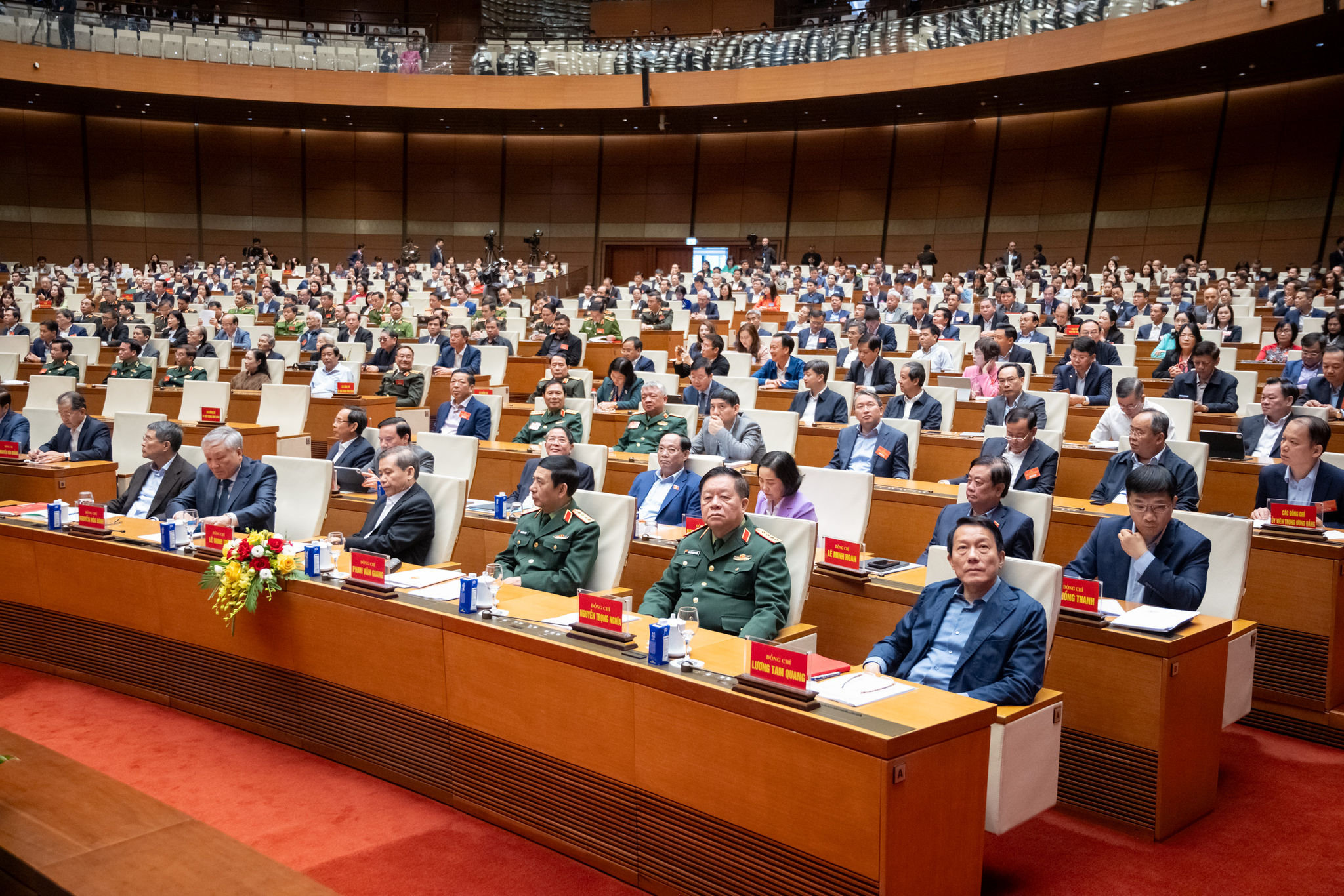
On the morning of February 25, at Dien Hong Hall of the National Assembly House, a nationwide conference was held to study, disseminate, thoroughly understand and implement Resolution No. 79-NQ/TW of the Politburo on the development of the state economy and Resolution No. 80-NQ/TW of the Politburo on the development of Vietnamese culture. General Secretary To Lam attended the conference and delivered an important keynote address. The People’s Deputies Newspaper respectfully presents the full text of the General Secretary’s speech.
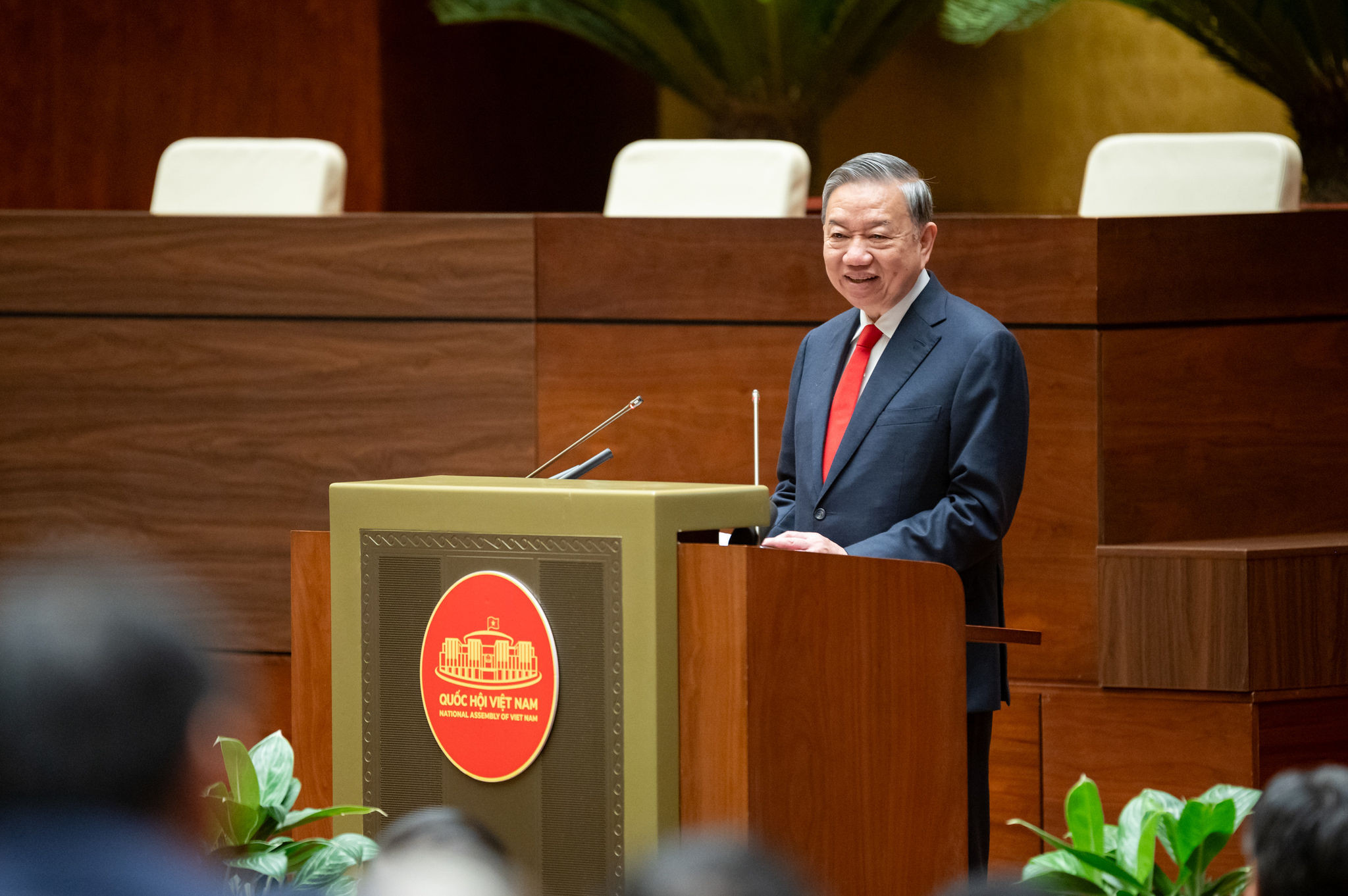
Distinguished leaders and former leaders of the Party, the State, and the Vietnam Fatherland Front; leaders of Party committees at all levels; leaders of central and local Party committees, ministries, sectors and agencies,
Distinguished officials, Party members and people from across the country attending the conference at various venues and through nationwide television and radio broadcasts,
Today, the Politburo and the Party Central Committee Secretariat are organizing this nationwide conference to disseminate and implement two resolutions of particularly important significance: Resolution No. 79 on the development of the state economy and Resolution No. 80 on the development of Vietnamese culture.
Together with previously issued resolutions, these two new resolutions represent additional major policy decisions of the Party. They have been formulated on the basis of profound reviews of practical experience and the continued development of theoretical thinking as the country enters a new stage of development. They aim to simultaneously address two fundamental requirements: strengthening the “material internal strength” and consolidating the “spiritual internal strength” of the nation.
These resolutions affirm the determination to build an independent, self-reliant, dynamic and effective economy deeply integrated into the international community, while developing an advanced Vietnamese culture imbued with national identity.
With that significance, I request all comrades to carefully study the contents of these resolutions and the guiding remarks delivered by Politburo members at this conference; deepen understanding of the core issues, new points and requirements in the implementation process; thereby achieving high unity in awareness and action.
Only when the entire Party, the entire people and the entire military fully understand and are determined to implement these resolutions will they truly enter into life, create clear transformations, and contribute to realizing the goal of rapid and sustainable national development in the new period.
Based on the requirements regarding tasks and solutions set out in the two resolutions, I would like to emphasize several additional points as follows:
I.
The State Economy Must Truly Occupy the “Strategic Commanding Heights” of the Economy, Play the Leading Role and Become a “National Pillar” in the New Era
In recent years, the state economy, together with the private sector, has formed two important pillars of Vietnam’s socialist-oriented market economy.
The private economic sector has continued to develop dynamically, making significant contributions to economic growth. Many private enterprises have gradually become more deeply engaged in regional and global value chains.
Alongside this, the state economy continues to play the leading role, ensuring major economic balances, maintaining stability, regulating the macro-economy, and undertaking strategic medium- and long-term tasks directly related to energy security, financial and monetary security, telecommunications security, essential infrastructure and other key areas of the economy.
In other words, the state economy must be able to occupy the “strategic commanding heights” of the economy.
.jpg)
However, in order to truly occupy these “strategic commanding heights”, the state economic sector must undergo strong restructuring, focusing on key industries, strategic areas, critical locations and sectors with high spillover effects.
The leading role must be demonstrated through leadership capacity, efficiency and tangible contributions to macroeconomic stability, economic security and medium- and long-term development.
Wherever the State needs to maintain control to ensure sovereignty and stability, it must firmly hold that role and perform it effectively and strongly.
Wherever the State should only play the role of guiding, creating foundations and opening pathways, mechanisms must be designed for the private sector to participate, compete and develop together.
Wherever the State does not need to participate or cannot operate effectively, restructuring must be carried out decisively according to market principles, transparency, and with efforts to prevent “interest groups”, “backyard arrangements”, “manipulation” and “policy profiteering”.
The state economy must make breakthrough contributions to national self-reliance, ensuring stability and enabling timely intervention when systemic risks emerge.
Therefore, in the new period, the state economy must be concretized into the following five major “pillars”:
First: A pillar for economic security and sovereignty
The state economy must hold and master the nation’s “lifelines” and “backbones”, including energy, strategic infrastructure, finance and credit, key logistics networks, data and essential digital platforms, among others.
Holding these areas is not intended to create monopolies, but rather to safeguard sovereignty, avoid dependence, proactively respond to fluctuations, protect national interests in all circumstances, and generate spillover effects across the economy.
Second: A pillar for regulation, stability and resilience
In particular, amid an era of intertwined shocks such as supply chain disruptions, interest rate and exchange rate volatility, trade wars, natural disasters and pandemics, the state economy must play a role in stabilizing essential markets, ensuring the provision of critical public services, maintaining foundational investment and building reserve capacity to respond promptly to systemic risks.
Third: A pillar for guiding and supporting the private sector
A strong state economy is not intended to overshadow the private sector, but rather to become a “foundation”, a “path opener” and a source of “support” enabling private enterprises to participate more deeply in value chains, develop supporting industries and increase localization rates, thereby forming industrial clusters with “leading enterprises” capable of competing regionally and globally.
If the state economy successfully fulfills its guiding role, the private sector will have a foundation for sustainable growth, and the overall strength of the economy will be significantly enhanced.
Fourth: A pillar for leading innovation and core technologies
If the state economy is only strong in terms of capital and assets but weak in technology, governance and human resources, it cannot maintain its leading role in the new era.
Today, the leading role is not measured merely by scale, but by the ability to master technologies, meet international standards, operate data as a strategic resource, ensure cybersecurity and apply modern risk management.
Fifth: A pillar for governance standards and integrity in economic management
State-owned enterprises must become models of discipline, transparency and the highest level of accountability.
State-owned enterprises must represent national governance standards, creating a managerial workforce with competitive capacity and a spirit of public service.
There must be no room for “interest groups”, “backdoor arrangements”, term-based investment decisions, or prolonged losses without clear accountability.
These five pillars must be transformed into specific action programs with clear objectives, measurable indicators, timelines, inspection mechanisms and clear sanctions.
Otherwise, the leading role of the state economy will remain merely a slogan, while the country will have to pay the price through wasted resources, declining competitiveness and erosion of public trust.
II.
“Culture Must Illuminate the Path for the Nation to Follow” — A People-Centered Culture as the Spiritual Foundation, Internal Strength, Crystallization of Vietnamese Wisdom and Driving Force for National Development, Independence, Self-Reliance and Resilience
Throughout the history of the nation, Vietnam’s strength has not been created solely by natural resources or national size, but first and foremost by the resilience, dignity, willpower and value system forged over thousands of years of building and defending the country.
During his lifetime, President Hồ Chí Minh stated: “Culture must illuminate the path for the nation to follow.”
That teaching remains profoundly relevant today, showing that culture does not merely accompany development; rather, culture must stand in the “leading position”, serving as the foundation that shapes the quality of people and the quality of the nation.
If the economy determines the ability to move quickly, then “culture determines the ability to go far.”
If the economy creates material wealth, culture creates the character, discipline, trust and spiritual strength that enable the nation to overcome challenges and rise forward.
The greatest challenge facing culture today is not merely a lack of resources, but the risk of erosion of the value system, deviation from social norms, excessive materialism, verbal violence, fake news, misinformation and the intrusion of harmful elements in cyberspace.
Without timely cultural revitalization, we may achieve rapid short-term growth but lack a foundation for long-term development.
People may become wealthier materially but poorer in standards, self-respect, civic responsibility and aspirations to contribute.
With this spirit, I propose focusing on the following five key tasks:
First, build and promote the national value system, cultural values and standards for Vietnamese people in the new era
A country that seeks to advance far must have a “compass” of values.
These values must combine tradition with modern aspirations, be strong enough to guide social behavior, clear enough to distinguish right from wrong, good from bad, truth from falsehood, and resilient enough to withstand deviations, cultural distortion and manipulation in the digital environment.
Among them, emphasis must be placed on core qualities: patriotism, respect for traditional values and customs, discipline, integrity, responsibility, compassion, creativity and the aspiration to rise.
More importantly, the value system cannot exist only “on paper”; it must be translated into educational programs, standards for public service, criteria for civilized communities and measures of development quality.
Second, regard the building of a healthy cultural environment as a foundational task
A cultural environment must truly embody a comprehensive set of standards of conduct, respect for the law, respect for truth, respect for human dignity, and respect for labor and contribution.
Particularly in the digital era, the cultural environment extends into cyberspace, where information spreads rapidly, emotions can easily be inflamed, and harmful content can “poison” public perception if society lacks sufficient resilience.
Therefore, it is essential to strengthen society’s “immunity” against fake news and toxic information, while fostering a culture of civilized debate and responsible behavior.
We must resolutely eliminate verbal violence, attacks on human dignity, the spread of hatred, division and moral degradation.
Third, place education and human development at the center, making them the core axis of cultural revitalization
Schools must not only teach knowledge but also teach people how to become responsible citizens, cultivate discipline and develop life skills.
Families must not merely provide material support; they must be the place where character, values, discipline and self-respect are formed.
Communities must not only provide spaces for social interaction; they must foster environments that honor good deeds, encourage work, promote learning and inspire contributions to society.
Cultural revitalization must begin with the most fundamental values: respect for the law, respect for others, honesty, kindness, responsibility and a spirit of service to the community—placing the collective interest above personal interest.
Every individual must recognize and fulfill his or her responsibility to society.
Fourth, develop cultural industries so that culture becomes both a spiritual foundation, an economic resource and a source of national soft power
A strong culture is measured not only by the depth of its traditions but also by its creativity and capacity to produce high-quality cultural products with broad influence and strong market appeal.
It is necessary to promote the development of cultural industries in a modern and professional direction, accelerate the application of science and technology, and advance digital transformation to create breakthrough momentum for cultural development.
At the same time, intellectual property rights must be protected, innovation ecosystems strengthened, and high-quality talent attracted.
By doing so, culture will not only preserve national identity but also create new value, making practical contributions to economic growth and the country’s international image.
Fifth, build a culture within the political system and regard it as the foundation of public trust
Culture within the Party and the public administration system must be a culture of exemplary conduct, consistency between words and actions, respect for honor, discipline and wholehearted service to the people.
Every cadre and Party member must become a nucleus spreading a culture of integrity, proper conduct, seriousness in performing duties, and a spirit that rejects avoidance, buck-passing and indifference.
It is impossible to build a healthy social culture if public-service culture remains superficial, bureaucratic or irresponsible.
Nor can we speak convincingly about social discipline when the enforcement of discipline in some places remains lax or merely formalistic.
Public trust is built first and foremost through the attitude of service, discipline in action and the exemplary conduct of officials and public servants.
Therefore, I request each Party committee and Party organization to clearly assess its own cultural realities and focus on addressing existing shortcomings.
We must avoid spreading efforts too thinly, avoid formalism and avoid the mentality of merely “doing it for appearance’s sake” or “doing it just to get it done.”
In particular, exemplary conduct must be regarded as the most persuasive method of leadership in building culture.
Leading by example does not mean speaking eloquently; it means acting correctly.
Leading by example does not mean making general appeals; it means exercising self-discipline, organizational discipline and discipline in implementation.
Where officials set good examples, discipline will be strong.
Where discipline is strong, public trust will be reinforced.
And when public trust is strengthened, every development task will have a solid foundation for breakthroughs and progress.
Distinguished comrades and fellow citizens,
The two resolutions disseminated today are not merely two parallel sets of tasks. They constitute a unified development framework in which each supports and reinforces the other.
Resolution No. 79 creates the material internal strength necessary for the country to maintain stability, master major economic balances and enhance national self-reliance.
Resolution No. 80 creates the spiritual internal strength needed to nurture resilience, discipline, trust and the intrinsic strength of the Vietnamese nation.
The most important factor, as I have emphasized, is implementation.
Studying and understanding a resolution is for the purpose of action.
Action is for the purpose of creating change.
Change is meaningful only when people can feel it in their daily lives and experience it in reality.
Therefore, immediately after this conference, I request Party committees, Party organizations, ministries, sectors and localities at all levels to urgently formulate action programs and specific implementation plans, clearly assigning individual responsibilities, especially those of leaders and heads of agencies.
We must resolutely correct the situations of avoidance, buck-passing and superficial implementation.
I firmly believe that with strong political determination, synchronized participation by the entire political system and society, and with the spirit of solidarity, discipline and aspiration for progress, we will swiftly bring these two resolutions into practice, create clear and tangible transformations, and contribute to building a Vietnam that is rapidly developing, sustainable, independent, self-reliant and resilient in the new era.
Once again, I wish all conference participants, all comrades and fellow citizens good health, happiness and success.
Thank you very much.
*Title assigned by the People’s Deputies Newspaper.