

Quang Tri plans seven growth poles, corridors linking seaports, airports and border gates
Quang Tri's provincial plan sets 22 specific targets for 2030. Besides average annual GRDP growth of at least 10%, it aims to raise GRDP per capita to 5,290 USD and the digital economy's contribution to 30% of GRDP.
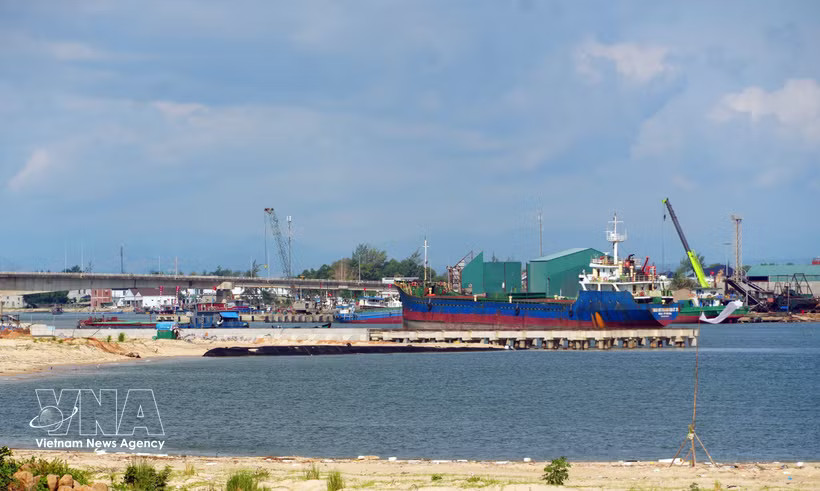
The central province of Quang Tri has identified seven growth poles and devised plans to develop economic corridors connecting seaports, airports and border gates to create new development space, with the goal of achieving average annual gross regional domestic product (GRDP) growth of at least 10% through 2030.
These are key orientations in a provincial plan to implement the Government’s Resolution No. 358/NQ-CP on the action programme for implementing the Politburo’s Resolution No. 27-NQ/TW dated August 28, 2026 on regional development and organisation of national development spaces in the new period.
The seven growth poles include Hon La-Ba Don-Quang Trach; Dong Hoi-Hoan Lao; Dong Ha, Gio Linh, Cua Viet, Nam Cua Viet, Trieu Binh and Cam Lo; the Southeast Quang Tri Economic Zone, Hai Lang, Dien Sanh, My Thuy and Vinh Dinh; the Cha Lo International Border Gate Economic Zone; Lao Bao International Border Gate; and La Lay International Border Gate.
The province plans to develop these growth poles in close connection with its urban network, economic zones and inter-regional transport infrastructure.
It will study and implement a proposal for a free trade zone linked to seaports, airports, economic zones and industrial parks. Another priority is developing a cross-border economic and trade zone connecting Lao Bao in Vietnam with Densavan in Laos.
Transport infrastructure is considered a key factor in connecting development areas. The province will focus on linking expressways, seaports, border gates and logistics networks. It aims to put My Thuy Port into operation and increase the capacity of Hon La International General Port.
Quang Tri also plans to develop logistics services along the Quang Tri-Hue-Da Nang corridor, connecting the province with Laos, Thailand and Myanmar.
In the energy sector, priority will be given to major projects, including the Quang Trach Power Centre, the Hai Lang LNG-fired power plant and renewable energy projects.
The province will also coordinate with central authorities to bring natural gas from the Ken Bau and Bao Vang fields ashore in Quang Tri, while promoting electricity imports from Laos.
Regarding urban development, the province will focus on Dong Hoi and Dong Ha and a chain of coastal urban areas linked to economic zones, industrial parks and transport hubs. Border urban areas will also be developed to facilitate trade and strengthen connections with localities in Laos.
The provincial plan sets 22 specific targets for 2030. Besides average annual GRDP growth of at least 10%, it aims to raise GRDP per capita to 5,290 USD and the digital economy's contribution to 30% of GRDP.
Industry and construction are expected to account for 40.7% of the economic structure, while services will make up 43%. Total factor productivity (TFP) is set to contribute more than 55% to economic growth.
In social development, the province targets an average life expectancy of 74.5 years, with 68 years of healthy life. It aims to have 13 doctors per 10,000 people and achieve universal health insurance coverage. The urbanisation rate is expected to reach 37%, while 60% of communes will meet new-style rural development standards./.