

Propose maintaining the mandatory in-depth examination mechanism for pharmaceutical and biological inventions
In the pharmaceutical field, a single poorly granted patent can cause difficulties for the entire generic industry for 20 years. Emphasizing this point during the National Assembly discussion on the draft Law amending and supplementing several articles of the Intellectual Property Law on November 3rd, National Assembly Deputy Nguyen Lan Hieu (Hanoi) proposed maintaining the mandatory in-depth assessment mechanism for pharmaceutical and biological inventions; and establishing a separate team of specialized medical and pharmaceutical experts, not shared with those in the mechanical and electronic fields.
Additional criteria are needed to prevent the prolonged duration of monopolies
Regarding pharmaceutical patents – protecting access to expensive new drugs worldwide through long-term antitrust protection – National Assembly Deputy Nguyen Lan Hieu stated that current law allows for a maximum protection period of 20 years to combat evergreening. However, in reality, many pharmaceutical companies only change the salt form, dosage form, or dosage to apply for new patents, thereby extending the period of exclusivity and hindering the participation of generic drugs.
Therefore, the delegates proposed adding specific criteria to prevent this situation; in which, a new discovery about the form or use of a known substance should not be considered an innovation unless it significantly increases the effectiveness of treatment.
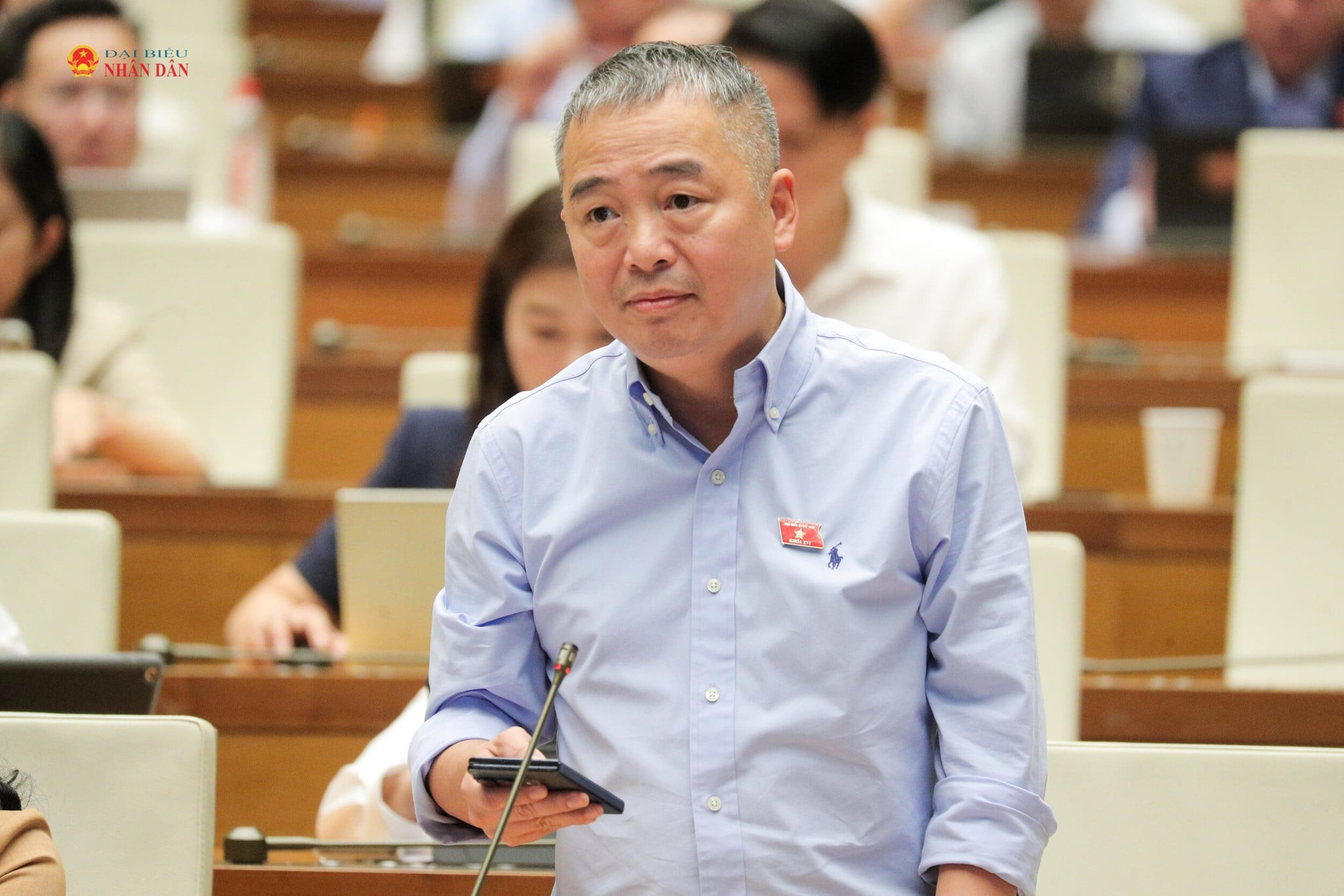
In addition, the Bolar exception in the Law needs clarification. Representatives argue that this is a legal provision in the field of intellectual property and pharmaceuticals, allowing generic drug manufacturers to use patented pharmaceutical inventions that are still under protection to conduct research, testing, and prepare registration dossiers without being considered a violation of intellectual property rights.
According to National Assembly Deputy Nguyen Lan Hieu, Vietnam needs regulations to encourage domestic businesses to boldly utilize this exception to research, test, and file applications for generic drug registration while the original patent is still valid. Without clear regulations in the law, Vietnamese businesses could delay bringing the drug to domestic use for patients by 2-3 years after the patent expires.
Regarding artificial intelligence in healthcare, National Assembly Deputy Nguyen Lan Hieu stated that the principle of "human authorship" must be upheld. Evaluating the draft law as a breakthrough in creating a legal framework for artificial intelligence ( AI ) for the first time, Deputy Nguyen Lan Hieu noted that in the medical field, AI is effectively supporting many activities such as reading CT and MRI scan results, assisting in prescribing medication, and detecting medical errors.
Based on that practice, the delegate proposed maintaining the principle that "AI is not the author." Accordingly, for diagnostic results assisted by AI, AI-recreated medical images, or AI-proposed treatment protocols, the authorship or co-authorship must belong to the doctor or research team that collected the data, trained, and was clinically responsible. The delegate proposed clearly stipulating that "Products created by AI systems are not protected by copyright unless there is creative human intervention."
At the same time, the delegate suggested that training data must be protected. According to the delegate's example, the University Medical Center currently has millions of patient data records, which are valuable assets. "Therefore, the Law needs to add the rights of medical facilities to anonymized medical databases and the obligation to obtain permission when using this data to train commercial AI systems," emphasized National Assembly delegate Nguyen Lan Hieu.
Regarding AI-generated inventions, the delegate raised the question: "AI-generated inventions: If a new drug molecule is entirely designed by AI, who is the owner? It is proposed that the owner be the person/organization that owns and operates the AI system and invests resources, but the role of AI must be clearly disclosed in the application."
"Every day that Vietnamese patients are delayed in receiving good medicine and medical equipment is a disadvantage. Therefore, the Intellectual Property Law must be strong enough to encourage Vietnamese people to invent medicines and ventilators, but also humane enough to ensure that no patent becomes a barrier between patients and life".
National Assembly Deputy Nguyen Lan Hieu (Hanoi)
Administrative procedures can be streamlined , but assessment standards must not be lowered
Notably, National Assembly Deputy Nguyen Lan Hieu also supported reducing administrative procedures; however, he cautioned against lowering assessment standards in certain specialized fields such as healthcare. Deputy Nguyen Lan Hieu expressed agreement with abolishing the registration procedure for transfer contracts. For hospitals and universities, this would facilitate faster technology transfer to provincial-level facilities.
However, delegates noted that in the pharmaceutical field, a single low-quality patent granted can cause difficulties for the entire generic industry for 20 years. Therefore, delegates proposed maintaining a mandatory in-depth evaluation mechanism for pharmaceutical and biological patents; establishing a separate team of specialized medical and pharmaceutical experts, not shared with the mechanical and electronic fields; and making evaluation reports public so that medical associations can participate in providing feedback.
Regarding intellectual property in hospitals and universities, National Assembly Deputy Nguyen Lan Hieu stated that doctors are currently improving equipment and writing textbooks, but ownership rights are very vague. Meanwhile, public hospitals are not allowed to account for intangible assets, so they dare not commercialize them. Therefore, fairness in defining intellectual property rights between individuals and hospitals is urgently needed.
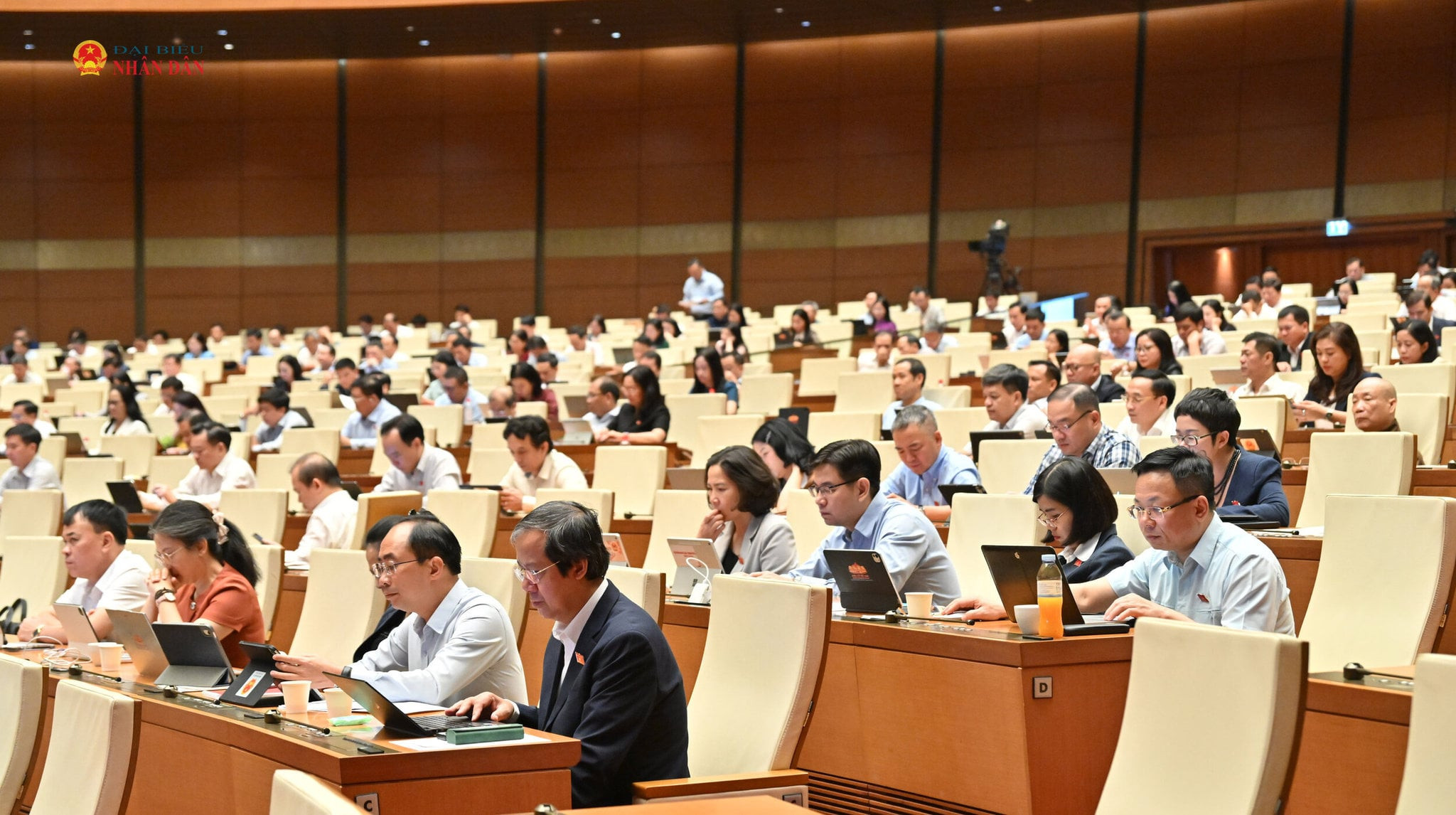
Therefore, the delegates proposed clearly stipulating that lecturers and doctors are the authors, but the hospital/school is the owner when using state budget funds; at the same time, a minimum of 40-50% of the profits must be shared with the authors.
In addition, hospitals should be allowed to use patents and trademarks as capital contributions or collateral for loans, as this is a crucial issue for the autonomous operation of medical facilities. The representative also proposed exempting corporate income tax on revenue from the transfer of medical patents for the first five years.
Regarding copyright for scientific and traditional medicine articles, National Assembly Deputy Nguyen Lan Hieu proposed adding an exception for "fair use" for teaching and emergency purposes. Accordingly, doctors at the district level would be allowed to use protocols and images from specialized books to serve their work in saving lives without being considered to be infringing on copyright.
Regarding traditional medicine and genetic resources, delegates argued that the proposed transfer of plant variety management to the Ministry of Science and Technology is reasonable. However, a mechanism for sharing benefits when exploiting the traditional medicine knowledge of ethnic minorities needs to be added. It is unacceptable for a foreign company to exploit Vietnamese medicinal plants, extract their properties, and then register patents abroad without a mechanism to ensure appropriate benefit sharing.