
Promoting the pioneering role of diplomacy and shaping a favorable international environment for national development
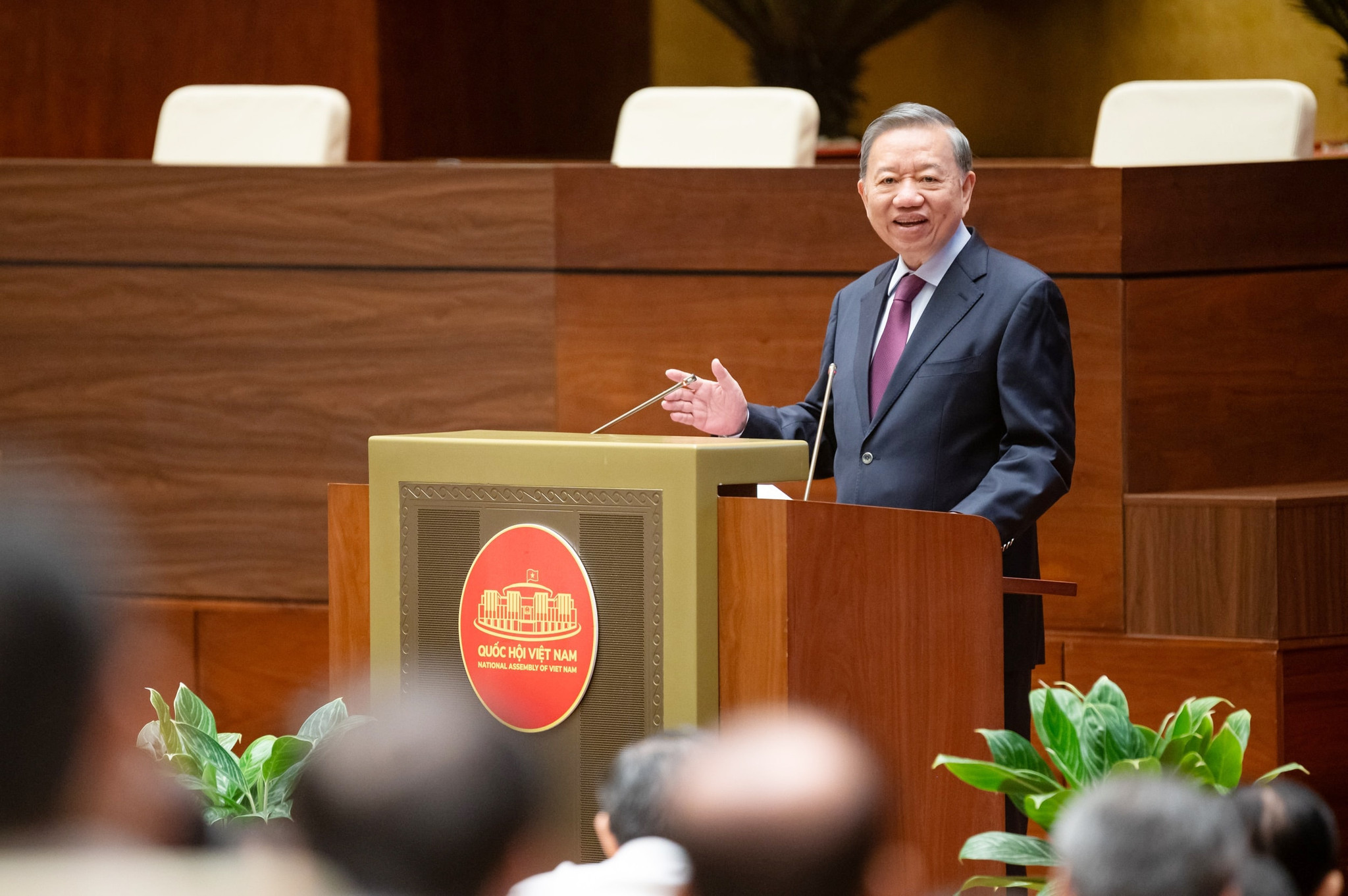
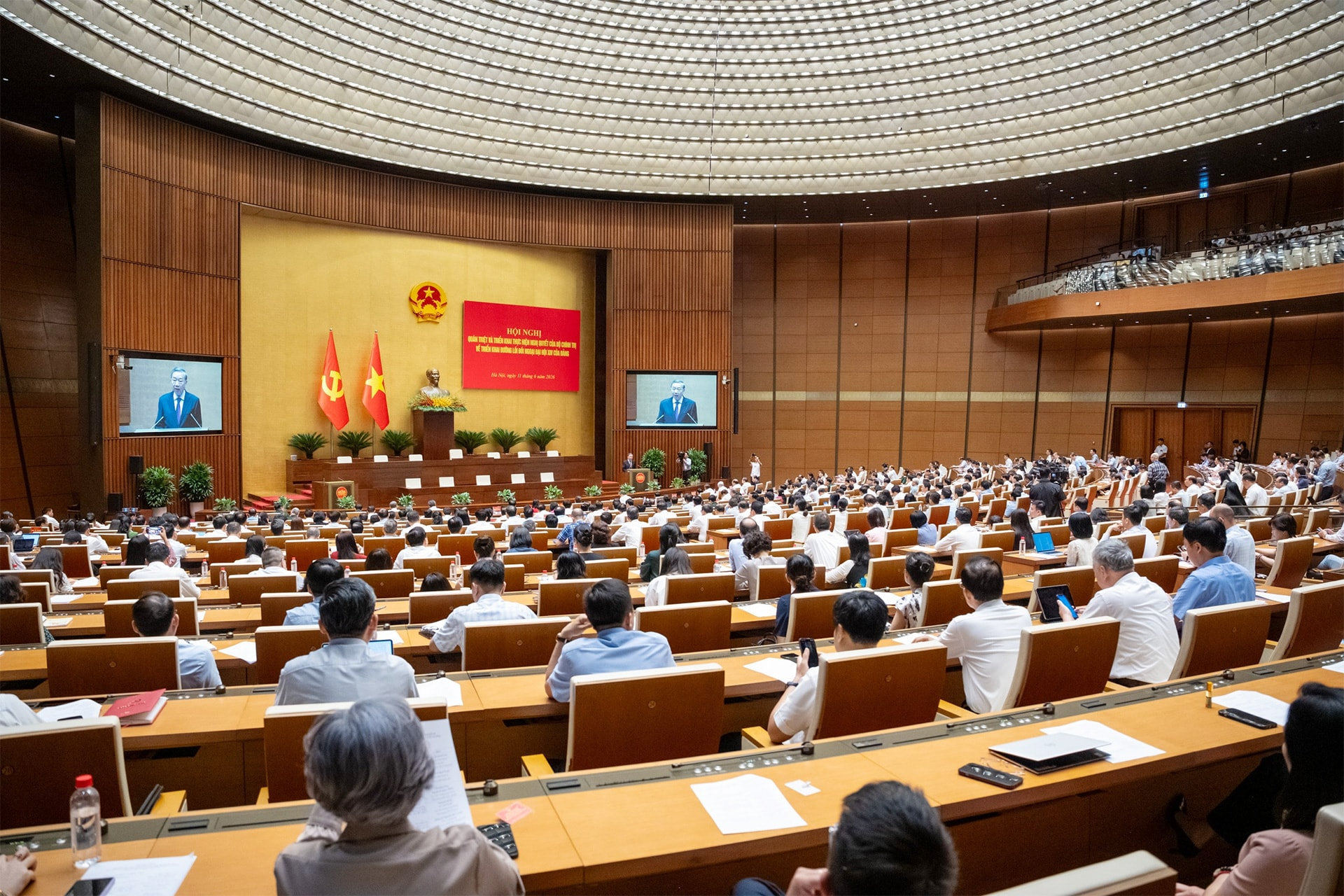
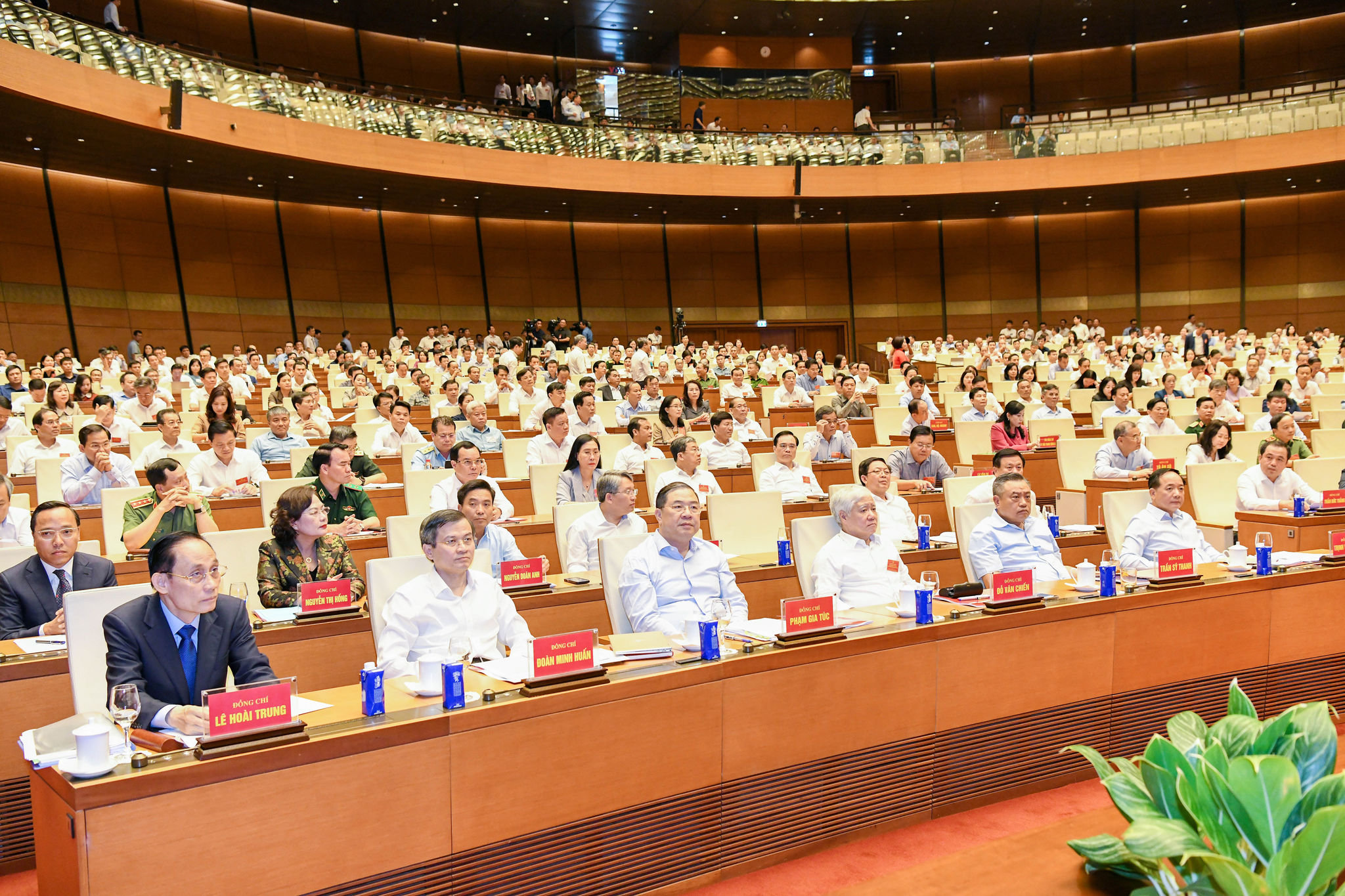
On June 11, at the National Assembly House, the Politburo and the Party Central Committee Secretariat held a nationwide conference to study, disseminate, and implement Resolution No. 06-NQ/TW dated May 19, 2026, issued by the Politburo, on implementing the foreign policy direction of the 14th National Party Congress. Party General Secretary and State President To Lam attended and delivered a keynote speech at the conference. The People’s Deputies Newspaper respectfully introduces the full text of the speech.
Distinguished Party and State leaders, leaders of the Vietnam Fatherland Front,
Distinguished Politburo members, Secretariat members, Central Committee members, and delegates attending the conference,
Today, the Politburo and the Party Central Committee Secretariat are convening this conference to disseminate and implement Resolution No. 06-NQ/TW dated May 19, 2026, issued by the Politburo, on implementing the foreign policy direction of the 14th National Party Congress. This resolution concretizes the guidelines and policies set out by the 14th National Party Congress, reflecting the Party’s thinking and vision on foreign affairs to meet the requirements of national development in the new era.
Following Resolution No. 59-NQ/TW dated January 24, 2025, on international integration in the new situation, Resolution No. 06-NQ/TW sets the goal of developing foreign affairs in the new period commensurate with the country’s historical stature, cultural identity, and position; contributing to the realization of Vietnam’s strategic objectives; and building a peaceful, independent, democratic, prosperous, civilized, and happy Vietnam that firmly advances toward socialism.
The delegates have heard the presentation on the Resolution and eight thematic reports, which aim to help Party committees, Party organizations, and each Party member gain a clearer, deeper, and more comprehensive understanding of the Resolution’s contents; ensuring a high degree of unity in awareness and action in leadership, direction, and implementation across ministries, sectors, localities, Party organizations, Party members, and the people.
Distinguished delegates,
The world is witnessing major, unprecedented transformations not seen since the end of World War II. These shifts bring intertwined opportunities and challenges, profoundly affecting all areas of social life and international relations. Countries that fail to keep pace with developments, lack appropriate responses, or isolate themselves from international cooperation will fall behind and struggle to develop. Countries that proactively formulate strategies, anticipate developments, respond effectively, and cooperate internationally will gain advantages and opportunities to rise.
Vietnam’s development cannot be separated from the development of the region and the world. Therefore, closely and effectively combining national strength with the strength of the times, and domestic resources with external resources, is a prerequisite for us to “stand shoulder to shoulder with the powers of the five continents” on the path of development.
Throughout our national history, domestic and foreign affairs have always gone hand in hand, complementing each other. “Foreign affairs are the extension of domestic affairs beyond national borders.” Trần Quốc Tuấn, Hưng Đạo Đại Vương, wrote in Binh thư yếu lược (Essentials of Military Strategy): “When there is harmony within the country, there is less need to use force; when there is peace along the borders, there is no fear of alarms.” Our ancestors knew how to combine national strength with external resources, steadfastly safeguarding independence and self-reliance while maintaining flexibility and harmony in diplomatic relations.
The Communist Party of Vietnam and President Hồ Chí Minh have always placed the Vietnamese revolution within the context of regional and global developments, skillfully combining national strength with the strength of the times to accomplish revolutionary tasks. President Hồ Chí Minh taught that “after defense, diplomacy is the essential matter for an independent nation.” Thanks to the correct foreign policy, Vietnam secured significant international support for national liberation as well as for national construction and development.
In the current context, whether Vietnam can successfully achieve its strategic goals for 2030 and 2045 under a new development model, with science and technology, innovation, and digital transformation as key pillars, depends to a large extent on the effective implementation of foreign affairs and international integration in parallel with domestic development.
Distinguished delegates,
The current situation places new requirements on us: maintaining a peaceful and stable environment; firmly safeguarding independence, sovereignty, territorial integrity, and national interests; enhancing the ability to prevent crises early and from afar; maximizing cooperation opportunities for rapid and sustainable development; strengthening internal capacity, resilience, and economic competitiveness; and contributing to the international community’s efforts to preserve a rules-based international order that is fair and transparent.
To meet these requirements, Resolution No. 06-NQ/TW concretizes the foreign policy viewpoints of the 14th National Party Congress through five major ideological orientations:
First, for the first time, foreign affairs are identified as a “key and regular” task alongside national defense and security. This represents a major advancement in the Party’s leadership thinking, positioning foreign affairs as an important means and a key, regular task in the cause of national construction, protection, and development. In the new era, foreign affairs must be at the forefront and play a central role, contributing to the early identification and prevention of risks of conflict and war.
Second, in the new period, foreign affairs are not merely a tool to protect national interests but also a means of demonstrating Vietnam’s character, identity, and stature on the international stage; spreading Vietnamese civilizational values; and creating respect, trust, and influence within the international community.
Third, foreign affairs must be based on the spirit of “strategic autonomy” and “self-reliance.” Strategic autonomy reflects the capacity to master the nation’s destiny, correctly position its role, choose the right path, and proactively respond with flexibility. Self-reliance means promoting internal strength and national confidence to make the country stronger.
Fourth, foreign affairs must undertake a new mission: ensuring the highest interests of the nation and the people; taking peace, independence, autonomy, and self-reliance as foundations; placing citizens at the center of all policies; and considering contributions to the international community as a responsibility. Vietnam must participate more deeply in global politics, the international economy, and human civilization.
Fifth, comprehensive foreign affairs are the cause of the entire Party and people, built on the coordination and mutual reinforcement of three pillars: Party diplomacy, State diplomacy, and people-to-people diplomacy. This requires close coordination between defense, security, and foreign affairs; between parliamentary diplomacy, State diplomacy, and people-to-people diplomacy; among central ministries and agencies; with deeper participation from localities, businesses, and citizens; and the harmonious combination of political, economic, technological, and cultural tools to best safeguard national interests and maximize the country’s comprehensive strength.
Distinguished delegates,
For Vietnamese diplomacy in the new period to shift from protecting development space to creating national development capacity; from market integration to market creation; from participating in rule-making to contributing to shaping rules; and from individual growth to growing together with ASEAN; so that Vietnam not only stands firm amid strategic competition but also advances the art of diplomacy of “remaining steadfast in principles while adapting flexibly to circumstances” through technology, markets, standards, trust, and position, I would like to emphasize five major orientations:
First, promote the pioneering role of foreign affairs in preventing risks and crises early and from afar, while shaping a favorable international environment for national development.
First and foremost is the firm consolidation of the “security-development belt.” Priority must be given to maintaining and developing foreign relations with neighboring countries; strengthening political trust and strategic connectivity in infrastructure, energy, logistics, culture, science, and technology to create long-term intertwined interests; closely coordinating to address border issues, water security, space security, and non-traditional security challenges; controlling disagreements and resolving disputes through peaceful means.
Vietnam must consolidate ASEAN solidarity and unity, enhance ASEAN’s central role, and proactively propose initiatives to promote ASEAN cooperation.
With major powers, Vietnam must proactively shape, maintain, and develop balanced, harmonious, and mutually beneficial relations, avoiding confrontation or dependence. Strategic trust must be strengthened, existing cooperation frameworks effectively implemented, and cooperation prioritized in areas suitable to Vietnam’s interests, including economy, trade, science, technology, defense, and security.
With other partners, Vietnam should create substantive breakthroughs and maximize opportunities from existing cooperation frameworks and free trade agreements (FTAs).
Amid today’s volatility and uncertainty, Vietnam needs to enhance strategic governance capacity, especially the quality of forecasting and inter-sectoral consultation, ensuring it is never passive or surprised in any situation. At the same time, cooperation in defense and security industries should be deepened; information sharing, cybersecurity cooperation, rescue and disaster response exercises, and peacekeeping operations should be strengthened.
Second, foreign affairs must serve as a driving force for opening new development spaces and opportunities, closely linked with the country’s socio-economic development process.
Foreign affairs must have a strategic, consistent, and long-term vision, addressing major challenges facing the country in order to successfully achieve strategic goals, become a developed, high-income country, and ensure that people benefit from development.
The focus of foreign affairs should shift from “attracting” resources to “selecting” and improving the quality of resources for strategic breakthroughs. Vietnam should diversify markets, partners, and supply chains toward increasing the value content of Vietnamese products; selectively attract foreign direct investment (FDI), prioritizing high-tech projects with deep domestic linkages and technology transfer; and unlock new financial sources such as green ODA, climate finance, and preferential capital for strategic infrastructure.
Strong political relations must be transformed into substantive cooperation projects and programs that anticipate emerging trends. International commitments and agreements must be fully and effectively implemented to become drivers of development.
Vietnam should also promote technology diplomacy, establish cooperation frameworks in innovation, digital transformation, artificial intelligence, quantum technology, strategic minerals, and other fields; connect with leading innovation centers worldwide and regionally; proactively participate in shaping new rules on data, AI, digital trade, and green standards; and connect foreign businesses and investors with domestic enterprises.
Third, demonstrate global responsibility and contribute to addressing common international challenges.
Vietnam needs to promote a constructive voice, provide ideas, and contribute to restoring trust and effectiveness in multilateralism. We must actively contribute to protecting a world order based on international law and the United Nations Charter; participate in reforming global political and economic governance toward greater equality and fairness; and propose international frameworks, rules, and standards in emerging fields.
With its new position and strength, Vietnam can rise to play a key role, provide leadership, and participate in shaping multilateral mechanisms suitable to its interests, capabilities, and conditions.
Vietnam should actively participate in addressing global challenges, especially issues directly affecting humanity such as climate change, sustainable development, food security, UN peacekeeping, rescue operations, and humanitarian assistance. Through its roles in international institutions, Vietnam can integrate national and ASEAN priorities into global agendas.
Fourth, enhance national stature commensurate with Vietnam’s historical stature, cultural identity, economic potential, and growing political role, contributing to human civilization.
As a country with thousands of years of cultural heritage, strong national identity, and major achievements of historic significance through the renewal process, Vietnam’s foreign affairs must continue promoting a peaceful and friendly foreign policy; demonstrating the ability to handle international issues with reason, harmony, and humanity; upholding international law; and transforming soft power into international support and cooperation for Vietnam.
Vietnam should proactively absorb the essence of global cultures while enriching its own national culture.
Resources from the overseas Vietnamese community should be unlocked, connecting networks of intellectuals, scholars, entrepreneurs, and students with national development efforts. Foreign information activities should be innovated and modernized to spread the image of a self-reliant, innovative, and responsible Vietnam. Cultural diplomacy and heritage diplomacy should become endogenous resources contributing to socio-economic development nationwide and in localities.
Fifth, build a comprehensive, modern, and professional diplomacy capable of meeting the requirements of the new era.
A comprehensive, modern, and professional diplomatic system must first demonstrate the “identity of diplomacy in the new era,” crystallizing “the glorious traditions of Vietnamese diplomacy, the revolutionary nature of Hồ Chí Minh-era diplomacy, the essence of global diplomacy, and the spirit of diplomacy in the new era.”
Vietnam’s diplomacy must strive to rank among the leading countries in the region and reach international standards. It is necessary to develop theoretical foundations for foreign affairs in the new era; organize institutions and allocate resources in a synchronized, reasonable, and effective manner; and gradually professionalize, modernize, and standardize diplomatic operations in line with Vietnam’s position and strength.
Building on the Party’s lesson that “cadres are the root of all work,” Vietnam must develop a diplomatic workforce that is both politically committed and professionally capable: “comprehensive” in character, qualities, and intellect; “modern” in thinking and working methods; and “professional” in conduct and style.
In particular, it is necessary to inspire the spirit of “six commitments”: daring to think, daring to speak, daring to act, daring to take responsibility, daring to innovate, and daring to confront difficulties for the interests of the nation.
Distinguished delegates,
Together with other strategic resolutions, with the goal of “deep understanding, correct implementation, thorough execution, and effective results,” studying the Resolution is ultimately for action; action is to create transformation; and transformation is to deliver substantive outcomes.
On that basis, I would like to emphasize four major issues in implementation:
First, foreign affairs must be recognized as the cause of the entire Party, people, military, and political system, from central to local levels, under the comprehensive and absolute leadership of the Party and unified state management. The implementation of Resolution No. 06-NQ/TW is not only the responsibility of diplomatic agencies but of all Party committees, agencies, organizations, and localities.
We must deeply understand President Hồ Chí Minh’s teaching: “Material strength is like a gong, diplomacy is like its sound. Only when the gong is good can the sound travel far.” By performing their own tasks effectively, every ministry, sector, and locality contributes meaningfully to foreign affairs.
Second, the Resolution must quickly be concretized into action programs and plans by all ministries, sectors, and localities, linked with the Government’s action program, with clear objectives, tasks, timelines, and responsibilities. Concrete results, practicality, and substance must be the measures of effectiveness, eliminating formalism and showmanship.
Third, strongly renew mechanisms for inter-sectoral and inter-regional coordination in foreign affairs: closely combining Party diplomacy, State diplomacy (including parliamentary diplomacy), and people-to-people diplomacy; integrating foreign affairs with defense and security; and connecting political diplomacy with economic, cultural, scientific, and technological diplomacy.
Digital technology, big data, and real-time monitoring systems should be applied in implementing the Resolution, particularly in tracking and supervising international commitments and agreements.
Fourth, strengthen the leadership and coordination mechanisms for implementing the Resolution, especially through the establishment of the Central Steering Committee on Foreign Affairs and International Integration; prepare to develop a comprehensive foreign affairs strategy at a higher level; and build a diplomatic workforce capable of implementation, willing to think, act, and take responsibility.
Weaknesses and delays in implementation must be overcome, with substantive results becoming the standard for evaluating officials.
Distinguished delegates,
Vietnam’s national history shows that when the country is united, resilient, and combines national strength with the strength of the times, we can overcome all difficulties and achieve glorious accomplishments.
With strong political determination, under the leadership of the Party, and with the synchronized participation of the entire political system, Resolution No. 06-NQ/TW must quickly come to life so that foreign affairs can fulfill their pioneering role and become a key, regular task, contributing to building a developed, independent, autonomous, and self-reliant Vietnam in the new era.
I wish you all good health, happiness, and success.
Thank you sincerely.
*The headline was provided by The People’s Deputies Newspaper.