

Vietnam’s fruit, vegetable exports approach 10 bln USD in 11 months
Vietnam's November fruit and vegetable exports were estimated at 913.18 million USD, down 9.96% month on month but up 30.2% year on year. Imports rose 32.1% to nearly 3.3 billion USD, leaving a trade surplus of more than 5.9 billion USD.
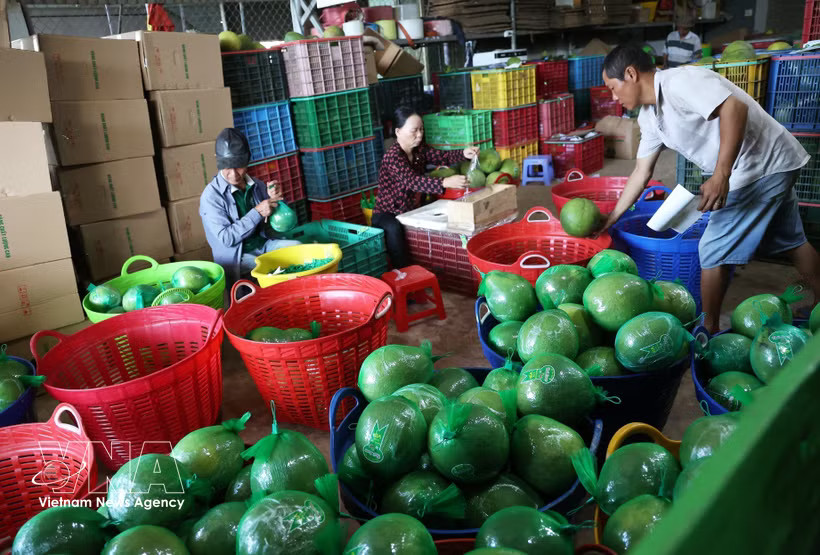
Vietnam’s fruit and vegetable exports topped 9.2 billion USD in the first 11 months of 2026, bringing the sector closer to the 10 billion USD full-year target and shifting the focus towards quality, standardised growing areas and the sustainable expansion of key export crops.
Demand broadens beyond China
Dang Phuc Nguyen, Secretary General of the Vietnam Fruit and Vegetable Association (Vinafruit), said November fruit and vegetable exports were estimated at 913.18 million USD, down 9.96% month on month but up 30.2% year on year. Imports rose 32.1% to nearly 3.3 billion USD, leaving a trade surplus of more than 5.9 billion USD.
China remains the dominant buyer, followed by the US, Japan, the Republic of Korea and the Netherlands. During January - October, shipments to China rose 20% to over 5.4 billion USD, exports to the US topped 556 million USD, up 22%; while Japan took more than 294 million USD, up 12%.
Durian remains the largest export earner. In the first nine months of 2026, the fruit brought home 3.45 billion USD, with about 3.3 billion USD going to China. Dragon fruit, banana, coconut and mango follow.
Banana is emerging as a new growth lever. Its nine-month exports fetched nearly 310 million USD, up 1.7% year on year. Vietnam has about 163,000ha of bananas, but exports were only nearly 420 million USD in 2025.
Banana growers and companies see a 1-2 billion USD annual export opportunity if 15-30% of the growing area is standardised. Better production processes and disease-resistant varieties that meet export standards will also be critical to lifting competitiveness.
To Van Huan from the Department of Plant Production and Protection said fresh and frozen durians are the standout products. Vietnam’s fresh and frozen durians are sold to 28 and more than 20 countries, respectively. Durian export value climbed from 177.7 million USD in 2021 to nearly 3.86 billion USD in 2025, or 45.1% of total overseas fruit and vegetable shipments.
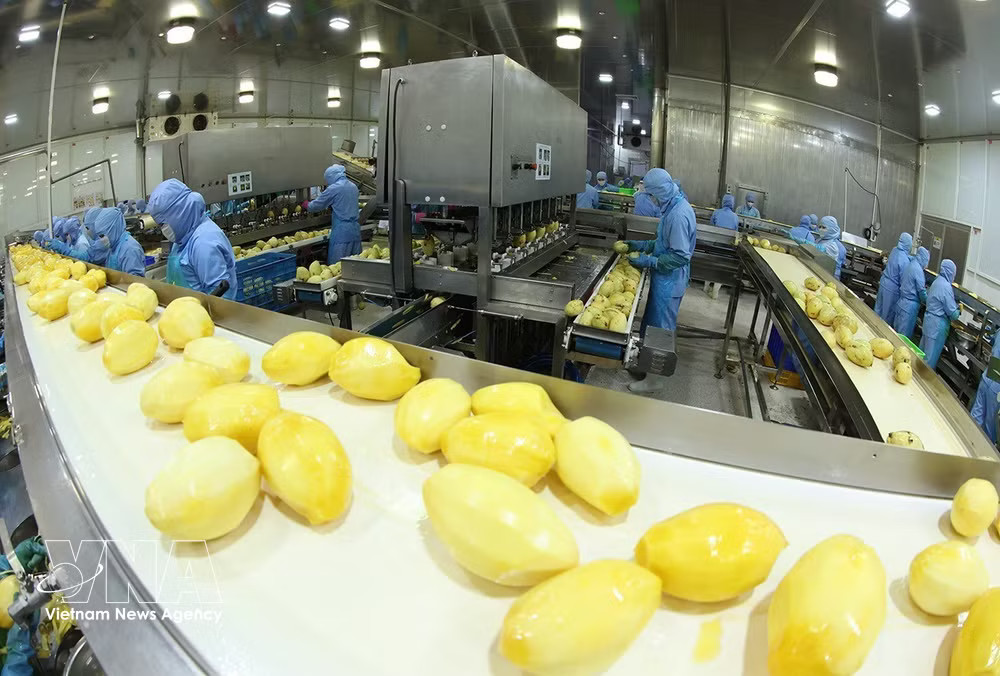
Durian quality and traceability test
As of November 2, 2026, Vietnam had 1,577 active durian growing-area and 274 packing-house codes, covering nearly 47,000ha and estimated output of about 1.175 million tonnes or 25 tonnes per ha.
The department asked the General Administration of Customs of China to approve an additional 576 growing-area and 303 packing-house codes. It also submitted remediation results for 86 growing-area and 83 packing-house codes flagged by China. Approval will strengthen the sector’s ability to meet import-market traceability rules.
The risk is structural. Durian production remains fragmented, poorly linked and overly dependent on China, while competition from Thailand, Malaysia and the Philippines is intensifying.
The department told localities to review durian areas and plan concentrated production zones linked to infrastructure, packing, preliminary processing and processing investment. The aim is to meet export requirements, especially traceability and control of heavy metals and chemicals.
Longer term, sustainable production, lower greenhouse gas emissions, market diversification and tougher negotiations with buyers will be essential to raise the value and competitiveness of Vietnamese durian and protect its position as the sector’s flagship export./.