

Prime Minister calls for modern, self-reliant and integrated oil and gas industry
To date, domestic crude oil production has reached 458.5 million tonnes, while total state budget contributions of the industry have amounted to approximately 3.1 quadrillion VND.
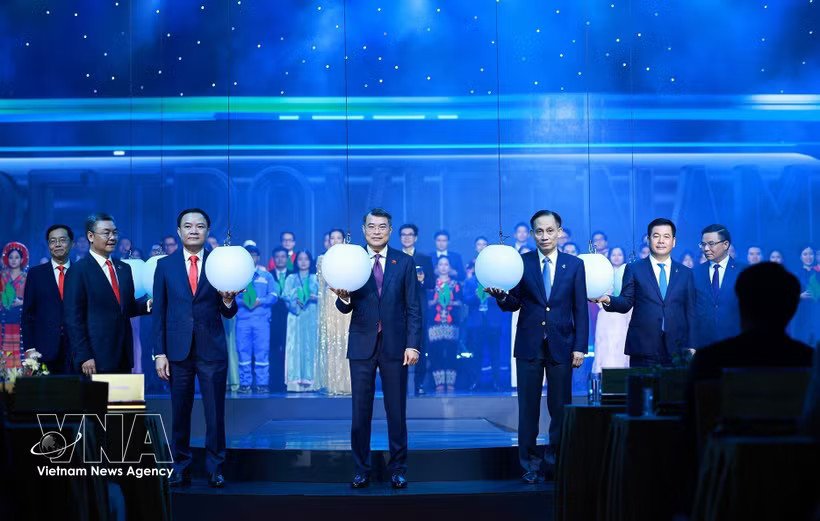
Hanoi (VNA) – Prime Minister Le Minh Hung has called for the development of a modern, integrated and self-reliant oil and gas industry which is capable of ensuring national energy security and supporting Vietnam's green energy transition.
Addressing a ceremony in Hanoi on November 26 marking the 65th anniversary of Vietnam's oil and gas industry (November 27, 1961–2026), PM Hung stressed that energy development must stay ahead of demand to serve socio-economic development, national defence and security, and improve people's living standards.
The ceremony, organised by the Vietnam National Industry – Energy Group (Petrovietnam), was attended by senior Party and State officials, representatives of ministries, sectors and localities, domestic and international partners, and generations of oil and gas workers.
Under the theme “65 Years of Petrovietnam: National Energy – Global Aspiration”, the event reviewed the industry's development and recognised the contributions of generations of workers to national construction and development.
In his address, PM Hung highlighted the industry's important role in Vietnam's economic development, particularly during the early years of the Doi Moi (Renewal) process, when oil and gas revenues provided vital resources to help the country overcome difficulties and fund development investment.
To date, domestic crude oil production has reached 458.5 million tonnes, while total state budget contributions of the industry have amounted to approximately 3.1 quadrillion VND, the government leader said.
He also emphasised the strategic importance of offshore oil and gas activities, which contribute not only to the marine economy but also to the protection of Vietnam's sovereignty, sovereign rights, jurisdiction and legitimate interests at sea in accordance with international law.
Petrovietnam has played a core role in developing oil and gas value chains, building the country's workforce and strengthening industrial capacity, he noted, adding that the group now faces greater responsibilities in ensuring national energy security, developing industry and supporting the green energy transition.
Against the backdrop of volatile international markets, intensifying technological competition and growing pressure to reduce emissions, PM Hung said Vietnam must make effective use of existing resources while preparing for future energy needs.
Oil and gas exploration and production should remain core activities, while the industry should gradually expand into new energy sectors based on national strengths, technological capabilities and long-term investment efficiency, he suggested.
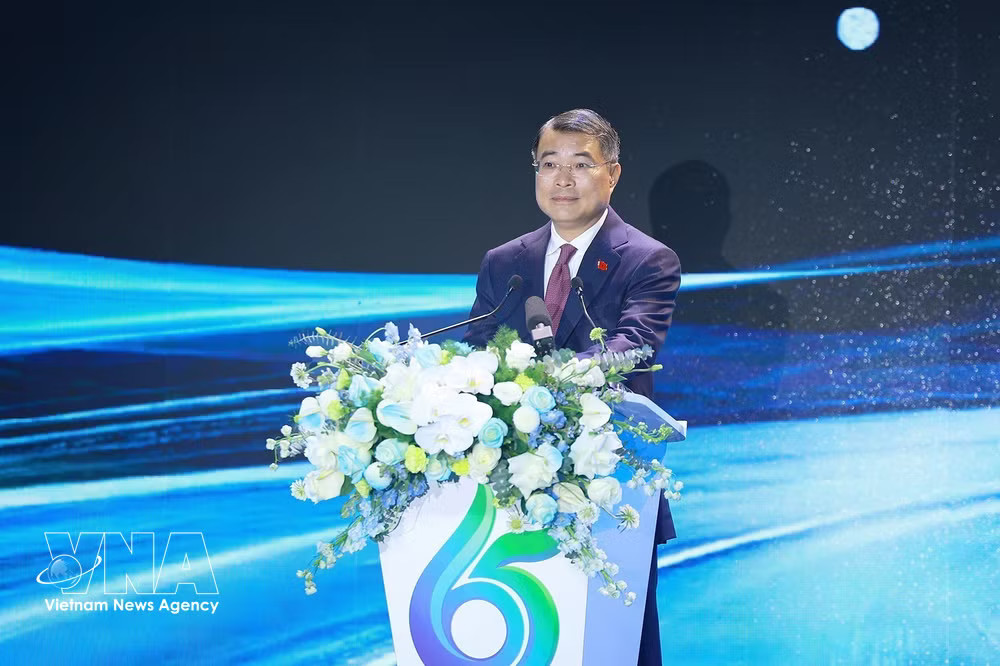
Referring to the Politburo's Resolution No. 70-NQ/TW on national energy security and Resolution No. 79-NQ/TW on the development of the state economic sector, as well as relevant conclusions of the Party Central Committee, the PM called for these policy orientations to be translated into concrete action programmes.
He urged the industry to strengthen basic surveys, exploration and production, increase reserves and make more efficient use of oil and gas resources, particularly in areas facing geological and technological challenges. International cooperation in exploration, production and petroleum storage should also be expanded, while oil and gas facilities must operate safely and reliably, the PM noted.
PM Hung also called for faster investment in the energy industry in association with the green transition, with priority given to key projects and infrastructure linking extraction, transport, processing and consumption.
He encouraged the development of offshore wind power, hydrogen and green ammonia production, as well as carbon capture, storage and utilisation technologies.
The PM stressed that projects must be carefully assessed in terms of market, technology, capital and overall efficiency, with strict control over costs, quality and implementation schedules.
He further called for breakthroughs in science and technology, innovation and human resource development, urging the industry to move beyond adopting existing technologies towards conducting research, innovation and mastering key technologies.
Artificial intelligence and big data should be applied more widely in management, oilfield operations, refining and petrochemical production, and value chain optimisation, he said, adding that Vietnam should also develop internationally competitive experts and engineers and participate more deeply in high-value segments of global energy supply chains.
PM Hung affirmed that the Government would continue supporting the industry and Petrovietnam in fulfilling their responsibilities.
He asked ministries, particularly the Ministry of Industry and Trade and the Ministry of Finance, to review and improve policies, strategies and plans, and prepare for the coordinated implementation of the 2026 Petroleum Law when it takes effect on March 1, 2027.
The government leader expressed his confidence that, building on its 65-year tradition, the industry would continue to grow under the orientation of “Pioneering – Outstanding – Sustainable – Global”, contributing to national development and safeguarding the country./.