

China, Vietnam join hands on path to prosperous development: Chinese scholar
Associate Professor Dr Chen Jihua suggested that Vietnam could take the initiative in designing programmes to promote Vietnamese culture in particular and the cultures of APEC economies in general, for example, by organising an APEC cultural week.
General Secretary of the Communist Party of Vietnam (CPV) Central Committee and President To Lam’s visit to China has contributed to building a Vietnam–China community with a shared future that carries strategic significance, according to a Chinese scholar.
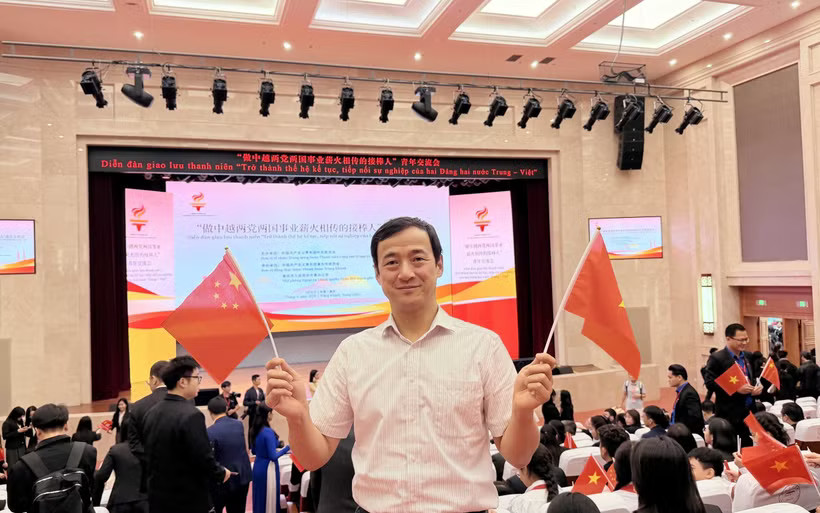
Associate Professor Dr Chen Jihua from Guangdong University of Foreign Studies made the assessment during an interview granted to a Vietnam News Agency (VNA) correspondent in China.
Chen said that during the visit, General Secretary and President Lam travelled to Guangdong and Yunnan provinces. In particular, his visit to the relic site of President Ho Chi Minh’s former residence in Kunming, Yunnan province, helped rekindle pride among the peoples of both countries in the traditional friendship between the two Parties and the two countries, characterised by their close bonds as “both comrades and brothers”.
From an international perspective, Chen said Vietnam showcased its achievements and development orientations to a large number of international partners, thereby strengthening the international community’s confidence in the country’s business environment and future development prospects.
Commenting on General Secretary and President Lam’s speech at the handover ceremony for the role of host of the 2027 Asia-Pacific Economic Cooperation (APEC) Forum, the scholar highlighted that the Vietnamese leader reviewed the country’s 40-year Doi Moi (Renewal) process, analysed three strategic orientations that APEC should promote, outlined Vietnam’s new development model in the new era, and introduced the country as host of APEC 2027.
Chen said he is delighted to witness the remarkable strides in Vietnam’s economy. In his view, the “good neighbourliness” embodied in the spirit of the “four goods” in Vietnam–China relations carries two meanings: first, the two neighbouring countries maintain good relations, and second, both have good economies.
He expressed particular appreciation for the fact that General Secretary and President Lam opened his speech by speaking highly of China’s outstanding development achievements in general and those of Shenzhen in particular. He expressed confidence that China and Vietnam will stand side by side on the path towards prosperous development.
Regarding Vietnam’s expected contributions during its APEC Year 2027, Chen said that “promoting the soft power of culture” is a noteworthy point in the Vietnamese leader’s speech. In his view, this could also become one of the achievements of Vietnam’s hosting of APEC next year.
He suggested that Vietnam could take the initiative in designing programmes to promote Vietnamese culture in particular and the cultures of APEC economies in general, for example, by organising an APEC cultural week.
As a lecturer specialising in Vietnamese language and a scholar whose research focuses on the history of Vietnamese vocabulary, Chen expressed his hope that Vietnam will initiate several events to promote the soft power of culture within the APEC framework. These could include youth and student exchanges, exchanges on languages and literature, as well as bilateral and multilateral exchanges involving cinema and feature films among APEC economies.
The vision on soft power is itself an expression of Vietnam’s soft power, he noted./.