

PM calls for full mobilisation of resources to achieve double-digit growth
Addressing a meeting with voters in Hai Phong city, Prime Minister Le Minh Hung stressed that the Government will mobilise resources through public investment, state budget revenue, bond issuance, domestic and foreign investment, capital and securities markets, the equitisation of state-owned enterprises and the development of the international financial centre.
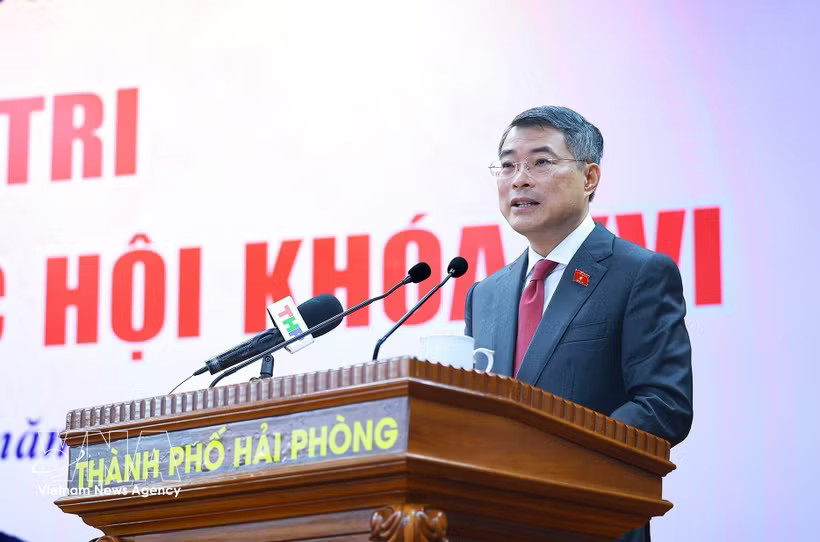
Hai Phong (VNA) - Prime Minister Le Minh Hung on November 23 called for the full mobilisation of resources from all sectors of the economy to achieve the country’s double-digit growth target, stressing the need to use capital efficiently, remove development bottlenecks and build growth scenarios well in advance.
Addressing a meeting with voters in Hai Phong city, PM Hung stressed that the Government will mobilise resources through public investment, state budget revenue, bond issuance, domestic and foreign investment, capital and securities markets, the equitisation of state-owned enterprises and the development of the international financial centre.
He emphasised that resources must be allocated and used effectively, with specific growth scenarios and responsibilities assigned to ministries, sectors and localities. These plans should be regularly updated and adjusted in response to changing circumstances.
The PM expressed his appreciation for the voters’ constructive and responsible contributions, noting that many of their recommendations address not only Hai Phong’s development but also national issues. Such opinions, he said, are valuable to the National Assembly’s legislative and supervisory work and to the country’s development.
He said that the second session of the 16th National Assembly, held after the fourth plenum of the Party Central Committee, focused on lawmaking and translating the Party’s strategies and policies into legislation, and addressing urgent practical issues. The overarching goal was to promote development for the people, improve their material and spiritual lives, ensure national defence and security, and strengthen foreign affairs.
According to the Government leader, the session’s legislative work helps ensure consistency across the policy system and improve the development environment and public services, with the focus on unlocking and mobilising resources, decisively removing bottlenecks and creating an institutional framework for a new stage of development.
The NA adopted and discussed important laws concerning data security, electronic identification and authentication, intellectual property, land, housing, real estate business, small- and medium-sized enterprise development, the state budget and investment. It also considered measures to address infrastructure constraints, improve regional connectivity and advance key transport projects.
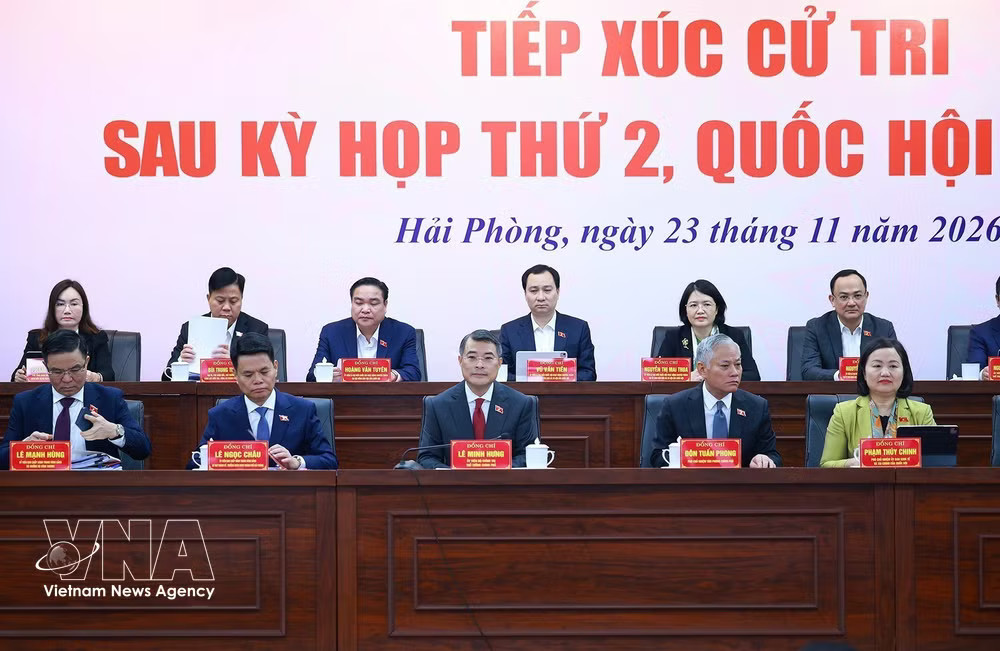
The Government, meanwhile, has issued guidance within its authority and worked to resolve overlapping and conflicting regulations, improve the investment and business climate and enhance the quality of public services, particularly at the grassroots level.
Despite global uncertainties and disruptions to energy supply chains that have put pressure on prices, the Government has pursued flexible and decisive measures to stabilise the currency and control inflation. In the first 10 months of 2026, tax, fee and land-rent exemptions, reductions and extensions worth more than 366 trillion VND (14.18 billion USD) were provided to support people and businesses.
The economy grew by 9.01% in the first nine months of the year, while total social investment reached approximately 3.11 quadrillion VND, up 15.1%. Public investment disbursement exceeded 708 trillion VND, equivalent to more than 74% of the annual plan. Foreign direct investment reached nearly 55 billion USD, up 74%, while disbursed FDI topped 24 billion USD.
For the first time, Vietnam’s total import-export turnover surpassed 1 trillion USD. State budget revenue in the first 10 months was estimated at more than 2.4 quadrillion VND, or 96.4% of the annual estimate.
The Prime Minister said the Government will prioritise foundational and supporting industries, energy, materials, electronics and semiconductors, while promoting high-tech agriculture linked with processing, consumption and market expansion. Trade, services, tourism and logistics will also be developed, alongside export market diversification.
Science and technology, innovation and digital transformation will be accelerated, with a focus on strategic and core technologies to raise productivity and competitiveness and reduce costs for businesses and citizens.
He stressed that growth must go hand in hand with macroeconomic stability, inflation control, secure supplies of essential goods and social welfare.
The Government will also urgently issue comprehensive guidance for implementing laws and NA resolutions to prevent delays that could obstruct production and business activities. Further decentralisation and delegation of authority will be accompanied by adequate resources and stronger implementation capacity, particularly at commune and ward levels.
Responding to voters’ recommendations, PM Hung pledged that the Government will seriously consider their proposals and address matters within its authority, with specific progress and results reported through the city delegation to the National Assembly.
Regarding Hai Phong, the Prime Minister acknowledged the city’s positive contributions to national growth and urged it to strive to exceed targets for growth, exports, budget revenue, public investment, industry and business development.
He called for faster administrative reform, timely resolution of business difficulties, accelerated implementation of major projects and stronger infrastructure connectivity, including ports, airports and logistics. Hai Phong should also raise domestic value added, help local enterprises participate more deeply in supply chains and support household businesses in their transition.
He urged the city to invest more in culture, education, healthcare, social housing and accommodation for workers to ensure balanced and sustainable development.
PM Hung expressed his confidence that ministries, sectors and localities, including Hai Phong, will continue to implement newly adopted laws and policies effectively, while calling on voters to maintain their constructive contributions to the country’s and the city’s development./.