

More than 27,000 police officers trained in investigating, tracing and recovering crypto-assets
On 13 November 2026, in Ha Noi, acting on the direction of Senior Lieutenant General Nguyen Van Long, Member of the CPV Central Committee, Deputy Minister of Public Security and Head of the Criminal Investigation Police Agency, the Office of the Criminal Investigation Police Agency of the Ministry of Public Security (MPS) held the Conference on Enhancing Skills in Investigating, Collecting Documents and Evidence, Analyzing Blockchain Data, and Tracing and Recovering Cryptocurrency in Criminal Cases.
The conference was held in person at the MPS Conference Hall and connected online to police units, localities and communal police across the country. Lieutenant General Tran Minh Tien, Chief of the Office of the MPS Criminal Investigation Police Agency and Standing Deputy Head of the MPS Criminal Investigation Police Agency, chaired the conference and delivered the opening and guiding remarks, authorized by the MPS leadership.
The conference aimed to strengthen the capacity of the People's Public Security Forces to investigate, detect, trace and recover crypto-assets linked to criminal cases. It also demonstrated the MPS's determination to combat high-tech crime, especially the misuse of crypto-assets to launder money, conceal the origin of assets and carry out illegal financial activities. In doing so, it contributed to more effective anti-money laundering and counter-terrorist financing work, stronger international cooperation, and the protection of national financial and monetary security.
What was new about this conference was that, for the first time, the training brought in a range of new in-depth knowledge, together with updated lessons learned and international best practices in combating crypto-asset-related crimes. The participants not only listened to presentations; they also worked through hypothetical scenarios simulated with technology. This visual, hands-on approach helped police officers absorb knowledge, practice tracing money flows and recovering assets, and apply these skills in their work.
More than 27,300 leaders, commanders, investigators, detectives and officers directly engaged in investigating and handling crime took part, from MPS operational departments; the leadership, lecturers and students of People's Public Security academies and schools; provincial and municipal police; and communal police. Representatives of the International Criminal Police Organization (INTERPOL) and the State Securities Commission, together with Vietnamese and international experts, organizations and businesses from the Republic of Korea, the United States, Switzerland and Singapore, took part and gave presentations.
Preventing criminals from the misuse of blockchain to conceal and dissipate assets
Opening the conference, Lieutenant General Tran Minh Tien emphasized that, amid global digital transformation, cyberspace is becoming a “new strategic space” that poses ever greater challenges to safeguarding security and order and to preventing and combating crime.
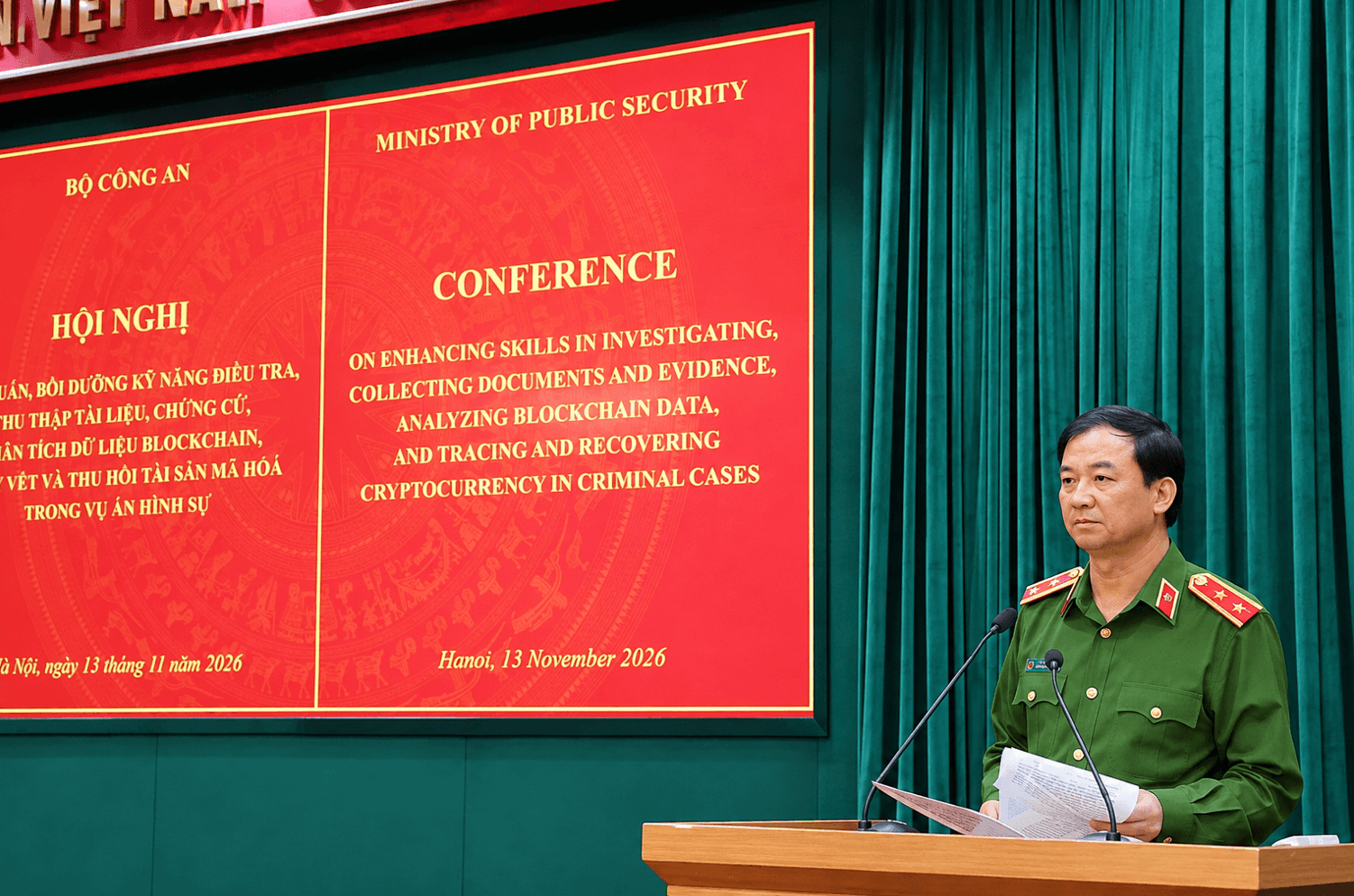
According to Lieutenant General Tran Minh Tien, the rapid development of blockchain technology and crypto-asset trading brings benefits and potential, but it is also being exploited by criminals to commit offenses, conceal the origin of assets and dissipate them.
High-tech crime, online fraud, gambling, organizing gambling and transnational money laundering are developing in complex ways, both worldwide and in Viet Nam, with increasingly sophisticated methods and tactics.
In particular, the emergence of decentralized exchanges (DEXs), coin mixers and cross-chain transaction techniques has made it harder to detect, verify and trace illicit money flows.
Proceeds from fraud, corruption and online gambling can quickly be converted into crypto-assets and then moved through many wallet addresses, trading platforms and countries, which makes them hard to control with traditional financial methods.
According to the leadership of the MPS Criminal Investigation Police Agency, this situation not only causes heavy financial losses to citizens and businesses, but also harms national financial and monetary security and public security and order.
In response to these practical demands, Lieutenant General Tran Minh Tien called on investigative forces and relevant units to focus on five key tasks to fight crime that exploits blockchain technology and crypto-assets more effectively.
First, the competent forces must proactively monitor the situation, identify criminal methods and tactics, and promptly detect the individuals, organizations and intermediary networks that facilitate illegal activity.
During investigations, they must urgently identify the wallet addresses, trading accounts, exchanges and platforms involved, and establish the origin of the assets, how they were acquired and moved, the intermediary transactions and the final destination of the funds.
In particular, Lieutenant General Tran Minh Tien required that the actual persons who create, manage, use and control the crypto-assets be verified, including where the funds have been moved across multiple blockchain networks, mixing services or cross-border platforms.
Another important requirement stressed by the leadership of the MPS Criminal Investigation Police Agency is to ensure the objectivity, integrity and authenticity of electronic evidence.
“Blockchain data analysis results must not automatically be treated as the sole basis for determining a person’s identity or control over assets; they must be combined with other documents, evidence and verification results to corroborate and clarify the facts,” Lieutenant General Tran Minh Tien emphasized.
This is an important principle in investigative work: although blockchain transaction data can help follow the trail of assets as they move, it still has to be checked against other evidence to establish precisely who committed the acts and the legal liability of each person.
On asset recovery, Lieutenant General Tran Minh Tien called for particular attention to tracing assets, preventing their dissipation and recovering them during the investigation itself, so that delays do not make freezing and seizure more difficult.
For assets moved to or held on cross-border platforms, the competent forces need to proactively identify points of contact and cooperation mechanisms with foreign law enforcement agencies and service providers, so that freezing, seizure and recovery measures can be taken promptly in accordance with the law.
At the same time, coordination needs to be stepped up among units inside and outside the People’s Public Security Forces, state management agencies, crypto-asset service providers and international law enforcement agencies.
INTERPOL experts and international organizations share experience in tracing crypto flows
A notable feature of the conference was the participation of experts and representatives of international organizations and companies experienced in blockchain data analysis, cybercrime investigation and digital asset recovery.
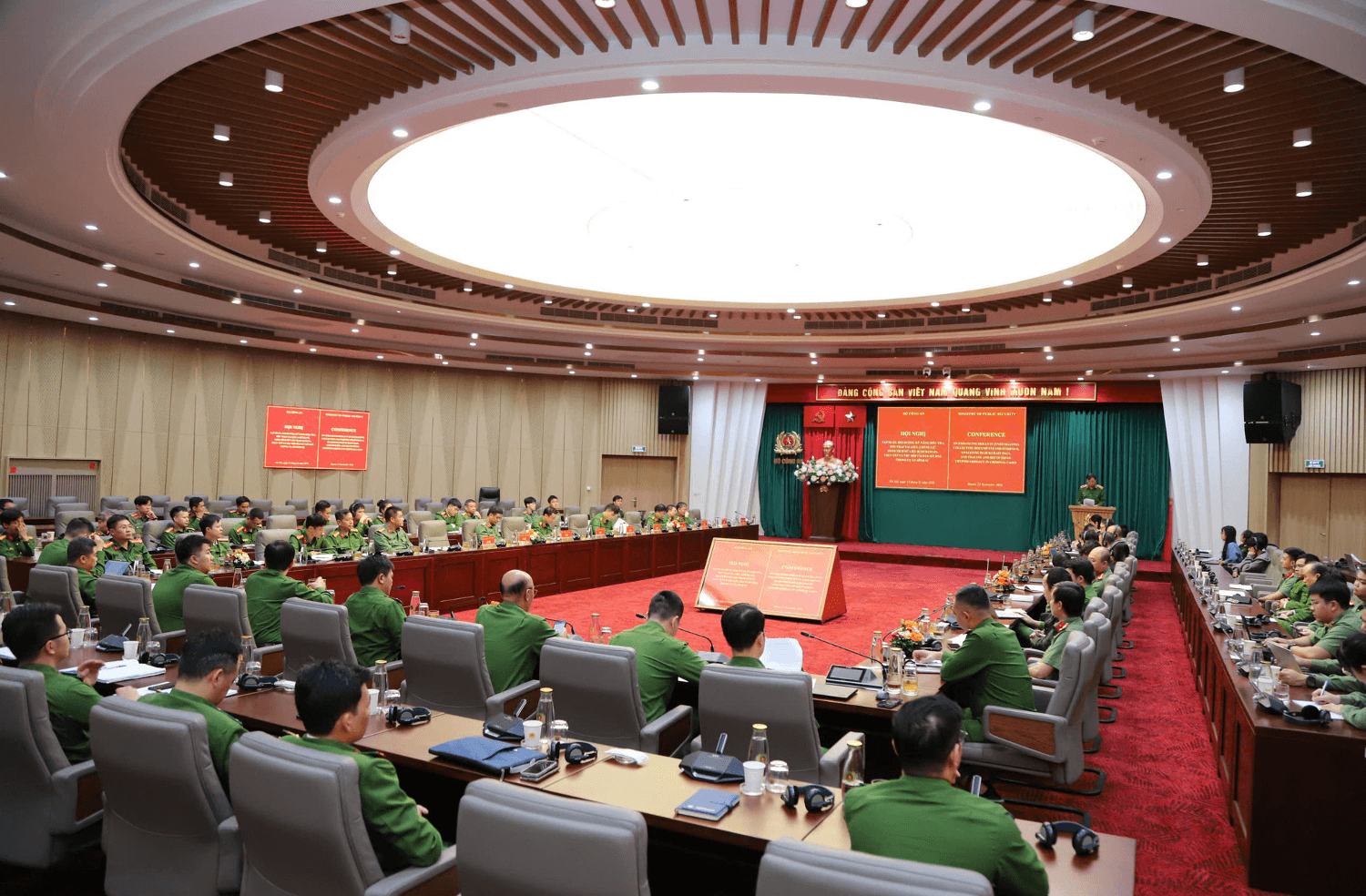
The one-day training program comprised seven sessions, covering knowledge, skills and professional methods from basic to advanced.
Mr Ngo Minh Hieu, senior on-chain data analyst at TRM Labs (United States), introduced the fundamentals of blockchain and Web3 and how popular networks such as Bitcoin, Ethereum, USDT/TRC20 and BEP20 work.
The in-depth sessions also covered the pseudonymous, address-based nature of blockchain transactions, techniques for obfuscating money flows, the use of custodial and self-custodial wallets, and methods for tracing transactions across crypto-asset networks.
From a legal perspective, Mr To Tran Hoa, Standing Deputy Head of the Crypto-Asset Trading Market Management Board, State Securities Commission, presented issues to note when investigating, collecting evidence and recovering crypto-assets.
A representative of Upbit, the Korean exchange, shared experience in detecting suspicious transactions, preserving evidence and working with law enforcement agencies in crypto-asset cases.

Notably, Colonel Dinh Thi Thu Thuy, INTERPOL Cybercrime Operations Coordinator; Head of Division, Office of the MPS Criminal Investigation Police Agency, presented a session on collecting electronic data across borders as a source of evidence in criminal proceedings.
A representative of VerifyVASP (Singapore) introduced the Travel Rule, which helps identify the virtual asset service providers involved in a transaction and supports information sharing for cross-border investigations.
Experts from zeroShadow (United States) shared approaches to preventing, detecting and responding to crypto-asset incidents, especially techniques for rapidly tracing stolen assets and working with exchanges to prevent further losses.
A representative of Recoveris (Switzerland) focused on advanced blockchain forensics, identifying where funds end up, and the cross-border freezing, seizure and recovery of crypto-assets.
Alongside the theoretical sessions, the conference held group exercises on investigating and tracing cryptocurrency in a fraud case, giving participants first-hand experience of real operational situations.
In his guiding remarks, Lieutenant General Tran Minh Tien asked the international experts to focus on sharing experience in working with exchanges, virtual asset service providers and law enforcement agencies on cross-border cases, especially data preservation and the freezing, seizure and recovery of assets.
The leadership of the MPS Criminal Investigation Police Agency required trainees to study seriously, engage actively in discussion, and take full part in the operational scenarios and practical exercises, so as to apply what they learned appropriately in investigative work in accordance with Vietnamese law.
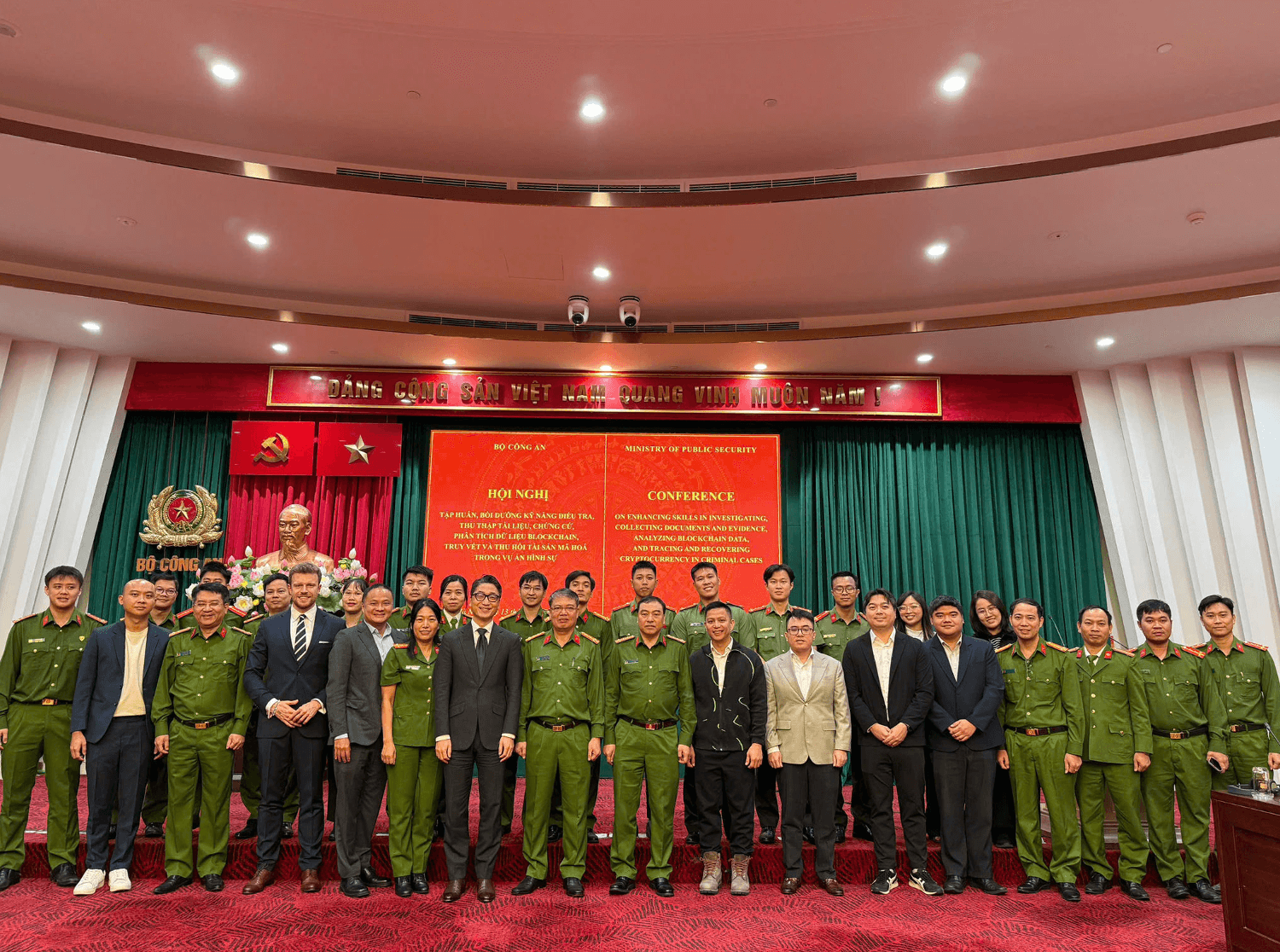
The conference was a professional initiative to strengthen the People’s Public Security Forces’ capacity to detect and investigate crime, analyze blockchain data and trace crypto-assets, while fostering the exchange of experience and international coordination in combating high-tech crime.
Because cryptocurrency funds can move rapidly across many platforms and countries, it is essential to combine traditional investigative capabilities with blockchain analytics tools and cross-border coordination mechanisms in order to either combat crimes more effectively or recover assets for victims.