

Vietnam, Philippines join hands for more effective ASEAN parliamentary diplomacy
Over the 50 years since the establishment of diplomatic relations and the 10 years since the two countries began implementing their Strategic Partnership, Vietnam and the Philippines have continuously strengthened trust, expanded exchanges and broadened cooperation across various fields. Parliamentary cooperation has also continued to deepen, with three notable areas of progress.
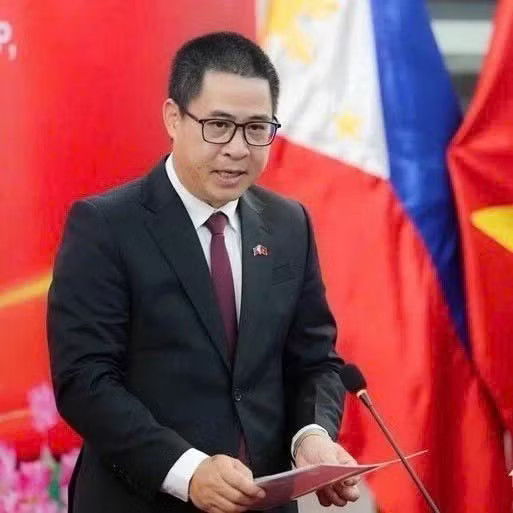
Hanoi (VNA) – Through bilateral cooperation and coordination within the ASEAN Inter-Parliamentary Assembly (AIPA), Vietnam and the Philippines are contributing not only to stronger ties between their legislative bodies but also to the development of an increasingly proactive, substantive and effective form of ASEAN parliamentary diplomacy, more closely integrated with the process of building the ASEAN Community, said Vietnamese Ambassador to the Philippines Lai Thai Binh.
Speaking to the Vietnam News Agency (VNA) ahead of National Assembly President Tran Thanh Man's trip to the Philippines for attendance at the 47th AIPA General Assembly in Manila from November 17 - 18, Binh described cooperation between the Vietnamese National Assembly, and the Philippine Senate and House of Representatives as an important component of, and a driving force behind the Vietnam-Philippines friendly and comprehensive cooperation.
Over the 50 years since the establishment of diplomatic relations and the 10 years since the two countries began implementing their Strategic Partnership, Vietnam and the Philippines have continuously strengthened trust, expanded exchanges and broadened cooperation across various fields. Parliamentary cooperation has also continued to deepen, with three notable areas of progress.
First, the two sides have maintained and promoted exchanges and contacts between their leaders and parliamentarians. In November 2022, the Philippine House of Representatives adopted a resolution establishing the Philippines-Vietnam Parliamentary Friendship Group, while the Philippine Senate passed another recognising and promoting inter-parliamentary cooperation between the two countries. These resolutions provided an important basis for maintaining contacts, exchanging information and advancing cooperation initiatives among parliamentarians.
Second, the two countries have strengthened exchanges of experience in legislation, supervision and policymaking. The Vietnamese National Assembly and Philippine legislative bodies share common interests and policy concerns in areas including socio-economic development, improving the quality of human resource training, ensuring food security, developing agriculture and the marine economy, digital transformation and responding to climate change.
Sharing experience in developing and refining legal systems and overseeing policy implementation helped improve the performance of each legislature while creating a favourable legal framework for bilateral cooperation. A notable example was the visit to Vietnam by the Second Congressional Commission on Education (EDCOM 2) from March 21 - 24, 2024, to study and exchange experience.
Third, Vietnam and the Philippines have actively coordinated at regional and international parliamentary forums, particularly AIPA. As active and responsible AIPA members, the two countries have regularly exchanged views, coordinated their positions and supported initiatives serving ASEAN’s common interests, with the aim of strengthening solidarity, upholding ASEAN centrality and advancing the building of the ASEAN Community.
Such coordination is particularly important as the region faces multiple interconnected challenges requiring member states to enhance dialogue, build trust and seek common ground, the Ambassador said.
He noted that these achievements have gained further significance since June 1, 2026, when the two countries officially upgraded their relations to an Enhanced Strategic Partnership during the state visit to the Philippines by General Secretary of the Communist Party of Vietnam Central Committee and President To Lam.
Their joint statement highlighted the need to establish new cooperation mechanisms between their legislative bodies, strengthen bilateral and multilateral interactions, and promote information-sharing and exchanges of experience. This provides important political direction, a framework and fresh momentum for parliamentary cooperation to develop in line with the stature of bilateral relations.
Looking ahead, he expressed confidence that parliamentary cooperation between Vietnam and the Philippines will develop positively, particularly following the upgrade of bilateral relations to an Enhanced Strategic Partnership, which provided a new foundation and impetus for expanding cooperation across all fields.
At the bilateral level, the two sides are expected to increase exchanges at all levels, particularly between legislative leaders, specialised committees and friendship parliamentary groups. They are also expected to study the establishment and further development of regular exchange mechanisms between the Vietnamese National Assembly and the Philippine Senate and House of Representatives.
Such mechanisms will enable the two sides to share experience in legislation, supervision and decision-making on major national issues, while coordinating efforts to refine legal frameworks and facilitate the implementation of cooperation agreements between the two governments.
The legislative bodies are also hoped to promote cooperation in areas of strategic importance and practical mutual benefit, including the marine economy, maritime security, food security, trade, investment, digital transformation, science and technology, education and people-to-people exchanges.
In particular, they should continue to promote the role of parliaments in fostering common understanding, consolidating trust and supporting dialogue and cooperation mechanisms to maintain peace, stability, maritime security and safety in the East Sea on the basis of international law, particularly the 1982 United Nations Convention on the Law of the Sea (UNCLOS), he said.
At the multilateral level, Vietnam and the Philippines are expected to maintain close coordination within AIPA and at other international inter-parliamentary forums, contributing to stronger ASEAN solidarity, unity and centrality. The two countries share common interests in promoting multilateralism, upholding international law, peacefully settling disputes and addressing traditional and non-traditional security challenges.
Binh highlighted the potential for parliamentary cooperation to support the implementation of the ASEAN Community Vision 2045, particularly by translating regional goals and commitments into concrete national policies, laws and actions.
Digital transformation, artificial intelligence, green development, climate change response, cybersecurity, combating transnational crime and strengthening people's adaptive capacity should remain key areas of cooperation, the diplomat said.
He expressed confidence that, underpinned by friendly relations, political trust and the determination of the two countries’ leaders, parliamentary cooperation between Vietnam and the Philippines would continue to grow stronger and become more substantive and effective, serving the interests of both countries' people while contributing to ASEAN’s shared peace, stability, solidarity and prosperity./.