

Lawmakers scrutinise draft Law on Cultural Industry Development
Lawmakers backed the need for the law, saying that it will fully institutionalise the Politburo’s Resolution 80-NQ/TW on Vietnamese cultural development and create a legal corridor for the cultural industry ecosystem and value chain.
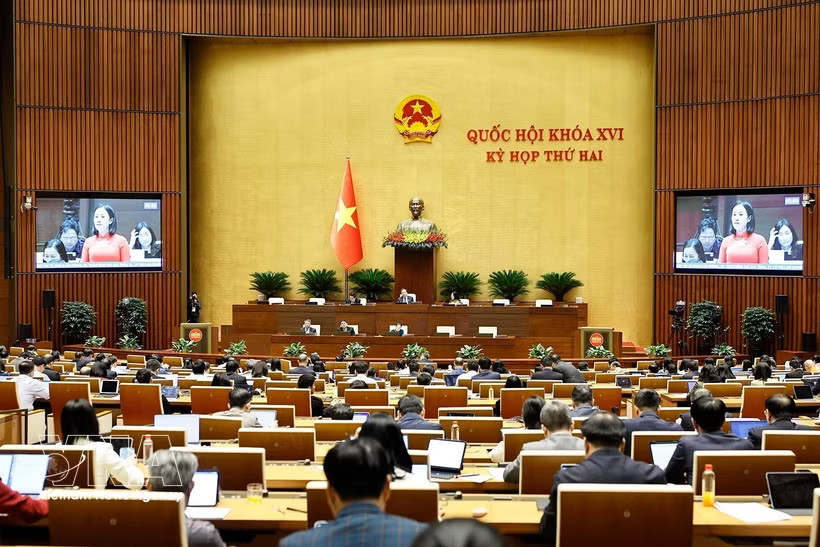
Hanoi (VNA) – The 16th National Assembly debated a draft Law on Cultural Industry Development in plenary in Hanoi on November 10 during its ongoing second session.
Lawmakers backed the need for the law, saying that it will fully institutionalise the Politburo’s Resolution 80-NQ/TW on Vietnamese cultural development and create a legal corridor for the cultural industry ecosystem and value chain.
Rethinking cultural development
Deputy Vuong Quoc Thang from Da Nang city said the drafting agency must sharpen policies to extract more economic value from cultural assets built over thousands of years of national history.
On intellectual property (IP), Thang said value in the creative economy sits in creative content, IP rights and commercial exploitation. He welcomed draft tools to support IP establishment, protection and commercialisation, especially online, but called for tighter consistency with IP law and clearer measures to spur transactions in IP rights and cultural products.
No guardrails risk culture-cloaked real estate
Deputy Le Hoang Anh from Gia Lai province urged an initial focus on electronic games and digital content; cinema and television; and music, performances and events. These three spearheads, he said, are the major engines.
He proposed tax incentives only for key products meeting statutory criteria, with recognition at the national level.
Besides, the designation of zones or clusters eligible for such incentives should be determined by the Government and concentrated in a select number of urban areas that already possess an established ecosystem, meet minimum thresholds for innovation-related space and activity, and are subject to a mechanism for the revocation of incentives, he added.
Deputy Trinh Xuan An from Dong Nai city said the draft must clearly identify priority sectors and policies to create growth momentum.
He called for a clearer definition of cultural industry, warning against an interpretation that products must have all creative culture, technology and IP rights.
Focusing on competitive products
Minister of Culture, Sports and Tourism Lam Thi Phuong Thanh said the ministry will review and revise the scope and application rules to cover all activities and entities in cultural industry development, including relevant foreign entities and individuals.
She said tax, credit, land, public-private partnership and public asset policies are designed to pool investment efficiently, with incentives for products carrying Vietnamese cultural value and identity and key products so that resources will concentrate on competitive, high-spillover products, turning cultural industry into a major economic sector and spreading Vietnamese cultural values.
On supporting creativity and IP rights in cultural industries, Thanh said the draft adds concepts regarding software for creative purposes and digital IP-support platforms, with a direction toward providing software and platforms free of charge.
On priority sectors, she said the new law sets a legal framework for 10 cultural industry sectors. The Government will then select and decide priority sectors for development in each specific period./.