

Tourism development linked to higher incomes for local residents
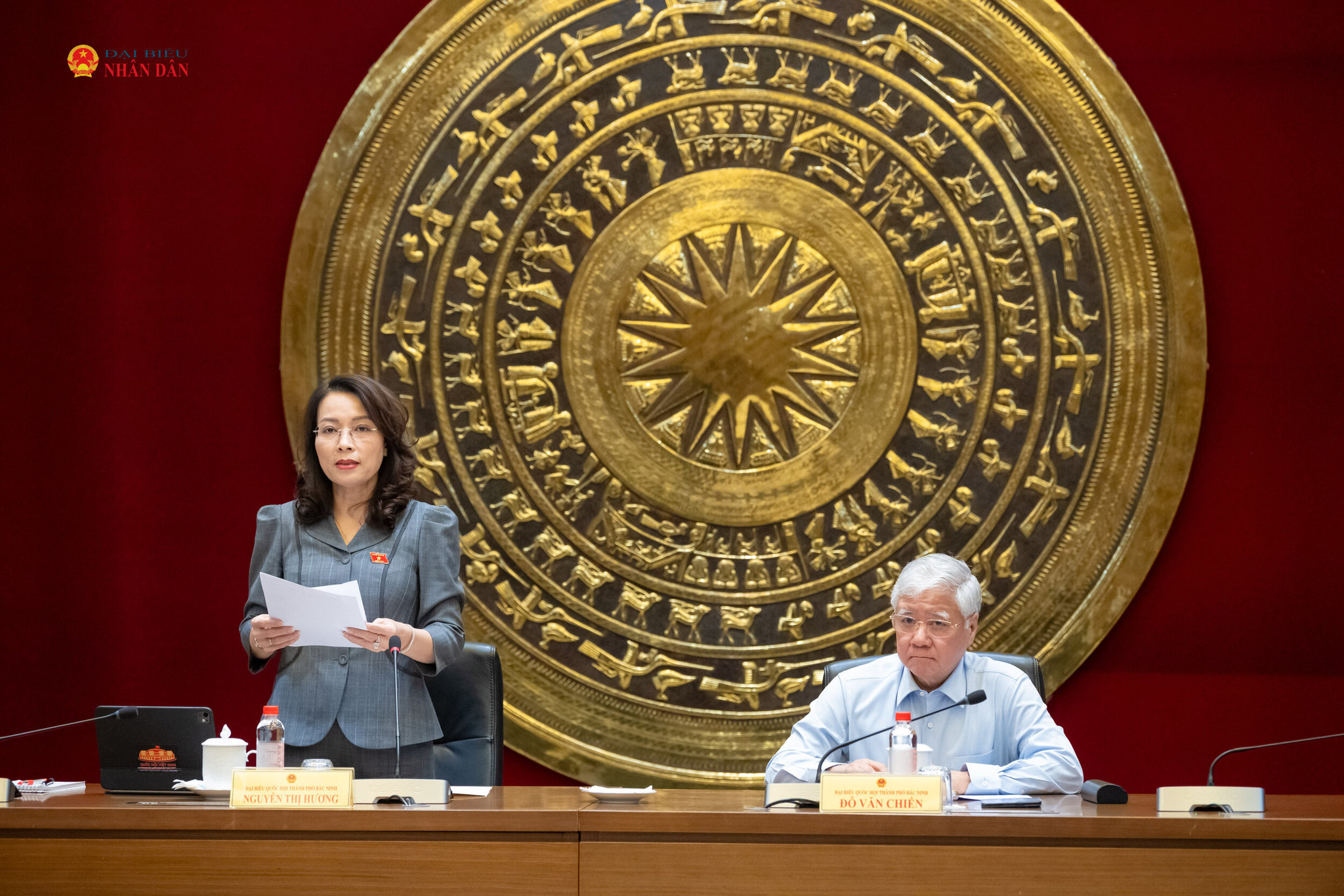
During a group discussion involving National Assembly deputies from Bac Ninh City and Lam Dong Province (Group 7), lawmakers proposed a range of measures to promote tourism development alongside expanding markets for agricultural products, increasing their value and improving local residents’ incomes.
Tapping the potential of cruise tourism
The National Assembly’s resolution on special mechanisms and policies for Vietnam’s tourism development should not only translate the Politburo’s Resolution No. 26-NQ/TW on developing tourism into a key economic sector into concrete action, but also serve as a measure to implement Resolution No. 20-NQ/TW on building and developing Vietnam into a strong maritime nation.
This was the proposal made by National Assembly deputy Pham Thi Hong Yen (Lam Dong Province).
According to deputy Pham Thi Hong Yen, Resolution No. 20-NQ/TW identifies the development of a maritime economy and a distinctive maritime culture as essential foundations, endogenous resources and soft power for a maritime nation. It also emphasizes building prosperous coastal and island communities, developing a strong maritime nation, opening up new maritime spaces and nurturing the ambition to reach out to the wider oceans.
She noted that the resolution sets a target of achieving average annual growth of 14% in total marine tourism revenue. This is directly relevant to marine tourism and the broader development of the maritime economy, as well as to Resolution No. 26-NQ/TW.
Citing statistics, the deputy said global cruise tourism revenue reached US$218 billion in 2026 and is projected to rise to US$401 billion by 2035, representing a compound annual growth rate of around 7%.
Countries such as China, Japan, Singapore, India and Thailand, as well as other ASEAN members, have increasingly invested in and prioritized cruise tourism, generating significant economic benefits.
In Vietnam, however, according to the Vietnam National Authority of Tourism, cruise tourism revenue stood at just US$410 million in 2023, compared with US$10 billion across ASEAN countries.
Against this backdrop, Pham Thi Hong Yen proposed that the draft National Assembly resolution on special mechanisms and policies for tourism development should include provisions specifically addressing cruise tourism. These should clearly outline mechanisms and policies for workforce training, as well as measures to capitalize on the country's maritime advantages.
Facilitating entry, exit and residence for international visitors
Highlighting the importance of high-tech and ecological agriculture, alongside the preservation of local cultural identity, National Assembly deputy Tran Thi Oanh (Lam Dong Province) proposed that Article 2 of the draft resolution should place greater emphasis on linking tourism development with higher incomes for local residents and the conservation of indigenous natural resources. She noted that the current draft focuses primarily on benefits for investors and businesses.
Under Clause 5, Article 3 of the draft resolution, support for community-based tourism is currently focused on mountainous areas inhabited by ethnic minority communities. Deputy Tran Thi Oanh argued that clearer criteria are needed to identify areas with potential for agricultural and eco-tourism linked to agricultural production, since not all areas with such potential are located in disadvantaged regions.
She also proposed adding cooperatives, cooperative groups and household businesses as direct beneficiaries of support under Clause 6, Article 5. Such support would help them develop OCOP products that reflect local characteristics, enabling tourism to expand market access for agricultural products, increase their added value and improve residents' incomes.
National Assembly deputy Do Thi Viet Ha (Bac Ninh City) focused on policies to support tourism workforce development.
Under Clause 1, Article 8, the draft resolution proposes prioritizing funding from national target programs for tourism skills training and capacity building for rural workers, ethnic minority communities and workers in remote, border and island areas.
However, National Assembly Resolution No. 46/2026/QH16, which approved the investment policy for the National Target Program on Cultural and Social Development, Rural Areas, Ethnic Minorities and Mountainous Regions for 2026–2035, has already established clear principles for allocating State budget resources.
These principles require investment to be focused and targeted rather than fragmented or spread too thinly, with the highest priority given to particularly disadvantaged communes and villages, ethnic minority and mountainous areas, border security zones and islands.
Deputy Do Thi Viet Ha therefore called on the drafting agency to reconsider the necessity of the proposed provision and clarify how funding priorities would align with the implementation of the national target program. The ultimate goal, she stressed, must be to ensure adequate resources, feasibility and responsiveness to practical needs.
Regarding Article 9 of the draft resolution, which provides for special visa policies to facilitate entry, exit and residence for international tourists, she said the provisions remain too general and lack clear implementation mechanisms.
She called for further work to translate the orientations set out in Resolution No. 26-NQ/TW into specific, feasible policies that would make entry, exit and residence procedures more convenient for international visitors.
On the proposed study of a controlled pilot mechanism for entry visas and residence arrangements for foreign nationals working remotely, who could stay for extended periods and contribute to the tourism economy while ensuring national defence and security, deputy Do Thi Viet Ha urged the drafting agency to clarify what such a controlled pilot mechanism would entail.
She pointed out that the provision, as currently worded, does not establish a legally binding rule but merely describes an implementation activity. If the policy has not yet been sufficiently developed or clearly defined, she suggested that it should be excluded from the draft resolution.