

Profound lessons on the People’s right to exercise power
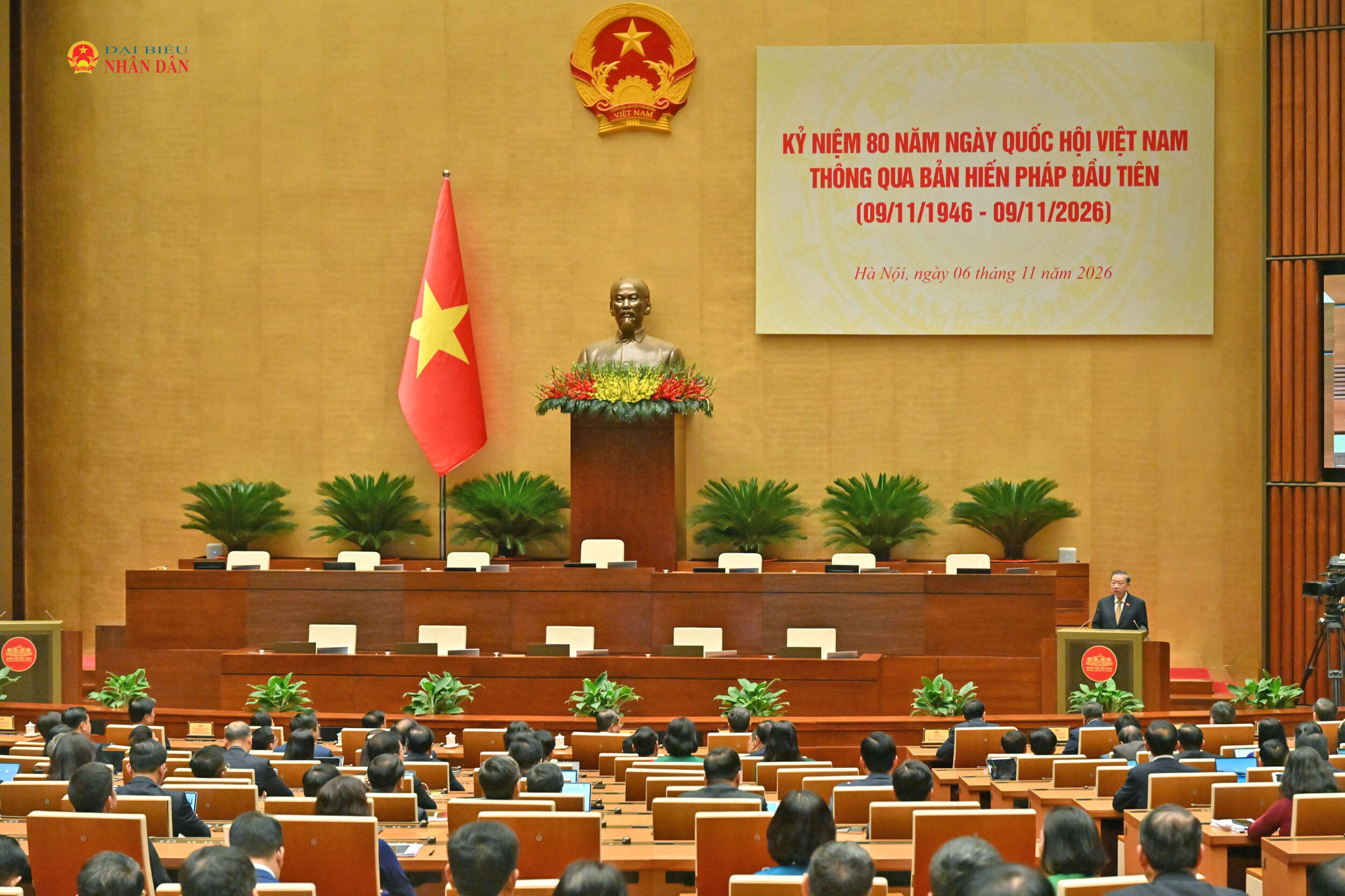
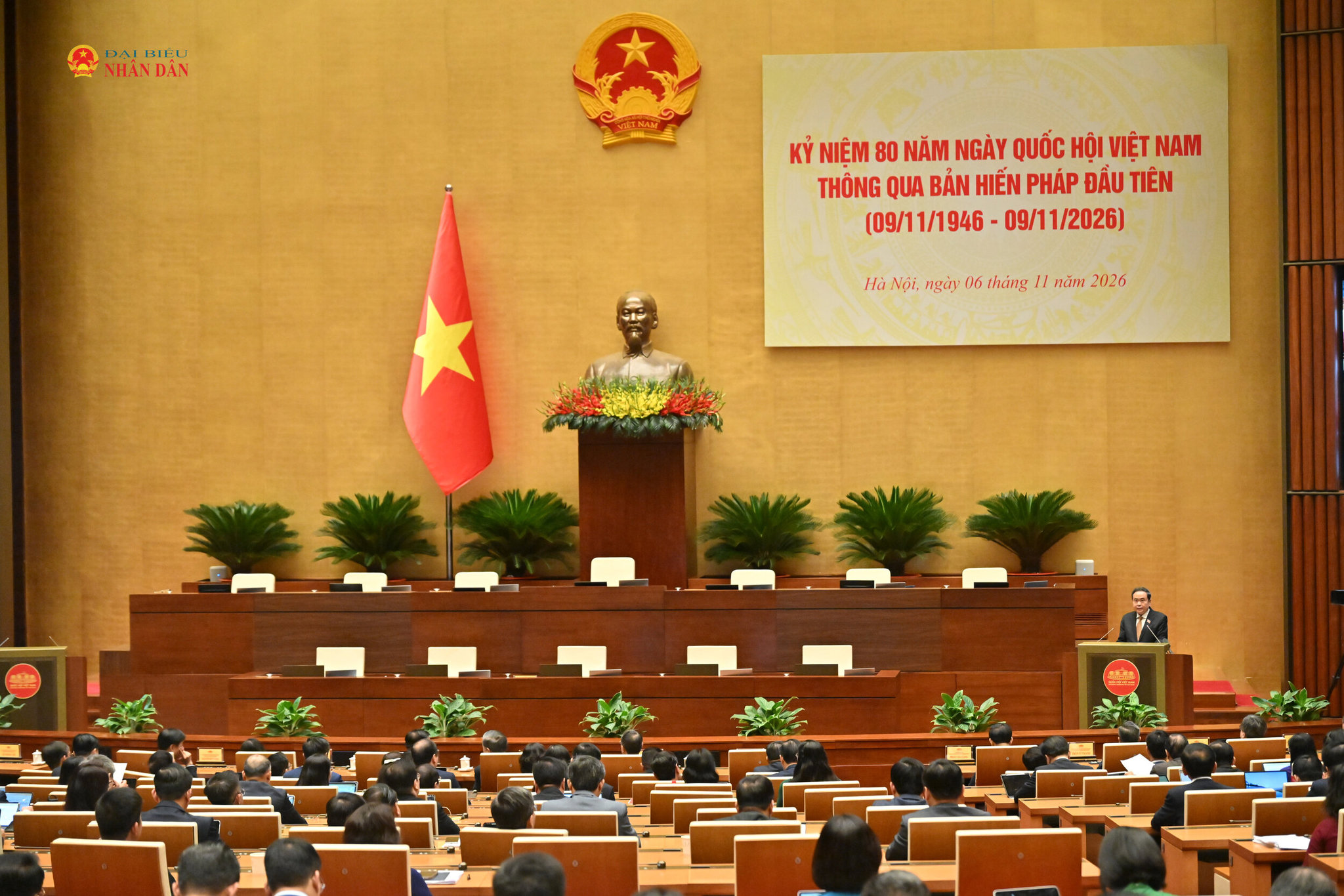
Marking the 80th anniversary of the National Assembly’s adoption of Vietnam’s first Constitution (November 6, 1946 – November 6, 2026), Deputy Chairman of the National Assembly’s Committee on Science, Technology and Environment Do Duc Hong Ha said that behind the steadfast constitution-making efforts of previous generations lie profound lessons about the people’s genuine right to exercise power, as well as the “imperatives for action” set out by General Secretary of the Party Central Committee and State President To Lam for the country’s new stage of development.
The strength of the State derives from the people
- Eighty years ago, the first National Assembly crystallised the will, wisdom and aspirations of the people in the country’s first Constitution. What are your reflections on the 80th anniversary of its adoption?
- Attending this morning’s commemorative programme, what stayed with me was not merely a sense of pride in a historic document, but a very specific question: 80 years ago, when the country had been independent for just over a year and was surrounded by internal and external threats, why did the first National Assembly regard drafting a Constitution as an urgent task that could not wait?
The answer lies in what General Secretary and State President To Lam pointed out: the profound significance of the 1946 Constitution was that it linked the achievement of national liberation with the people’s right to exercise sovereignty through the constitutional organisation of government.
Winning independence was only half the journey. Independence could be complete only when the people genuinely became masters of their country, and that right had to be enshrined in the fundamental law of the land, with the highest legal authority, rather than remain a mere declaration.
Article 1 of the 1946 Constitution states: “All powers in the country belong to the entire Vietnamese people.” Just one short sentence, but it established unequivocally who holds sovereignty over the government.
This gives rise to a principle that remains fully relevant today: the strength of the State derives from the people and must be exercised in their service. The State does not possess power in its own right; that power is entrusted to it by the people.
Therefore, the measure of a policy decision is not simply whether it was adopted by the right authority and in accordance with the proper procedures. More importantly, it is whether the people genuinely benefit from it.
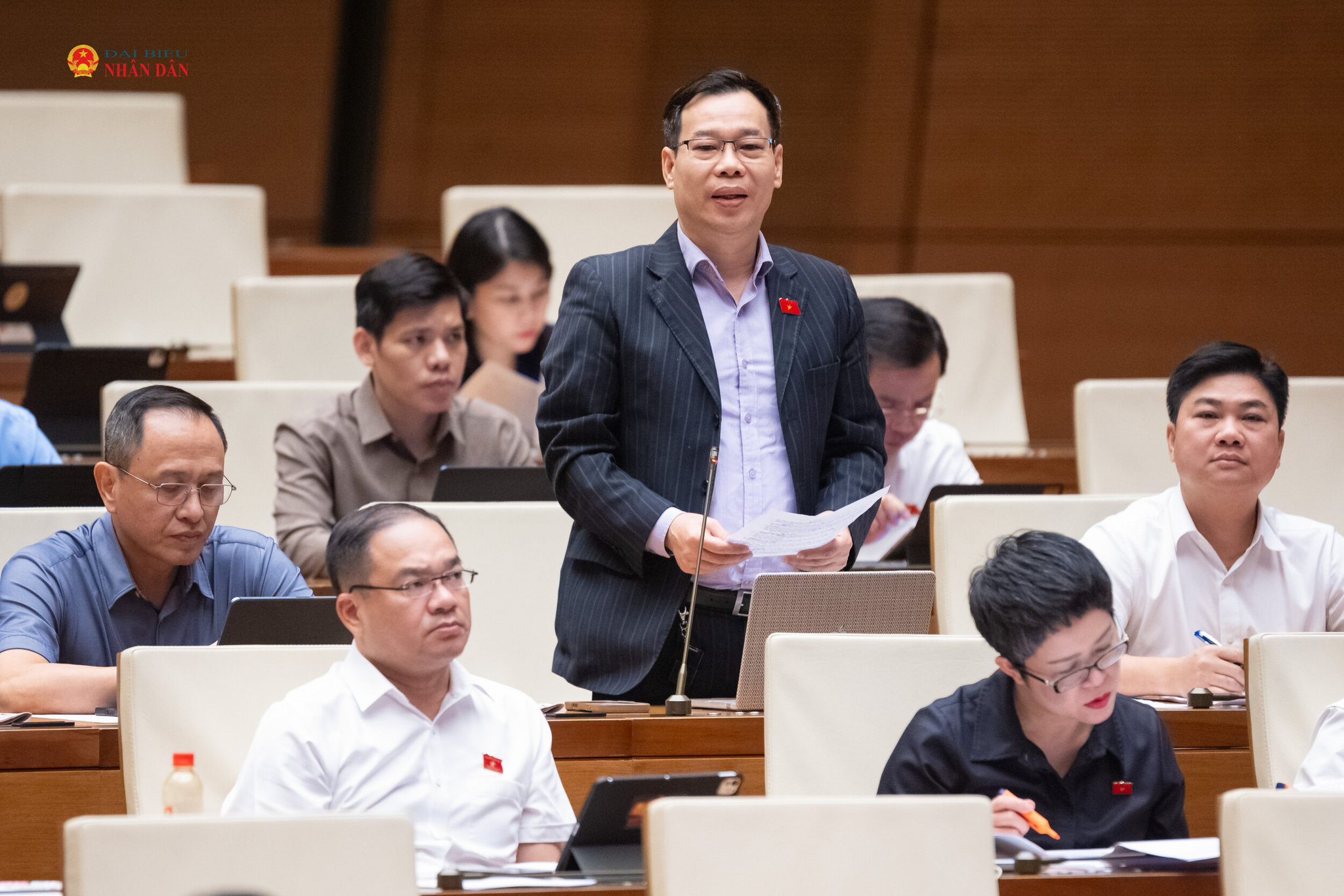
This lesson remains as relevant as ever. Every time I press the button to vote, I am exercising the people's right to sovereignty on behalf of my constituents. If their petitions do not reach the parliamentary chamber or are not translated into specific provisions of law, then no matter how carefully worded a policy decision may be, it will remain distant from the people.
For me, the 80th anniversary of the National Assembly’s adoption of the first Constitution is therefore an opportunity to remind myself that faithfully conveying the people's will and aspirations into every policy decision is a daily duty of a National Assembly deputy.
An imperative that demands concrete action
- In his speech at the commemorative programme, General Secretary and State President To Lam outlined an important task: inheriting the legacy of constitution-making and continuing to improve the socialist rule-of-law State in the new stage of development. The focus is not only on improving the Constitution and legal system, but also on reforming the organisation, oversight and exercise of State power, ensuring the people's right to exercise sovereignty and enhancing national governance capacity. What are your thoughts on this “imperative”?
- What is new, and also challenging, about the guidance from General Secretary and State President To Lam is the recognition that drafting good laws alone is not enough. Power must also be organised and controlled in such a way that laws are effectively translated into practice.
The General Secretary and State President frankly pointed out that gaps remain between legal provisions and their implementation, as well as between assigned authority and the resources and capacity available to fulfil it. In some places, responsibilities are still unclear, while people's legitimate rights and interests are not addressed promptly.
It is right to call this an imperative because it demands concrete action.
- How, in your view, should this imperative be understood and implemented?
- In constitution-making and law-making, we must take the initiative to revise laws proactively rather than wait for problems to emerge before making changes.
The 14th National Party Congress set out the task of studying a comprehensive revision of the 2013 Constitution. Such a revision is not about changing provisions for the sake of change. Its purpose is to strengthen the legal foundations for the country's new stage of development, based on a thorough review of implementation, including provisions that were amended as recently as 2025, and a clear assessment of what should be retained and what needs improvement.
This must go hand in hand with a very practical requirement: laws must not create unreasonable barriers to development. One regulation must not open the way for progress while another creates new obstacles.
This is precisely what voters and businesses have been reporting: a law may permit something, but a decree, circular or another specialised law may impose additional conditions, leaving projects on hold and forcing people to make repeated visits to administrative offices.
To address this, during the appraisal of every draft law, we must identify which other laws its provisions relate to and assess their impact on those directly affected. Every legal provision must answer one question: does it genuinely reflect the people's will, or does it merely make things more convenient for administrative agencies?
Regarding the organisation, exercise and oversight of State power, we must tackle two seemingly contradictory “illnesses” simultaneously: exceeding one's authority on the one hand, and shifting responsibility or avoiding accountability on the other.
In fact, both stem from the same root cause: authority and responsibility have not been sufficiently linked. When something offers benefits, agencies compete to take it on, sometimes even exceeding their powers. When risks arise, they push the responsibility upwards or pass it to others.
Strengthening decentralisation and delegating greater authority to local governments is both right and necessary. However, as the General Secretary and State President emphasised, greater autonomy does not mean arbitrary decision-making, nor should it weaken accountability.
Every transfer of authority must be accompanied by the necessary implementation conditions, oversight mechanisms and accountability requirements. Agencies entrusted with authority must take full responsibility for their decisions.
For its part, the National Assembly must ensure that oversight continues through to the final outcome. Every oversight recommendation must clearly identify what needs to be addressed, who is responsible and the deadline for completion.
With regard to our responsibility to future generations, I particularly appreciate the requirement that development today must build greater capacity for tomorrow, rather than allowing short-term interests to undermine the environment, stability and opportunities available to future generations.
A project that generates economic growth for a few years but leaves behind a polluted river, depleted water resources or a heavy debt burden is, in effect, consuming our children's share of resources today.
For the National Assembly, this requirement must become a concrete criterion when deciding on investment policies, allocating the State budget or amending laws on natural resources and the environment. We must fully account for long-term costs rather than focus solely on immediate growth figures.
The completion of the socialist rule-of-law State must be something people can experience in their everyday lives: simpler administrative procedures, faster resolution of legitimate claims and a better living environment.
As General Secretary and State President To Lam stated, the value of constitutional rights must be reflected in people's ability to exercise those rights and in the effective protection afforded to every individual.
Achieving this will be the most practical way to carry forward the legacy of the 1946 Constitution.
- Thank you very much for your insights.
Translated by Hong Nhung