

From the spirit of the 1946 Constitution to a state that shapes the future
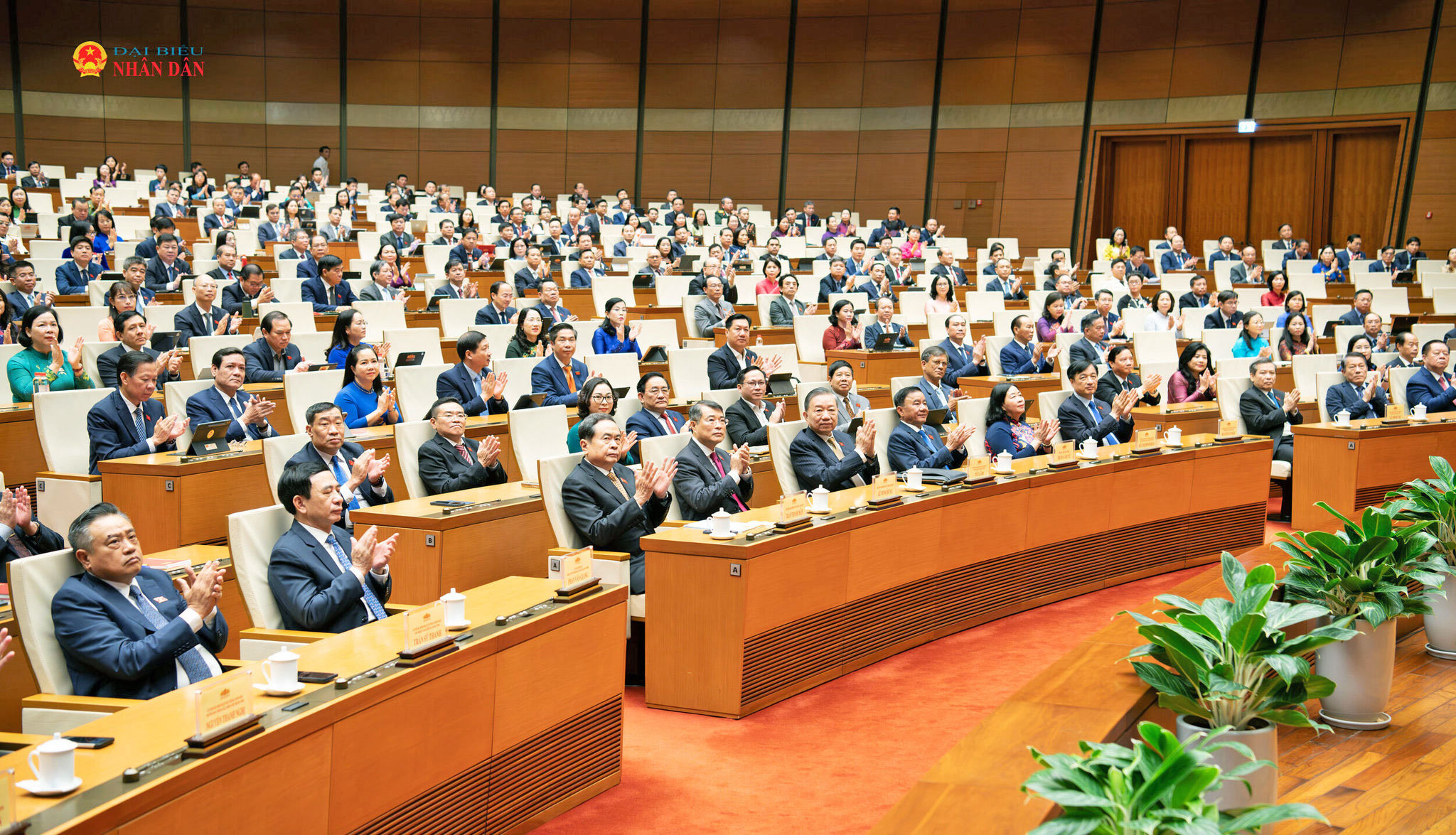
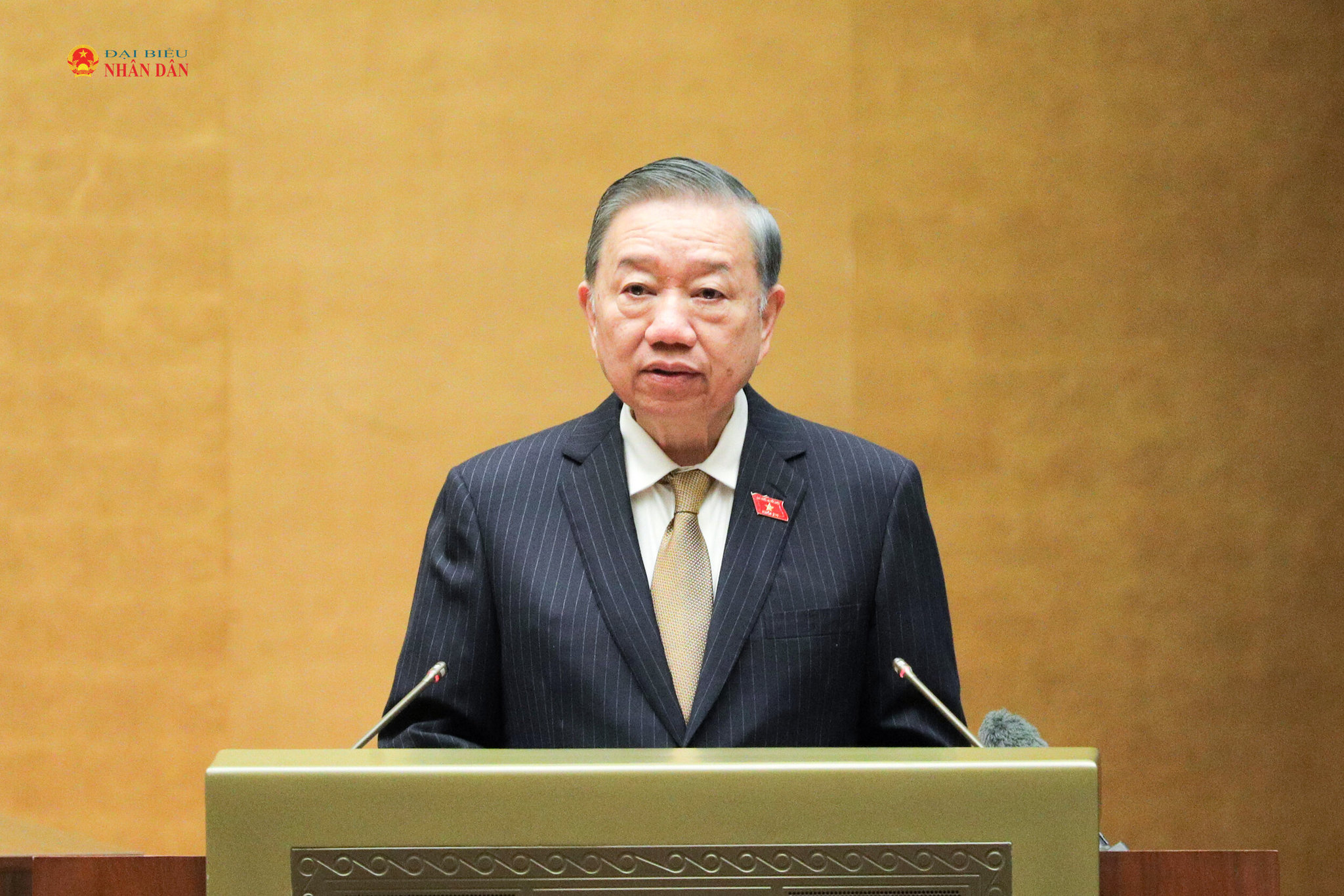
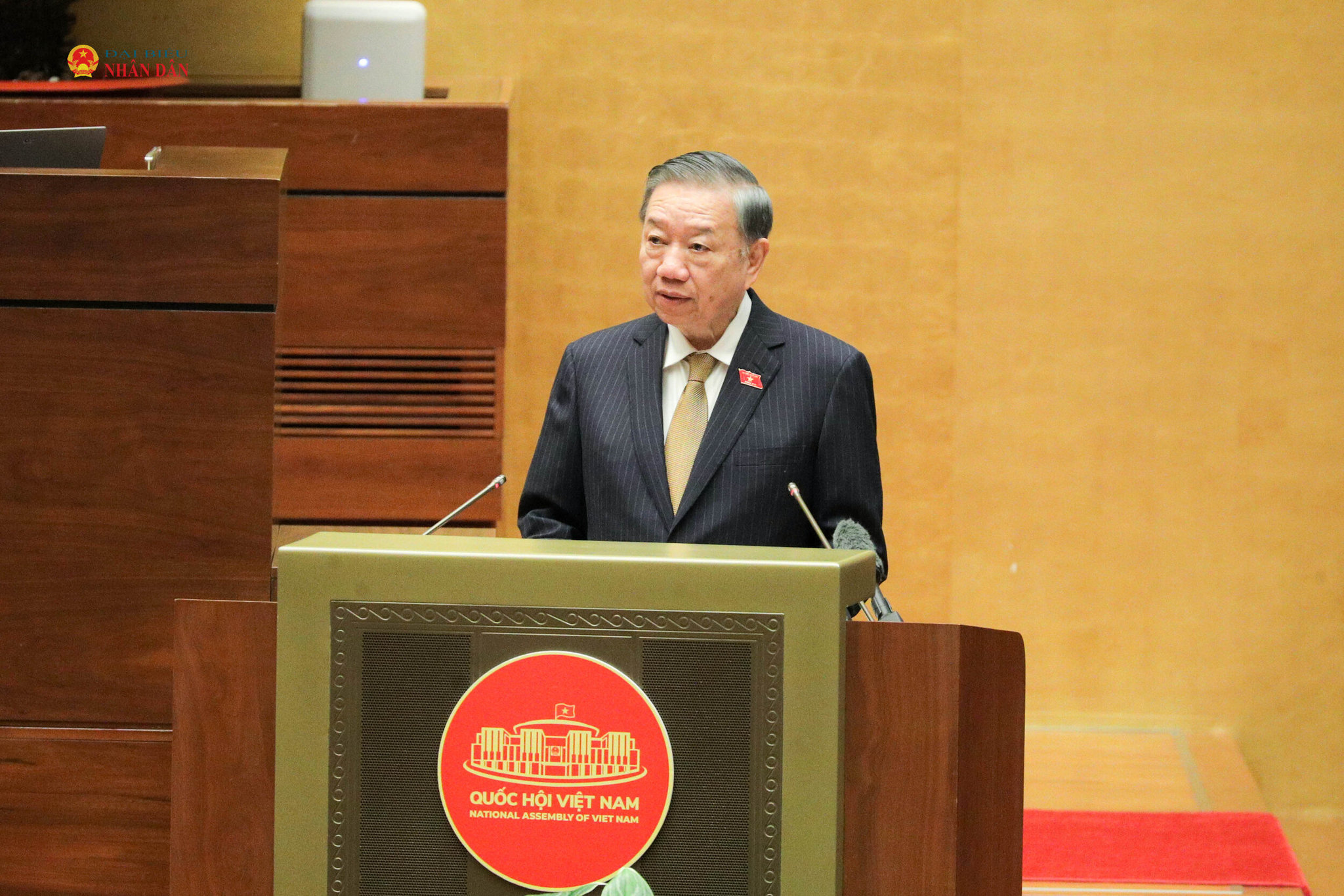
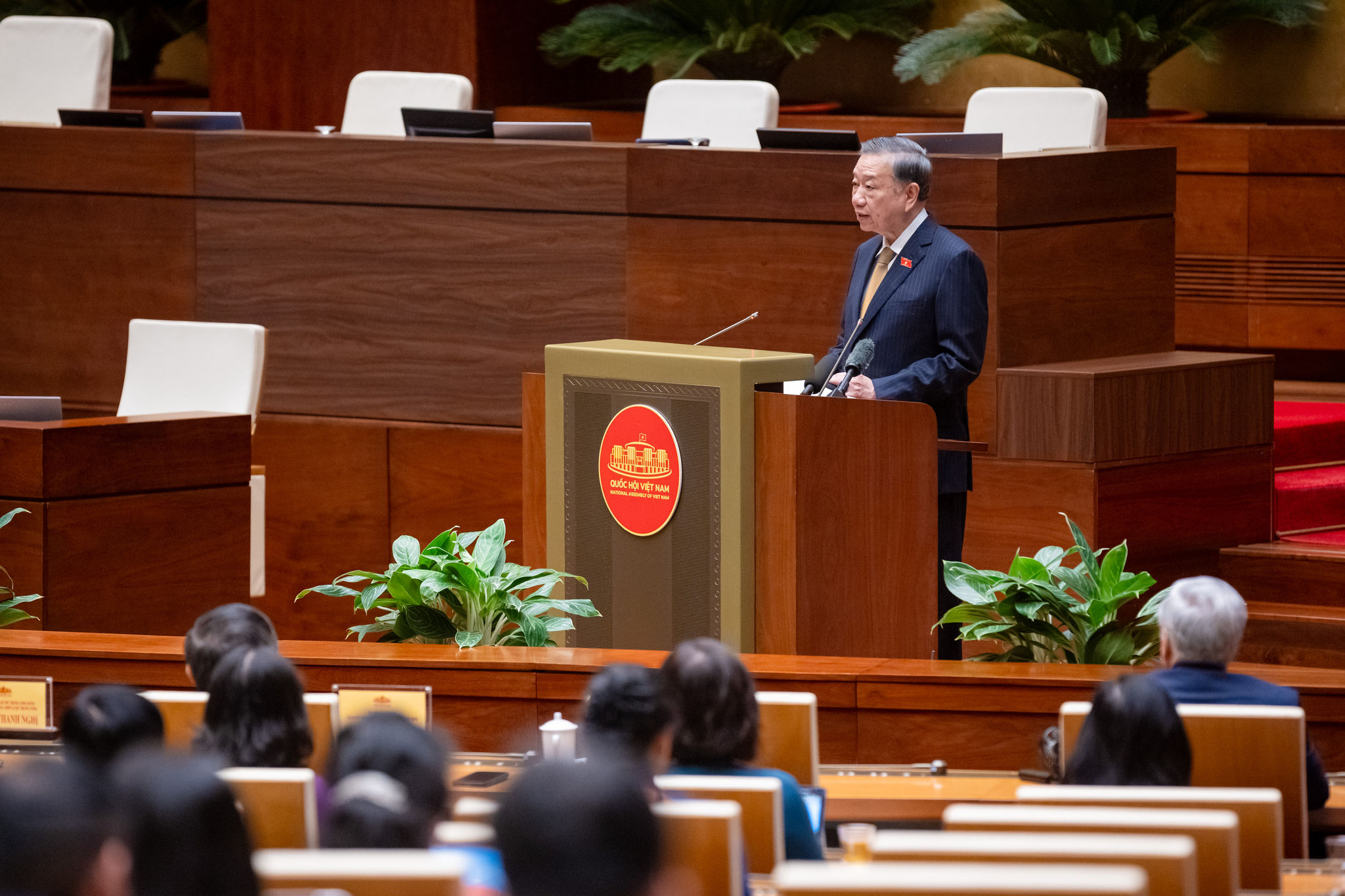
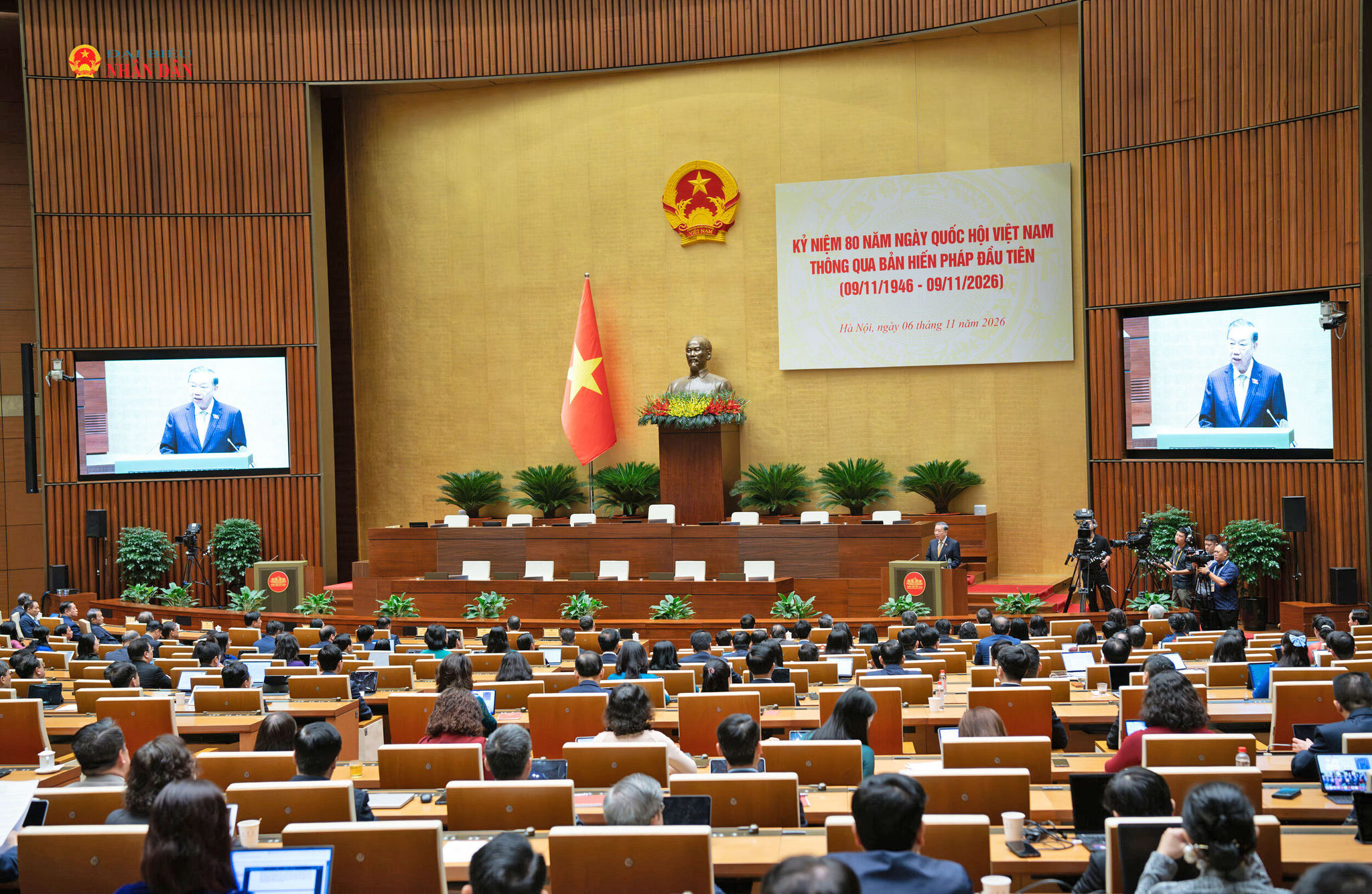
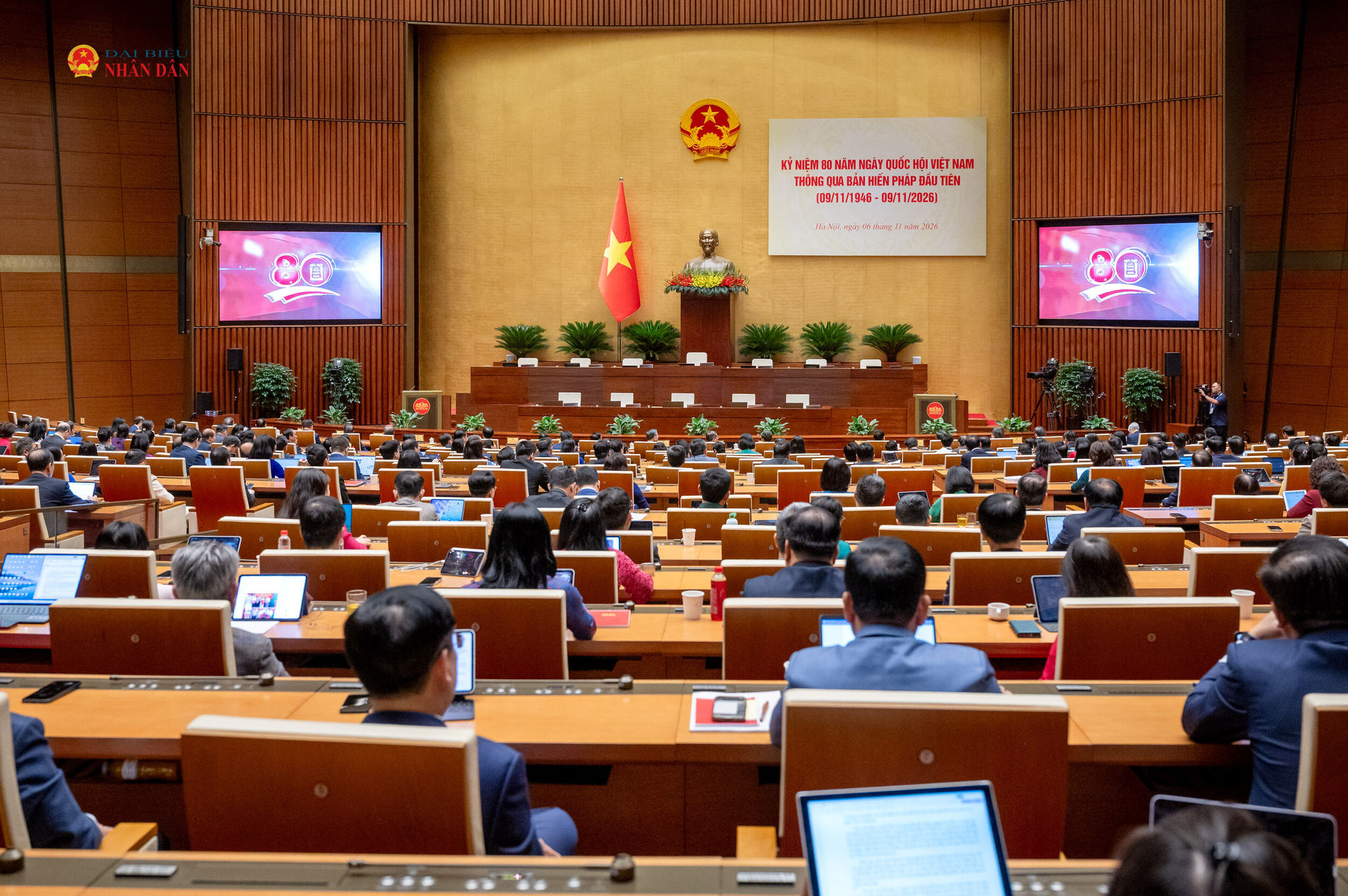
On the morning of November 6, at the National Assembly House, as part of a ceremony marking the 80th anniversary of the National Assembly of Vietnam's adoption of the country's first Constitution (November 9, 1946 – November 9, 2026), General Secretary and State President To Lam delivered a speech conveying profound messages. Reaffirming the enduring values of the 1946 Constitution, his address highlighted the need to continue building a socialist rule-of-law state that is clean, capable of taking action, exercises effective checks on power, and creates long-term development opportunities for the country.
From the Constitution of Independence to the foundation of the people's right to master their country
Every time we revisit the 1946 Constitution, we are reminded of choices that were decisive for the nation's destiny. Just over a year after independence, amid countless challenges facing a fledgling revolutionary government, the First National Assembly adopted the country's first Constitution. Under those circumstances, drafting a constitution was not merely a matter of legal technique; it was an affirmation of the nature of the new political system: national independence had to go hand in hand with freedom, the people's right to self-determination, and the dignity of every citizen.
General Secretary and State President To Lam placed this historic milestone within the broader context of Ho Chi Minh's political thought, from his aspiration expressed in the words, “We earnestly request that a Constitution be promulgated, so that all matters may be governed by the rule of law,” to the organisation of the General Election and the establishment of a State founded on a solid legal framework. This demonstrates that the principle of upholding the rule of law did not emerge only after the country had achieved stability; it was present from the very outset of the struggle for national liberation. Winning independence opened the door to freedom, while adopting a Constitution established the principles necessary to protect that freedom through state power entrusted by the people.
The special significance of the 1946 Constitution, therefore, lies not only in its status as the country's first constitutional document. It also embodies the spirit of great national unity, equality among citizens, democracy, and the vision of a government that is “strong and wise” and belongs to the people. The Constitution laid the foundation for a progressive understanding: the State can exercise legitimate power only when that power derives from the people and is used to serve them.
Eighty years have passed, and Vietnam has experienced vastly different historical circumstances, yet this guiding principle remains as relevant as ever. From the 1946 Constitution to the 2013 Constitution and the amendments and supplements introduced in 2025, Vietnam has pursued a process of inheritance and development to meet the demands of the revolution at each stage. What matters is not simply recognising that power belongs to the people, but establishing mechanisms that enable them to exercise that power in practice: to participate, oversee, be heard and have their rights protected.
Commemorating the country's first Constitution, therefore, cannot be limited to looking back at a historic milestone. It is an opportunity to recognise more clearly our responsibilities today: ensuring that the founding values of Vietnam's constitutional tradition continue to shape every policy decision, every institution and every interaction between the State and its citizens. A constitutional order can endure only when history serves as a foundation for the present and a source of inspiration for opening pathways to the future.
A strong state acts within the law and is accountable to the people
One of the speech's key messages was its perspective on the strength of the State. The General Secretary and State President affirmed: “The strength of the State derives from the people and must be used to serve the people.” This is both a continuation of the constitutional philosophy established in 1946 and a concrete benchmark for assessing the quality of national governance today.
A strong State is not simply one with a large administrative apparatus or extensive authority. Its true strength is demonstrated by its ability to address practical challenges, protect citizens' legitimate rights and interests, translate policies into action, and take responsibility for the results. As Vietnam continues to restructure and refine its governance model, streamlining the administrative apparatus must go hand in hand with greater effectiveness; decentralisation must be accompanied by adequate resources; and the delegation of authority must be matched by oversight. Citizens may not be particularly concerned about which administrative level is responsible for handling a particular procedure, but they will clearly notice whether their applications are processed more quickly, transparently and conveniently.
A particularly thought-provoking aspect of the speech was its call to address two shortcomings in public service simultaneously: exceeding one's authority and evading responsibility. Abuse of power undermines discipline and infringes upon legitimate rights and interests. Meanwhile, avoiding responsibility, shifting blame and fear of making decisions can also create bottlenecks, waste resources and cause the country to miss development opportunities. Checks on power, therefore, are not intended to make the administrative apparatus hesitant to act. Rather, they ensure that every decision is made within the proper authority, on a sound legal basis, subject to oversight and with clear accountability for its outcome.
This requires the principle of constitutional supremacy to permeate all legislative, executive and judicial activities. When the National Assembly considers a draft law, the question should not simply be whether its provisions facilitate state management. It must also consider whether they uphold constitutional principles, respect human rights and citizens' rights, and establish reasonable limits on the exercise of power. When administrative agencies handle public affairs, performance should be measured not only by compliance with procedures but also by service quality, transparency and accountability. When the judiciary performs its functions, the protection of justice, the prevention of wrongful convictions and the guarantee of access to justice must remain central priorities.
One particularly humane aspect of the speech was its emphasis that constitutional rights must translate into the actual ability to exercise those rights. The right to education requires equitable educational opportunities; the right to healthcare requires an accessible service system; and the right to legal protection demands effective mechanisms for restoring rights when they are violated. Policies must pay particular attention to vulnerable groups and communities living in disadvantaged areas. It is impossible to speak comprehensively about a rule-of-law state if the discussion focuses solely on institutions, powers and procedures without considering people, their needs and aspirations, as well as the disadvantages they may face and the support they deserve.
Conversely, the people's right to mastery must also be realised through meaningful mechanisms for participation and oversight. Elected representatives must do more than receive petitions; they must monitor how those petitions are addressed. Public authorities must do more than listen; they must provide explanations and be held accountable. Oversight and social criticism must go beyond offering comments and contribute to tangible change. It is through such concrete actions that public trust is nurtured. And that trust, in turn, becomes a source of strength for the State.
Institutions must drive development and expand opportunities for future generations
While the first part of the speech evoked the depth of Vietnam's constitutional history, the orientations for the coming period revealed an institutional vision focused on the future. Against a backdrop of rapid scientific and technological change, evolving governance models and an increasingly complex international environment, Vietnam needs a legal system that ensures stability and discipline while remaining capable of unlocking resources and adapting to emerging challenges. The law cannot simply follow events and respond after they have happened. In many cases, it must proactively create the space for new drivers of development to emerge.
The General Secretary and State President called for a coherent and consistent legal system in which one regulation does not open up opportunities while another creates barriers. This is a crucial requirement for institutional development. A progressive policy can lose much of its effectiveness if it encounters obstacles in other laws, subordinate regulations or the implementation process. Institutional breakthroughs, therefore, are not simply about issuing more legal documents. They require eliminating overlapping regulations, clarifying responsibilities, conducting substantive impact assessments and ensuring the necessary conditions for implementation.
Another noteworthy point was the need to distinguish between shortcomings in policy design and weaknesses in implementation. Not every practical problem stems from a lack of legislation. Sometimes the causes lie in poor coordination, unclear responsibilities, insufficient implementation capacity or reluctance to make decisions. Without correctly identifying the underlying causes, Vietnam risks falling into a cycle of amending regulations without changing the way things are done. This is why the quality of institutions must be measured by results, not merely by the number of legal documents issued.
In this spirit, the proposed review of the implementation of the 2013 Constitution, including an assessment of the amendments and supplements introduced in 2025, is of strategic importance. It will provide a theoretical and practical foundation for studying and proposing a comprehensive revision of the Constitution. This is a process of research and preparation, not yet a decision to promulgate a new Constitution. The speech set out clear requirements: ensuring the Party's leadership, drawing on the wisdom of the people, conducting the process scientifically, democratically and cautiously, acting within the proper authority, and continuing to strictly implement the existing Constitution. Reform must build on established foundations, while proactive preparation for the future must go hand in hand with maintaining the stability of constitutional principles.
From the perspective of culture and ideological work, another equally important task emerges: transforming the spirit of the Constitution into a rule-of-law culture throughout society. This means a culture that respects truth and justice; a culture of exercising power for its proper purpose; a culture of public service characterised by listening, accountability and wholehearted dedication; and a civic awareness of individual rights, obligations and responsibilities towards the community. When the rule of law becomes a cultural value, compliance with legislation is driven not only by legal obligations but also by trust in sound principles and fairness.
In particular, the message that “Development today must create greater capacity for tomorrow” offers a profound standard for national responsibility. Every decision concerning investment, public budgets, natural resources, the environment or education has implications that extend beyond a single term of office or development period. Preserving cultural heritage is not merely about safeguarding memories; it is about passing on a resource of national identity to future generations. Investing in people is not simply about meeting immediate needs; it is about building the foundations for long-term development. Good institutions must enable the country to move faster today without narrowing the opportunities available tomorrow.
Eighty years ago, the 1946 Constitution embodied the will of a nation that had just regained its right to self-determination. Today, that spirit must continue to be affirmed through a clean, action-oriented and development-enabling rule-of-law state that is accountable to the people. As General Secretary and State President To Lam emphasised, the spirit of the 1946 Constitution must be reflected in “the way power is exercised, the dedication to public service, and the increasingly better lives of the people”.
That is the most meaningful way to honour the generations who laid the foundations of Vietnam's constitutional tradition: not merely by preserving the values they established, but by ensuring that those values continue to flourish in everyday life and pave the way for a prosperous, civilised and happy Vietnam.
Transated by Hong Nhung