

80 Years of the 1946 Constitution: National development must be sustainable and rooted in independence, sovereignty, freedom, justice and the happiness of the people
The 80th anniversary of the adoption of the 1946 Constitution provides an opportunity to reaffirm an enduring principle: the strength of the State derives from the People; the exercise of state power must be safeguarded by the Constitution and the law; and the sustainable development of the nation must be closely linked to independence, sovereignty, freedom, justice and the happiness of the People.
Enduring Constitutional values
The foremost value of the 1946 Constitution lies in its principle that the People are at the centre of state power. Beyond affirming that sovereignty belongs to the People, the Constitution enshrined a range of important democratic rights and freedoms, including equality before the law; the rights to vote and stand for election; freedom of speech and belief; freedom of association and assembly; and the inviolability of the home and correspondence. Notably, Article 21 stipulated that the People had the right to approve the Constitution and decide on matters concerning the destiny of the nation. This provision reflected a profound understanding of the People's role in decisions of historic importance to the country.
The second value lies in its approach to organising state power through a division of functions and responsibilities, together with mechanisms to ensure accountability among state institutions. The 1946 Constitution provided for the People's Parliament, the Government, the judicial system and local authorities. These institutional arrangements demonstrated a clear concern with defining the powers, responsibilities and relationships among state bodies. Although the model of state organisation has undergone significant changes throughout different historical periods, the principle that state power must be exercised within the limits of assigned authority and the law, with accountability and effective oversight, remains fundamental.
The third value is the combination of citizens' freedoms with their obligations to the Fatherland. The 1946 Constitution not only recognised citizens' rights but also established their duties to defend the Fatherland, respect the Constitution and abide by the law. This approach reflects the close relationship between rights and responsibilities, and between individual interests and the interests of the nation and the people. Particularly significant was the fact that, at a time when the country had only recently gained independence, the Preamble explicitly identified the preservation of national territory, the safeguarding of independence and national reconstruction as fundamental objectives. This demonstrated a consistent vision: nation-building must always go hand in hand with national defence.
The fourth value is the spirit of democracy, openness to different viewpoints and responsibility in constitution-making. The 1946 Constitution emerged from a process of research, consultation, debate and consideration of diverse perspectives. This process offers an important lesson for lawmaking: legislation must be grounded in the interests of the nation and the people, take account of practical realities, listen to public opinion and place institutional quality above narrow or sectional interests.
Upholding the Spirit of the 1946 Constitution in building a Rule-of-Law State
From the 1946 Constitution to the subsequent Constitutions of 1959, 1980, 1992 and 2013, Vietnam's constitutional history reflects the evolution of the State and society through different historical periods.
Each Constitution was adopted under different historical circumstances, responding to the political, economic and social requirements, as well as the national defence tasks, of its time. Nevertheless, these successive constitutions demonstrate continuity in fundamental values, particularly national independence and sovereignty, the People's right to mastery, and the role of law in organising and managing society.
The 2013 Constitution reaffirmed that the Socialist Republic of Vietnam is a socialist rule-of-law State of the People, by the People and for the People, with all state power belonging to the People. It also stipulates that state power is unified, with a division of responsibilities, coordination and oversight among state bodies in exercising legislative, executive and judicial powers.
These principles require continuous institutional improvement and higher standards in the organisation and operation of the state apparatus, ensuring that state power is exercised in the interests of the People, subject to public oversight and constrained by the Constitution and the law.
Today, as Vietnam accelerates efforts to reform its governance model, streamline the state apparatus, implement the two-tier local government model, develop the digital economy and digital society, and deepen international integration, the task of building a rule-of-law State has become increasingly urgent.
The quality of a rule-of-law State should not be measured merely by the number of legal documents it promulgates. Above all, it must be reflected in the quality of institutions, transparency, enforceability, the effectiveness of protecting the lawful rights and interests of the People, and the extent to which the law facilitates socio-economic development.
The law must genuinely serve as an instrument for protecting justice and maintaining order and discipline, while also paving the way for innovation and unlocking resources for development.
From the Constitutional spirit of 1946 to the responsibilities of today's National Assembly
The 80th anniversary of the adoption of Vietnam's first Constitution is also an opportunity to reflect more deeply on the responsibilities of the National Assembly in this new stage of development.
First, the National Assembly must continue to improve the quality of legislation, ensuring that the legal system is constitutional, lawful, consistent, coherent, stable and practicable.
Every law must stem from practical needs, address issues arising in everyday life, protect the lawful rights and interests of the People and businesses, and establish a favourable legal framework for national development.
Greater efforts are needed to address unclear, overlapping or contradictory provisions, as well as the tendency to delegate important matters falling within the legislative authority of the National Assembly to subordinate legal documents. Issues directly affecting human rights, citizens' rights, and the rights and obligations of relevant entities must be regulated rigorously, transparently and within the proper scope of authority.
Second, the National Assembly must continue to reform its supreme oversight activities, strengthen accountability and improve the effectiveness of law enforcement. No matter how carefully a law is drafted, it can only fulfil its purpose when implemented seriously, consistently and effectively. Oversight activities should therefore focus on issues of greatest concern to the People, bottlenecks in the implementation of policies and laws, and the responsibilities of relevant agencies, organisations and individuals.
Third, the role of the People in the process of developing and improving legislation must be further strengthened. The democratic spirit of the 1946 Constitution serves as a reminder that all important policy decisions must be directed towards the interests of the People and must take their voices into account.
Public consultation must go beyond a procedural requirement to become a substantive process of dialogue, with clear explanations, consideration of feedback and responses. National Assembly deputies must genuinely serve as a bridge between the will and aspirations of voters and the legislature's work in lawmaking, oversight and decision-making on major national issues.
Building a Strong Rule-of-Law foundation alongside early and proactive national defence
One particularly important principle of the 1946 Constitution that must continue to be upheld is the close relationship between state-building and national development, on the one hand, and the protection of independence, sovereignty, national unity and territorial integrity, on the other.
Against the backdrop of rapidly changing global and regional developments, intensifying strategic competition, conflicts and increasingly complex traditional and non-traditional security challenges, the task of defending the Fatherland extends beyond territorial boundaries, borders, seas and islands. It now also encompasses cyberspace, data, energy, technology and other critical sectors.
This requires Vietnam's legal framework governing national defence, security and external relations to be further improved in a more coherent, forward-looking and adaptable manner. It must both firmly safeguard national interests and create a peaceful and stable environment for development.
The requirements for closely integrating socio-economic and cultural development with the strengthening of national defence and security, as well as the expansion of external relations, must be more fully institutionalised from the earliest stages of planning, strategy formulation, policymaking and resource allocation.
At the same time, legal mechanisms must continue to be strengthened to proactively prevent and effectively respond to national defence and security situations, states of emergency, disasters and other threats to national security. This must ensure coordinated and unified action among state agencies, relevant forces and authorities at all levels.
In particular, building a strong all-people national defence and people's security posture must go hand in hand with strengthening the people's support and confidence in the State. Protecting the lawful rights and interests of the People, ensuring social justice and reinforcing public trust in the law and state institutions are fundamental to this effort.
Defending the Fatherland proactively and from an early stage is not merely a strategic requirement in national defence, security and external relations. It also calls for institutions with sufficient capacity to anticipate, prevent and address risks before they develop into serious challenges.
Keeping the Spirit of the 1946 Constitution Alive
Eighty years ago, despite the immense difficulties facing the country, the deputies of the first National Assembly laid the foundations for a democratic constitutional order, embodying the aspirations for independence, freedom and the People's right to mastery.
Eighty years later, Vietnam faces new opportunities and challenges. The task is not simply to inherit historical values, but also to translate them into higher-quality institutions, more effective national governance, stronger legal discipline and tangible development achievements that the People can enjoy.
The spirit of the 1946 Constitution must continue to find expression in high-quality legislation, policy decisions that serve national interests, an effective and efficient state apparatus, and a contingent of dedicated, honest and accountable officials and civil servants.
For every National Assembly deputy, the most meaningful tribute to previous generations of constitutional architects is to continue renewing their thinking, strengthening their political resolve, intellectual capacity and sense of responsibility in parliamentary activities; to always listen to the People, protect their legitimate interests and contribute to improving the legal system in line with the country's development requirements.
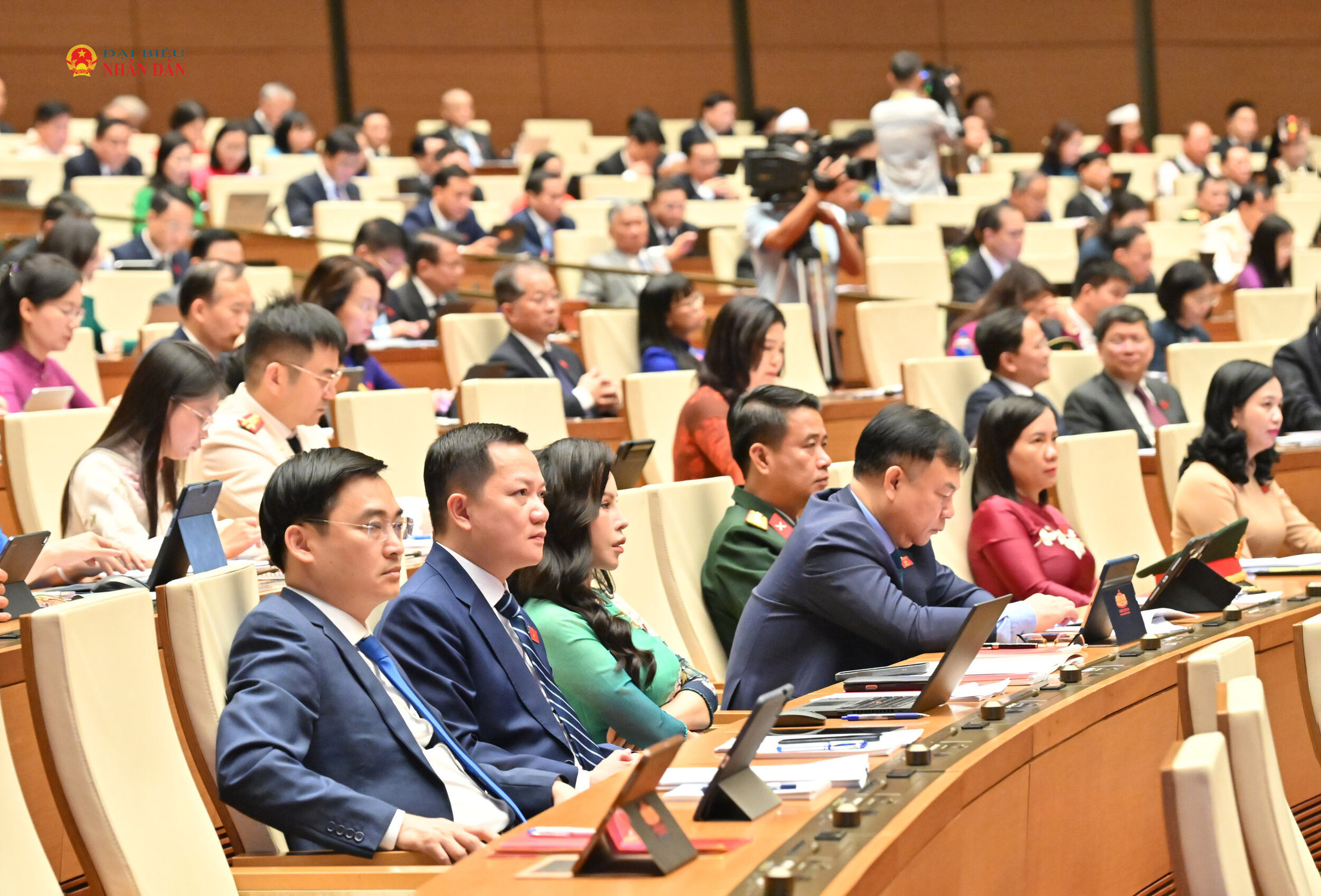
The 80th anniversary of the 1946 Constitution provides an opportunity to reaffirm an enduring principle: the strength of the State derives from the People; the exercise of state power must be safeguarded by the Constitution and the law; and the sustainable development of the nation must be closely linked to independence, sovereignty, freedom, justice and the happiness of the People.
This is also the spirit that must continue to guide the process of building the socialist rule-of-law State of Vietnam, towards the goal of a peaceful, independent, democratic, prosperous, strong, flourishing, civilised and happy Vietnam.
Transated by Hong Nhung