

The legal consequences of suspending or reinstating plant variety protection certificates need to be clarified
During the National Assembly discussion on the draft Law amending and supplementing several articles of the Intellectual Property Law on the morning of November 3rd, National Assembly Deputy Nguyen Thi Minh Tu (Nghe An) proposed clarifying the legal consequences of automatically suspending and restoring the validity of plant variety protection certificates, ensuring the rights of certificate holders and related parties; at the same time, it is necessary to clarify the criteria for using existing technical test results and protect legally protected information in intellectual property assessment activities.
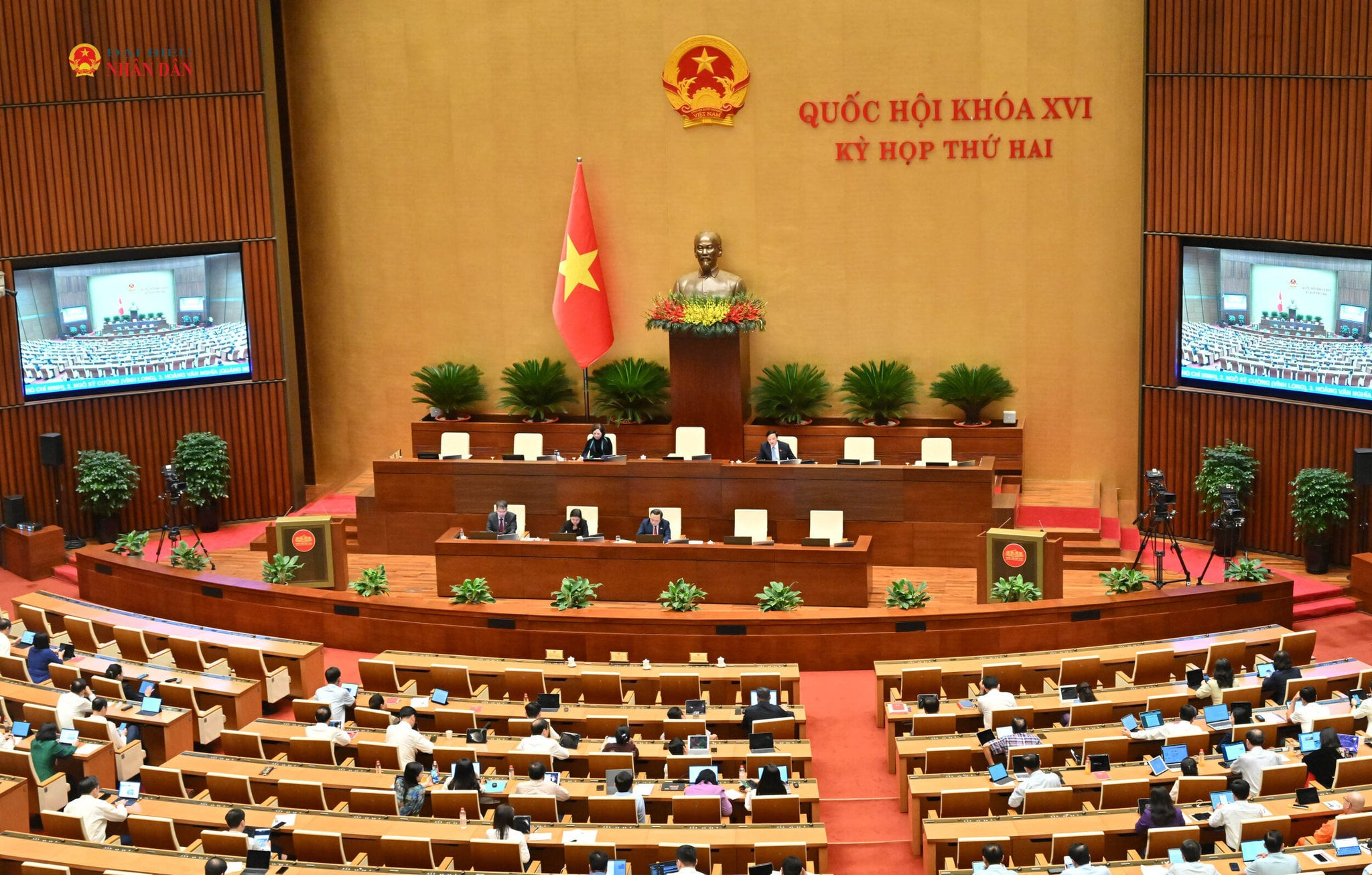
Protecting property rights when suspending or reinstating the validity of a patent.
Commenting on the regulations regarding the suspension and restoration of the validity of Plant Variety Protection Certificates in Clause 8, Article 1 of the draft Law, amending Clauses 3 and 5 of Article 170, National Assembly Deputy Nguyen Thi Minh Tu stated that the draft stipulates that Plant Variety Protection Certificates are automatically suspended from the start of the first year of validity if the maintenance fee is not paid. The suspension is announced within 30 days of the suspension date; the Certificate is restored when the reason for the suspension has been rectified.
While agreeing with the goal of reducing procedures, the delegates argued that this regulation directly impacts plant variety rights, which may be the result of many years of research and investment. Therefore, the legal consequences of automatically suspending and reinstating the validity of plant variety protection certificates need to be clarified.
According to the delegates, the report on the acceptance and explanation by the drafting agency states that the obligation to pay fees is stipulated by law ; the Official Gazette and online system help holders access information, and also specifies a 6-month deadline for rectification. However, it is necessary to clearly demonstrate the mechanism for ensuring the opportunity for rectification and the legal status of the right during this period.
Raising specific scenarios, delegate Nguyen Thi Minh Tu requested clarification on the following: If a patent is suspended and then reinstated, will the rights be maintained continuously? During the suspension period, what happens if a third party commits an act within the scope of the patent holder's rights? If the patent holder has paid the fees on time but the system is slow to update, how are their rights protected?
According to the delegates, these are consequences directly related to property rights and need to be defined in principle in the Law. The provision for reinstatement when the cause of suspension has been rectified does not clarify the timing and scope of the reinstatement.
Therefore, delegates proposed adding an electronic notification mechanism, a late submission fee, and a principle of continuous validity if the certificate holder fulfills their obligations within the permitted timeframe. The government will specify the deadlines, notification methods, and implementation procedures in detail.If the automatic suspension mechanism continues to be applied, the Law needs to clearly define the time of reinstatement and how to handle rights arising during the suspension period.
Representative Nguyen Thi Minh Tu proposed adding an electronic notification mechanism, a late payment fee, and a principle of continuous validity if obligations are fulfilled within the permitted timeframe. The government should regulate the deadline, notification method, and procedures. If automatic suspension is maintained, the law needs to clearly define the time of reinstatement and how rights arising during the suspension period will be handled.
Transparency in testing criteria and data protection in expert assessment activities.
Regarding the regulations on technical testing in Clause 15, Article 1, amending Article 178, National Assembly Deputy Nguyen Thi Minh Tu agrees with expanding the right to conduct self-testing, hiring other organizations to conduct testing, and using existing results to reduce time and costs for research institutes, businesses, and plant breeders.
The drafting agency's report on the feedback and explanations stated that the results of self-testing still need to be verified; Government Decree No. 79 already stipulates the inspection of testing conditions, processes, and reporting of results. Therefore, the drafting agency proposed not adding a separate verification principle to the Law.
Taking note of the explanation, the delegates argued that the regulations on evaluation do not fully address the requirement for transparency when accepting or rejecting the use of existing test results.
According to the delegates, the phrase "usable" in Clause 2 of Article 178 should be linked to the criterion of transparency. The reliability of DUS test results regarding distinctiveness, homogeneity, and stability depends on the control variety, method, testing conditions, and original data. Changes in testing location or conditions may require expert evaluation, but should not automatically lead to a complete retest.
Therefore, the delegates proposed adding the principle that: the results of existing tests should be used when the competent authority determines that they meet the technical requirements and provide sufficient basis for evaluation. The rejection or request for additional testing must clearly state the professional basis and the content that needs to be supplemented.
Regarding Clause 3 of Article 178, the delegates proposed specifying the criteria for using domestic and foreign test results; requiring the retention and retrieval of test data and materials according to the characteristics of each species; and verification when necessary. The scope of supplementary testing must be consistent with identified professional deficiencies or doubts.
Regarding intellectual property assessment under Clause 21, Article 1, amending Article 201, Representative Nguyen Thi Minh Tu acknowledged that the Report on Acceptance and Explanation clarified the obligations to refuse assessment when there is a vested interest, the requirements for the basis and methods of assessment, and the responsibility for compensation as stipulated in the decrees.
Delegates agreed with the direction of improving professional obligations and post-inspection mechanisms, and not reinstating business conditions that have been abolished; they also proposed a review to ensure these obligations are fully applied to organizations and individuals operating under the new mechanism.
Regarding Clause 4 of Article 201, the addition of a requirement to provide information on "results of inspection activities already carried out" to ensure transparency in operational experience is justified. However, according to the representative, if the requirement to disclose this information excludes only personally identifiable information, it could lead to the disclosure of trade secrets, technical data, or customer information that needs to be protected.
In addition, the obligation to update information within 10 working days could also be interpreted as requiring notification after each assessment result.
To address this, the delegate suggested replacing the phrase "results of the inspection activities performed" with "general information about the experience in inspection activities"; while retaining the requirement to provide information on the field, knowledge, and professional expertise.
At the same time, information protected by law must be excluded from publication; records and expert opinions must be retained and provided to competent authorities in accordance with the law.
The delegates also proposed adding to Clause 3 of Article 201 the principle of controlling conflicts of interest and the verifiability of expert opinions. Clause 6 entrusts the Government with the authority to regulate post-audit procedures. The posting of the names of organizations and individuals on the information portal must be distinguished from certification of competence.