

Vietnam’s export outlook holding firm
The four EFTA markets do not import much Vietnamese seafood at present, but having a free trade agreement will make two-way trade easier and widen cooperation between Vietnamese companies and partners strong in fishing, processing and seafood technology,” said Deputy Secretary General of the Vietnam Association of Seafood Exporters and Producers (VASEP) Le Hang.
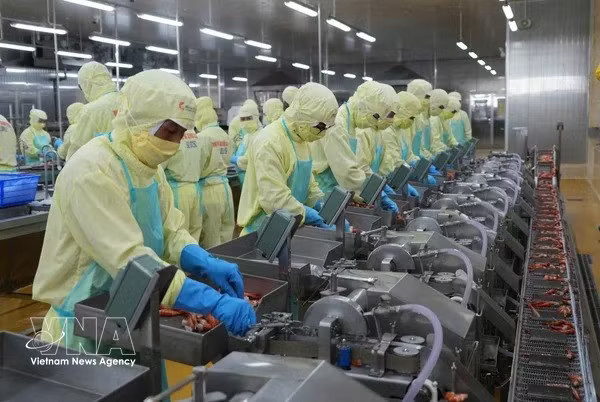
Vietnam’s export outlook is holding firm despite unpredictable global trade, supported by stronger manufacturing capacity, higher realised foreign direct investment and a widening web of free trade agreements (FTAs).
Opening up more opportunities
Vietnam formally signed a FTA with the European Free Trade Association (EFTA) in mid-October, after 14 years of negotiations. The deal, known as VEFTA, opens a new chapter aimed at deepening economic, investment and trade ties with highly developed markets.
“The four EFTA markets do not import much Vietnamese seafood at present, but having a free trade agreement will make two-way trade easier and widen cooperation between Vietnamese companies and partners strong in fishing, processing and seafood technology,” said Deputy Secretary General of the Vietnam Association of Seafood Exporters and Producers (VASEP) Le Hang.
Switzerland stands out among EFTA markets for Vietnamese seafood, with high purchasing power and demand for quality, sustainably produced goods with transparent origins. Vietnam has a particular edge in eco-friendly shrimp, especially mangrove forest shrimp raised under the mangrove canopy.
The VEFTA is also expected to open more doors for tra fish, processed tuna and other added-value seafood. The opportunity goes beyond shipping more goods, with room to attract investment, absorb technology and move into higher-value stages of the production chain.
Once in force, the VEFTA will create more export opportunities and deepen seafood supply chain cooperation for Vietnamese companies. Tariff preferences under the deal will also give consumers more chances to buy quality goods at good prices, notably Norwegian salmon, whose import duties now 10% for whole fish and 15% for fillets, will fall to zero when the VEFTA takes effect.
Vietnam’s exports totalled 463.7 billion USD as of October 15, up 25.9% from the same period last year and far above the 15-16% target.
Le Hoang Tai, Deputy Director of the Vietnam Trade Promotion Agency at the Ministry of Industry and Trade, said Vietnam continues to attract shifting production as global supply chains restructure. That gives local companies room to take a deeper role in international manufacturing networks and expand exports of electronics, machinery, components, apparel, wooden furniture and processed industrial goods.
“Macroeconomic stability and deep economic links through 17 FTAs in force offer a major opportunity to evolve from a simple processing link into a key production and supply hub with higher value added”, Tai said.
Capital flowing into electronics, artificial intelligence and semiconductors from global technology groups is turning Vietnam into a hi-tech manufacturing hub of growing capacity. Electronics exports could contribute about 250 billion USD to Vietnam’s exports in 2026, according to estimates.
Alongside markets already covered by FTAs, closer economic and trade ties with countries in Europe, the Middle East, Africa, Latin America and other emerging markets are adding outlets for Vietnamese goods. That helps companies reduce reliance on a few traditional markets.
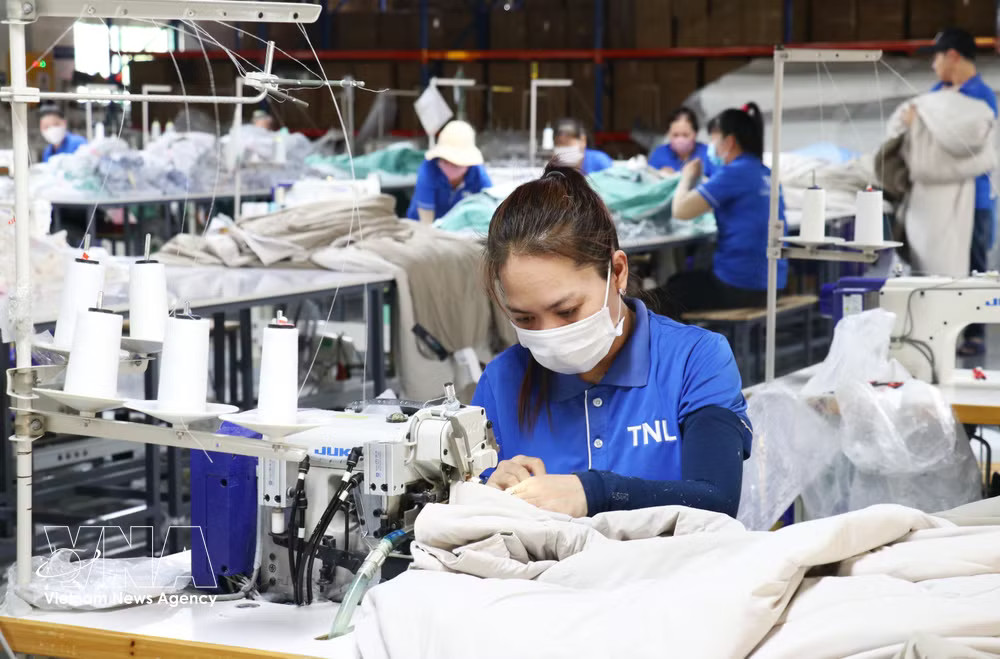
A garment factory in Tay Ninh province (Photo: VNA)
Stronger production base
Vietnamese goods are increasingly present in global markets, particularly electronics, textile and garments, agricultural products, and timber and wood products. But tighter requirements on the environment, emissions, raw material sourcing and supply chain responsibility are piling on pressure, forcing companies to revamp production processes and better meet international standards.
Tran Thanh Hai, Deputy Director of the Export-Import Department at the Ministry of Industry and Trade, said companies that stop at simple processing and assembly will struggle to withstand increasingly strict technical barriers. Real-world trade has already shown the risks when policies change.
Global trade trends in the coming time will favour products that can prove clear origin, use sustainable materials, save energy and meet environmental standards, giving them better access to customers in markets with high import requirements.
Competitiveness in global trade no longer rests on price and production scale alone. Meeting standards, providing transparent information and ensuring supply chain sustainability are increasingly the conditions for companies to keep markets and win more orders.
Ito Group Holdings Pte. Ltd. has made Vietnam its manufacturing hub since 2012, said its Chairman Peter James Opdahl. The group is now building a new 12,000 sq.m factory in Ho Chi Minh City’s Linh Trung Export Processing Zone to make equipment used in manufacturing across many industries.
According to him, Vietnam’s appeal goes beyond market access through FTAs to an increasingly clear role in regional production networks. To draw more quality projects and amplify spillover effects, the country needs to keep improving its industrial ecosystem, raise domestic supply capacity and develop technical talent, helping Vietnamese companies widen their international connections.
Vietnam’s trade outlook for 2026 remains upbeat, with a fairly realistic target of as much as 1.2 trillion USD in total export-import turnover and staying among the world’s 15 largest trading powers./.