

Lawmakers propose scrapping employment service licences, expanding compulsory social insurance coverage
The draft law amending and supplementing some articles of the Law on Social Insurance will authorise the NA Standing Committee to decide, based on Government proposals and socio-economic conditions, on compulsory coverage for people working without employment contracts and those on digital platforms with stable, regular jobs and incomes.
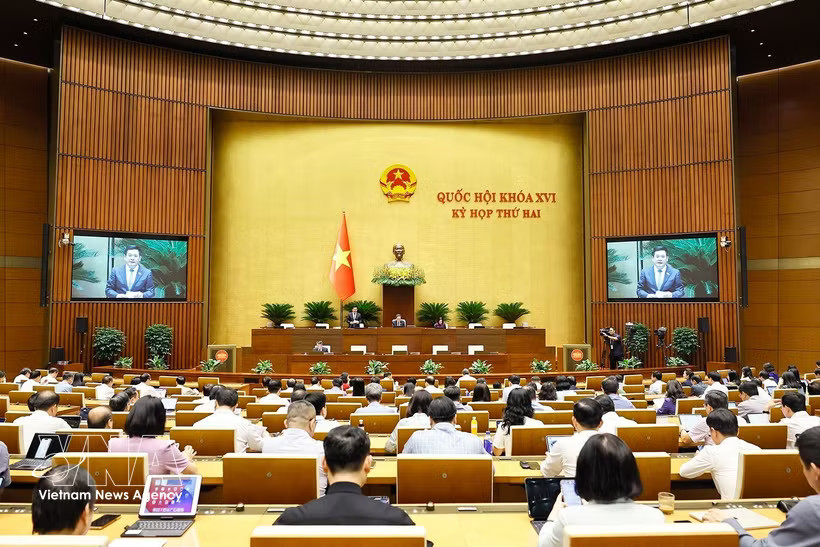
Hanoi (VNA) – The 16th National Assembly’s second session on October 21 considered proposed amendments to several laws on labour, employment, social insurance, gender equality, archival services and grassroots democracy, including plans to abolish employment service licences and gradually expand compulsory social insurance coverage.
The draft law amending and supplementing some articles of the Law on Occupational Safety and Hygiene aim to streamline administrative procedures, adapt regulations to the two-tier local administration model and ensure consistency across the legal system.
Nguyen Dac Vinh, Chairman of the NA Committee for Cultural and Social Affairs, supported the amendments, including provisions clarifying higher-level trade unions’ responsibilities at businesses without grassroots unions. The committee also backed allowing employers to organise occupational safety training themselves or hire training providers, and expanding eligibility for training provision to both non-business public service units and businesses.
The draft law amending and supplementing some articles of the Labour Code, Law on Archives, Law on Gender Equality, Law on Red Cross Activities and Law on Employment will redistribute state management responsibilities and simplify procedures. Revisions include designating November 24 as Vietnam Culture Day, a paid holiday, and abolishing archival practice certificates and related fees in favour of professional qualification requirements.
Under the proposed amendments to the Law on Employment, businesses would no longer need licences to provide employment services but would instead notify the relevant provincial-level agency before operating. The Committee for Cultural and Social Affairs broadly supported the change while calling for further review to ensure effective oversight and protect workers’ rights.
Meanwhile, the draft law amending and supplementing some articles of the Law on Social Insurance will authorise the NA Standing Committee to decide, based on Government proposals and socio-economic conditions, on compulsory coverage for people working without employment contracts and those on digital platforms with stable, regular jobs and incomes.
The Committee on Cultural and Social Affairs agreed in principle with gradually expanding the coverage but warned that the proposed groups are too broadly defined. It urged the Government to assess impacts carefully and specify targeted groups and implementation timelines. If feasibility and consensus could not be ensured, the changes should be considered during a comprehensive revision of the law.
The draft revised Law on the Implementation of Grassroots Democracy comprises six chapters and 65 articles, 26 fewer than the current law. It provides for state support to help persons with disabilities, ethnic minority people and residents of disadvantaged, mountainous, border, maritime and insular areas exercise their democratic rights at the grassroots level.
The NA's Committee for People's Aspirations and Supervision found that the draft basically complies with the Constitution and the legal system and meets requirements on national defence, security, gender equality and ethnic policies. It called for further reviews to ensure consistency with relevant laws and international treaties, while safeguarding equal and safe participation in digital democracy and protecting personal data, especially that of vulnerable groups.
Regarding digital democracy, the committee called for clear responsibilities in assisting citizens, ensuring equal and safe digital participation, protecting personal data, maintaining appropriate in-person channels, and preventing coercion or proxy participation./.