

Draft law proposes decentralising management of culture, sports and tourism
Minister of Culture, Sports and Tourism Lam Thi Phuong Thanh said the draft aims to institutionalise the Party’s policies on restructuring the state apparatus, operating the two-tier local administration model, strengthening decentralisation, cutting administrative procedures and business conditions, promoting digital transformation, and resolving problems arising during the implementation of existing laws.
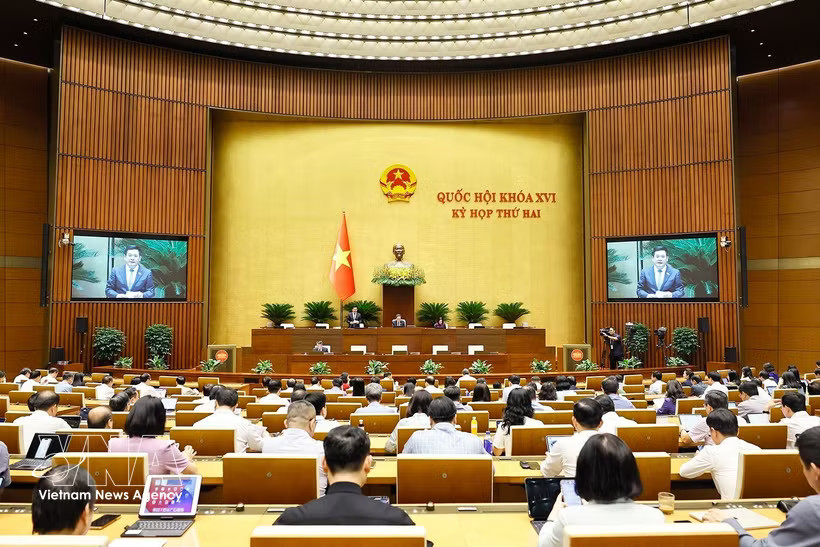
Hanoi (VNA) – The National Assembly (NA) heard a proposal and a verification report on a draft law amending and supplementing several articles of seven laws covering culture, sports and tourism at its second session of the 16th legislature on October 20.
The draft law covers the Law on Physical Training and Sports, the Law on Tourism, the Law on Libraries, the Law on Cinematography, the Law on Cultural Heritage, the Law on Advertising, and the Law on the Press.
Presenting the proposal on behalf of the Government, Minister of Culture, Sports and Tourism Lam Thi Phuong Thanh said the draft aims to institutionalise the Party’s policies on restructuring the state apparatus, operating the two-tier local administration model, strengthening decentralisation, cutting administrative procedures and business conditions, promoting digital transformation, and resolving problems arising during the implementation of existing laws.
The draft consists of eight articles, with amendments transferring authority to ministries and local authorities while reducing administrative requirements.
Under the proposed amendments to the Law on Physical Training and Sports, the authority to organise the national Phu Dong Sports Festival for students would be transferred from the Prime Minister to the Minister of Education and Training. The Minister of Culture, Sports and Tourism would also be authorised to organise regional, continental and world-level sports championships and youth championships in Vietnam.
For the Law on Tourism, the draft proposes amending, supplementing or repealing 38 of its 78 articles. It would transfer the authority to recognise tourist attractions from provincial-level People’s Committees to provincial tourism authorities, and the recognition of interprovincial national tourist areas from the Prime Minister to the Minister of Culture, Sports and Tourism.
The draft would also remove procedures for renewing or reissuing tour operator licences and vehicle identification signs for tourist transport, recognise electronic tour guide cards as legally valid, abolish tourism planning regulations and provide for annual state budget allocations to the tourism development support fund.
Amendments to the Law on Libraries would clarify the role of provincial libraries as central libraries, adjust commune-level library duties to fit the two-tier local administration model, and transfer authority to receive library activity notifications to provincial- and commune-level People’s Committees. This would shift management from pre-approval to post-inspection.
The proposed changes to the Law on Cinematography would allow agencies using public funds to commission, assign, or put out to tender state-funded film projects. The draft also provides for state budget support for films serving political tasks, strengthens the responsibilities of online film distributors, and authorises provincial-level People’s Committees to license film festivals, awards and competitions involving foreign elements.
The draft would further decentralise decisions on UNESCO emergency heritage assistance dossiers, approval of plans to protect UNESCO documentary heritage, and the detection of deterioration at national and provincial-level relic sites.
Amendments to the Law on Advertising would remove separate licensing requirements for dedicated advertising channels operated by broadcasting organisations and abolish regulations on outdoor advertising plans.
For the Law on the Press, certain changes to information stated in press operation licences would be subject to notification within five days instead of prior approval.
Presenting the verification report, Nguyen Dac Vinh, Chairman of the NA Committee for Culture and Social Affairs, supported the draft, saying its dossier was constitutional, lawful and consistent with the legal system.
The committee welcomed the removal of 13 proposed policy provisions whose impact assessments were considered insufficient, including those on online travel agencies, compulsory insurance for international tourists and construction in protected heritage areas.
It also backed stronger decentralisation and the shift from pre-inspection to post-inspection, while urging the Government to assess the resources needed to implement the changes, clarify coordination mechanisms among ministries and localities, and issue guiding documents in a timely manner.
Lawmakers discussed the draft in groups later the same day./.