

Vietnam, Denmark work together to build greener, more prosperous, sustainable future
Ahead of the State visit to Denmark by General Secretary and President To Lam and his wife, Ambassador Luong Thanh Nghi shared his views on Vietnam-Denmark cooperation.
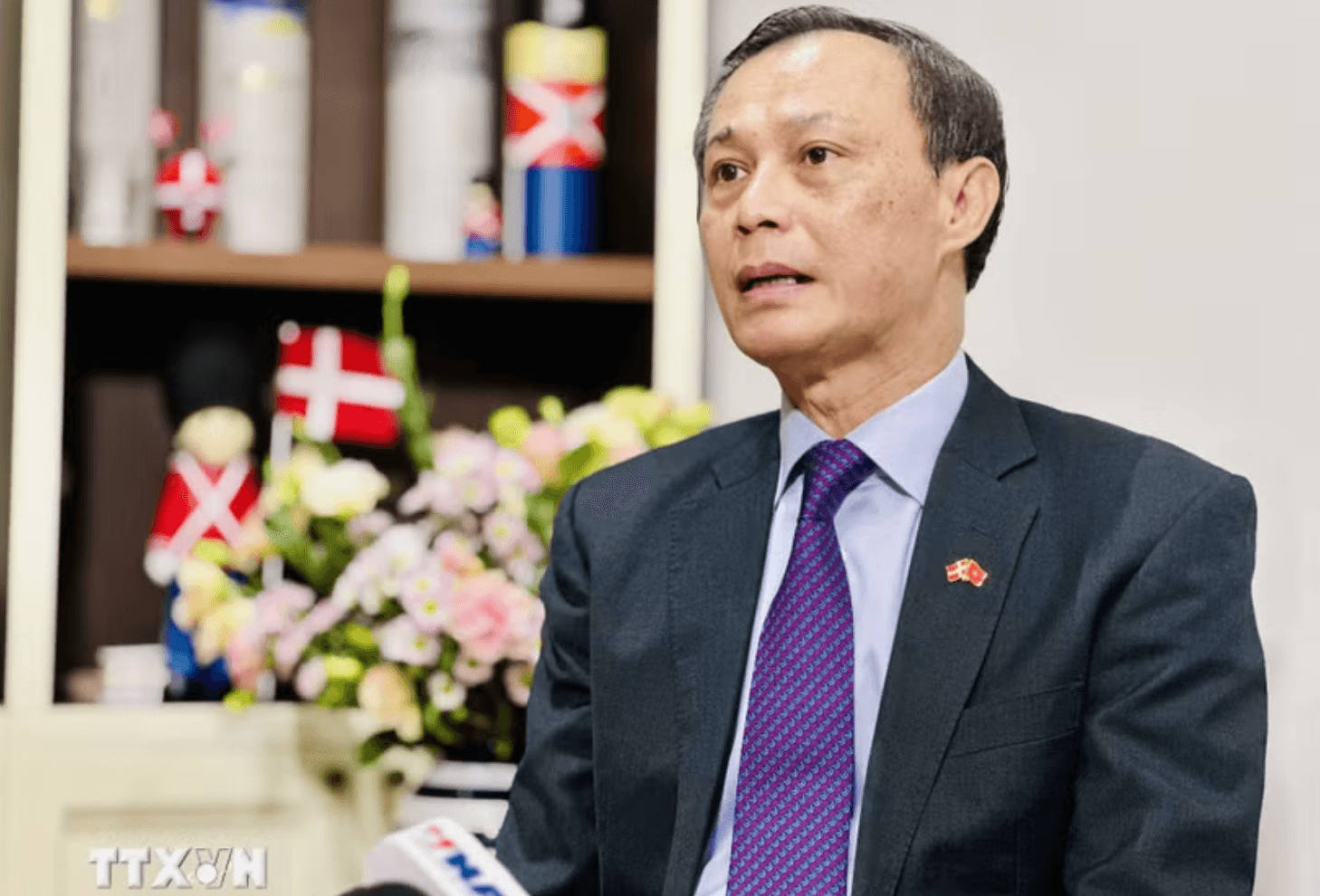
Hanoi, October 18 (VNA) - The upcoming State visit to Denmark by General Secretary of the Communist Party of Vietnam Central Committee and President To Lam is expected to generate fresh momentum for Vietnam-Denmark relations and open up cooperation opportunities aligned with the development needs of both sides, according to former Vietnamese Ambassador to Denmark Luong Thanh Nghi.
Speaking to the Vietnam News Agency ahead of the visit, he highlighted the particular significance of the visit as the first to Denmark by Vietnam’s top Party and State leader since the two countries established a comprehensive partnership in 2013 and a Green Strategic Partnership in 2023.
The visit also comes at a time when King Frederik X has been on the throne for just over two years and Denmark’s new government, formed in June 2026, has been in office for slightly more than four months. Nghi said the timing underscored the high level of political trust and the importance both countries attached to their friendship and strategic cooperation.
Coinciding with the 55th anniversary of diplomatic relations, the visit will provide an opportunity to strengthen political trust, review more than five decades of bilateral ties and chart the course for the next stage of cooperation, he said.
The ambassador said that Vietnam is entering a new phase of development, with a growth model driven by science and technology, innovation and digital transformation. Its priorities include improving productivity, growth quality and economic competitiveness, while accelerating the green transition, energy transition, structural transformation and improvements in workforce quality.
Denmark, meanwhile, is pursuing strategic autonomy and strengthening its focus on the Asia-Pacific, with Southeast Asia regarded as a priority region. Over several decades, it has consistently pursued policies on energy, the environment and sustainable development, building its competitiveness based on knowledge, technology, workforce quality and cooperation across society despite limited natural resources.
These are also areas in which Vietnam has substantial demand for cooperation. Denmark, for its part, highly valued Vietnam’s aspirations and determination to pursue the green transition and sustainable development, regarding the country as one of its leading partners in the shift towards a green economy, he held.
After 55 years of bilateral ties, the two countries have many reasons to be confident about future cooperation, he said, adding although they differ in size, development conditions and specific priorities, both aspire to build prosperous economies, improve quality of life and create a more sustainable future for generations to come.
According to Nghi, Vietnam-Denmark relations have been nurtured not only through high-level meetings and government commitments but also through people and businesses that believe in the benefits of cooperation.
The Foreign Investment Agency reported that Denmark had had 180 valid investment projects in Vietnam as of the end of August 2026, with total registered capital of nearly 2.5 billion USD, ranking 21st among 154 countries and territories investing in the country.
A prominent example was LEGO Group’s project to build the world’s first carbon-neutral factory in Vietnam, with an investment of more than 1 billion USD in the former Binh Duong province (now part of Ho Chi Minh City). The facility was inaugurated and began operations in April 2025, creating around 4,000 jobs.
Major Danish and international companies in manufacturing, technology, maritime transport, logistics and renewable energy have also established a presence in Vietnam. These include Ecco, Pandora, A.P. Moller-Maersk, Danfoss, Mascot, Vestas and Carlsberg.
Nghi observed that most Danish projects focused on green manufacturing, social responsibility and wider economic benefits. They could serve as models for high-quality investment, demonstrating Vietnam’s determination to attract green projects and achieve net-zero emissions by 2050. Such tangible cooperation reflected the shared vision and commitment of the two countries to green growth and sustainable development, while providing a foundation for elevating bilateral relations.
He added that considerable potential remained untapped. The two countries see many opportunities to expand cooperation in renewable energy, particularly offshore wind power, as well as maritime transport, smart logistics, digital transformation, artificial intelligence, quantum technology, semiconductors and biomedicine. These areas could help businesses in both countries benefit from green value and supply chains and advanced technologies.
Beyond investment, he called for stronger cooperation in research, workforce training, technology development and business connectivity. Joint programmes should deliver measurable results, including stronger technological capabilities, lower emissions, more efficient resource use and additional high-quality jobs.
Beyond deepening existing cooperation, Nghi hoped the visit would provide fresh impetus for collaboration in the maritime economy, including maritime transport, logistics and offshore wind power, as well as green technology, innovation, digital transformation, education and human resource development.
He also expected the visit to encourage businesses from both countries to expand investment, strengthen supply-chain links and develop projects with long-term value.
Denmark is among the world’s most advanced economies and a global leader in several fields, including offshore wind power, energy-transition technologies, renewable energy transmission and storage, and quantum technology.
Nghi said leveraging the momentum in bilateral relations to advance cooperation in these fields would make a practical contribution to Vietnam’s sustainable development. The two countries could also expand collaboration in parliamentary diplomacy, judicial affairs, culture, environmental protection and climate change adaptation.
He stressed the need for stronger multilateral cooperation at the United Nations, EU-ASEAN dialogue and, in particular, the Partnership for Green Growth and the Global Goals 2030 (P4G), of which Vietnam and Denmark are both founding members.
At the same time, Nghi emphasised that people-to-people exchanges, cooperation among localities, universities and social organisations, and the role of the Vietnamese community in Denmark would remain essential to the long-term strength of bilateral relations.
Over the 55 years since diplomatic relations were established, Vietnam and Denmark have built a solid foundation of friendship, trust and increasingly close cooperation. Rooted in historical ties and the affection shared by the Royal Family and the two countries’ people, their relationship is entering a new chapter centred on the green transition, innovation and sustainable development, he said.
On that foundation, he noted, Vietnam and Denmark can work together to build a greener, more prosperous and more sustainable future./.