

Urgent action needed to address law enforcement as weak link: Top leader
Chairing the September meeting of the Standing Board of the central steering committee on institution improvement and law enforcement, which also saw the attendance of Politburo members: Prime Minister Le Minh Hung and Standing Member of the Party Central Committee’s Secretariat Tran Cam Tu, General Secretary and President Lam said the effectiveness of lawmaking and enforcement should be measured by the removal of bottlenecks, lower compliance costs, better mobilisation of resources, stronger discipline and the effective protection of the legitimate rights and interests of people and businesses.
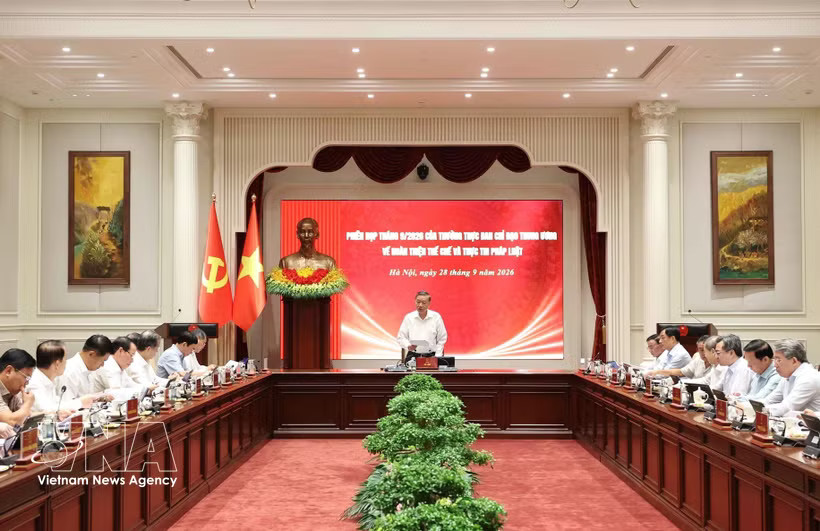
Hanoi (VNA) – General Secretary of the Communist Party of Vietnam Central Committee and President To Lam on September 28 called for urgent and fundamental improvements in law enforcement, stressing that legislation and its enforcement must form a unified whole and ultimately serve development, protect legitimate rights and interests, and strengthen public trust.
Chairing the September meeting of the Standing Board of the central steering committee on institution improvement and law enforcement, which also saw the attendance of Politburo members: Prime Minister Le Minh Hung and Standing Member of the Party Central Committee’s Secretariat Tran Cam Tu, General Secretary and President Lam said the effectiveness of lawmaking and enforcement should be measured by the removal of bottlenecks, lower compliance costs, better mobilisation of resources, stronger discipline and the effective protection of the legitimate rights and interests of people and businesses.
Regarding the comprehensive review of legal documents, he called for greater quality, responsibility and urgency, with priority given to regulations that hinder investment, production and business or increase compliance costs. Where shortcomings have already been clearly identified and there are sufficient grounds for action, competent agencies should address them immediately rather than wait for the completion of the overall review. He requested the Party Committee of the National Assembly to coordinate with the Party Committee of the Government and relevant agencies to complete the report on the results of the comprehensive review and overall solutions, for submission to the steering committee at its second meeting, scheduled for this December.
The General Secretary and President stressed that each recommendation must clearly identify problematic provisions, their impacts and causes, as well as proposed solutions, with feedback from people and businesses and practical experience in the justice system taken into account. Where the problem lies in regulations, they should be amended; where enforcement is weak, corrective measures must be taken.
He also called for greater attention to legal gaps and policies that have not been fully institutionalised, particularly issues affecting investment, business, the operation of the new administrative apparatus and the exercise of citizens’ rights. Inter-sectoral problems should be addressed in a coordinated manner to prevent different agencies from resolving only parts of an issue while bottlenecks remain.
On the strategy for completing the legal system in the new era, the top leader stressed that the goal should be a modern legal system operating on digital data and artificial intelligence by 2045, together with a democratic, professional and incorruptible judiciary. By 2030, there must be a clear improvement in law enforcement, with fundamental shortcomings addressed and delays and outstanding detailed regulations eliminated.
He stressed that laws must be stable enough for people and businesses to anticipate their rights and obligations and feel secure in investing, while remaining flexible enough to respond to development requirements, international integration, technological advances, new business models, climate change and emerging issues. The shift from pre-inspection to post-inspection should be based on standards, data, risk management and accountability.
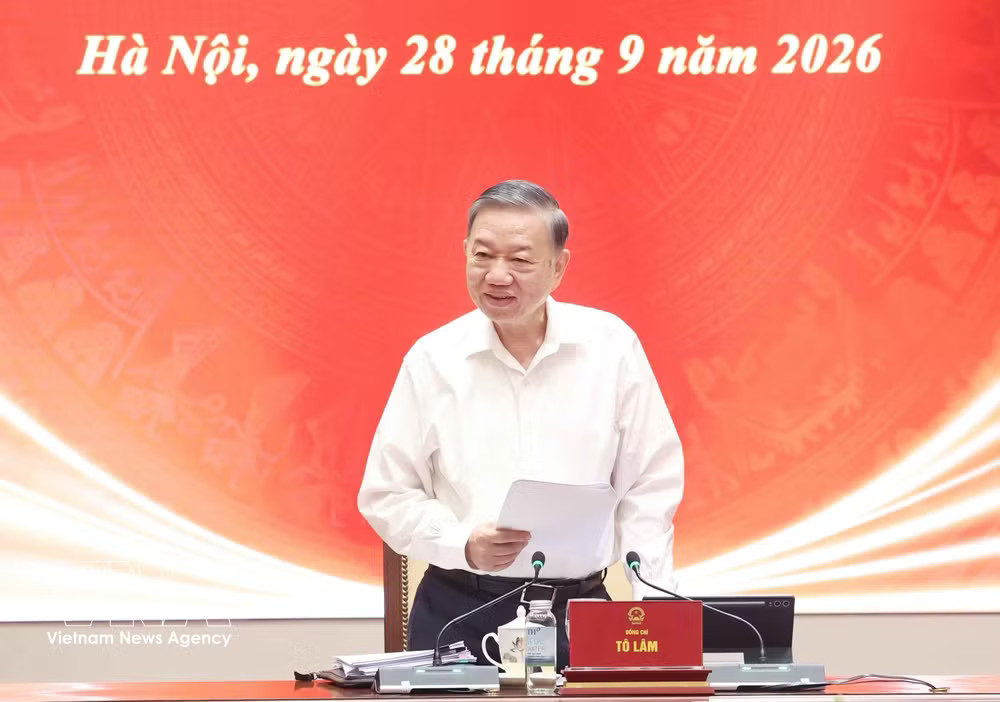
Regarding law enforcement organisation and a culture of legal compliance, General Secretary and President Lam emphasised that enforcement must become a continuous responsibility from policy formulation to evaluation of results. Sectoral and local management agencies and their heads should bear primary responsibility, while legal and judicial bodies should provide guidance, monitoring and advice.
He called for an end to delays and outstanding detailed regulations, stressing that each policy must identify those responsible for implementation, available resources, necessary conditions and expected results. Administrative documents must not be used to impose additional conditions or obligations beyond the law.
A culture of compliance begins with the exemplary conduct of State agencies, officials and Party members, he stated, adding that harassment, arbitrariness and avoidance of responsibility must be addressed, while those who act correctly should be protected and violations handled fairly. Greater support should also be provided to vulnerable groups and small- and medium-sized enterprises.
Regarding the handling of administrative violations, he called for a shift from detecting violations for punishment to risk management, prevention, guidance and improved compliance, supported by digital transformation and data-based governance. He also requested measures to reduce costs and shorten the settlement of civil and commercial disputes, and ensure fairness, objectivity and efficiency in line with judicial reform and international practice./.