

Asia-Pacific dialogue on heritage and authenticity opens in Hanoi
Vietnam hopes the Hanoi Document to be adopted at the dialogue will go beyond statements of intent and provide practical guidance for heritage protection and management across the region.
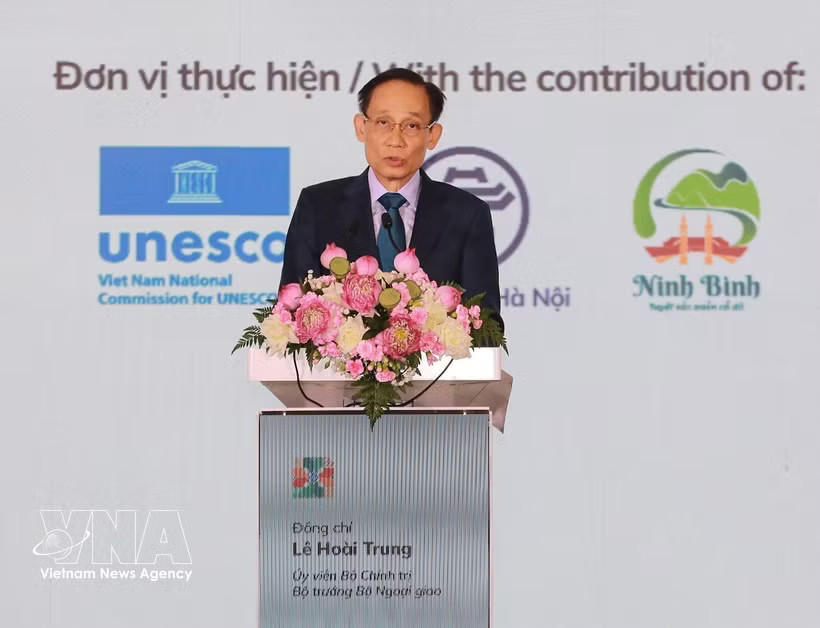
Hanoi (VNA) – The Asia-Pacific Dialogue on Heritage and Authenticity opened in Hanoi on September 28, bringing together around 250 Vietnamese and international delegates to discuss ways to preserve heritage while promoting sustainable development.
The five-day dialogue, jointly organised by the Vietnam National Commission for UNESCO, UNESCO, the Hanoi People’s Committee and the Ninh Binh People’s Committee, is being held in Hanoi and Ninh Binh from September 27 to October 1.
Politburo member and Minister of Foreign Affairs Le Hoai Trung attended the opening and delivered remarks on behalf of the Vietnamese Government.
The event brings together senior Vietnamese officials, UNESCO representatives, members of the World Heritage Committee, heritage managers, researchers and experts from across the Asia-Pacific region.
Among the international participants are Lazare Eloundou Assomo, Director of the UNESCO World Heritage Centre; Ihsan Mustafa Yurdakul, Chairperson of the 49th session of the World Heritage Committee; and Jonathan Wallace Baker, UNESCO Representative to Vietnam.
In his opening remarks, Trung highlighted the significance of the dialogue as Vietnam and UNESCO mark the 50th anniversary of their relations.
He noted that the UN General Assembly has adopted a resolution declaring 2027-2036 the International Decade of Culture for Sustainable Development, an initiative launched by Vietnam and co-sponsored by 103 countries. The year 2027 will also mark 55 years since the adoption of the 1972 World Heritage Convention.
The minister described heritage as a link between the past, present and future, stressing that preserving authenticity ultimately means respecting historical truth and the values handed down through generations.
The Asia-Pacific region, one of the cradles of human civilisation and a dynamic development hub, is facing growing pressure on its heritage from urbanisation, infrastructure development and climate change, he said.
Finding the right balance between conservation and development would provide valuable experience not only for the region but also for the wider world, he added.
Trung reaffirmed Vietnam’s commitment to putting culture at the heart of sustainable development. The country’s approach is to conserve heritage for development and use development to strengthen conservation, while avoiding trade-offs between cultural identity and short-term economic growth.
He called on delegates to focus on four priorities: promoting a shared understanding of authenticity while respecting cultural diversity; ensuring that conservation and restoration decisions are grounded in science and responsible technology use; putting people and communities at the centre of heritage protection; and strengthening international cooperation, knowledge sharing and capacity building.
The minister also proposed establishing an Asia-Pacific Heritage Cooperation Network and working with UNESCO to organise regular training programmes for young heritage professionals.
Vietnam hopes the Hanoi Document to be adopted at the dialogue will go beyond statements of intent and provide practical guidance for heritage protection and management across the region, he said.
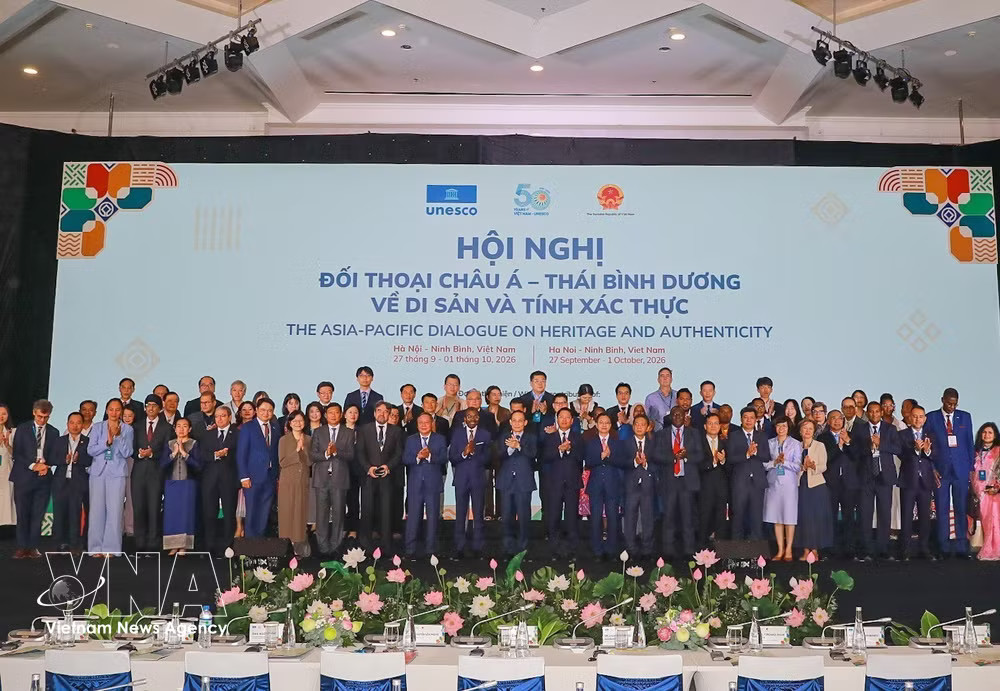
Speaking at the opening, Deputy Secretary of the Hanoi Party Committee Nguyen Van Phong said Hanoi has more than 6,000 historical and cultural sites, thousands of inventoried intangible cultural heritage elements, numerous national treasures and UNESCO-recognised heritage sites.
Phong said the capital faces the dual task of safeguarding the integrity, authenticity and identity of its heritage while turning heritage into a resource for education, cultural development, socio-economic growth and better livelihoods.
He highlighted the significance of holding the dialogue in Hanoi as the capital steps up efforts to conserve and promote the Imperial Citadel of Thang Long and implements the project on the preservation, restoration and rehabilitation of Kinh Thien Palace.
In his remarks, Yurdakul praised Vietnam’s active role as Vice Chair of the World Heritage Committee.
He said stronger Asia-Pacific dialogue would help make the World Heritage system more inclusive and sustainable by promoting respect for cultural diversity. He also pledged to work with Vietnam to advance dialogue outcomes at the 49th session of the World Heritage Committee in Istanbul, Türkiye, in 2027.
Speaking on behalf of the UNESCO Director-General, Assomo thanked Vietnam for hosting the dialogue and praised its efforts to link heritage conservation with sustainable socio-economic development and local livelihoods.
He highlighted the management of heritage sites, including the Imperial Citadel of Thang Long, Trang An, Hoi An, Hue, Ha Long Bay and the Yen Tu complex as valuable experience for the international community.
Assomo also welcomed Vietnam’s initiative for the International Decade of Culture for Sustainable Development, adopted by the UN General Assembly on September 4, 2026, and pledged UNESCO’s continued support for its implementation.
Before the opening session, Trung held a working meeting with the Chairperson of the World Heritage Committee’s 49th session, the Director of the World Heritage Centre, ambassadors to UNESCO, representatives of ICOMOS and other international delegates.
The minister reaffirmed Vietnam’s appreciation of UNESCO’s role in promoting multilateralism and issues relating to culture, education, science and technology, communications and digital transformation, while highlighting the substantive partnership between Vietnam and UNESCO over the past five decades.
He also reaffirmed Vietnam’s commitment to preserving and promoting its 79 UNESCO heritage designations and titles, while seeking continued cooperation and technical support for the Imperial Citadel of Thang Long, Kinh Thien Palace, the Oc Eo - Ba The dossier and other heritage nominations under preparation.
The dialogue continues with plenary sessions, expert discussions, exhibitions and activities at the Imperial Citadel of Thang Long, including the groundbreaking ceremony for the preservation, restoration and rehabilitation of Kinh Thien Palace.
The closing session is scheduled for September 30 and is expected to adopt the Hanoi Document on Heritage and Authenticity, setting out Asia-Pacific perspectives and priorities on authenticity within the World Heritage system.
In Ninh Binh, delegates will visit the Trang An Landscape Complex and the Tam Chuc area, combining policy discussions and expert exchanges with field experience in heritage conservation and management./.