

UNESCO ready to work with Vietnam to implement International Decade of Culture for Sustainable Development initiative: Representative
Jonathan Wallace Baker, UNESCO Representative to Vietnam, noted that the official proclamation of the 2027–2036 period as the "International Decade of Culture for Sustainable Development" comes at a particularly important moment. As the international community works to accelerate progress towards the 2030 Agenda while beginning to consider what comes after 2030, the Decade provides a ten-year framework to strengthen the place of culture in development.
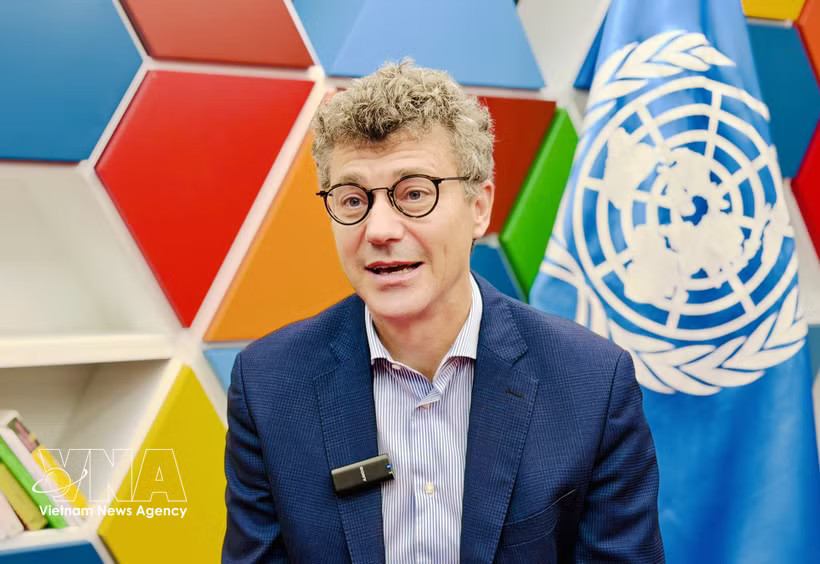
Hanoi (VNA) - UNESCO looks forward to working closely with Vietnam, other United Nations member states, the UN system and partners in developing the Action Plan for implementing the International Decade of Culture for Sustainable Development and translating this shared commitment into results, Jonathan Wallace Baker, UNESCO Representative to Vietnam, stated in an interview granted to the Vietnam News Agency.
Baker noted that the official proclamation of the 2027–2036 period as the "International Decade of Culture for Sustainable Development" comes at a particularly important moment. As the international community works to accelerate progress towards the 2030 Agenda while beginning to consider what comes after 2030, the Decade provides a ten-year framework to strengthen the place of culture in development.
This Decade builds directly on the momentum of MONDIACULT 2025, where UNESCO Member States reaffirmed culture as a global public good and called for culture to be recognised as a goal in its own right in the post-2030 development agenda. In that sense, the Decade can serve as an important bridge between the current Sustainable Development Goals and the framework that will follow them.
He stressed that if culture is to have a stronger place in development, it should be reflected in concrete decisions, including stronger cultural policies and sustainable financing for culture; greater support for cultural and creative sectors and cultural rights; stronger protection of cultural diversity and heritage; and more systematic integration of culture into education, economic, social, environmental and development policies.
“Ultimately, the success of the Decade should be measured by the changes that take place for people and communities: whether cultural life becomes more vibrant and inclusive, whether creators and cultural practitioners have better opportunities and more sustainable livelihoods, and whether communities are better able to protect their heritage, knowledge and identity while adapting to change,” he said.
The initiative for the Decade originated from a proposal by Vietnam, was endorsed by consensus at the UNESCO General Conference in 2025 with 72 co-authors, and was officially adopted by the 80th UN General Assembly on September 4, 2026, with the broad co-sponsorship of 103 nations.
According to Baker, what is particularly significant is that the proposal speaks to a concern shared well beyond any one country: how culture can contribute more fully to sustainable development, social cohesion, creativity and resilience. Moving an idea from a national initiative, through UNESCO’s General Conference, and then to the UN General Assembly requires sustained dialogue and the ability to build common ground among countries with very different contexts and priorities.
The next phase is equally important. Leadership in proposing the Decade now needs to be matched by strong implementation. UNESCO looks forward to working closely with Vietnam in this process, he said.
Specifying how UNESCO and Vietnam will coordinate actions to realise the Decade's practical goals such as advancing the creative economy, digital culture, and the application of indigenous knowledge to environmental protection, the UNESCO representative said that UNESCO sees several concrete areas of cooperation.
The two sides can continue working together to strengthen cultural policies and their implementation. Vietnam has already taken important steps through Resolution No. 80-NQ/TW, the Strategy for the Development of Vietnam’s Cultural Industries to 2030 with a vision to 2045, the revised Law on Cultural Heritage and other national strategies. The country has also set a clear ambition for cultural industries to contribute 7% of GDP by 2030.
The challenge now is implementation: turning these commitments into effective policies, institutions, investment and measurable results. UNESCO can contribute through policy dialogue, international standards, technical expertise, cultural data and knowledge from other countries.
Besides, the two sides can work together to strengthen Vietnam’s cultural and creative ecosystem. The country’s four UNESCO Creative Cities already connect local creativity with international networks, but long-term growth will also depend on helping young creators build sustainable careers, strengthening cultural institutions and creating stronger links within the creative ecosystem. UNESCO is already supporting this direction through the Uplifting the Dynamic Cultural and Creative Industries in Vietnam 2025–2030 project with the Ministry of Culture, Sports and Tourism and support from the SOVICO Group.
Digital transformation is another important part of this picture. For Vietnam, the priority should be to develop connected and reliable cultural databases, protect cultural data and community rights, widen equitable access to digital cultural resources, and invest in the people and institutions needed to manage them responsibly.
Finally, the Decade can expand opportunities for international knowledge exchange. Through UNESCO’s global networks, South–South and triangular cooperation, Vietnam can learn from the experience of other countries while also sharing its own approaches and lessons. Vietnam’s initiative in bringing forward the Decade already shows that it can contribute ideas to the global cultural agenda, not simply participate in it, said Baker./.