

Vietnamese goods gain wider access to EU market
In the seventh year of implementing the EVFTA, the EU has completed its tariff liberalisation schedule, bringing import duties on approximately 99% of tariff lines for Vietnamese goods to zero. The development is expected to strengthen the competitiveness of Vietnamese businesses in the European market, but also requires them to improve their ability to meet increasingly strict market standards.
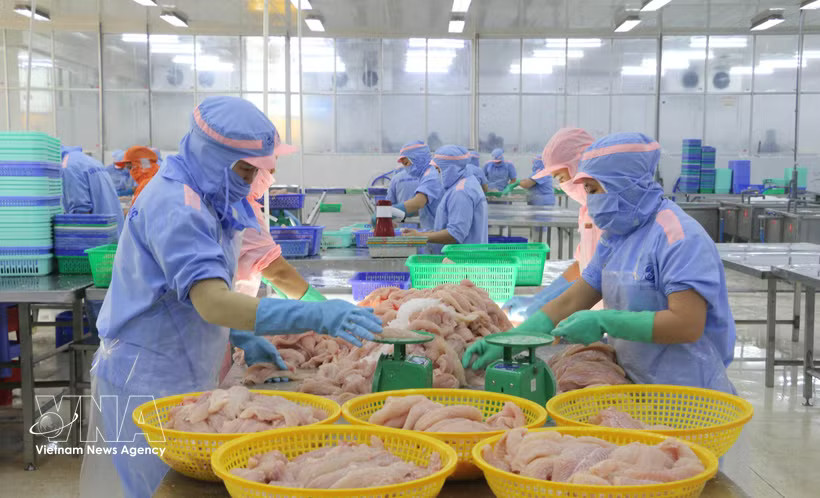
Vietnamese goods are gaining greater access to the European Union (EU) market as the tariff commitments under the EU-Vietnam Free Trade Agreement (EVFTA) reach an important milestone, creating new opportunities for exporters while placing greater demands on product quality, origin and sustainability.
In the seventh year of implementing the agreement, the EU has completed its tariff liberalisation schedule, bringing import duties on approximately 99% of tariff lines for Vietnamese goods to zero. The development is expected to strengthen the competitiveness of Vietnamese businesses in the European market, but also requires them to improve their ability to meet increasingly strict market standards.
After six years of implementation, the EVFTA has had a positive impact on trade between Vietnam and the EU.
Data for the first six months of 2026 showed that bilateral trade reached 41.4 billion USD, with Vietnam's exports standing at 31.8 billion USD and imports at 9.7 billion USD. Vietnam recorded a trade surplus of approximately 22 billion USD, exceeding the 21.7-billion-USD surplus for the whole of 2019, before the EVFTA took effect.
According to data from the Customs Department, total trade between Vietnam and the EU exceeded 900 billion USD between January 1995 and June 2026. Of this figure, 383.8 billion USD, or 42.6%, was generated during the six years since the EVFTA came into force, highlighting the growing importance of the agreement to bilateral trade.
The proportion of Vietnamese exports benefiting from preferential certificates of origin (C/Os) under the EVFTA increased from 14.8% in 2020 to approximately 35.1% in 2025. The value of goods issued with C/Os rose to around 18.13 billion USD.
The figures reflect progress in businesses' use of the agreement's tariff preferences, while also showing that considerable room remains for improvement.
Jean-Jacques Bouflet, Vice Chairman of the European Chamber of Commerce in Vietnam (EuroCham) and a former member of the EU's EVFTA negotiating team, said the agreement had helped create a complementary economic ecosystem in which both sides could build on their respective strengths.
European products, including high-tech goods, advanced machinery, equipment and pharmaceuticals, contribute to improving Vietnam's industrial productivity. Meanwhile, Vietnamese electronics, mechanical engineering, textiles, footwear, wooden products and agricultural goods are playing an increasingly important role in European supply chains and consumer markets, he said.
The EVFTA has also helped raise Vietnam's profile among European businesses seeking to expand their operations in Asia.
According to EuroCham's Business Confidence Index for the second quarter of 2026, 55% of surveyed European businesses considered Vietnam a core operational hub or a key growth market, while 22% regarded the country as an important part of their regional networks.
These figures indicate that Vietnam is becoming an increasingly important base for European companies' long-term expansion strategies in Asia.
Tariff preferences come with higher standards
The EVFTA is entering an important implementation phase, especially regarding the tariff incentives. The EU has officially completed its trade liberalisation roadmap, opening the duty-free door for 99% of Vietnam's export goods.
Vietnam, meanwhile, will continue reducing tariffs on EU goods under its own schedule, with the process expected to be completed by 2030.
Bouflet noted that the EVFTA covered much more than tariffs, extending to customs procedures, technical standards, intellectual property and sustainable development.
Environmental and supply-chain regulations, including the EU's Carbon Border Adjustment Mechanism (CBAM), the EU Deforestation Regulation (EUDR) and requirements linked to the European Green Deal, are placing greater demands on exporters.
Businesses' ability to comply with these regulations will be crucial to maintaining their export advantages, he said.
Simplifying customs procedures, speeding up tax refunds, digitising documents and clarifying rules of origin would help businesses, particularly small and medium-sized enterprises, make better use of EVFTA preferences.
In March, the Ministry of Industry and Trade issued Circular No. 14/2026/TT-BCT on rules of origin for goods under the EVFTA, aiming to further improve the legal framework and origin certification mechanisms.
However, businesses must do more than understand the regulations to qualify for preferential tariffs. They need to closely monitor their sources of raw materials, ensure supply-chain traceability and maintain adequate documentation to prove the origin of their products.
As Vietnamese goods gain a stronger foothold in the EU market, the risk of trade defence investigations may also increase. Anti-dumping, countervailing and safeguard measures could create additional challenges for exporters.
Businesses therefore need to develop transparent accounting systems and maintain reliable records of production costs, prices and product origins to respond effectively to potential investigations./.