

Indonesia investigates 25 fortified rice brands that failed to meet nutritional requirements
The Indonesian government plans to revoke the marketing licences for 25 substandard rice brands and withdraw the related products from the market.
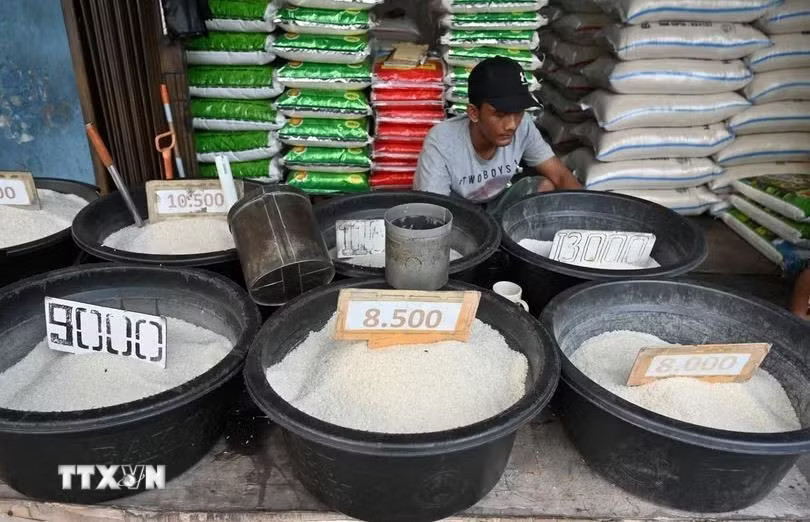
Jakarta (VNA) – Indonesia is stepping up its investigation into 25 of 27 rice brands advertised as fortified with micronutrients that failed to meet the nutritional standards stated on their packaging, with estimated losses to consumers reaching 89 trillion IDR (about 5 billion USD).
Minister of Agriculture and head of the Indonesian National Food Agency (Bapanas) Andi Amran Sulaiman said on September 17 that testing results from four laboratories showed that 25 rice brands did not meet the nutritional content advertised.
He said the main tactic was to use packaging and labels to advertise higher nutritional values than the actual content for profit.
While regular rice has a reference price of around 13,500 IDR per kilogramme, some fortified rice products were sold for between 25,000 and 57,000 IDR per kilogramme. With an average price difference of approximately 22,000 IDR per kilogramme, authorities estimate that consumers could suffer losses of around 89 trillion IDR.
Notably, Amran emphasised that this type of rice was originally intended to serve vulnerable groups such as children at risk of stunting, pregnant women, breastfeeding women and low-income individuals. However, the high prices and misrepresented quality risk undermining the programme's objectives.
The Indonesian government plans to revoke the marketing licences for 25 substandard rice brands and withdraw the related products from the market. The Ministry of Agriculture has collaborated with the Criminal Investigation Agency (Bareskrim) and the Food Task Force to investigate potential violations, including possible misrepresentation of labelling and nutritional content.
From September 10 to 12, authorities conducted an assessment of the safety standards and nutritional content of the products.
Police will also review the entire distribution chain to identify violations and responsible parties. If there is sufficient evidence of illegal activity, the individuals involved will be prosecuted in accordance with regulations. The process of identifying suspects is expected to take one to two months after the completion of inspections, verifications and scientific testing./.