

Greening agriculture through low-emission crop production
The scheme to sustainably develop 1 million ha of high-quality, low-emission rice in the Mekong Delta by 2030 is advancing, said Nguyen Quoc Manh, Deputy Director of the Department of Plant Production and Protection at the Ministry of Agriculture and Environment.
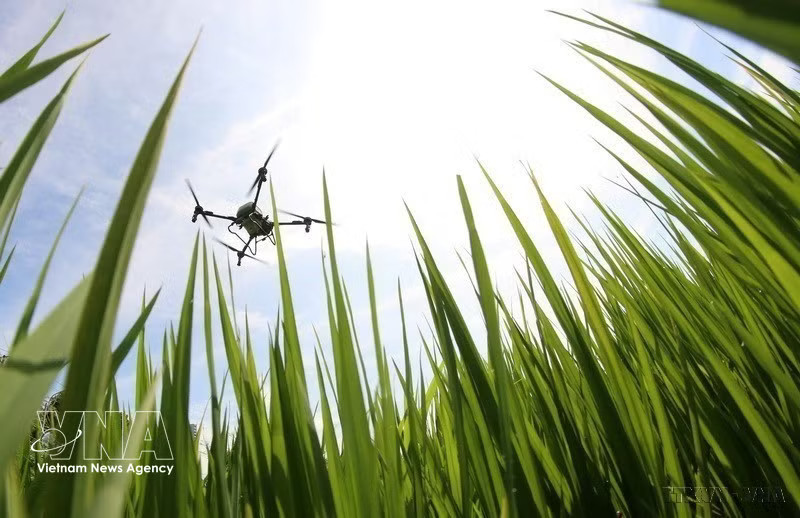
Vietnam's low-emission farming models are delivering, and farmers are buying in. The results are strong enough that the cultivation sector is now moving to standardise practices, clear regulatory bottlenecks and pool investment as it pushes toward a fully "green" system.
A rapid scale-up
The scheme to sustainably develop 1 million ha of high-quality, low-emission rice in the Mekong Delta by 2030 is advancing, said Nguyen Quoc Manh, Deputy Director of the Department of Plant Production and Protection at the Ministry of Agriculture and Environment.
The 2025 target was 180,000 ha. By year-end, cultivated area already topped 379,000 ha, more than double the goal. That figure climbed to almost 421,000 ha by August 2026, with roughly 68,000 ha meeting every criterion, as more than 175,000 farming households joined the scheme.
An Giang is leading the region with 159,667ha, followed by Dong Thap (97,053), Can Tho (76,000), Tay Ninh (69,390), Vinh Long (13,703) and Ca Mau (5,000).
Northern provinces are following suit, with low-emission rice models underway in Hung Yen, Ninh Binh and Hai Phong. Hai Phong alone is targeting 10,000 ha this year, said Luong Thi Kiem, Deputy Director of the municipal Department of Agriculture and Environment.
She said some 5,000ha are already in the final tillering and panicle-initiation stages, with early encouraging results. That puts Hai Phong on track to cut total greenhouse gas emissions 10-15% by 2035 from a 2020 baseline.
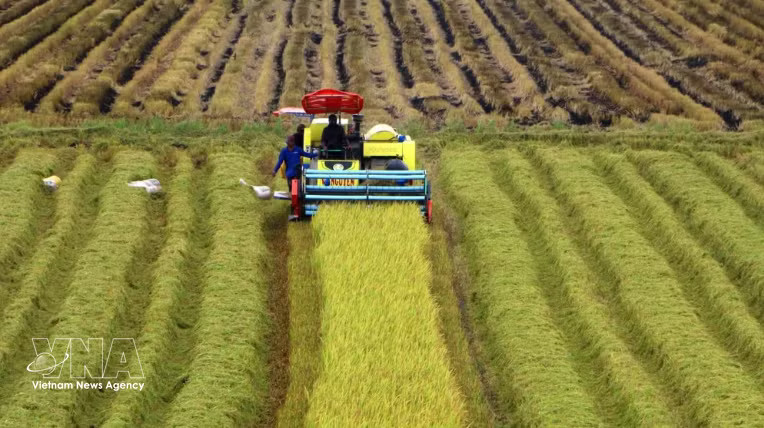
The ministry is not stopping at rice. It is drafting similar low-emission processes for coffee, cassava and other key crops as it looks to green the entire cultivation sector. It is a concrete step toward fulfilling Vietnam's international climate commitments - a foundation for a greener, responsible and higher-value agricultural sector.
Toward concentrated farming areas
According to local authorities, mechanism and policy coordination still falls short of what the scheme needs. Irrigation, farm roads, drying and storage facilities, and logistics remain inadequate in many areas.
Mechanisation is patchy in some areas, especially precision seeding and water management. Digital and technology adoption remains fragmented as well.
The measurement, reporting and verification (MRV) system, along with certification standards and carbon-credit mechanisms, remains unfinished. Unclear rules on managing and sharing emission-reduction revenue add another bottleneck. Some cooperatives also lack the management and service capacity to link farmers into the supply chain.
The sector's near-term focus is clearing those obstacles. Priorities include standardising the MRV system, building value chains and markets for low-emission products, and creating dedicated production zones by commodity and ecological region, Manh said.
The sector wants international donors to shift funding away from one-off pilot projects and toward standardisation and large-scale replication. That means prioritising research, testing and technical packages tailored to different ecological zones and growing seasons.
Core techniques include certified seeds, precision seeding to cut seed use, and alternate wetting-and-drying irrigation. Better nutrient management, including lower nitrogen use, improved soil health and integrated pest control, is also a priority.
Straw treatment and reuse, full-cycle mechanisation and coordinated drying and storage are next in line to cut losses. That will require new investment in irrigation, farm roads, storage infrastructure and logistics networks, Manh said./.