

Vietnam emerges as strategic bridge in ASEAN through Myanmar President’s visit
The official visit to Vietnam by Myanmar President Min Aung Hlaing from September 4-6 opened a new chapter in bilateral ties and contributed to regional peace and prosperity, while highlighting Vietnam’s constructive and pragmatic role in maintaining ASEAN unity and credibility.
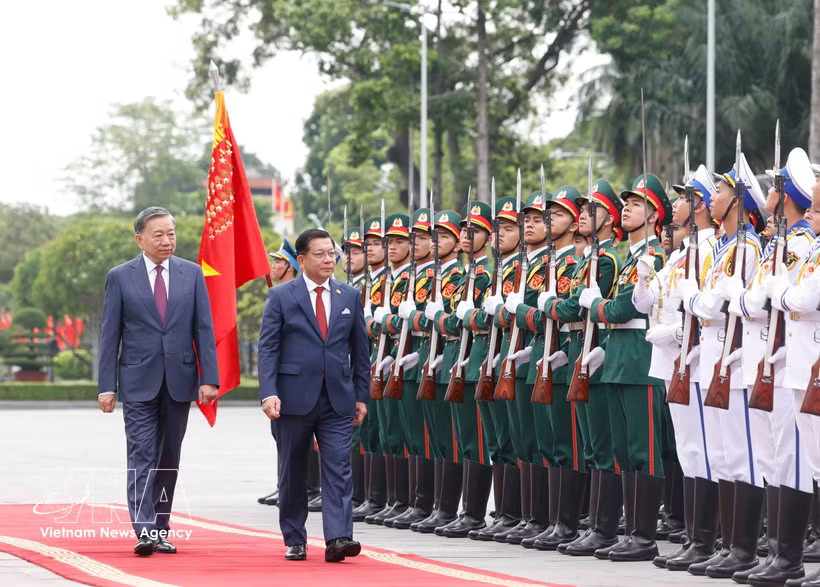
Hanoi (VNA) – The official visit to Vietnam by Myanmar President Min Aung Hlaing from September 4-6 was more than a step forward in bilateral ties, reflecting Vietnam’s increasingly active role in promoting peace and stability in Southeast Asia, according to Malaysia-based Southeast Asian history and defence researcher Enzo Sim.
Talking to the Vietnam News Agency, Enzo said the visit drew particular attention as it was President Min Aung Hlaing’s first official trip to Vietnam since Myanmar completed its general election in January 2026 and established a new government in April.
Vietnam’s state-level reception of the Myanmar leader, at the invitation of General Secretary of the Communist Party of Vietnam (CPV) Central Committee and President To Lam, sent a strong diplomatic message, showing that Myanmar’s new government is gradually being treated by neighbouring countries as a functioning government and creating opportunities to restore substantive and stable state-to-state relations.
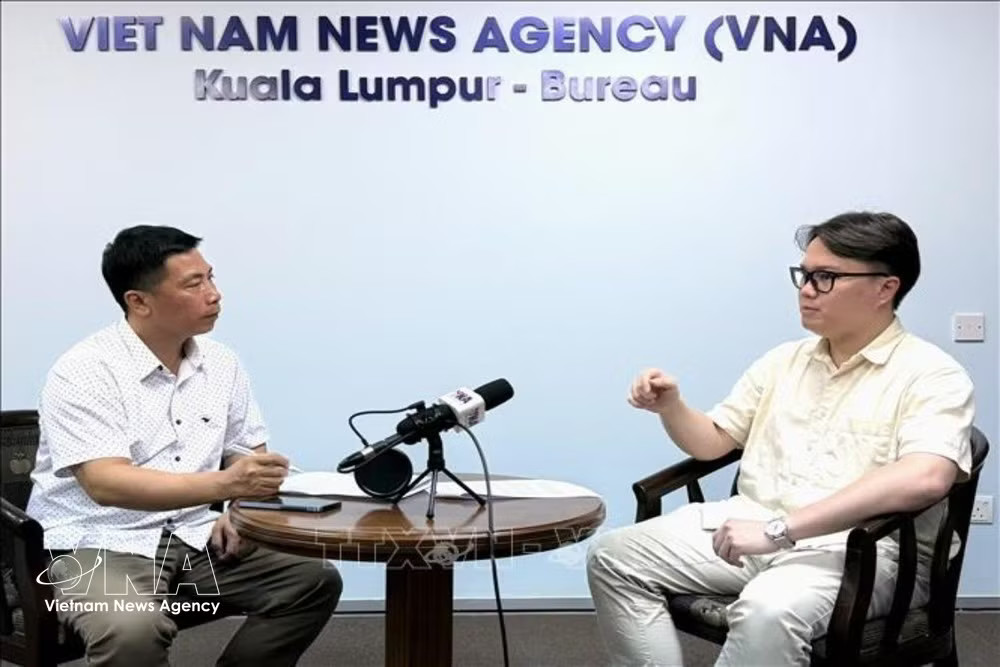
According to Enzo, after a prolonged period of international isolation, Myanmar is seeking to restore its diplomatic presence and engagement in Southeast Asia, with Vietnam emerging as a leading strategic destination.
This historic visit was the result of careful preparations by both sides. On August 25-26, Vietnamese Minister of Foreign Affairs Le Hoai Trung paid a working visit to Myanmar and co-chaired the first meeting of the Vietnam-Myanmar Joint Committee for Bilateral Cooperation since 2019, laying the groundwork for high-level agreements. The preparations have helped Hanoi-Naypyidaw ties move beyond a focus on maintaining political relations amid the post-2021 crisis toward more substantive cooperation centred on economic ties, functional security and development.
Enzo said economic cooperation is the most practical and promising pillar of the new partnership. Two-way trade fell sharply from about 853 million USD in 2020 to 590 million USD in 2025 amid the COVID-19 pandemic and Myanmar’s political turmoil. However, trade showed clear signs of recovery in the first half of 2026, reaching about 335 million USD.
The researcher highlighted the sides’ determination to restore and realise the target of 1 billion USD in bilateral trade. He said that the participation of a large Myanmar delegation, including ministers responsible for agriculture, industry, trade, digital development, investment and foreign trade, reflected this ambition.
As Myanmar needs investment capital, advanced technology, essential goods and deeper regional economic connectivity, Vietnam is well positioned to contribute, he said. As of June 2026, Vietnamese businesses had 107 valid investment projects in Myanmar with total registered capital of about 1.4 billion USD.
Enzo said Vietnam’s efforts to boost investment and trade connectivity would not only help maintain and expand its strong market position amid growing competition from regional partners, but also support Myanmar’s economic recovery. The Myanmar delegation’s engagements with Viettel and visit to a VinFast electric vehicle factory also demonstrated Naypyidaw’s interest in Vietnam’s digital infrastructure, telecommunications technology and environmentally friendly transport, opening prospects for high-tech cooperation.
Beyond economy, Enzo noted the importance of cooperation in non-traditional security, including online scam centres, human trafficking, drug smuggling, transnational organised crime and cybersecurity threats.
By focusing on these functional security issues, Vietnam has skillfully established a channel of highly substantive cooperation with the Naypyidaw authorities. This not only helps safeguard Vietnam’s national security interests but also directly contributes to ASEAN’s collective efforts to dismantle transnational criminal networks that are threatening stability across the region. This approach enables Vietnam to promote practical actions that benefit the people without becoming deeply involved in Myanmar’s complex internal political disputes, thereby creating a flexible and effective security cooperation model.
The researcher described Vietnam’s approach as a “two-track” diplomatic strategy. Bilaterally, it maintains direct dialogue and promotes practical economic and security cooperation for sustainable development of both sides. Multilaterally, Vietnam remains a responsible ASEAN member, consistently supporting the bloc’s Five-Point Consensus while preserving ASEAN unity and not unilaterally calling for Myanmar’s unconditional restoration of high-level political representation at ASEAN summits.
This delicate balance has strengthened Vietnam’s diplomatic standing in the region, he said, adding that Vietnam has positioned itself effectively as a valuable diplomatic bridge, maintaining a trusted working relationship with the Naypyidaw authorities while preserving close ties with other ASEAN members to uphold the bloc’s legitimacy.
According to the researcher, leveraging its diplomatic credibility, Vietnam could work closely with key partners such as Thailand and the Philippines to form a flexible policy coordination mechanism on Myanmar, helping advance gradual reintegration based on clear and measurable criteria while preventing deeper intra-bloc divisions.
He highlighted the visit as an important milestone, opening a new chapter in bilateral ties and contributing to regional peace and prosperity, while highlighting Vietnam’s constructive and pragmatic role in maintaining ASEAN unity and credibility./.