

Message from General Secretary and President To Lam at the Third Plenum of the 14th Party Central Committee: The two-tier local government model to better serve the people
After one year of operating the two-tier local government model, the Third Plenum of the 14th Party Central Committee sent a clear message: what the people expect is not merely a leaner apparatus. More importantly, they expect an apparatus that operates with greater capacity, effectiveness and efficiency, handles affairs more swiftly and transparently, and serves the people better. This shift from “streamlining” to “enhancing governance capacity” was the central theme running through the opening address delivered by General Secretary and President To Lam.
Streamlining is a prerequisite; serving the people is the ultimate goal
A notable highlight of the opening address at the Third Plenum was that General Secretary and President To Lam did not focus on figures showing reductions in organisational units or payrolls. Instead, he called for a substantive assessment of how effectively the apparatus has operated following its restructuring.
Accordingly, “streamlining is only a prerequisite; the goals are for the Party to exercise more effective leadership, the State to govern better, the apparatus to operate more swiftly, the people to receive better services, and their real living standards to improve.”
This message indicates that organisational reform is entering a new phase: ensuring that the restructured apparatus operates smoothly, with clearly defined personnel, tasks and responsibilities, while handling public affairs more effectively.
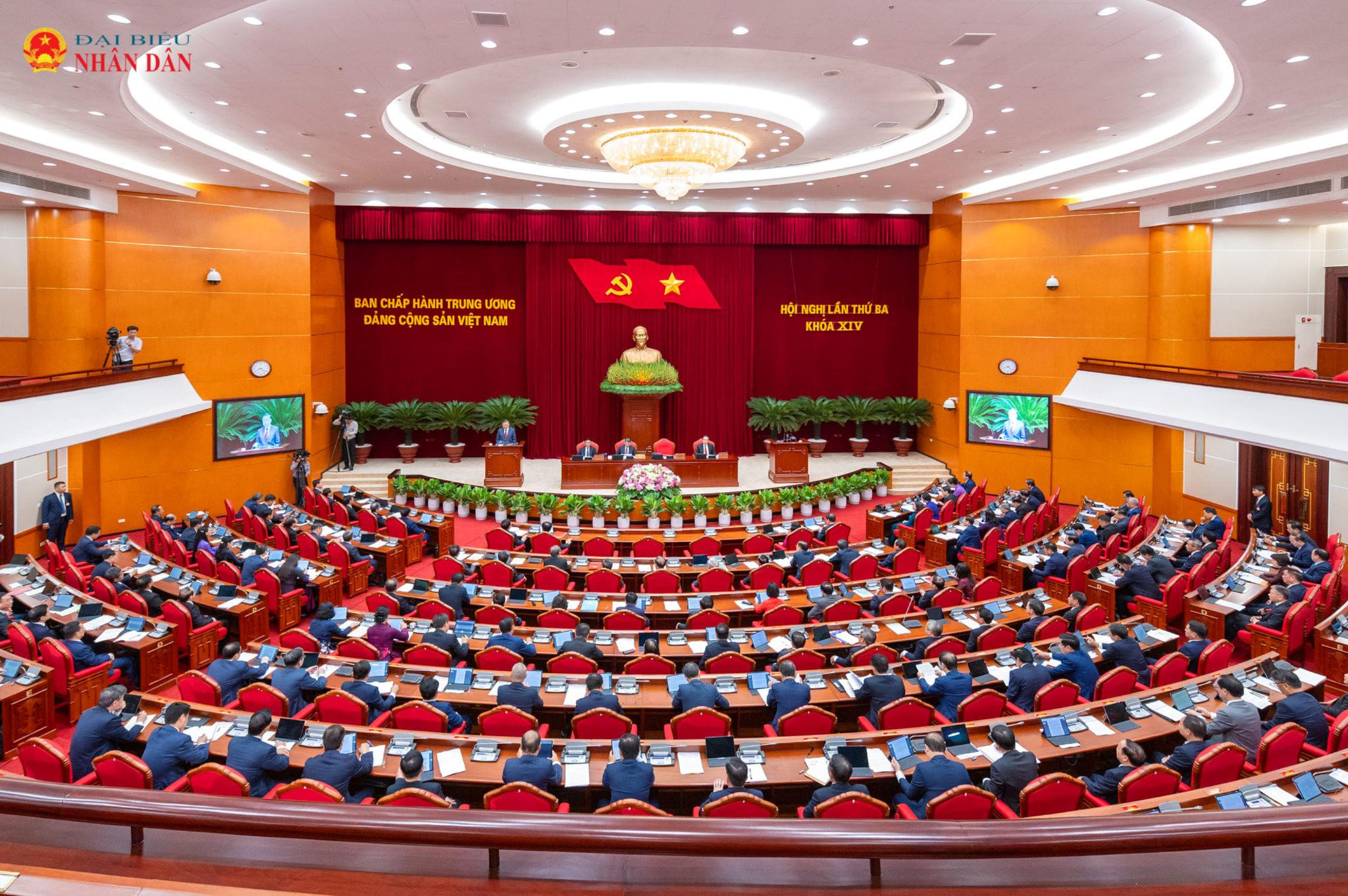
The first year of operating the two-tier local government model has shown that, alongside positive results, difficulties were unavoidable during the initial transition. Nevertheless, preliminary figures demonstrate that the reform is moving in the right direction and generating tangible changes in accordance with the principle of putting the people at the centre of public service.
The strong decentralisation of authority to localities has fundamentally changed the way public services are delivered. According to a report presented by the Government Party Committee at the conference reviewing the first year of operating the overall organisational model of the political system and the two-tier local government model, ministries now directly handle only 1,595, or 27.4%, of the country’s 5,816 administrative procedures. Meanwhile, 2,518 procedures have been assigned to the provincial level and 839 to the commune level.
This reflects a transition from a centralised management model towards one that delivers services directly at the grassroots, bringing government closer to the people.
Nationwide, more than 42.5 million administrative dossiers have been received. Of these, 91.74% were submitted online, while the rate of on-time processing remained above 95%. Nearly 95% of dossiers were digitised, and data from more than 16.5 million dossiers were accessed and reused.
Notably, the overall public satisfaction rate reached 83.08%, while as many as 89.09% of respondents said that harassment and obstruction by civil servants at the grassroots level were no longer occurring. These figures show that what people expect is for every procedure to be handled more quickly, every petition to be received and addressed promptly, and every visit to a public agency to be met with attentive and transparent guidance.
Speaking after completing administrative procedures in his locality, Nguyen Van Hung, a resident of Nam Hong Linh Ward in Ha Tinh Province, said that what matters most to people is whether their affairs are handled smoothly. When procedures can be completed at the grassroots level, without repeated travel, and dossiers are received digitally, people can most clearly feel the benefits of reform.
This is also precisely the spirit emphasised by General Secretary and President To Lam in his opening address: the measure of reform lies not only in the number of organisational units reduced, but also in the effectiveness of leadership and management and the quality of services provided to the people.
Every policy decision must generate new development capacity
Another notable point in the opening address was the requirement that every policy decision must not only address immediate difficulties but also answer three fundamental questions: Which bottleneck will it remove? What new development capacity will it generate? And what conditions are required to ensure its effective implementation?
This approach demonstrates a clear shift from a management mindset to one centred on enabling development. The value of a resolution will no longer be measured solely by its promulgated content, but by its ability to bring about tangible changes in governance, administration and the quality of services provided to people and businesses.
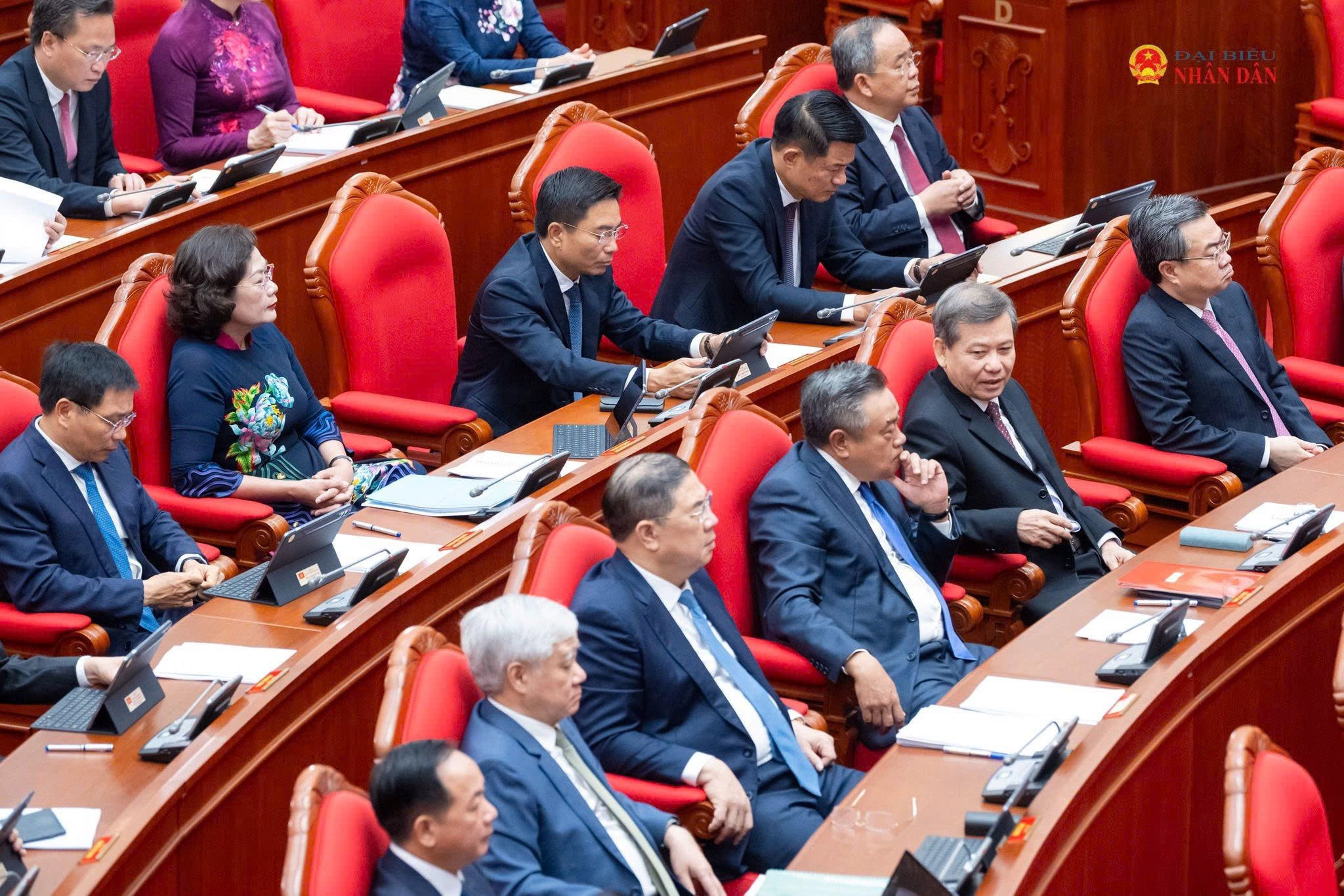
The first year of operating the two-tier local government model has provided initial evidence of the effectiveness of this approach. Decentralisation and the delegation of authority have been accelerated. Commune-level administrations have gradually affirmed their role as the level of government that directly handles the affairs of people and businesses. The effectiveness of state management and the quality of public services have continued to improve, creating new momentum for socioeconomic development.
In 2025, the country met or exceeded all 15 of its key targets. GDP grew by 8.02%, while the economy reached approximately USD 514 billion in size. Resources saved through the organisational restructuring were prioritised for investment in social welfare, education and grassroots healthcare.
However, as the Government has candidly acknowledged, the transition process continues to face considerable challenges.
Ngo Duc Thai, a war veteran from Hung Nguyen Commune in Nghe An Province, said the most noteworthy aspect of the General Secretary and President’s message was that organisational reform should not be regarded as an end in itself.
“Streamlining is a necessary condition, but it is not sufficient. More importantly, the new apparatus must generate new governance capacity, new implementation capacity and new development capacity,” Thai explained.
From this perspective, the four strategic shifts outlined by the General Secretary at the Plenum — enhancing the Party’s leadership and governing capacity; ensuring unified governance of the country’s development space; renewing the growth model based on science, technology and human capital; and proactively strengthening national resilience — are not merely strategic directions. They also represent a requirement for a comprehensive renewal of national governance in the new stage of development.
At the conclusion of his address, the General Secretary once again stressed that every resolution and conclusion adopted at the Plenum must immediately be translated into programmes and action plans, with “clearly defined objectives, tasks, authority, resources, responsibilities, deadlines, deliverables and outcomes.”
This is also what voters and the people expect: every major policy must not remain confined to promulgated documents but be transformed into changes that can be felt in daily life — from a shortened administrative procedure and a project completed on schedule to a more favourable investment environment.
Only when every policy decision genuinely creates new development capacity can reform build confidence and generate momentum for the next stage of the country’s development.