

Military Region 9 is implementing a plan to search for, collect, and identify the remains of fallen soldiers
Implementing the "500-day campaign to intensify the search, collection, and identification of the remains of fallen soldiers," Military Region 9 is currently collecting tens of thousands of remains of unidentified and partially identified fallen soldiers from cemeteries in Vinh Long and Can Tho cities for DNA testing, contributing to the identification of the remains of fallen soldiers.
Specifically, on the morning of May 29th, the Steering Committee 515 of Can Tho City held a conference to implement the plan for collecting samples of remains of martyrs from unidentified graves in martyrs' cemeteries for DNA testing, and the plan for searching for and collecting the remains of martyrs in the city.
At the conference, representatives from the Steering Committee 515 of Can Tho City presented the plan for collecting samples of remains of martyrs from unidentified graves in martyrs' cemeteries for DNA testing, and the plan for searching and collecting the remains of martyrs in the city. They also announced the decisions to establish inter-agency working groups and teams for collecting samples of martyrs' remains; and launched a competition in carrying out the tasks of collecting samples of martyrs' remains and searching for and collecting their remains.
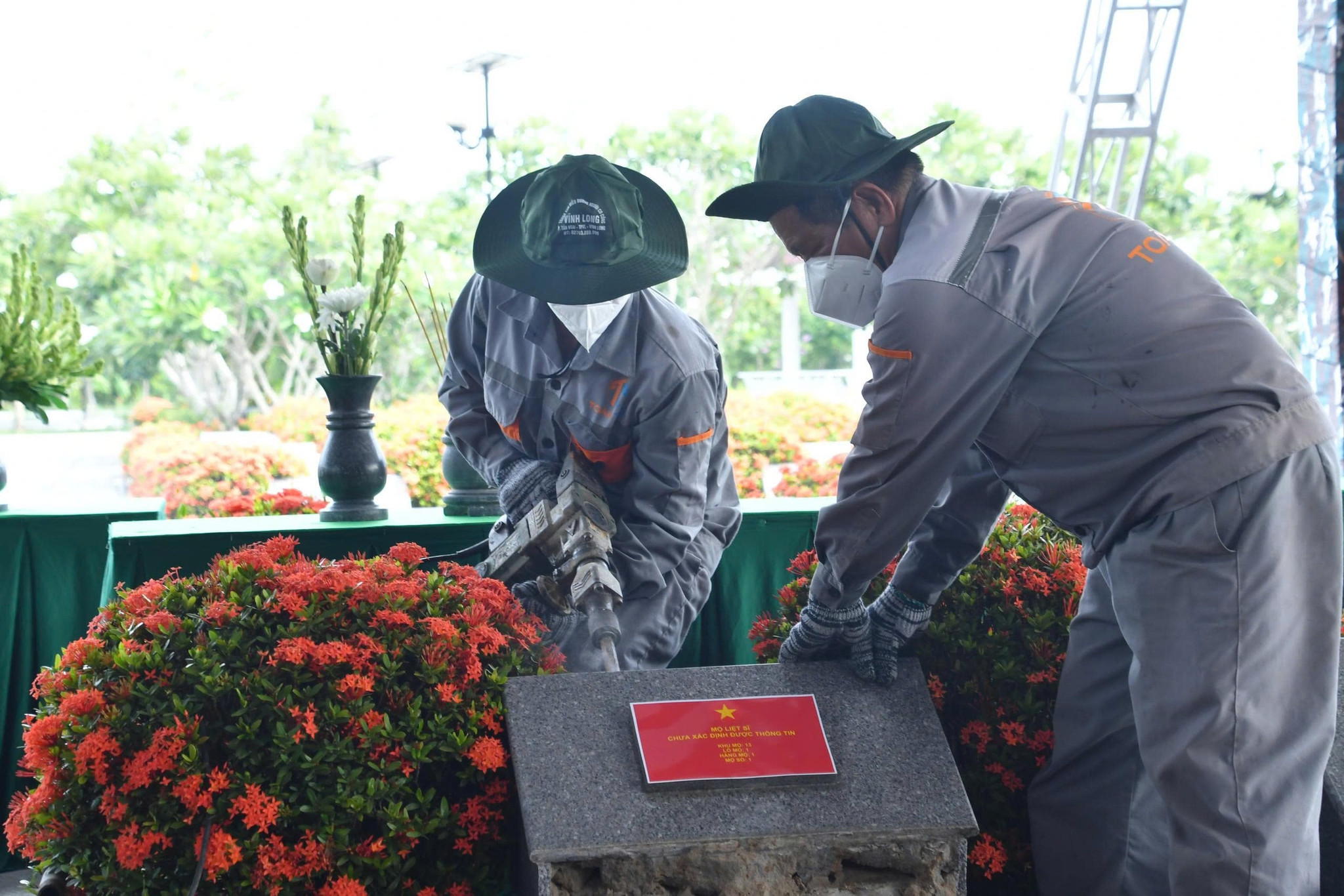
According to the City's Steering Committee 515, these activities are aimed at implementing the "500-Day Campaign to Intensify the Search, Collection, and Identification of Martyrs' Remains" launched by the National Steering Committee 515. From May 2026 to July 2027, the City's Steering Committee 515 will collect 5,122 samples of unidentified martyrs' remains from 17 martyrs' cemeteries; and conduct surveys, searches, and collection of martyrs' remains in Phong Dien, Thoi Lai, Truong Long Tay, Nhu Gia communes and Phuoc Thoi ward.
Martyr Le Ngoc Long from Ha Tinh is a special case, as both of his mothers were awarded and posthumously awarded the prestigious title of Heroic Vietnamese Mother by the State. His biological mother passed away long ago, while his adoptive mother is now 107 years old.
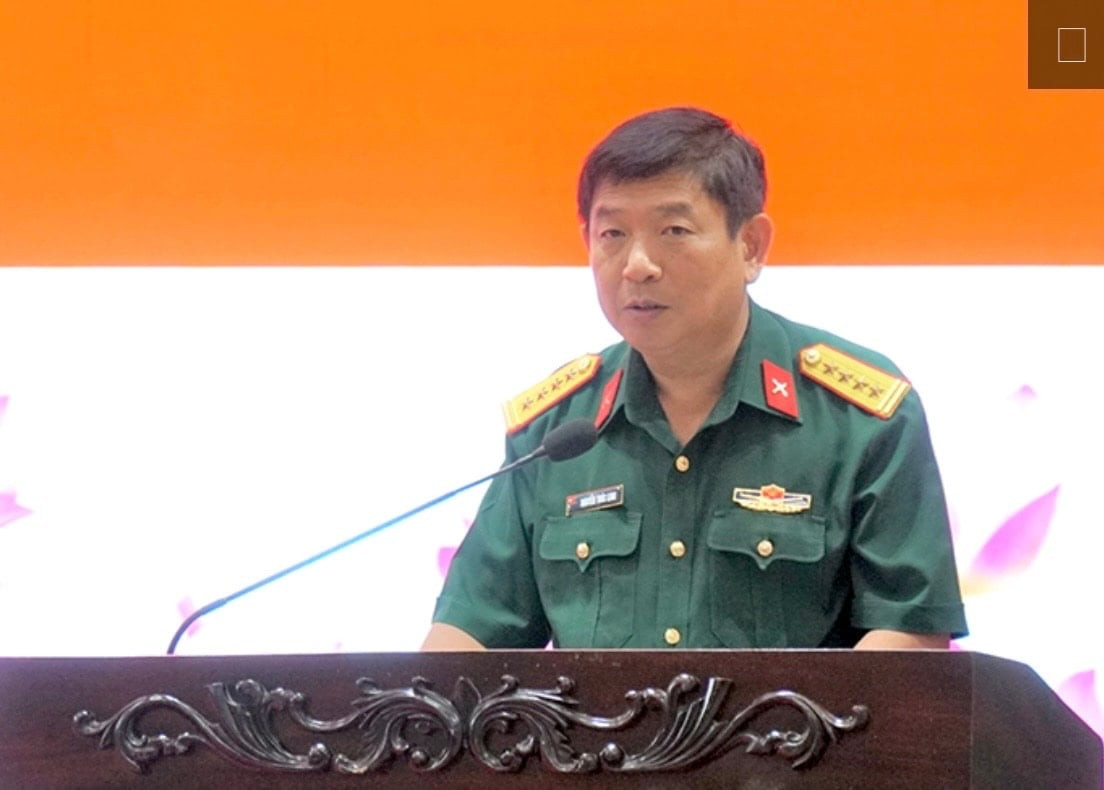
Speaking at the conference, the Deputy Head of Political Affairs of Military Region 9, Deputy Head of the Standing Committee of the 515 Steering Committee of Military Region 9, Colonel Nguyen Thuc Linh, requested the 515 Steering Committee of Can Tho City to continue prioritizing resources and focusing on leading and directing the organization of sample collection and handover of martyrs' remains, ensuring that the process is correct, scientific , accurate, safe, and effective; and to spread positive images and exemplary acts of responsibility, dedication, and humanity in the work of searching for, collecting, and identifying the remains of martyrs.
Previously, on May 27th, at the Vinh Long Provincial Martyrs' Cemetery, the Steering Committee 515 of Military Region 9 and the Steering Committee 515 of Vinh Long Province also collected 10 biological samples from the remains of unidentified martyrs for DNA testing.
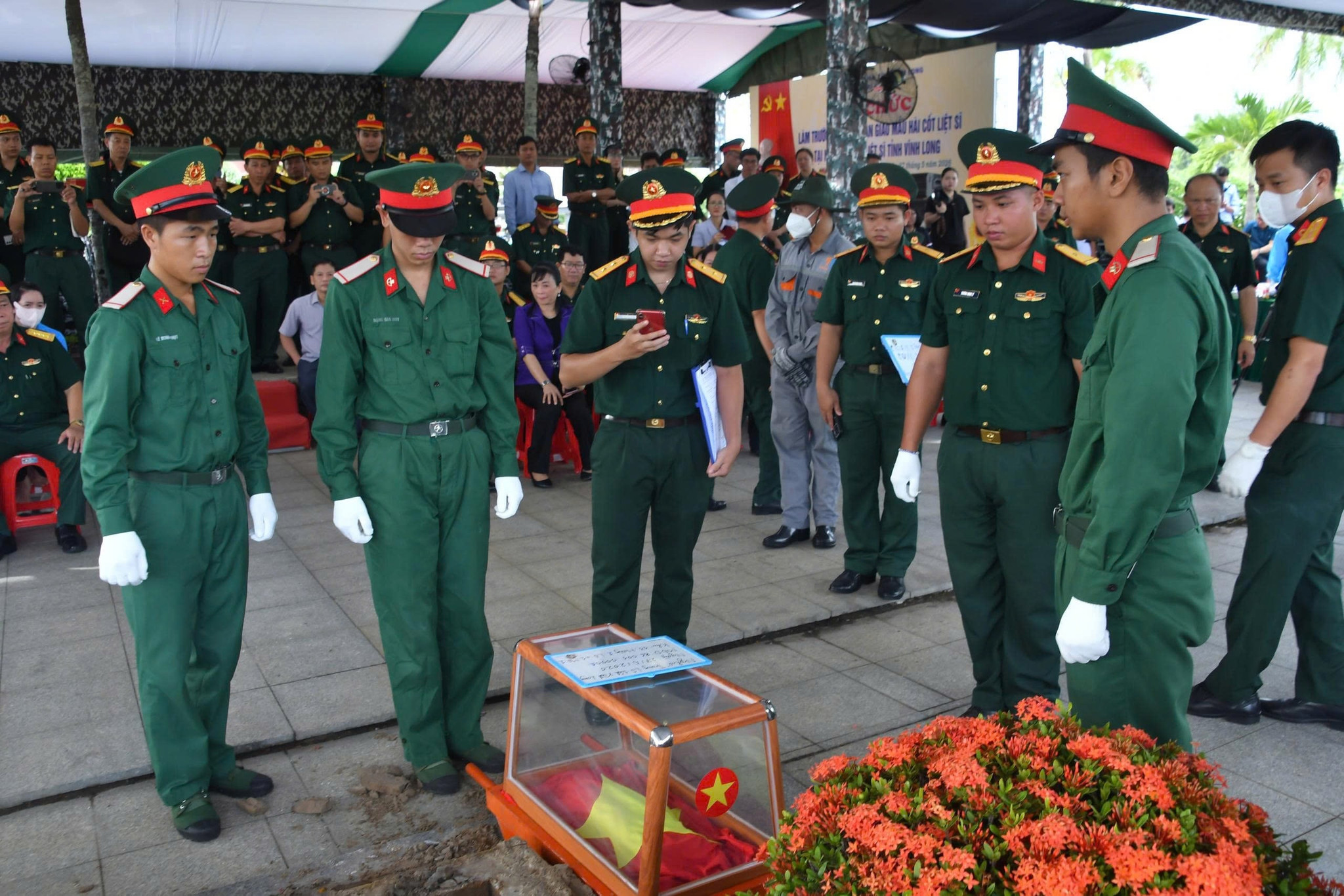
In implementing this campaign, Vinh Long province plans to collect 20,726 samples of remains of martyrs whose information is unknown or partially known from 33 martyrs' cemeteries in the province for DNA testing to determine the identities of the martyrs' remains.
Currently, Military Region 9 has 116 martyrs' cemeteries with over 155,971 graves, including 83 mass graves. Of the total number of martyrs' graves, 47,316 are unidentified; the total number of graves requiring sampling during the campaign (including those with incomplete information and those with partial information) is 92,573. This is a huge workload, requiring close coordination among the military, police, medical, scientific, and local authorities.
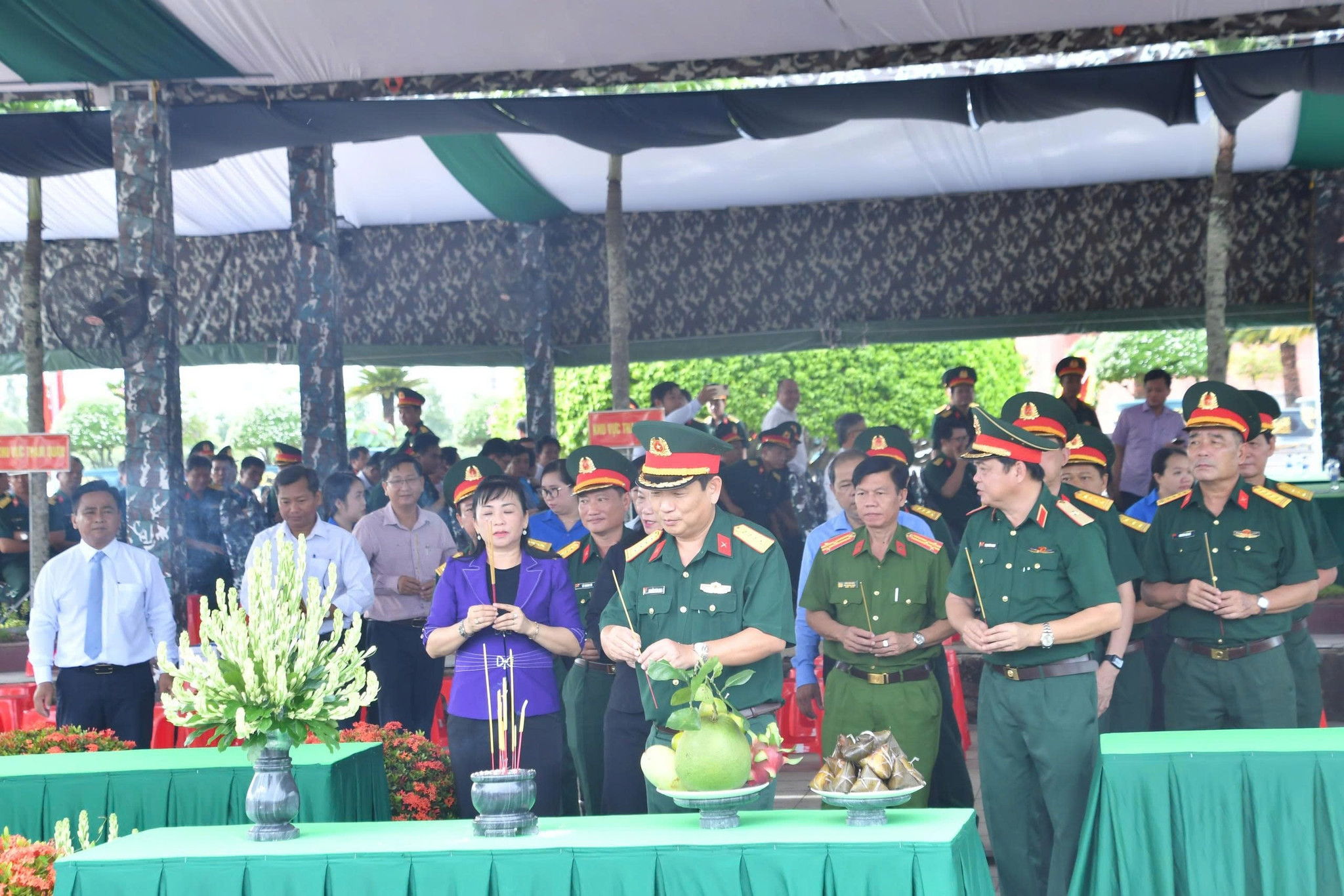
More than half a century has passed since the war ended, but the journey of honoring fallen heroes has never ceased. There are soldiers who silently trek through forests and streams, tracing every trace in the vast wilderness of neighboring countries to bring their comrades home. There are those who patiently stand before the remains of fallen soldiers, cherishing each biological sample, placing their faith in science to recover the names of those who died for the independence and freedom of the nation. One person follows another, one generation follows another; only when the remains of the fallen soldiers are returned to their homeland and their identities are confirmed will the reunion truly be complete.
In addition to collecting biological samples from the remains of fallen soldiers, this work also aims to build, complete, and put into operation a database of genes of relatives of fallen soldiers whose information has not yet been identified, serving the purpose of cross-referencing and identifying the remains of fallen soldiers.