

Narrowing the gap between resolutions and tangible results is the true measure of the Party’s leadership and governing capacity
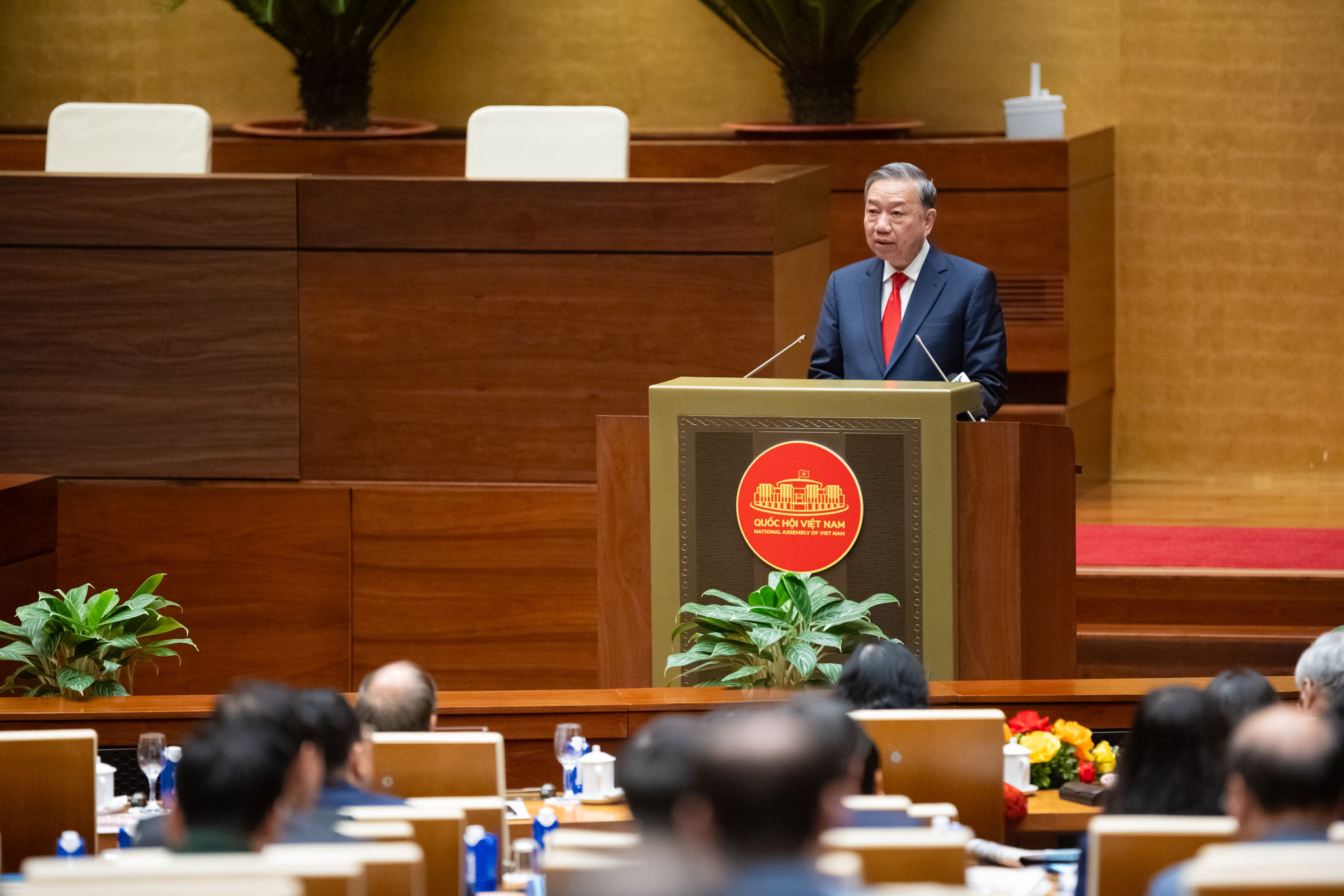
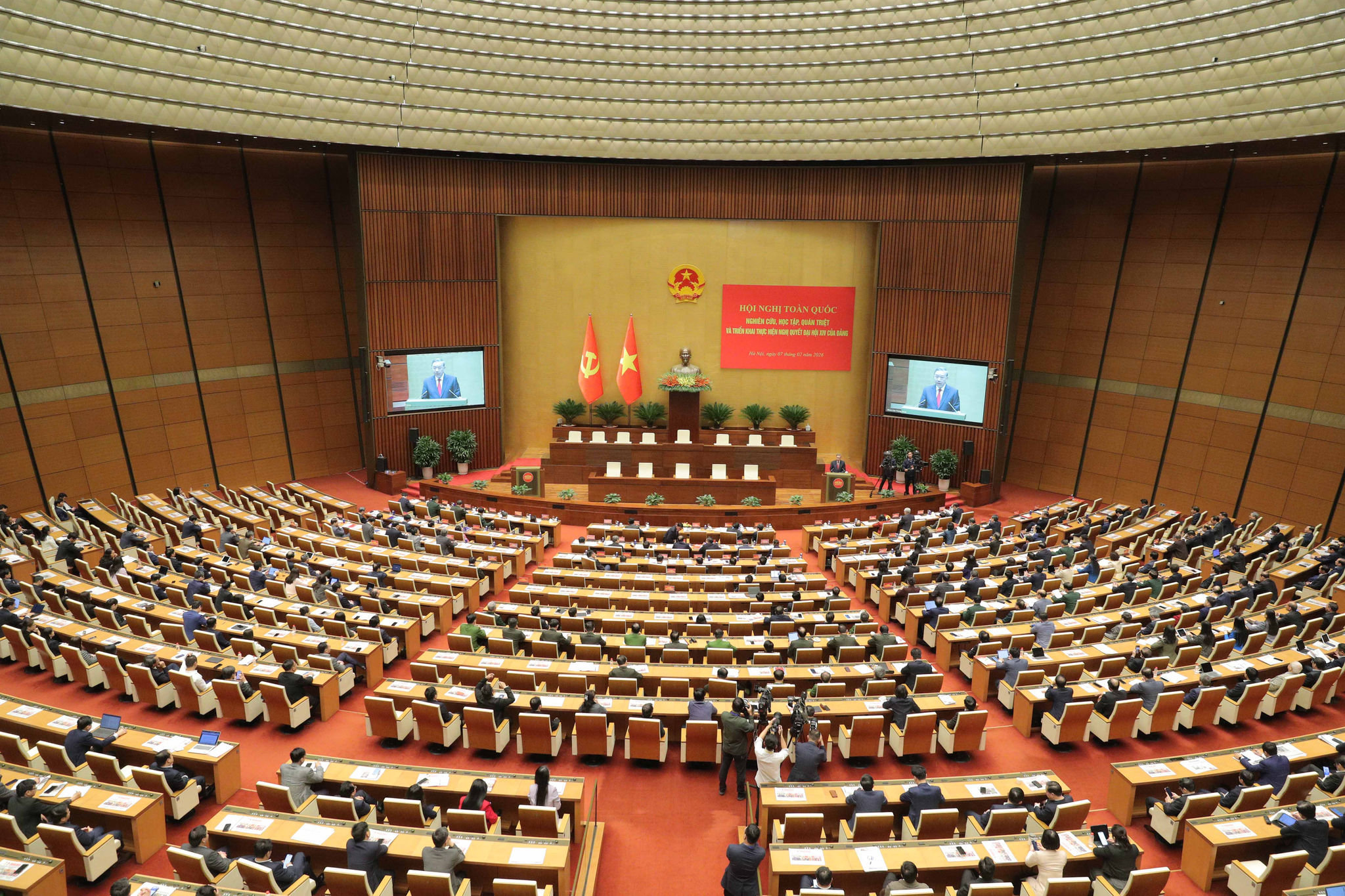
On February 7, at the National Assembly House, the Politburo and the Party Central Committee’s Secretariat held a nationwide video conference to study, disseminate, thoroughly understand and implement the Resolution of the 14th National Congress of the Communist Party of Vietnam. General Secretary To Lam attended and delivered a guiding speech. The People’s Deputies Newspaper respectfully introduces the full text of his remarks.
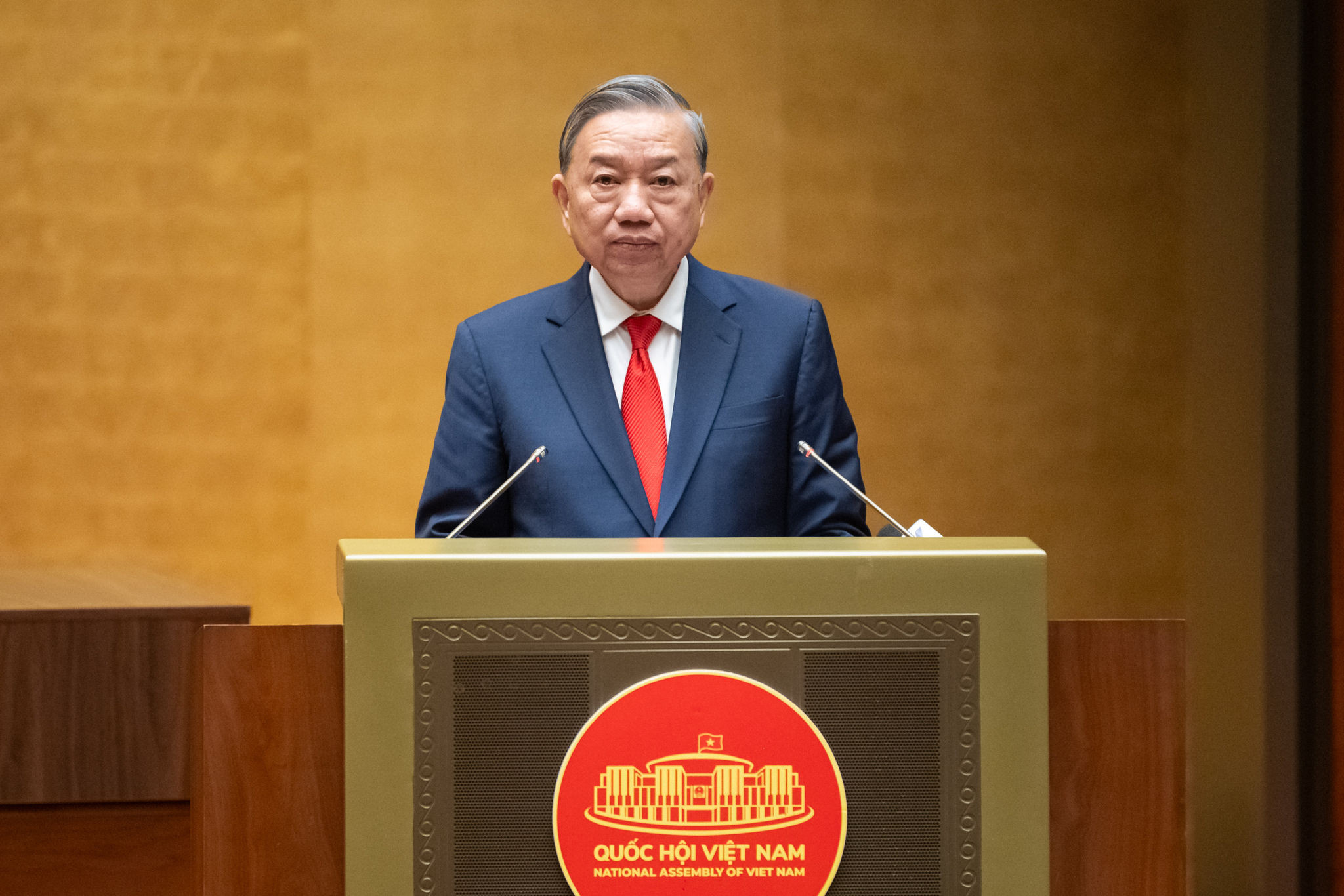
Dear Party and State leaders and former leaders; leaders of Party committees at all levels; leaders of central and local agencies, ministries and sectors,
Dear officials, Party members and people nationwide attending the conference at various locations,
The 14th National Congress of the Communist Party of Vietnam was a great success, opening a new stage of national development with a long-term vision, clear objectives and strong political determination from the entire Party, people and armed forces.
The Congress marked an important transition in the revolutionary cause, affirming the Party’s mettle, wisdom and leadership capacity in shaping the nation’s future amid profound and complex changes in the world.
The Resolution of the 14th National Congress represents a profound summary of both theory and practice. It embodies the will and aspiration of the entire Party and people, with the determination to successfully build a peaceful, independent, democratic, prosperous, civilized and happy Vietnam, firmly advancing toward socialism.
Today’s conference opens a broad political forum aimed at unifying will and action, creating the foundation for bringing the Resolution of the 14th National Congress into reality.
With 10 important thematic sessions presented by Politburo members and leaders of central agencies, the conference has clarified urgent issues requiring implementation while identifying major orientations for the entire tenure and beyond. This has deepened awareness of the nation’s development path and the need to renew the Party’s leadership thinking and governing methods in the new era.
To transform the spirit and stature of the Resolution of the 14th National Congress into a unified action programme for the entire Party, people and armed forces, I would like to emphasize several key points as follows:
First: All national achievements are associated with periods when correct policies were implemented decisively, synchronously and effectively
Looking back on 80 years of national construction and development, particularly 40 years of renewal (Đổi mới), it can be affirmed that the Party’s decision to launch the renewal process was a historically significant and era-defining decision. It originated from the country’s vivid realities and from the political courage of a revolutionary party that dared to face the truth and pursue reforms for the interests of the people and the nation.
From a poor and backward country devastated by war and subjected to decades of encirclement and embargoes, Vietnam has courageously overcome difficulties and gradually risen to become a developing country with middle income, deeply integrated into the global economy and increasingly affirming its position in the international arena.
Vietnam’s revolutionary practice demonstrates that every national achievement has been associated with periods when correct policies were implemented resolutely, comprehensively and effectively. Implementation is the decisive factor in transforming resolutions into concrete results.
We have achieved relatively high economic growth rates for many years, but the quality of growth, sustainability and the economy’s resilience remain limited.
We have deeply integrated into the global economy, but our level of mastery of technology, labour productivity and endogenous competitiveness has yet to match the country’s potential and people’s expectations.
We have built a relatively comprehensive political system, but the effectiveness of national governance, administrative discipline and the quality of policy implementation still fall short of development requirements.
Therefore, the current requirement is not merely to reaffirm the correctness of the renewal path, but more importantly to carry out stronger, more decisive and more comprehensive innovation in development thinking, growth models, and especially the capacity for implementation.
The fundamental bottleneck today does not lie in our strategic direction, but in our ability to transform that direction into concrete development outcomes.
To meet increasingly demanding requirements in the country’s new development phase, we must firmly adopt the consistent mindset of moving strongly from “speaking” to “doing”, from awareness to action.
The Congress documents clearly stated the need to thoroughly overcome the situation of “saying much but doing little”, “speaking well but performing poorly”, and “words not matching actions”, while eliminating bureaucratic and formalistic working styles.
Every Party committee, Party organization and cadre or Party member, especially heads of agencies and units, must uphold responsibility and take the lead in turning decisions into reality.
Second: Five key factors decisive to implementing the Resolution of the 14th National Congress
The Resolution of the 14th National Congress has identified strategic development goals for the country in the new period and requires enhanced capacity to turn those goals into specific, measurable results that directly benefit the people.
Accordingly, five key areas must be prioritized in organizing the implementation of the Resolution.
First, improve the capacity to institutionalize and concretize resolutions into policies and laws
Every major Party policy must be promptly, synchronously and consistently transformed into a feasible, stable and transparent system of mechanisms, policies and laws.
Institutions are not merely tools of state management; they must become drivers of development, liberate productive forces, mobilize social resources and create favourable conditions for innovation.
The situation where resolutions are correct but policies are issued slowly, lack consistency or are difficult to implement must be completely addressed.
There must be alignment between the Party’s strategic objectives, the State’s legal system and the administrative apparatus’s implementation capacity.
Second, reform implementation methods and strengthen execution discipline
All action programmes must be designed with clear objectives, specific roadmaps, transparent assignment of responsibilities and strict inspection and supervision mechanisms.
There must be a strong shift from “management based on administrative orders” to “governance based on results”; from assessment through “formal reports” to assessment through “concrete development outcomes” and “real social impacts”.
Execution discipline must become the operating principle of the entire political system, eliminating avoidance, stagnation and responsibility shifting in implementing resolutions.
Third, consider development effectiveness and people’s satisfaction as the highest measures of implementation
Every policy must answer the fundamental question: “What benefits does it bring to the country, the people and the long-term development future of the nation?”
The value of a resolution is not only confirmed by its theoretical correctness but must be tested through growth quality and improvements in people’s lives.
When a resolution truly creates positive changes in socio-economic life, enhances national capacity and expands development opportunities, it gains sustainable political and historical value.
Fourth, build a contingent of capable cadres who dare to think, dare to act and dare to take responsibility for the common interest
Breakthroughs in action must particularly focus on “breakthroughs in people”.
We must build a cadre workforce with strong political qualities, intellectual capacity, implementation ability and willingness to take responsibility for the common good.
The situation where cadres are strong in advising but weak in organizing implementation must be overcome. Practical results must become the most important criterion for evaluating cadres.
At the same time, mechanisms must be created to protect those who dare to think, dare to act and dare to innovate for the interests of the country.
Fifth, link implementation of resolutions with renewing the Party’s leadership methods and improving national governance effectiveness
The Party leads through its guidelines and policies, through organizational capacity, exemplary conduct and political credibility, as well as through inspection and supervision.
The Party leads through the State, the Vietnam Fatherland Front and socio-political organizations.
In the new period, renewal of leadership methods must aim toward building a modern socialist rule-of-law state and an effective, disciplined, transparent national governance system that serves the people.
Third: Promote the role of the entire political system in implementing the Resolution of the 14th National Congress
Narrowing the gap between resolutions and tangible results is the measure of the Party’s leadership and governing capacity.
It is also the criterion by which history will evaluate today’s cadres and Party members — through the country’s development achievements, the practical values enjoyed by the people and the people’s trust and affection toward the Party.
First and foremost, central Party agencies are responsible for playing the central role in orienting and closely supervising implementation of the Resolution nationwide, ensuring consistency between strategic thinking, policy design and implementation outcomes throughout the political system.
They must “actively detect early mismatches between policies and reality”, “between set goals and implementation capacity”, promptly adjust orientations, remove bottlenecks and rectify manifestations that weaken the Party’s leadership effectiveness.
Each resolution must be accompanied by an implementation monitoring framework, clearly defining ultimate objectives, mandatory review milestones and the political responsibilities of each Party committee and each leader.
The National Assembly must strongly promote its legislative and supreme supervisory roles, ensuring major Party policies are institutionalized promptly, consistently and feasibly within the legal system.
Every law enacted must truly open pathways for development, remove barriers, unlock resources and avoid creating unnecessary procedures or unreasonable compliance costs for citizens and businesses.
Legislative work must originate from the country’s development requirements and socio-economic realities, overcoming the mindset of making laws that emphasize management while paying insufficient attention to creating conditions for development.
The National Assembly’s supervision must be carried out through to the end, closely linked with responsibilities for correction and final outcomes.
Supervision must not stop at identifying shortcomings but must clearly require solutions, deadlines and responsible agencies.
Areas that allow institutional bottlenecks to persist, obstruct resources or hinder innovation must have their responsibilities clearly identified and specific solutions implemented.
Through legislation and supreme supervision, the National Assembly must contribute to improving institutional quality, strengthening discipline in state management and creating a stable, transparent legal environment conducive to rapid and sustainable development.
Through this, the National Assembly’s role in realizing major Party resolutions and meeting people’s expectations in the new development era will be affirmed.
The Government and ministries must make a strong shift from the role of “policy makers” to the role of “organizations that ensure policies are implemented to completion”, taking substantive development outcomes as the measure of governance capacity.
The focus must be on mobilizing resources, mechanisms and administrative capacity to establish and effectively promote strong growth poles, key economic regions, dynamic urban areas and new-generation special economic zones with competitiveness comparable to the region and the world.
Implementation must aim to create new development spaces with broad spillover effects, driving growth and restructuring the economy in a deeper and more sustainable manner.
On that basis, proactive efforts must be made to develop international financial centres, high-quality service and tourism centres, and large-scale logistics hubs closely connected with modern, smart and highly automated seaports, international transit airports and key border gates.
At the same time, enhancing technological self-reliance and the capacity to participate in and master supply chains in strategic sectors must be considered a key national task, directly linked to economic security, strengthening the economy’s resilience and consolidating Vietnam’s position in regional and global value chains.
Strong innovation is required in mechanisms for inter-sectoral, inter-regional and inter-level coordination, particularly for strategic infrastructure projects, new development spaces and major value chains.
The mindset of sectoral and local fragmentation must be thoroughly overcome.
A unified coordination mechanism must be established, with a single focal point taking ultimate responsibility for each major programme and project, ensuring that decisions from the central level are implemented smoothly from the central government to grassroots levels.
Alongside this, management tools must be renewed, with stronger application of data, digital technology and real-time monitoring systems in development management and administration.
Assessment of results must no longer rely solely on periodic reports but must be based on data, indicators and actual impacts, thereby improving transparency, execution discipline and the ability to respond to policies in a timely manner.
The Vietnam Fatherland Front and socio-political organizations have the responsibility to promote their roles in supervision, social criticism and mobilizing “people and businesses to participate in implementing resolutions and monitoring implementation from grassroots levels to the central level” through digital platforms.
Supervision and social criticism must become substantive, focusing on issues of direct public concern, bottlenecks in policy implementation and the concrete social impacts of resolutions.
The views, aspirations and legitimate recommendations of the people must be accurately reflected in a timely manner so that the Party and State can adjust policies and guidelines in accordance with reality.
Alongside this, there must be strong innovation in methods of mobilizing and gathering the people, toward being closer to the people, understanding the people and relying on data, dialogue and two-way interaction, avoiding the bureaucratization and formalization of the activities of the Fatherland Front and socio-political organizations.
Each organization must truly become a trusted bridge between the Party, the State and the people, contributing to strengthening social trust and creating broad consensus in implementing major decisions.
When the people correctly understand, trust and directly participate in implementing and supervising resolutions, the strength of the great national unity bloc will be fully awakened and transformed into a powerful and sustainable driving force for national development in the new period.
Local authorities at all levels must truly become the frontline force in implementing the Resolution, serving as the place where Party policies are directly transformed into concrete socio-economic development outcomes.
Implementation at the local level must aim at substantive results, reflected in sustainable economic growth, improved living standards, enhanced quality of public services and a better investment and business environment.
Local authorities must not pursue formal targets or exaggerate achievements, but instead must take long-term development effectiveness and people’s satisfaction as the measures for evaluating their leadership and governance capacity.
They must absolutely not wait for or rely on the central government, nor mechanically copy models from elsewhere.
Instead, they must promote self-reliance, creativity, the courage to think, the courage to act and the courage to take responsibility within the framework of the law and the Party’s overall orientations.
Any locality that delays reforms, wastes resources or misses development opportunities must first hold its head responsible before the Party and the people.
Promoting the frontline role of local governments is an important condition for narrowing the gap between resolutions and real life, ensuring consistency between central-level orientations and the diverse realities of each region and locality, thereby creating balanced and sustainable development momentum nationwide.
In the new development phase, “discipline and responsibility must be placed first”.
The assignment of tasks must go together with mechanisms for inspection, evaluation and clear accountability.
If a collective fails to complete its duties, its leader must bear responsibility; collective responsibility must not be used to conceal individual accountability.
Individuals who do not meet job requirements must be willing to step aside.
Those who make promises but fail to deliver, or those who act without achieving results, must be considered for replacement or reassignment.
It is unacceptable for resolutions to be correct while implementation remains weak, slow and ineffective without anyone being specifically accountable.
Weaknesses in organization and personnel must not be allowed to slow the country’s progress, because time is a particularly important and non-renewable development resource.
Delays in implementation not only waste resources but also reduce development momentum and cause the country to miss valuable opportunities.
Dear comrades, dear conference,
Ahead of us are very heavy responsibilities, but also great opportunities if we can seize them and act decisively.
The country’s development future depends greatly on the sense of responsibility, political courage and capacity for action of every Party committee, every Party organization and every cadre and Party member, especially those holding leadership positions.
I request that immediately after this conference, Party committees, Party organizations, authorities, the Vietnam Fatherland Front and socio-political organizations urgently concretize the Resolution of the 14th National Congress into programmes and action plans appropriate to their functions, responsibilities and practical conditions.
They must clearly identify what needs to be done immediately and what breakthrough areas require focused leadership and direction; ensuring that words are matched by actions, that work is carried out thoroughly and that concrete results are achieved.
On the occasion of the upcoming Lunar New Year, I wish Party and State leaders, former leaders, Party members, conference participants and all compatriots and soldiers nationwide good health, happiness and success.
Thank you very much.
*The headline was set by The People’s Deputies Newspaper.