

Strategic autonomy – steadfastly pursuing the two 100-year strategic goals – united, determined, and resolute for the prosperity and happiness of the People
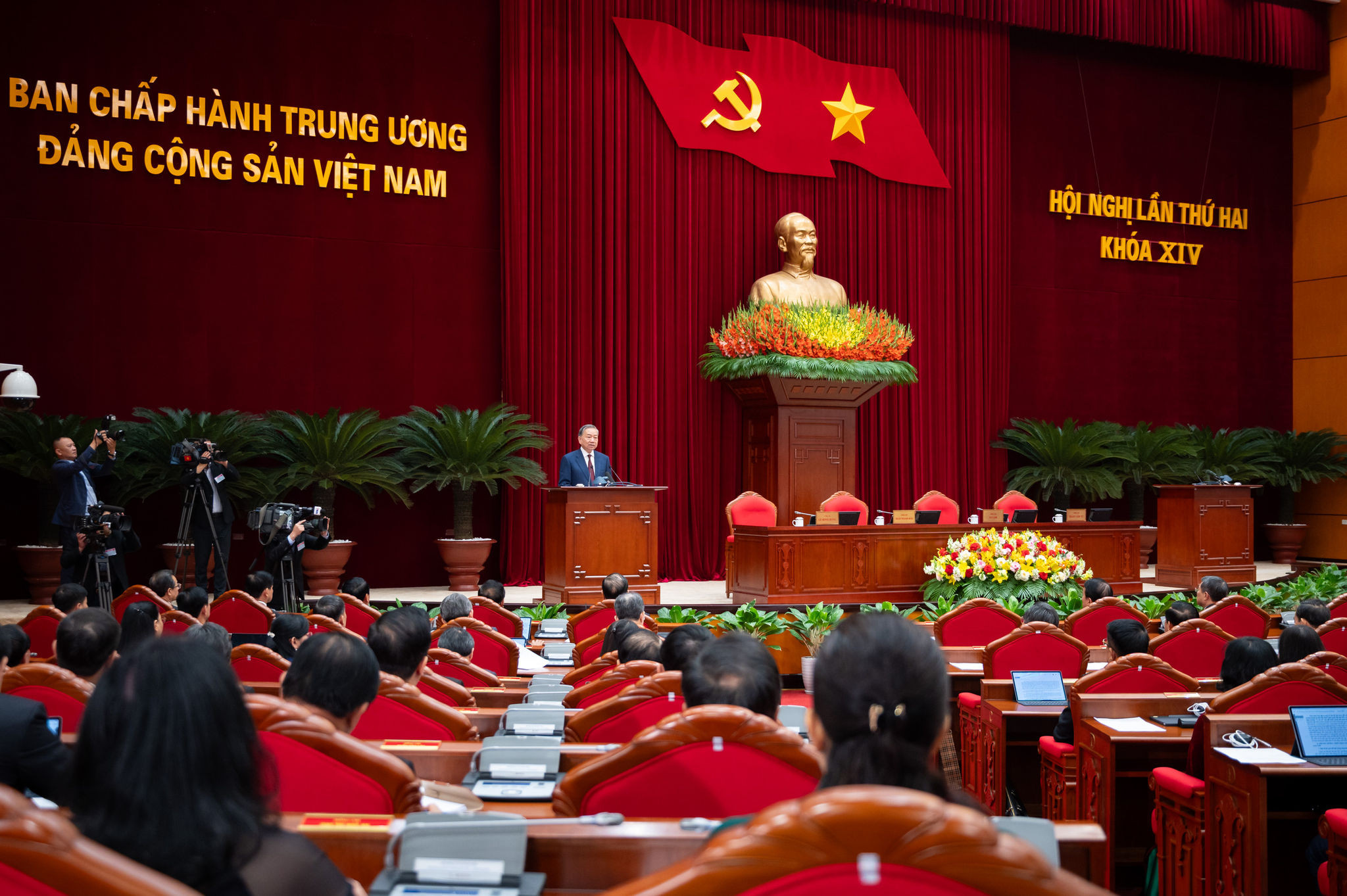
On the afternoon of March 25, after three days of urgent, serious, responsible, democratic, candid, and in-depth deliberations, the Second Plenary Session of the 14th Party Central Committee concluded. General Secretary To Lam delivered the closing remarks. The People's Deputies Newspaper respectfully presents the full text of the General Secretary's closing speech:
.png)
Comrades Members of the Politburo, Members of the Secretariat, and Members of the Party Central Committee,
Comrades attending the Conference,
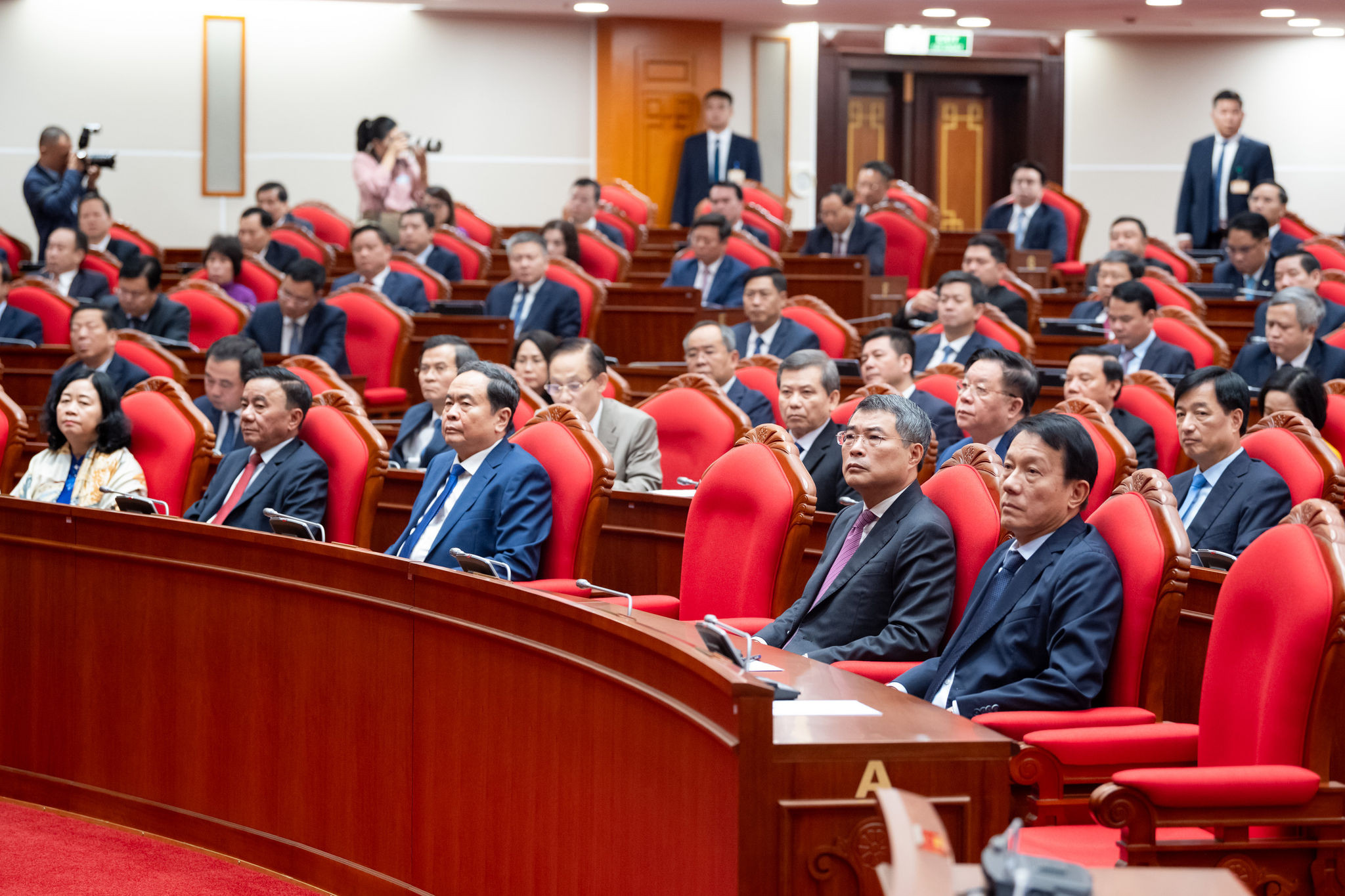
After three days of urgent, serious, responsible, democratic, candid, and substantive work, the Second Plenary Session of the 14th Party Central Committee has successfully completed all items on its agenda. The Central Committee reached a very high level of consensus on major and significant issues concerning the Party and the country, particularly those related to organizational and personnel work, as well as the Party's foundational regulations.
On behalf of the Politburo and the Secretariat, I sincerely thank and highly appreciate the dedicated efforts of Central Committee members, supporting agencies, and all delegates attending the Conference.
To conclude the Conference, I would like to summarize and emphasize five key areas of work:
First: Political and Ideological Work within the Party
Party building in terms of politics and ideology in the new era must continue to be strengthened and prioritized, creating a solid foundation for enhancing the Party's political steadfastness, vanguard role, fighting spirit, and leadership and governing capacity.
I call on all cadres and Party members throughout the Party to continue thoroughly studying and consistently implementing the "Four Commitments" in political and ideological work.
The first commitment is to uphold, creatively apply, and further develop Marxism-Leninism and Hồ Chí Minh Thought. This serves as the basis for maintaining the Party's revolutionary nature and fidelity to its core principles, while flexibly and creatively adapting them to Vietnam's realities and the demands of the times.
The second commitment is to uphold the goals of national independence and socialism. This historic choice is the guiding thread throughout Vietnam's revolutionary journey and the ideal pursued by our Party. Under any circumstances, especially in the face of difficulties and challenges, we must remain steadfast in our confidence, determination, and commitment to the path chosen by our Party, State, and People.
The third commitment is to uphold the Party's policy of renewal (Đổi mới). This is an objective requirement and a lawful revolutionary process that continuously promotes social progress, liberates productive forces, mobilizes all resources, expands development space, and elevates the country's standing. We must remain committed to renewal that is properly oriented, principled, and dedicated to national development and the happiness of the people.
The fourth commitment is to uphold the Party's principles of organization and operation in order to build and firmly defend the Socialist Republic of Vietnam. This ensures unity in will and action, maintains discipline and order, and preserves the Party's comprehensive leadership role. It keeps the Party pure and strong in all respects, reinforcing the people's confidence in a peaceful, independent, democratic, prosperous, civilized, and happy Vietnam steadily advancing toward socialism.
The regulation on political and ideological work adopted at this Conference is a concrete manifestation of these "Four Commitments."
Second: The Goal of Double-Digit Economic Growth
This objective arises from the country's development requirements in the new era and the aspiration of the entire nation to advance. We do not accept low growth. We must persist in pursuing high, sustainable, and substantive economic growth.
Therefore, Party committees, ministries, sectors, localities, citizens, and businesses must thoroughly embrace the following four core principles:
First: Genuine Growth
Growth must not come at the expense of quality or sustainability. Economic growth must be accompanied by improvements in productivity, product quality, national competitiveness, and real value creation. Every percentage point of GDP growth must contain greater knowledge content and higher added value.
Today's growth must not undermine tomorrow's development foundations or deplete resources needed by future generations. We must decisively reject the mentality of chasing achievements. Growth focused solely on speed while neglecting quality will not be sustainable and will ultimately carry a heavy cost.
Second: Maintaining Macroeconomic Stability
Macroeconomic stability, inflation control, and balanced major economic indicators are essential prerequisites and pillars for ensuring the economy operates flexibly, safely, and effectively.
Fiscal, monetary, and other macroeconomic policies must be proactive, flexible, and closely coordinated, simultaneously supporting reasonable growth, strengthening market confidence, stabilizing expectations, and enhancing resilience against external shocks.
Third: Efficient Use of Resources
All available resources must be utilized effectively, with priority given to key projects and public-private partnerships to improve investment efficiency and national competitiveness.
Resource allocation must be guided by scientific principles and transparent socio-economic accounting, ensuring effective use of capital and avoiding inefficiency, fragmentation, and waste. Selected projects must have strategic significance for the entire economy, generate substantial added value, and strengthen the nation's critical infrastructure.
Fourth: Growth Must Benefit the People
High economic growth must serve the interests of the people, improve living standards, and promote social equity.
All policies, projects, and investments must create tangible value for citizens, increase incomes, reduce poverty, narrow development gaps, improve social welfare, and safeguard the legitimate rights and interests of all social groups.
The benefits of economic growth must be distributed fairly, creating a solid foundation for social consensus and sustainable development.
Based on these four core principles, the implementation of the double-digit growth objective must be carried out consistently, synchronously, and steadfastly, under strong central leadership and close coordination across all levels of the political system.
To create the "driving force of all driving forces" for development, the Central Committee should soon formulate a Resolution on a new national development model centered on science, technology, innovation, and digital transformation for consideration at the Third Plenary Session of the 14th Central Committee.
Third: Leveraging the Strengths of the Two-Tier Local Government Model
The current two-tier local government model is not merely a new administrative structure but a new model of local governance designed to eliminate intermediate layers, ensure smoother operations, allocate resources more rationally, utilize technology and data more effectively, and better serve citizens and businesses.
First, this must be recognized as a governance reform rather than simply an organizational restructuring exercise. If reform stops at reducing administrative layers and merging units without simultaneously reforming decentralization mechanisms, redesigning workflows, standardizing data systems, clarifying accountability, and shifting from administrative control to service-oriented governance, its effectiveness will be limited.
Second, the principle must be that provincial authorities are strong in strategy, while commune-level authorities are strong in implementation.
Provincial governments should focus on planning, strategic development, major investments, resource coordination, risk management, supervision, and ensuring coherence across their jurisdictions. Commune-level governments, meanwhile, must be empowered with adequate resources and become the primary level for resolving issues directly affecting citizens, businesses, social welfare, public order, administrative services, and urgent local needs.
Decentralization must also be accompanied by resource allocation, capacity building, and effective oversight mechanisms. Additional responsibilities cannot be assigned to communes without corresponding staffing, budgets, data access, digital infrastructure, and monitoring systems.
Accordingly, the guiding principle must be:
- Authority delegated must be matched by resources;
- Decentralization must be accompanied by effective oversight;
- Assigned responsibilities must be matched by enhanced capacity.
The operation of the two-tier local government model must be flexible, scientific, and grounded in reality. A single template cannot be applied uniformly to all localities, given differences in population, geography, urban-rural characteristics, cultural factors, defense and security requirements, development levels, and workloads.
If implemented rigidly, a new cumbersome bureaucracy could emerge at the grassroots level, contradicting the objective of a streamlined, efficient, and effective government.
Ultimately, the satisfaction of citizens and businesses must be the ultimate criterion for evaluating the model's success. Reform effectiveness should not be measured by the number of reorganized administrative units but by concrete outcomes: reduced inconvenience for citizens, faster administrative procedures enabled by technology and digital transformation, improved public service attitudes among officials, and, most importantly, the ability of commune-level governments to resolve issues effectively on site.
Fourth: Inspection, Supervision, Power Control, and the Fight Against Corruption, Wastefulness, and Negative Practices
Inspection, supervision, power control, and anti-corruption efforts in the coming period must be integrated into the broader goal of achieving rapid and sustainable national development through both systematic and strategic approaches.
These tasks are not only urgent and ongoing requirements for maintaining a clean political system but also fundamental conditions for strengthening public trust, ensuring socio-political stability, and creating a healthy environment for development.
As the country pursues high growth targets, launches large-scale projects, and adopts more open and enabling policies to unlock development resources, risks of corruption, wastefulness, and misconduct may also increase in both scale and sophistication.
Experience shows that sectors enjoying significant incentives can become high-risk areas if preventive, inspection, and oversight mechanisms are inadequate. Therefore, institutions must be designed and improved so that corruption and waste become impossible, while oversight mechanisms are strong enough to ensure officials neither dare nor wish to engage in such behavior.
These efforts must be pursued with strong political determination, resolute and persistent action, and continuous implementation. Violations must be handled strictly under the principle of "no forbidden zones and no exceptions," while upholding humanitarian values, the rule of law, and development objectives.
At the same time, effective mechanisms must be established to protect dynamic, innovative officials who dare to think, act, and take responsibility for the common good. A clear distinction must be made between misconduct driven by personal gain and mistakes arising from experimentation and innovation.
Fifth: National Defense, Security, Foreign Affairs, and International Integration in the New Era
Developments in global politics, economics, and security demonstrate that a country seeking rapid growth, major investment inflows, expanded markets, and deep international integration must first possess strategic autonomy, risk-management capacity, strong institutions, social stability, deep international engagement, and resilience against both traditional and non-traditional security challenges.
Ensuring national defense, security, and foreign affairs in the new era is not only about safeguarding sovereignty, borders, maritime areas, and airspace. It also involves protecting institutions, social trust, cyberspace, data, economic lifelines, and the country's strategic development interests.
This must be fully recognized as a long-term, core, strategic, and persistent mission of the entire Party, people, armed forces, and political system.
National defense, security, foreign affairs, and international integration must be integrated into all development strategies, plans, and policies. They must ensure that development remains properly oriented, sustainable, sovereign, risk-controlled, and capable of self-defense from an early stage and from afar—proactively "protecting the country before danger arises."
This requires building comprehensive national strength in peacetime, where military, security, diplomatic, economic, scientific-technological, and national unity strengths are integrated into a unified and mutually reinforcing whole.
Special attention must also be given to strengthening the "people's hearts and minds" posture, building an all-people national defense posture linked with a people's security posture across all areas, especially strategic regions, border and maritime zones, major cities, economic centers, critical infrastructure, and cyberspace.
This represents the combination of strategic positioning and capability, national defense and societal resilience, territorial sovereignty protection and ideological security, and political stability and social order.
The new era demands ever-closer integration between defense, security, foreign affairs, and socio-economic development, combining protection with development and stability with innovation.
Defense, security, and foreign affairs must become integral components of national competitiveness and direct drivers of development, while serving as strategic pillars enabling the country to advance confidently into a new era.
Comrades,
With the foundations already established, with strong political determination and the unity of the entire Party, people, and armed forces, we firmly believe that the development goals and aspirations set forth by the 14th National Party Congress will soon become reality, ushering the country into a new stage of faster, more sustainable, and more comprehensive development.
Let the entire Party, people, and armed forces act according to the guiding motto:
"Strategic Autonomy – Steadfastly Pursuing the Two 100-Year Strategic Goals – United, Determined, and Resolute for the Prosperity and Happiness of the People".
With that spirit, I hereby declare the Second Plenary Session of the 14th Party Central Committee closed.
Thank you, comrades.
*Title assigned by The People's Deputies Newspaper.