

Master, internalize, and resolutely, synchronously and effectively implement resolutions to create clear transformations across the entire political system and spread development momentum throughout society
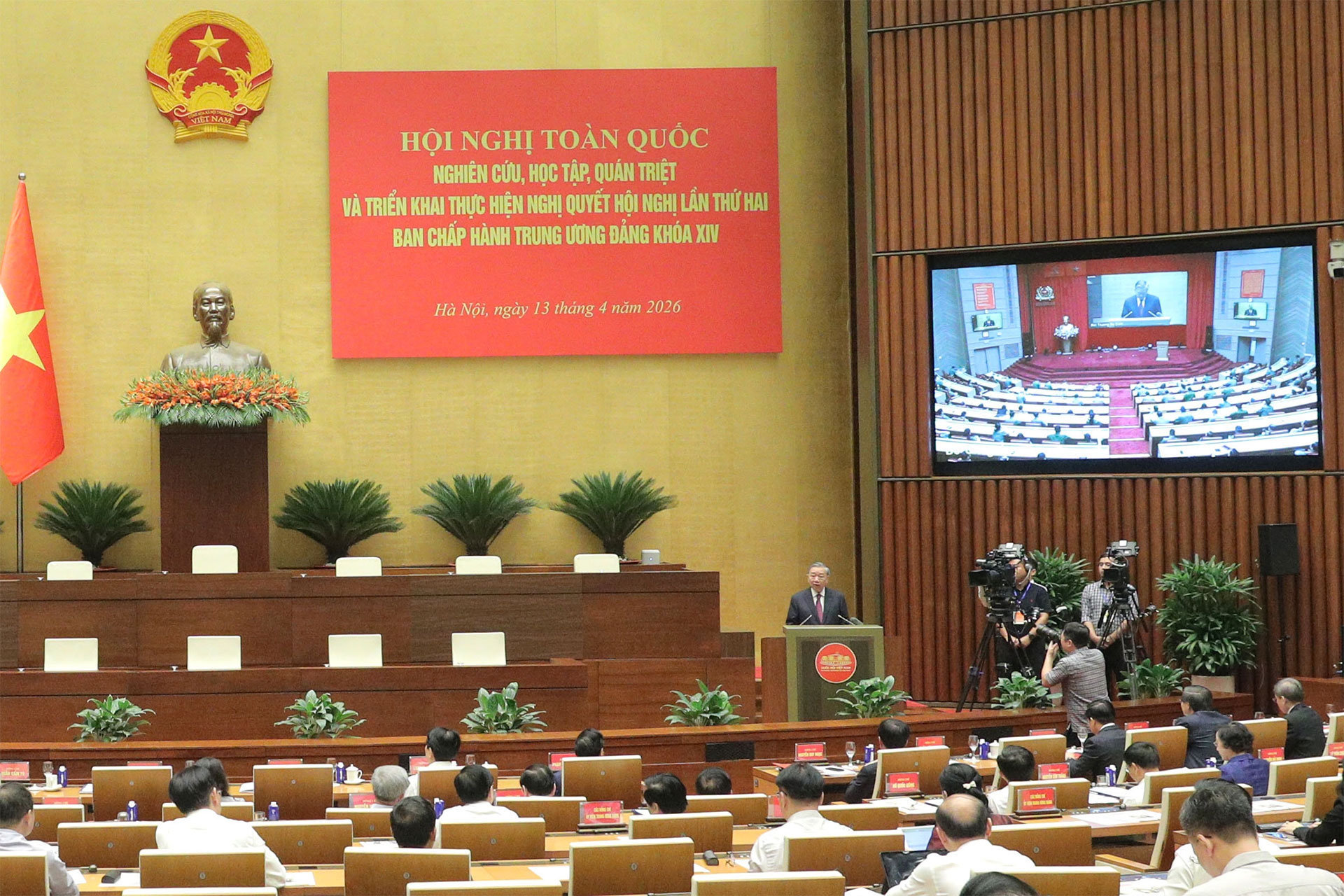
On the morning of April 13 in Hanoi, the Politburo and the Secretariat of the Party Central Committee held a nationwide conference to study, disseminate, thoroughly understand and implement the Resolution of the 2nd Plenary Meeting of the 14th Party Central Committee. Party General Secretary and State President To Lam attended and delivered a keynote address at the conference. The People’s Deputies Newspaper respectfully introduces the full text of his speech.
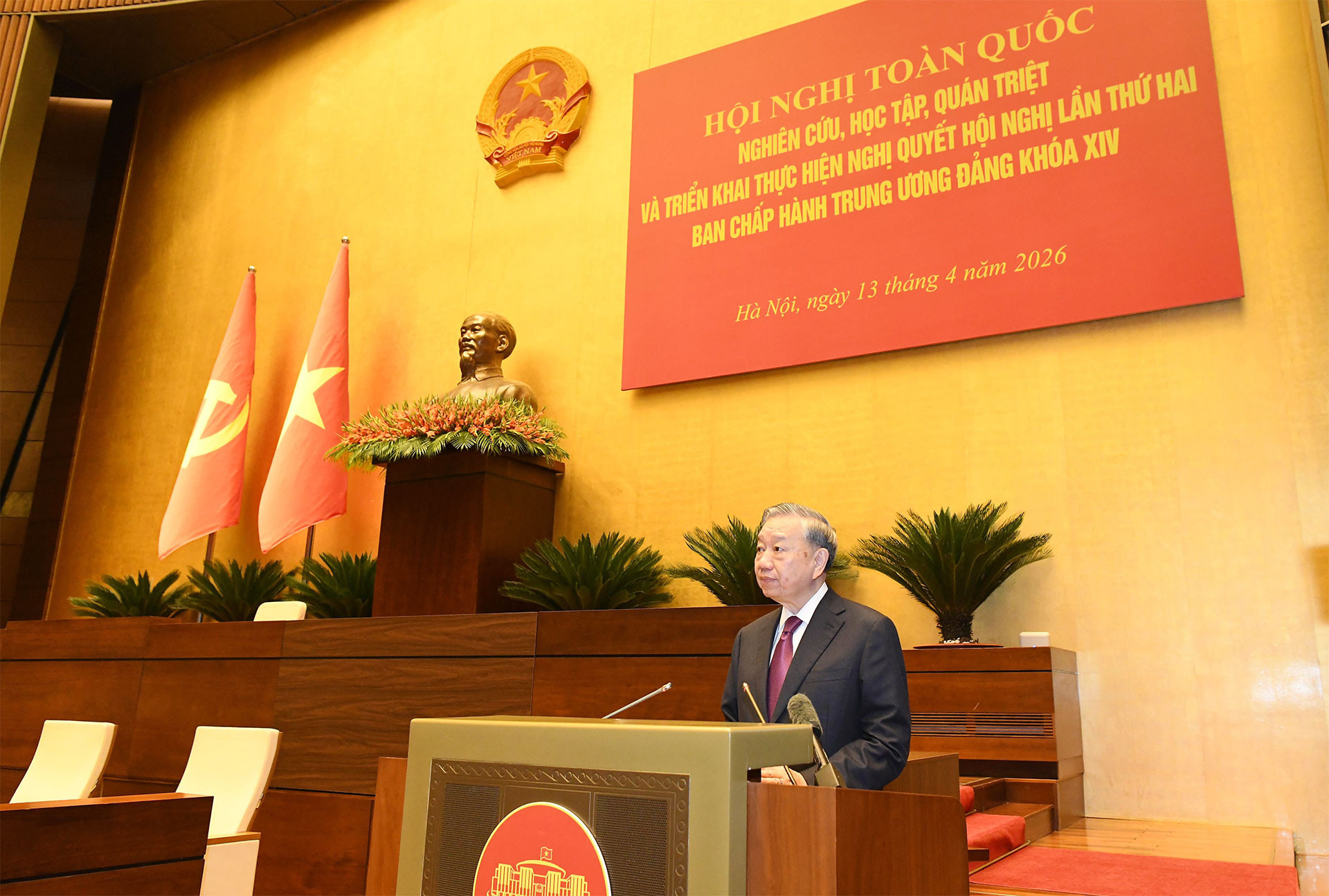
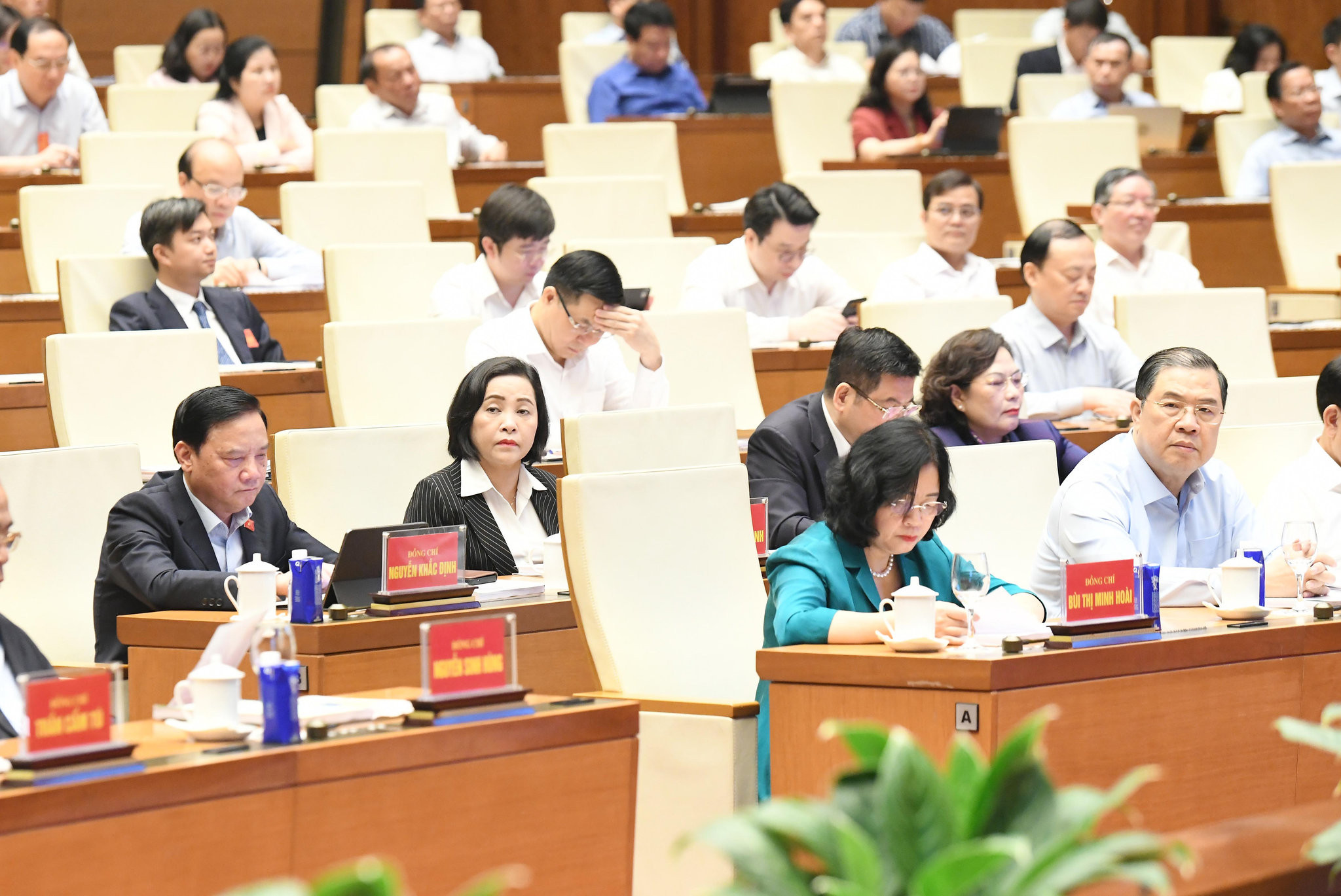
Distinguished leaders and former leaders of the Party, State and Vietnam Fatherland Front; leaders of Party committees at all levels; leaders of central and local ministries, sectors and agencies,
Dear Party members, cadres and people nationwide,
Today, the Politburo and the Secretariat are holding a nationwide conference to disseminate and implement the Resolutions of the 2nd Plenary Meeting of the 14th Party Central Committee. The conference has heard five detailed and specific thematic presentations delivered by leaders of central agencies. I basically agree with the orientations and approaches for implementing these themes.
Yesterday, I gave an interview to the People’s Army Newspaper regarding the task of implementing Party resolutions, including contents related to the Resolutions of the 2nd Plenary Meeting of the 14th Party Central Committee (many newspapers today have published the full text). Comrades may refer to it for further information.
The rapid and extensive developments in the international situation are having profound impacts on many areas, from economics, politics and diplomacy to culture, science and technology, reshaping many established global orders. Domestically, following the successful 14th National Party Congress; the results of the election of the 16th National Assembly and People’s Councils at all levels for the 2026–2031 term; and the results of the first session of the 16th National Assembly’s First Sitting, it can be said that our direction and path forward are now clear and coherent. The structure and organization—particularly the personnel arrangements—of the entire political system have basically been completed.
Our current task is to act and act correctly; act decisively and effectively.
I believe that the requirement following this conference is to fully grasp and deeply internalize the resolutions, and to organize their implementation in a decisive, synchronized and effective manner, with clear priorities and focus, creating visible changes throughout the political system and spreading development momentum across society.
On this basis, I would like to emphasize five issues:
First: Fully and deeply understand that Party regulations are the institutional foundation ensuring that the Party operates as a unified entity within the entire political system
If Party guidelines and policies represent the crystallization of vision and political will, then Party regulations serve as the institutional foundation to realize that vision and transform that will into an organized system of operation and implementation in practice.
They ensure that our Party operates as a unified whole, consistently from the central level to the grassroots level, under all circumstances and throughout every stage of national development.
In particular, as the country stands before major opportunities to make breakthroughs and rise strongly, while also facing very high, new and great requirements in the cause of national construction and defense, maintaining principles, discipline, order and unity throughout the Party has become a decisive factor in comprehensively improving the Party’s leadership capacity, governing capacity, combat strength and ability to organize implementation.
Practice shows that wherever regulations are seriously disseminated and correctly applied, discipline is maintained, organizations are strengthened, and leadership capacity and combat strength are enhanced. Conversely, if awareness is incomplete and implementation is not strict, it can easily lead to arbitrary application, weakened discipline and inconsistency in action, undermining leadership effectiveness and people’s trust.
Therefore, the requirement is that every Party committee, Party organization, cadre and Party member must correctly understand, deeply comprehend and strictly implement Party regulations, considering this a direct political responsibility. No one is allowed to interpret them differently, act differently, or apply them in ways that serve personal interests.
All regulations must be implemented uniformly, synchronously and consistently from top to bottom, combined with strict inspection and supervision and serious handling of violations. At the same time, good and creative approaches that comply with regulations should be encouraged and recognized.
Second: Fundamentally renew development thinking, effectively mobilize all resources and capital for sustainable growth
For a long time, in many places and at many levels, there has remained a development mindset that relies primarily on existing resources, with the state budget, land and public investment regarded as the main pillars.
In essence, this approach views development resources as limited and static, emphasizing allocation rather than creation. If not adjusted promptly, this mindset will become a major obstacle to development in the new period.
An economy seeking high, sustainable growth and breakthroughs cannot operate solely on a single source of resources, nor can it place the entire burden of development on the State.
Therefore, the requirement is not merely to adjust the structure of capital sources, but to fundamentally transform development thinking—from resource allocation toward resource creation, guidance and activation.
The State needs to shift from being a direct investor to designing and creating an environment where all social resources can be mobilized and allocated according to market signals within a transparent and stable institutional framework.
On that foundation, the role of different capital sources must be repositioned within a new development structure, where capital flows do not exist separately but interact, amplify and guide one another.
State capital must be correctly positioned as seed capital and enabling capital, shaping development spaces, reducing initial risks, and thereby guiding and activating non-state capital flows effectively.
Enterprise capital, including private-sector investment and FDI, should be directed toward high-value-added manufacturing sectors, innovation projects and knowledge-based value chains.
Foreign borrowing must be used selectively and strategically, linked to absorption capacity and long-term debt repayment ability, prioritizing key infrastructure projects and fields with high spillover effects.
Financial markets—including capital markets, credit markets and bond markets—must truly become channels providing medium- and long-term capital for the real economy.
The focus should be on directing capital toward production, innovation and essential infrastructure systems, thereby improving the quality of growth.
In particular, it is necessary to attach importance to unlocking people’s capital and consider this a strategic breakthrough in the new period.
This is not merely financial capital, but the combination of knowledge, skills, labor, entrepreneurial spirit and the aspiration of tens of millions of people to achieve legitimate prosperity.
When effectively activated, this resource can be transformed into an enormous endogenous driving force, contributing to strengthening the economy’s self-reliance.
Third: Resolutely overcome fragmented thinking based on administrative boundaries, sectors and terms of office in development planning
Planning is the spatial expression of development thinking. Therefore, overall development planning must reflect integrated, multi-objective and long-term thinking.
It must create a more rational development structure, use resources more efficiently, distribute development space more evenly, improve regional connectivity and open up greater growth potential for the future.
If planning is conducted with closed, fragmented and localized thinking—where each entity acts independently—it will not only fail to create new development space but also generate conflicts, overlaps, resource waste, broken linkages and reduced overall development efficiency, even hindering progress.
Each local development plan and sectoral plan must be viewed within the overall structure, linked with regional connectivity and associated with the vision of “Eastward orientation – Western expansion” and the “continuous North–South axis.”
This represents a vision of organizing national development space by using the East as a breakthrough area opening toward the ocean, from which development momentum spreads deep into the western regions; while the North–South axis serves as the backbone of the country.
From this foundation, every development decision must be considered in organic connection with infrastructure, energy, population, labor, environmental protection, food security and the country’s long-term development requirements.
Planning must not become a source of loopholes, gaps or conflicts of interest among localities, sectors and levels.
In particular, energy planning must receive greater attention in overall planning.
Without sufficient, stable, sustainable and reasonably priced energy with appropriate distribution, successful industrialization and modernization cannot be achieved; sustained high growth cannot be maintained; and new development spaces cannot emerge.
Energy must be placed within the overall national development strategy, in relation to industry, urban development, logistics, digital infrastructure, green transition, resilience and national security, while ensuring self-reliance.
Alongside planning is the issue of project development. We must decisively end investment based on trends, subjective desires, “asking–giving” mechanisms, political terms or superficial appearances.
Every project must be placed within overall planning and carefully, seriously evaluated.
Priority must be given to meeting national technical standards, national quality standards, requirements for synchronization, modernization, long-term operation and genuine development objectives.
Large investment cannot be accompanied by low standards. Rapid implementation cannot come at the expense of quality. Nor can we build today only to find tomorrow’s projects outdated, disconnected and difficult to operate.
We must incorporate a vision spanning centuries into overall planning.
A good project must be evaluated based on development impacts and genuine socio-economic effectiveness, with people’s benefits as the central criterion.
Absolutely, investment scale must not replace effectiveness; the number of projects must not replace growth quality; and superficial disbursement speed must not replace long-term efficiency.
Every dong invested—whether state capital or social capital—must be carefully calculated in terms of efficiency, spillover effects, ability to stimulate further investment, job creation, value addition, competitiveness improvement and social welfare enhancement.
Fourth: Unleash productive forces and mobilize resources among the people, ensuring that every citizen, family, household business and enterprise becomes a driving force of growth
The goal of achieving double-digit economic growth is an ambitious objective, requiring very high determination and innovative approaches, while ensuring that macroeconomic management is sound and that the microeconomic foundation is equally effective.
If the micro level is not smooth, if capital flows do not reach where they are needed, if labor is not used efficiently, if production faces bottlenecks, and if households and small businesses lack the motivation to grow, then economic growth will lack momentum, resilience and a sustainable foundation for national development.
An economy is only truly strong when each of its cells is healthy.
Therefore, substantive growth must be generated in both directions—from the top down and from the bottom up—through every link of the economy, from each household, household business, production establishment and enterprise.
When the internal resources of the people are unlocked and connected with state resources, infrastructure, markets, technology, training, credit and development planning, the economy will have a strong endogenous foundation for stable and sustainable growth.
Therefore, we must create a development environment where millions of people can see genuine opportunities, where every family and household business has favorable conditions to invest, expand production and conduct legitimate business activities while remaining committed to the economy over the long term.
At the same time, we must ensure that enterprises see a stable and transparent institutional environment, reasonable compliance costs, synchronized infrastructure and broad market access.
This will generate strong endogenous momentum, promoting innovation, entrepreneurship and sustainable development.
Every mechanism, policy, infrastructure project and capital flow must aim to activate the development capacity and aspirations of the people, transforming potential opportunities into actual growth and transforming trust into a long-term driving force for the country and the economy.
Fifth: Continue improving and enhancing the effectiveness and efficiency of the two-tier local government model
After nearly one year of implementation, the two-tier local government model has passed its initial launch phase, gradually establishing a relatively stable and smooth operating mechanism and entering a stage of improving the quality of implementation toward greater effectiveness and substantive efficiency.
A preliminary review of one year of implementing this model is expected to take place in July.
However, for this model to fully demonstrate its value and strength, it must be viewed as an integral part of the national governance system, based on a consistent principle:
“The central level must be strong in strategic orientation, institutional development and supervision; localities must be strong in organization and implementation, with the commune level playing a decisive role in determining the quality of the entire system’s operation.”
In 2026, the central level has identified this as the “Year of grassroots cadres,” requiring transformation at every grassroots level.
To realize this vision, we must first build strong commune-level administrations with decision-making capacity.
The commune level must receive clear decentralization, accompanied by specific resources and responsibilities, so that it can proactively address emerging issues, from infrastructure and social services to socio-economic management.
Authority must be tied to responsibility in order to create substantive efficiency and avoid overlap and administrative stagnation.
Next, strengthening the commune level’s ability to mobilize resources will enable provincial authorities to take greater initiative in coordinating and implementing strategic projects.
The commune level is where social, economic and human resources are directly connected at the local level.
The ability to mobilize and allocate these resources effectively will ensure optimal use of resources and improve the implementation capacity of the entire two-tier local government system.
Finally, communes must be strong in supervision and feedback.
Dynamic commune-level administrations will provide accurate data and information about realities and people’s needs, helping provincial authorities make appropriate, timely and accurate decisions.
This is the mechanism that creates momentum and ensures the overall effectiveness of the two-tier local government system.
To make communes a driving force for upgrading provincial governance, every resolution, policy and project must be translated into concrete actions.
At the same time, these decisions must directly contribute to improving people’s quality of life, promoting socio-economic development and strengthening local competitiveness.
This is also the foundation for ensuring the smooth operation, discipline and effectiveness of the entire political system from the central level to the grassroots.
Dear comrades attending the conference,
The issues I have discussed are not merely specific requirements for organizing the implementation of resolutions, but also matters of long-term strategic significance for the leadership capacity, governing capacity and operational effectiveness of the entire political system in the new development period.
I request that Party committees, Party organizations, cadres and Party members from the central level to the grassroots level truly engage with the highest sense of responsibility, becoming more proactive, more decisive and more substantive in their actions.
Each level, sector and locality must place itself within the overall national picture, clearly understand its role and responsibility in the country’s common development process, and act consistently, with discipline and effectiveness.
Most importantly, we must create confidence and development momentum throughout society.
When people have confidence, businesses have confidence, the system operates smoothly and resources are unlocked, the aspiration for development will be transformed into real strength, contributing to the country’s rapid and sustainable development in the coming period.
I wish all comrades good health, happiness and success in fulfilling your assigned tasks.
Thank you very much.
*Headline created by People’s Deputies Newspaper.