

Ho Chi Minh City targets high-quality FDI to drive green growth, sustainable development
With 21,351 valid FDI projects worth a combined 146.8 billion USD, Ho Chi Minh City remains Vietnam's leading recipient of foreign investment. The southern largest economic hub recorded nearly 7.5 billion USD in registered FDI in the first half of 2026, fulfilling over 68% of the annual target.
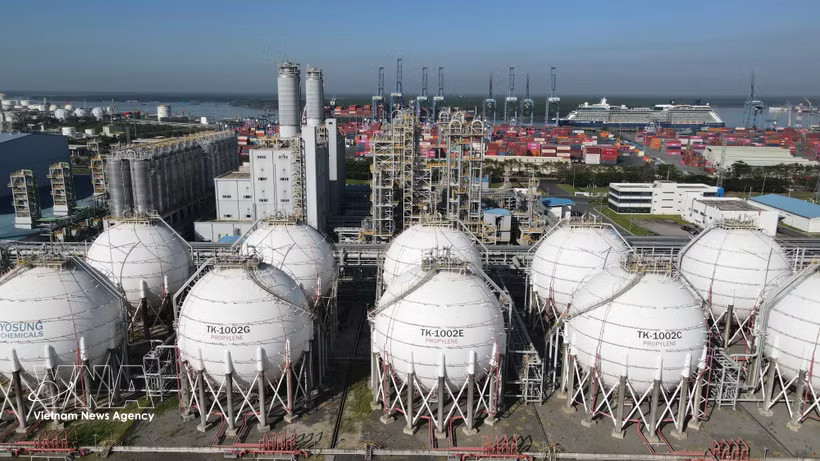
Ho Chi Minh City is reshaping its foreign direct investment (FDI) attraction strategy under the Politburo’s Resolution No. 10-NQ/TW, moving beyond attracting FDI at any cost to forging high-quality and long-term partnerships while offering the best possible investment conditions and tightening scrutiny of low-quality projects to channel capital into green growth, digital transformation and sustainable development.
With 21,351 valid FDI projects worth a combined 146.8 billion USD, Ho Chi Minh City remains Vietnam's leading recipient of foreign investment. The southern largest economic hub recorded nearly 7.5 billion USD in registered FDI in the first half of 2026, fulfilling over 68% of the annual target.
Investment was concentrated in five key sectors, with real estate business attracting the largest share of more than 3 billion USD, followed by wholesale and retail trade and the repair of motor vehicles and motorcycles at nearly 2 billion USD; almost 733 million USD in the information and communications sector; over 602 million USD in manufacturing and processing; and nearly 534 million USD in professional, scientific and technical activities.
These impressive results underscore the strong underlying appeal of the country's economic powerhouse. However, in line with the strategic vision of Resolution No. 10-NQ/TW, the city's leaders stress that success will no longer be measured primarily by the value of registered investment. Instead, greater emphasis will be placed on the deep technology of projects, their innovation capacity, stronger linkages with domestic enterprises, and their tangible contributions to the economy.
Under the municipal People’s Committee's new approach, new-generation partnerships with foreign investors will be based on mutual benefit. The city is committed to fostering a supportive ecosystem by providing high-quality infrastructure and a skilled workforce. In return, foreign-invested enterprises are expected to make substantive investments, operate transparently and responsibly, and integrate more closely with domestic businesses instead of functioning as isolated enclaves.
Projects using outdated technologies, relying on low-cost labour, causing environmental pollution, or failing to meet environmental, social and governance (ESG) standards will be firmly rejected or phased out in favour of higher-quality investments.
The city also expects foreign investors to increase technology transfer, support local supply chains and supporting industries, and create jobs in strategic sectors such as semiconductors, artificial intelligence (AI), finance and green governance, while helping develop a highly skilled workforce.
Kulachet Dharachandra, General Director of Long Son Petrochemicals Co., Ltd. (LSP), welcomed the resolution and the city's implementation efforts, describing the policy direction as a positive signal for Vietnam. He said the LSP has introduced one of the country's most advanced petrochemical technologies and continues investing in workforce development, operational efficiency, safety and supplier capabilities, with the goal of building a stronger industrial ecosystem in Vietnam.
To reinforce investors' confidence, Ho Chi Minh City is translating the resolution into concrete action programmes. The entire political system is implementing tasks under the principle of "six clear responsibilities" covering assigned tasks, lead agencies, coordination, deadlines, specific outcomes and accountability.
Alongside administrative reforms and digital transformation to remove bottlenecks in land, planning and construction procedures, Ho Chi Minh City is pursuing a strategy of using public investment to leverage private capital. Resources are being channelled into transport, logistics, digital infrastructure, energy and site clearance to lure high-quality inflows into the Vietnam International Financial Centre, a free trade zone, semiconductor and AI ecosystems, big data centres and biomedical industries.
As part of its target of achieving double-digit GRDP growth during 2026-2030, the city aims to mobilise 1.24 quadrillion VND (47.2 billion USD) in total social investment this year, with the FDI sector expected to contribute 263.6 trillion VND, or 21.2% of the total.
According to Director of the municipal Department of Finance Hoang Vu Thanh, attracting new registere investment is only the first step. Faster capital disbursement, shorter project implementation time and stronger actual investment demand will be decisive in supporting the city's growth targets. He called on foreign investors to demonstrate their long-term commitments through timely and substantive disbursement./.