

OP-ED: Strength of policies shaped by listening to public voices
Recent developments have demonstrated that policies shaped through listening to public opinion have become a powerful source of social consensus and public trust, enabling the Party, the State and the people to work together toward more ambitious goals and a longer-term vision for national development.
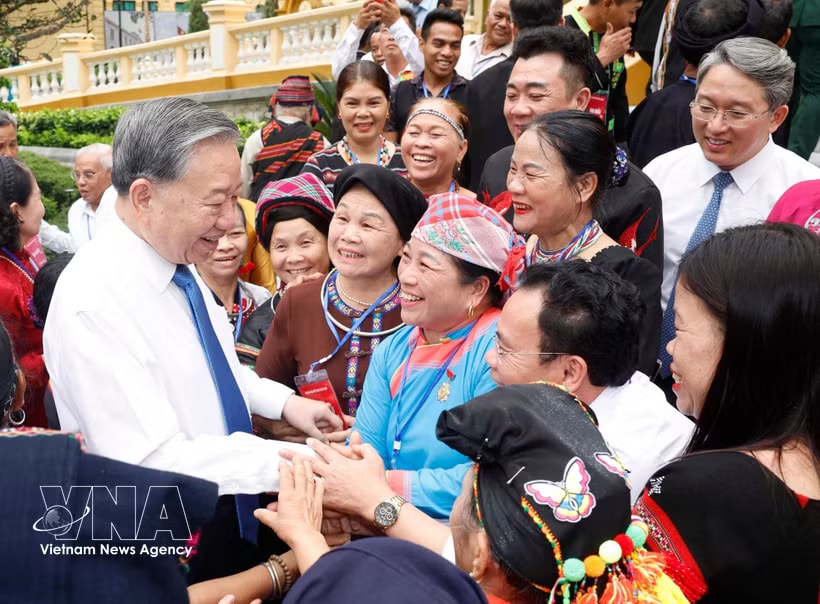
Hanoi (VNA) – At a time when the world is evolving at an unprecedented pace and Vietnam stands at a pivotal moment in its development journey, with strategic socio-economic decisions made against the backdrop of intense global competition, any delays can mean missing opportunities for an entire development cycle. Yet, amid the urgency of reform and growth, the legitimate aspirations, concerns and expectations of the people have not been overlooked.
Recent developments have demonstrated that policies shaped through listening to public opinion have become a powerful source of social consensus and public trust, enabling the Party, the State and the people to work together toward more ambitious goals and a longer-term vision for national development.
That public consensus and trust also serve as compelling evidence refuting unfounded allegations and distortions that seek to deny the Party’s and the State’s commitment to listening to the people in recent years.
Vietnam’s revolutionary history has proved that the harmony between the Party’s vision and the people’s aspirations constitutes a vital source of national strength leading the country from one success to another. This unity transforms challenges into opportunities, difficulties into motivation and aspirations into tangible achievements. Listening to the people, embracing constructive feedback and adjusting policies in line with practical realities are therefore not only central to the principle of putting the people at the heart of governance, but also essential characteristics of a truly transparent, open and progressive rule-of-law state.
In the current period of profound transformation, this approach has become even more important than ever. Addressing the 11th National Congress of the Vietnam Fatherland Front for the 2026–2031 term, Party General Secretary and State President To Lam reaffirmed that the genuine voice of the people must guide policymaking, underscoring the principle that meaningful reform cannot succeed without understanding and responding to citizens’ concerns.
Recent policy adjustments provide concrete examples of this approach. One notable case is the Government’s decision to raise the annual revenue threshold exempt from taxation for business households and individuals to 1 billion VND (38,000 USD), doubling the level proposed in the initial draft and effective from January 1, 2026. The adjustment followed consultations with business households, economists and professional associations, reflecting both practical realities and public feedback. The measure not only provides direct support for millions of small businesses but also shows the Government’s commitment to fostering private-sector development as a key driver of economic growth.
Another example is Hanoi’s proposed Red River Landscape Boulevard project. Recognising public concerns surrounding this large-scale infrastructure initiative, city authorities have prioritised transparency, public consultation and expert engagement. Through public information sessions, thematic conferences and community-level dialogues, numerous recommendations have been incorporated into the project’s planning process. Adjustments to the project’s scope and investment scale, together with repeated commitments to protecting residents’ rights and legitimate interests in resettlement and urban redevelopment, have demonstrated an effort to place people at the centre, with social consensus considered as the foundation and practical effectiveness as the yardstick for all development decisions.
Similarly, the nationwide rollout of E10 biofuel has generated diverse opinions among the public. Rather than dismissing concerns, relevant authorities have actively provided information, clarified technical issues and refined implementation plans. Such efforts reflect a modern governance approach that values dialogue and seeks to build social consensus through transparency and evidence-based policymaking.
The concerns expressed by citizens – whether related to relocation, changes to familiar neighbourhoods, shifts in livelihoods, digital transformation, tax policies or emissions reduction commitments – are legitimate and deserve attention. Importantly, public sentiment is being acknowledged, and authorities have shown a willingness to address concerns through practical measures. Examples include digital platforms enabling citizens to provide feedback on fuel quality and environmental issues, as well as community surveys designed to gather residents’ views on urban planning and local development.
Listening to public opinion and incorporating feedback should not be interpreted as inconsistency or hesitation in governance. On the contrary, it is a hallmark of effective and responsive administration. Policies refined through public consultation are not concessions to pressure but improvements designed to better meet development needs and the legitimate aspirations of the people.
Vietnam’s history has consistently demonstrated that when the Party remains closely connected to the people, listens to their voices and draws strength from their support, even the most formidable challenges can be overcome. The social consensus needed to achieve the country’s long-term aspirations for prosperity and sustainable development is built on trust – trust that is nurtured through respect for the people, openness to their views and a continuous commitment to improving policies in the public interest.
This principle is not only rooted in President Ho Chi Minh’s thought but has remained a consistent guiding philosophy of the Party and State during the leadership, governance, and development of the country./.