

Second consultative conference: Bridging the Party’s will and the People’s voice
In the process of electing deputies to the 16th National Assembly and People’s Council deputies at all levels for the 2026-2031 term, the second consultative conference plays a pivotal role. Under the stewardship of the Vietnam Fatherland Front (VFF), the second consultation has increasingly affirmed its role as a vital bridge between the Party’s will and the people’s aspirations, ensuring democracy, transparency, and the selection of worthy representatives of the electorate.
Laying the groundwork for voter meetings
Practical implementation of the second consultative conference across localities demonstrates a strong spirit of democracy, responsibility, and careful preparation for the subsequent step of collecting voters’ opinions at their places of residence. In Hanoi, the conference reached consensus on a preliminary list of 53 candidates for the 16th National Assembly, including 51 nominees introduced by agencies and organizations and two self-nominated candidates. At the same time, it agreed on a preliminary list of 248 candidates for the 17th municipal People’s Council, ensuring appropriate structure, composition, and surplus in accordance with regulations.
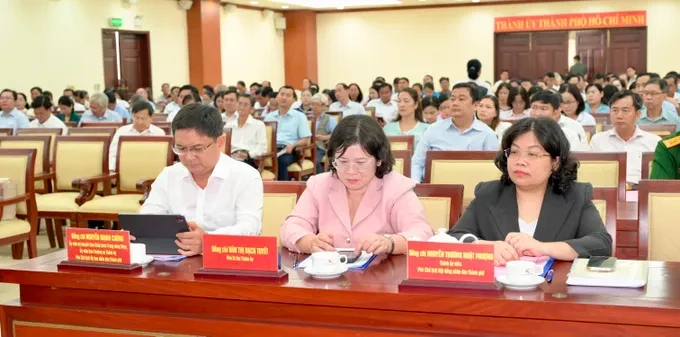
In Ho Chi Minh City, the second consultative conference unanimously approved a preliminary list of 60 candidates for the 16th National Assembly and 221 candidates for the city’s People’s Council for the 2026–2031 term (with one withdrawal). Leaders of the city attended the conference, underscoring its importance. The Standing Vice Chairwoman of the municipal VFF emphasized the need to urgently organize training sessions to guide the process of collecting voters’ comments and confidence votes, as well as to promptly conduct voter consultations at both places of residence and workplaces, where applicable, especially for self-nominated candidates.
These examples show that the second consultative conference goes beyond merely finalizing a preliminary list. More importantly, it opens a phase in which the people directly participate in supervision and evaluation through voter meetings at their places of residence. Thorough preparation at this stage lays a solid foundation for selecting candidates who are truly exemplary and capable of representing the will and legitimate aspirations of voters.
Ensuring the people’s voices are fully heard
Voter meetings at places of residence are the direct continuation of the second consultative conference, where the preliminary list of candidates is scrutinized through public opinion. According to Resolution No. 101/2025/UBTVQH15 of the Standing Committee of the National Assembly, which provides detailed guidance on organizing voter meetings, collecting voters’ comments and confidence levels is considered a crucial step with decisive significance in further screening and selecting candidates who meet required standards and enjoy public trust.
Based on the outcomes of the second consultation, Standing Committees of the VFF at all levels are closely coordinating with People’s Committees and grassroots Fatherland Front working committees to prepare voter meetings scheduled from February 4 to 8, 2026. These meetings are organized in strict compliance with regulations regarding venue, participants, procedures, and formalities. The preparation of voter lists and invitations is conducted in a public and rigorous manner, ensuring the legally required number of participants and creating favorable conditions for broad and substantive voter engagement.
Under the regulations, voter meetings are held in villages, hamlets, or residential groups where candidates permanently or temporarily reside. The focus is on voters’ assessments of candidates’ moral integrity, lifestyle, law observance, relationships with the local community, and sense of responsibility as role models. In special circumstances such as natural disasters or epidemics, meetings may be organized in alternative forms as decided by competent authorities, provided that voters’ rights to participation and supervision are fully guaranteed.
At the grassroots level, local VFF Standing Committees have developed detailed plans, clearly assigned responsibilities to Fatherland Front working groups in each residential area, and coordinated closely with neighborhood leaders to ensure all necessary conditions for voter meetings are met. Communication and mobilization efforts are regarded as mandatory, enabling voters to have sufficient information to provide candid and responsible feedback. Importantly, voters’ comments and confidence assessments are fully and honestly compiled and reported to competent authorities for consideration in the third consultative conference. Issues raised by voters that require verification are handled promptly, ensuring that no public opinion is ignored or left unresolved.
A democratic space linking Party and people
Careful preparation for voter meetings in line with Resolution No. 101/2025/UBTVQH15 underscores that the second consultative conference is not merely a procedural step in forming a preliminary list. Rather, it opens a broad democratic space for the people to directly participate in the candidate selection process. Through this mechanism, the Vietnam Fatherland Front continues to affirm its central role as a durable bridge between the Party’s leadership and the people’s will, contributing to the success, legitimacy, and democratic character of elections at all levels.