

Postal services are essential infrastructure for digital economy: NA President
The draft law reduces 14 administrative procedures to a single electronic registration procedure, with management agencies checking the completeness of applications rather than assessing their content, while businesses assume responsibility for compliance and subsequent inspections.
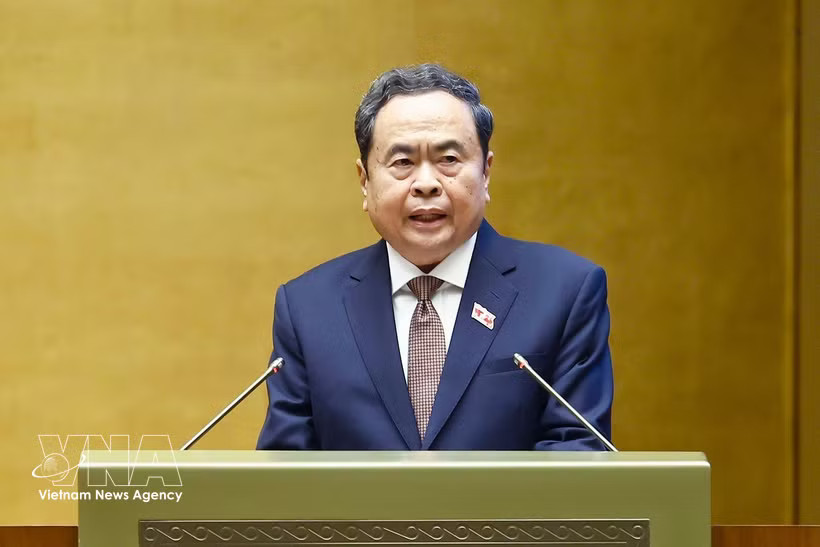
Hanoi (VNA) – National Assembly (NA) President Tran Thanh Man highlighted postal services as essential infrastructure for the digital economy and the flow of goods, during a group discussion on the draft revised Law on Postal Services as part of the 16th legislature’s ongoing second session on October 17.
NA President Man highlighted the proposed shift from preliminary inspection and licensing to registration and post-inspection based on data as a breakthrough reform.
The draft law reduces 14 administrative procedures to a single electronic registration procedure, with management agencies checking the completeness of applications rather than assessing their content, while businesses assume responsibility for compliance and subsequent inspections.
The top legislator welcomed this approach for reducing market entry barriers and aligning regulations with the digital economy. However, he cautioned that post-inspection will only be effective if supported by reliable data and robust monitoring tools. He called for clear requirements on sharing minimum data, including postal item identification codes, as well as a mandatory digital transformation roadmap for large enterprises and technical assistance for smaller ones.
NA President also stressed the need to clearly distinguish postal services from transport and independent logistics and warehousing activities. While defining services based on their actual nature rather than their names is a progressive step towards resolving long-standing regulatory overlaps, more specific quantitative criteria are needed to prevent regulatory loopholes and overlapping management responsibilities across the postal sector.
Regarding identification and tracking of postal items, the NA President said that assigning each item a unique identification code throughout its journey will help shift management from detecting violations to preventing risks. However, he emphasised that regulations must balance security requirements with privacy and compliance costs. Risk classification criteria, based on factors such as goods’ value and type, sender history and destination, should be transparent, while personal data must be protected in accordance with the Law on Personal Data Protection.
On universal and expanded public-interest postal services, he underlined the importance of financial sustainability and ensuring affordable access for people in remote, mountainous, border and island areas. He proposed clearly identifying services that the market could not adequately provide and establishing compensation mechanisms based on actual costs and independent audits to avoid distorting competition. Multi-purpose service points combining public-interest and digital services should also be prioritised.
According to the top legislator, the draft law has recognised that postal services are no longer limited to letters but have become vital infrastructure underpinning the digital economy and goods circulation. He urged lawmakers to further clarify the legal boundaries of postal activities, establish an effective data and post-inspection system, and ensure transparent and sustainable public-service financing while balancing business facilitation with consumer protection and network security.
While discussing in groups the draft Law amending and supplementing a number of articles of the Law on Measurement on the morning of October 17, deputies broadly agreed on the need for the amendments and praised the drafting agency for its efforts in preparing the bill.
Deputy Vo Thanh Tung of Hue city proposed incorporating into the law fundamental provisions on professional standards, training requirements, conditions for certificate revocation, and the legal responsibilities of individual inspectors, who directly sign inspection results with significant legal implications./.