
OP-ED: When foreign affairs pioneer in shaping nation's future
Resolution No. 06-NQ/TW represents both a continuation and a development of the Party’s comprehensive foreign policy and President Ho Chi Minh’s thought. If international integration helped create a favourable environment for development, diplomacy today is tasked with protecting and expanding that space.
Hanoi (VNA) – History shows that every stage of Vietnam’s development has been accompanied by the expansion of its external relations. Today, amid rapid global change and intensifying competition, maintaining a peaceful and stable environment while effectively mobilising external resources has become a strategic imperative.
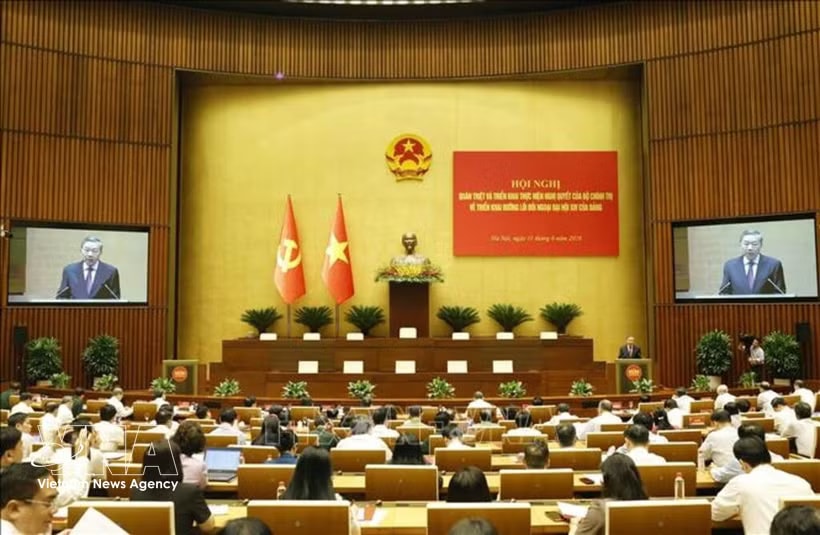
Politburo Resolution No. 06-NQ/TW on implementing the foreign policy adopted at the 14th National Party Congress marks a new development in foreign policy thinking by identifying foreign affairs as a “vital and regular” task and a pioneering force in shaping a favourable international environment for national development.
Addressing a national conference on the implementation of the resolution, Party General Secretary and State President To Lam stressed that Vietnam’s development is inseparable from that of the region and the world. Combining national strength with the strength of the times, and internal resources with external ones is not only an objective requirement but also a prerequisite for realising the country’s development aspirations.
This principle has been a consistent thread in the Party’s foreign policy and President Ho Chi Minh’s thought, particularly since the launch of the Doi Moi (Renewal) process in 1986. While foreign affairs once focused on breaking international isolation, expanding relations and creating a favourable international environment for nation building, today’s demands are far greater.
To achieve the goal of becoming a developed, high-income nation by 2045, Vietnam needs new sources of capital, technology, knowledge, markets and high-quality human resources. At the same time, a growth model driven by science, technology, innovation and digital transformation requires deeper international connectivity than ever before.
The rationale is evident in the country’s achievements over four decades of Doi Moi.
From a nation once subject to embargoes and isolation, Vietnam has established diplomatic relations with 194 countries, built 38 partnership frameworks and become an active member of more than 70 international organisations and forums. It maintains economic and trade ties with 230 countries and territories and participates in a network of 20 free trade agreements.
Vietnam’s economic scale has expanded nearly 100-fold since 1986, making it one of the world’s 32 largest economies, while per capita income has risen from below 100 USD to more than 5,000 USD.
From joining ASEAN in 1995, APEC in 1998 and the WTO in 2007, to its participation in next-generation trade agreements such as the CPTPP, EVFTA and RCEP, Vietnam has not only expanded its markets but also enhanced competitiveness, attracted investment, accessed technology and integrated more deeply into global value chains.
International integration has truly become an important driver for strengthening internal capacity, effectively supporting the country’s development efforts, including in science and technology, education and training, and health care. It has helped Vietnam’s economy grow stronger and integrate more deeply with the world.
These achievements demonstrate that every step forward in national development has gone hand in hand with an expanded diplomatic horizon.
Against this backdrop, Resolution No. 06-NQ/TW marks the first time that foreign affairs have been identified as a “vital and regular” task alongside national defence and security.
This reflects an important development in the Party’s leadership thinking.
Foreign affairs are no longer limited to safeguarding a peaceful environment and mobilising favourable international conditions. They are now positioned at the forefront of efforts to identify and prevent risks from early and afar as well as from their source while proactively creating the most favourable international conditions for national development.
Party General Secretary and State President Lam has called for a shift from “diplomacy that protects development space” to “diplomacy that builds national development capacity”; from “market integration” to “market creation”; and from “participating in the rules of the game” to “helping shape the rules of the game”.
This is perhaps the most notable innovation in the foreign policy adopted at the 14th National Party Congress.
The approach reflects Vietnam’s growing stature and capabilities. As the country expands its global network of partnerships, deepens economic openness and embraces innovation and digital transformation as key growth drivers, diplomacy can no longer focus solely on maintaining relationships or attracting resources through traditional means.
Instead, it must help open up new development opportunities. This includes diversifying markets, partners and supply sources; attracting high-quality foreign investment linked to technology transfer and domestic value creation; promoting technology diplomacy and innovation partnerships; and actively contributing to the development of international frameworks, standards and rules in emerging fields.
For that reason, Resolution No. 06-NQ/TW not only emphasises safeguarding national interests but also highlights Vietnam’s responsibility for contributing to addressing common global challenges, including peacekeeping, climate change, food security, sustainable development, humanitarian assistance and disaster response.
This is a natural progression for a country with growing influence and capabilities.
President Ho Chi Minh once said: “Internal strength is like the gong, diplomacy like its sound. A good gong carries its sound far.” Internal strength remains decisive, but its full potential can only be realised by making the best use of favourable external conditions.
Resolution No. 06-NQ/TW represents both a continuation and a development of the Party’s comprehensive foreign policy and President Ho Chi Minh’s thought. If international integration helped create a favourable environment for development, diplomacy today is tasked with protecting and expanding that space.
All of this is aimed at ensuring that Vietnam moves confidently towards its 2045 development goals./.