

New chapter in Vietnam-Switzerland comprehensive partnership
With the positive outcomes achieved during the visit and the continued efforts of ministries, sectors and localities, Vietnam and Switzerland will make the most of their respective strengths and opportunities for cooperation to foster stable and sustainable bilateral relations, said Deputy Minister of Foreign Affairs Le Thi Thu Hang.
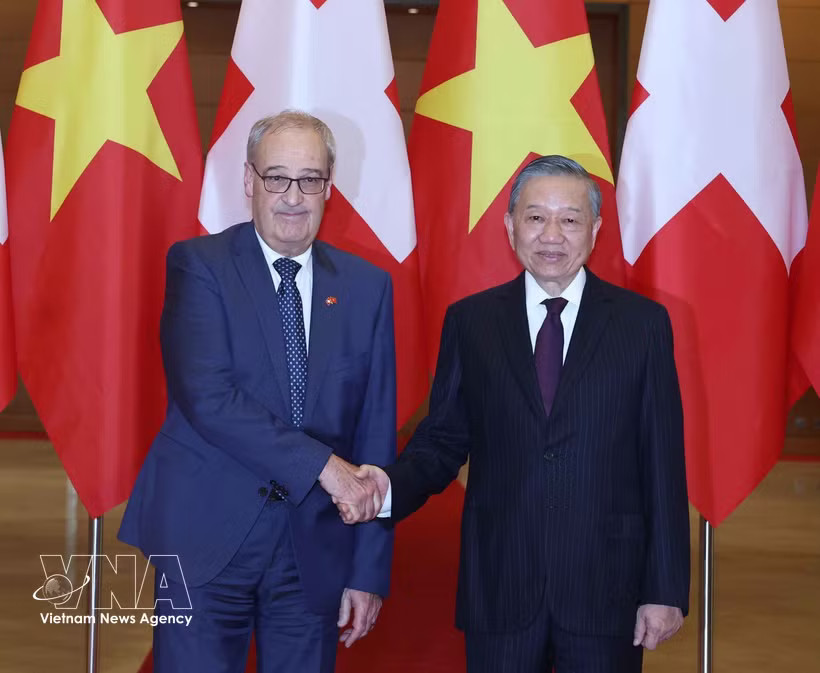
Hanoi (VNA) – The outcomes of Swiss President Guy Parmelin and his spouse’s official visit to Vietnam on October 17-18 have helped deepen the social foundations of bilateral relations while reaffirming the two countries' shared commitment to contributing to the international community's common affairs, according to Deputy Minister of Foreign Affairs Le Thi Thu Hang.
The Deputy FM said the visit took place at a particularly significant time, as bilateral relations are marked by three key milestones: the 55th anniversary of diplomatic relations, the Comprehensive Partnership established and implemented since January 2025, and the signing of a Free Trade Agreement (FTA) between Vietnam and the European Free Trade Association (EFTA), of which Switzerland is a member.
Switzerland was among the first Western European countries to recognise and establish diplomatic relations with Vietnam. Over the years, Vietnam has valued Switzerland’s steadfast support and partnership, spanning development cooperation, education and research, as well as assistance to the Vietnamese people in times of natural disasters, storms, floods and pandemics.
Building on this solid foundation, the visit provided an opportunity for the two countries to set strategic directions for a new chapter in their Comprehensive Partnership, Hang underscored. Switzerland's strengths in research, innovation, finance and education and training can be more closely aligned with Vietnam's development needs and production capabilities.
Both countries have ample opportunities to jointly develop technologies, improve human resource quality and create new value, thereby carrying their friendship forward through cooperation in pursuit of long-term development goals, she said.
During the visit, President Parmelin held talks with General Secretary of the Communist Party of Vietnam Central Committee and President To Lam and met with Prime Minister Le Minh Hung and National Assembly President Tran Thanh Man. Leaders of both countries reaffirmed the importance they attach to bilateral friendship and cooperation, while recognising each other's role and standing in their respective regions and globally, as well as in multilateral mechanisms.
The strategic high-level talks between the Swiss President and General Secretary and President Lam outlined broad directions for developing the Comprehensive Partnership framework, including exchanges of delegations at all levels and more frequent high-level contacts and dialogue to strengthen bilateral cooperation.
Both sides also pledged to ensure substantive progress in traditional areas such as politics-diplomacy and trade-investment, while expanding collaboration in science-technology, innovation, digital finance, international financial centres, high-quality human resource training and sustainable tourism. These efforts would contribute positively to the new development phase of both nations, the Deputy FM noted.
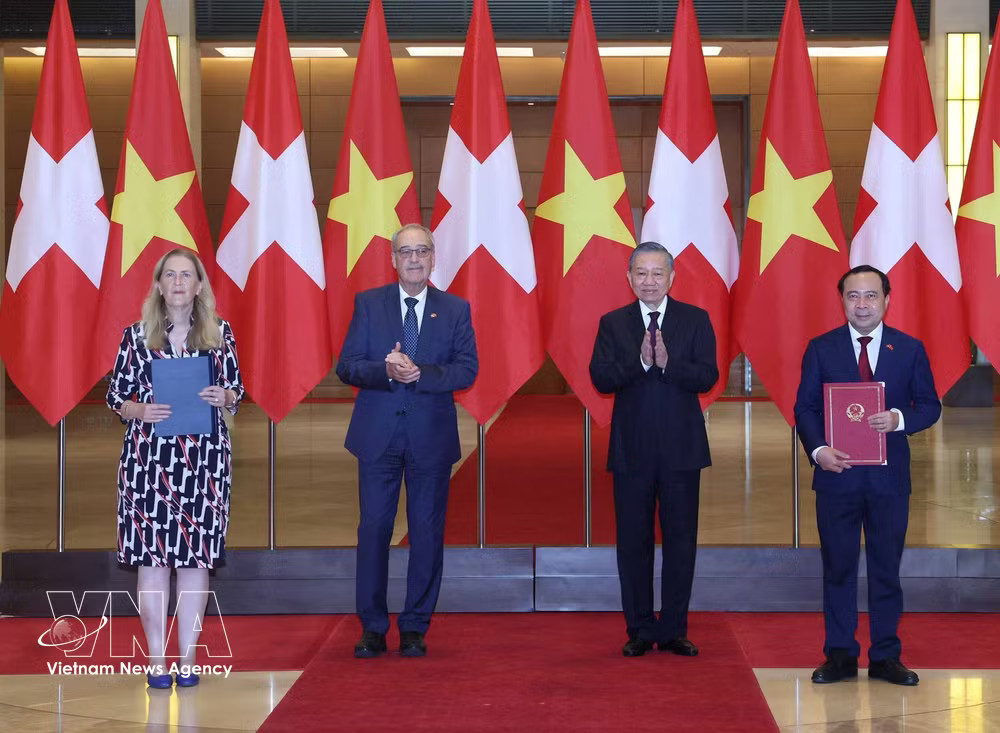
In economic, trade and investment cooperation, one of the major outcomes was the signing of the Vietnam-EFTA FTA. The agreement marks an important milestone in economic integration and, once it takes effect, will facilitate businesses' access to markets and expansion of operations in line with the agreed commitments.
For Vietnam, its long-term significance also lies in opportunities to connect with technology, knowledge and high-quality business networks, thereby enhancing competitiveness and enabling deeper participation in value chains. In turn, Vietnam offers prospects for cooperation with a dynamic market that has substantial production capacity and is becoming increasingly integrated into the regional and global economy.
The two sides also identified priority areas for cooperation more clearly in line with emerging development needs. Cooperation documents signed during the visit in areas such as labour, employment, science, technology and innovation will provide a solid foundation for closer links between investment, research and training, improving the quality of cooperation, increasing its technological content and developing human resources.
At the multilateral level, Vietnam and Switzerland sent to the international community a strong message of supporting sustainable development, multilateralism, free trade and a rules-based world order, amid growing global instability and mounting challenges to the multilateral trading system.
Regarding priorities for the coming period, the Deputy FM said the warm reception extended to President Parmelin demonstrated Vietnam's consistent implementation of its foreign policy of independence and self-reliance, multilateralisation and diversification of external relations, and proactive international integration.
Expanding ties with trusted partners will help Vietnam diversify markets and access high-quality resources for national development, serving the interests of both peoples while enabling the country to contribute more actively to global issues.
During the talks, General Secretary and President Lam directed Vietnamese ministries, sectors and localities to swiftly translate political trust between the two countries into effective coordination among their respective agencies and localities, and practical benefits for businesses. Each cooperation programme should have a designated focal point, adequate resources, a clear roadmap and tangible outcomes so that both sides could monitor progress and jointly advance implementation.
About economic-investment and financial cooperation, Vietnam should build on the signing of the Vietnam-EFTA FTA to promote areas where both sides have strengths and shared needs, particularly science-technology, innovation, digital finance, green finance, high-quality human resource training and infrastructure.
Vietnam and Switzerland are determined to work towards doubling bilateral trade, which exceeded 1 billion USD in 2025, and attracting greater Swiss investment flows into Vietnam.
In science-technology and innovation, the two countries should explore ways to link joint research programmes based on the “three-party cooperation” model involving the State, universities and businesses, thereby promoting technology transfer and commercialisation in fields such as biomedicine, green energy, the digital economy and agriculture.
This could be pursued through existing mechanisms connecting the two countries’ national science development funds, universities, research institutes and business communities.
Regarding high-quality human resources training and people-to-people exchanges, Vietnam should continue promoting training partnerships and exchanges of experts and researchers, making the most of Switzerland's world-leading education and research systems to develop a workforce capable of meeting the demands of the country's new development phase.
Hang expressed confidence that with the positive outcomes achieved during the visit and the continued efforts of ministries, sectors and localities, Vietnam and Switzerland will make the most of their respective strengths and opportunities for cooperation to foster stable and sustainable bilateral relations, serving the development of both countries and the interests of their people, while contributing to peace, stability, cooperation and development in the region and around the world./.