

NA deputies propose adding enforcement measures to administrative penalties
The revised Law on Handling of Administrative Violations comprises six chapters and 128 articles. It proposes extending the statute of limitations for penalties to two or three years in certain sectors, raising maximum fines from 1 billion VND (over 38,000 USD) to 1.5 billion VND for individuals and from 2 billion VND to 3 billion VND for organisations, and specifying maximum fines for individual sectors.
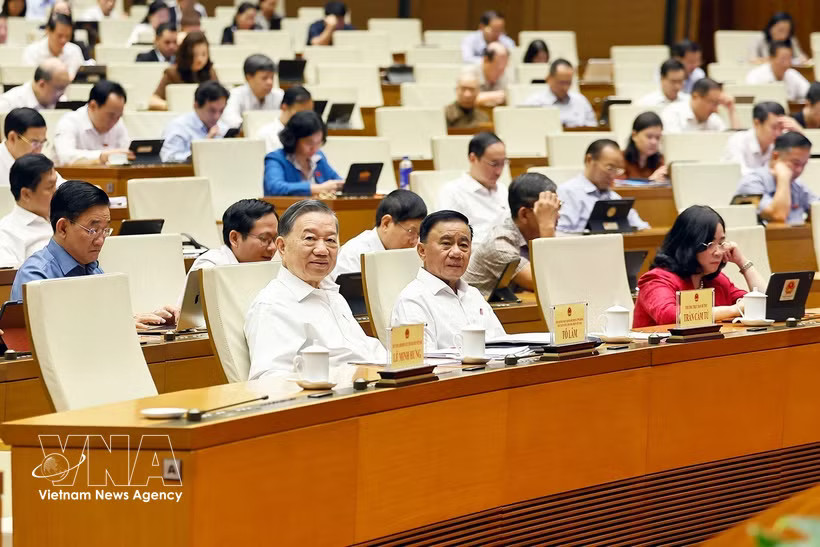
Hanoi (VNA) – Lawmakers, during the 16th National Assembly’s second session on October 26, discussed five draft laws, including the amended Law on Handling of Administrative Violations that would expand enforcement measures, increase maximum fines and extend statutes of limitations for certain violations.
The session was attended by General Secretary of the Communist Party of Vietnam (CPV) Central Committee and President To Lam, Standing Member of the CPV Central Committee's Secretariat Tran Cam Tu, and President of the Vietnam Fatherland Front Central Committee Bui Thi Minh Hoai.
Minister of Public Security General Luong Tam Quang gave a presentation of the five draft laws: the Data Security Law; the Law on Protection of Important Works Related to National Security; the Electronic Identification and Authentication Law; the Law amending and supplementing some articles of the Law on Management and Use of Weapons, Explosives and Supporting Tools and the Law on Fire Prevention, Firefighting, Rescue and Salvage; and the revised Law on Handling of Administrative Violations.
The revised Law on Handling of Administrative Violations comprises six chapters and 128 articles. It proposes extending the statute of limitations for penalties to two or three years in certain sectors, raising maximum fines from 1 billion VND (over 38,000 USD) to 1.5 billion VND for individuals and from 2 billion VND to 3 billion VND for organisations, and specifying maximum fines for individual sectors.
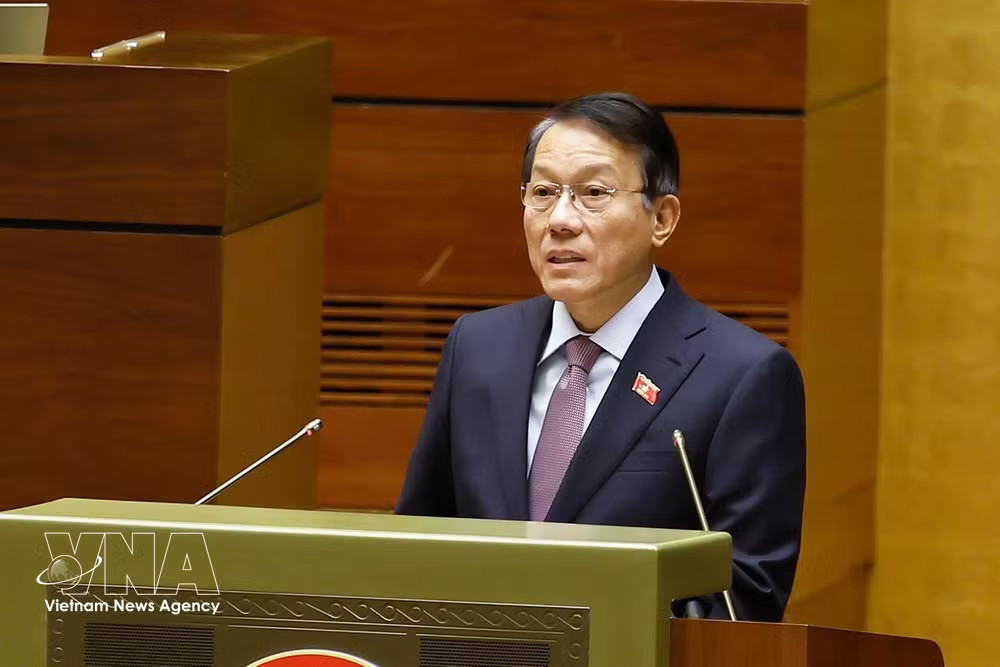
Additional enforcement measures would include temporary exit suspension; sealing offices, premises or production and business facilities; suspending electricity and water supplies; suspending vehicle inspections, registration or driving permits; and cutting off Internet, telecommunications or digital infrastructure services, or blocking access through technical measures.
Phan Chi Hieu, Chairman of the National Assembly’s Committee for Legal and Judicial Affairs, called for further scrutiny of the proposed extension of limitation periods to ensure that violations are detected and handled promptly.
He cautioned that extending the period to three years, potentially four years in cases referred by procedural authorities, could narrow the legal distinction between administrative violations and criminal offences, whose limitation period for less serious crimes is five years.
He also warned that excessively high fines might exceed the financial capacity of some individuals and businesses, reducing their effectiveness. Alternative measures, including remedial requirements, licence revocation and suspension of operations, should therefore be considered.
Regarding the additional enforcement measures, Hieu said some proposals were more suited to stopping violations than enforcing penalty decisions, while others targeted assets or facilities rather than the individuals responsible.
He called for further revisions to ensure that the measures genuinely serve to enforce the law and are appropriate and feasible. /.