
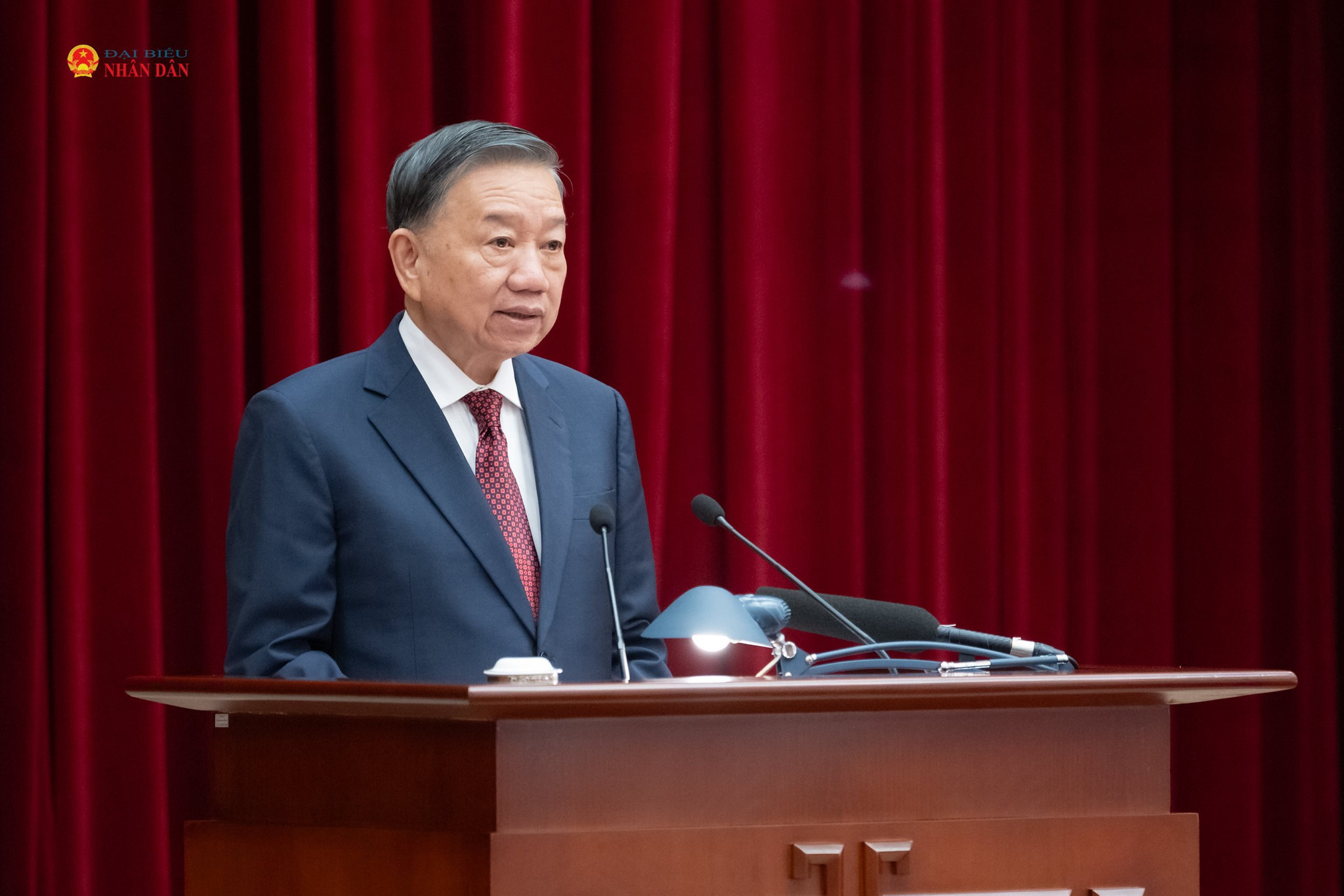
Messages from General Secretary and President To Lam at the closing of the 14th Party Central Committee’s third plenum
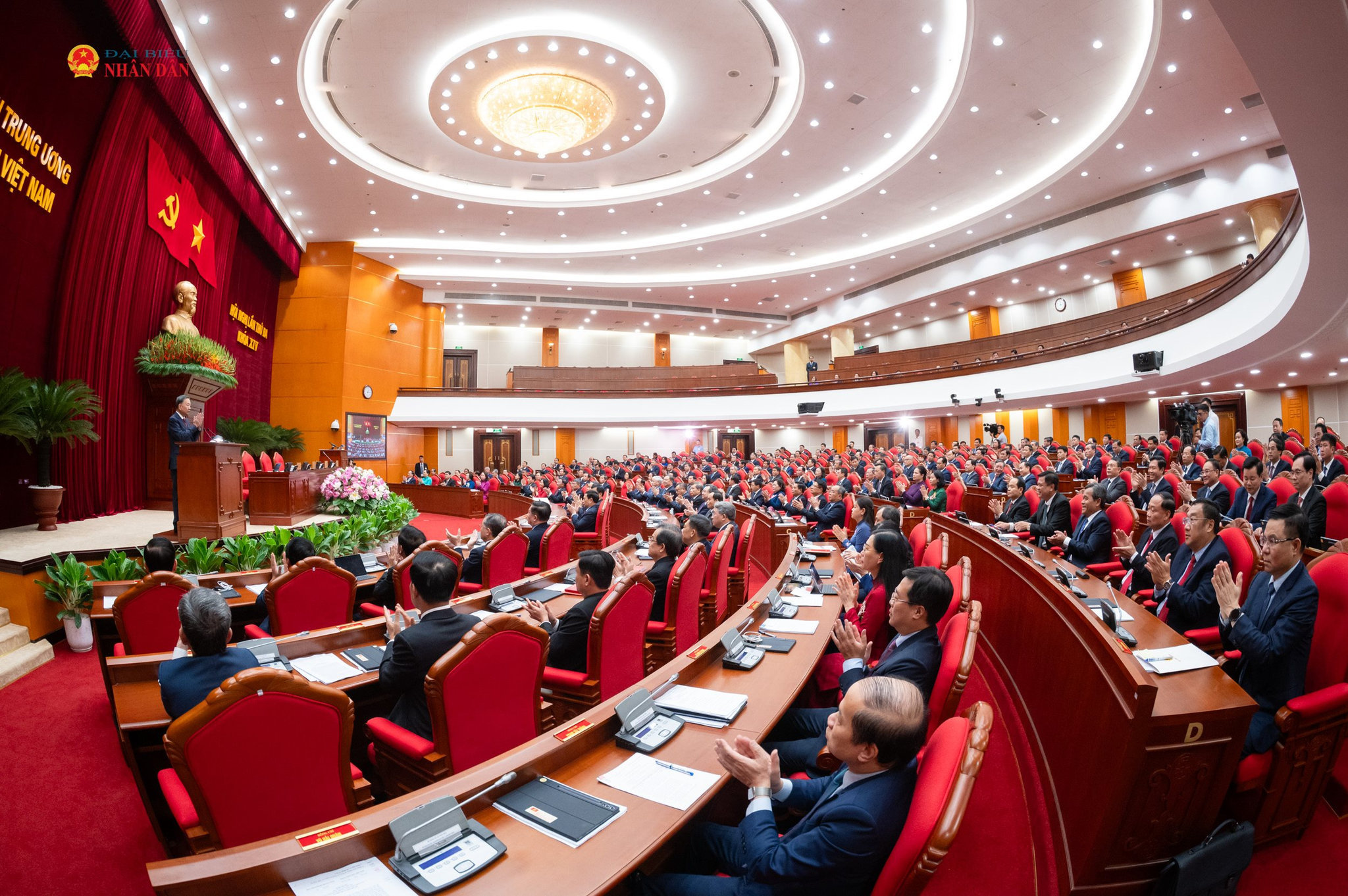
Following a period of urgent, serious, democratic, candid and responsible deliberations, the 3rd Plenum of the 14th Central Committee of the Communist Party of Viet Nam concluded its agenda on the afternoon of July 24. The Central Committee thoroughly discussed all agenda items and reached broad consensus on a number of major policies and strategic decisions concerning Party building, the political system, and national development and defense. General Secretary and President To Lam delivered the closing remarks. People's Deputies Newspaper respectfully presents the full text of the remarks by General Secretary and State President To Lam.
Dear Members of the Politburo,
Dear Members of the Secretariat,
Dear Members of the Party Central Committee,
Distinguished delegates attending the Plenum,
Following a period of urgent, serious, democratic, candid and responsible deliberations, the 3rd Plenum of the 14th Party Central Committee has successfully completed its agenda. The Central Committee carefully examined all agenda items and reached broad consensus on numerous major policies and strategic decisions concerning Party building, the political system, and national development and national defense. The Politburo has earnestly incorporated the opinions expressed at the Plenum, provided explanations where necessary, and finalized the draft documents.
On behalf of the Politburo and the Secretariat, I would like to express my sincere appreciation and high regard for the sense of responsibility and wisdom demonstrated by members of the Central Committee and our invited delegates. I also commend all agencies, organizations, and personnel involved in preparing and serving this Plenum.
Dear Comrades,
Before declaring the Plenum closed, I would like to briefly summarize three principal outcomes and highlight five key requirements for translating the Central Committee's decisions into tangible results.
First,
The Central Committee unanimously assessed that during the first six months of 2026, the implementation of the Resolution of the 14th National Party Congress and the Party's strategic resolutions was carried out with urgency and determination. The Party's leadership, governance, inspection and supervisory capacity continued to improve. Following institutional restructuring, the political system has largely stabilized and has begun to demonstrate its effectiveness.
However, the greatest bottleneck remains implementation.
The root causes lie in the fact that, in some places, authority has not been matched by accountability; decentralization has not been sufficiently accompanied by the necessary resources, data, implementation tools, personnel capacity and oversight mechanisms; resources remain fragmented; economic growth has yet to be firmly driven by productivity and domestic strengths; and forecasting and preventive capabilities in certain sectors, industries and localities have failed to keep pace with rapidly evolving circumstances.
Accordingly, these root causes must be addressed comprehensively through reforms in institutions, organizational structures, human resources, and leadership and governance methods. Party building must be closely integrated with national governance, socio-economic development and national defense.
Second,
The Central Committee reached a high level of consensus on all 13 agenda items submitted to the Plenum and voted to adopt the Plenum Resolution together with all documents included in the agenda.
The resolutions, conclusions, regulations and policy proposals adopted are firmly aligned with the Resolution of the 14th National Party Congress. They address both immediate and long-term requirements while laying the foundation for implementing four strategic transformations.
(i) Party building and the political system
The Central Committee agreed that, after one year of operating under the new organizational model of the political system and the two-tier local government model, the new institutional framework has demonstrated clear advantages. It has proven appropriate, coherent and increasingly effective. Nevertheless, operational quality remains uneven, particularly at the grassroots level.
The Central Committee approved key tasks for the remaining six months of 2026, requiring continued refinement of organizational functions, authority and working relationships, while ensuring that decentralization is accompanied by adequate human resources, financial resources, data, implementation tools and effective power oversight.
The Central Committee decided to promulgate amendments and supplements to Regulation No. 20, emphasizing that this is an especially important document for implementing the Party Charter. All amendments must strictly comply with the Party Charter and remain within the proper authority. Any new matters not yet stipulated in the Charter may only be piloted within clearly defined authority, scope and timeframes. Preliminary and comprehensive reviews will be conducted to support preparations for amendments to the Party Charter at the 15th National Party Congress.
The Central Committee also agreed to issue a new Regulation on Prohibited Conduct for Party Members in response to the requirements of the new situation and to ensure consistency with the Party's existing regulations.
The regulation is intended to be clear, rigorous and practical. It further specifies ethical standards and responsibilities for exemplary conduct, accurately identifies prohibited behaviors, ensures strict Party discipline, while at the same time avoiding any constraints that could undermine innovation or discourage officials from taking responsibility in pursuit of the common good.
(ii) Organizing the Development Space and Governing National Resources
The Central Committee approved the policy of establishing Quang Ninh City and Bac Ninh City.
The Central Committee also agreed to issue a Conclusion on the preliminary review of Resolution No. 18 together with guiding principles for amending the Land Law and other relevant legislation. It reaffirmed that land belongs to the entire people, with the State acting as the representative owner and exercising unified management. Land is recognized as a special national resource and the fundamental space for the nation's survival and development.
The State shall not reconsider lawfully established land-use rights that have been granted under land policies and legislation in force during different historical periods.
Amendments to the Land Law and related legislation must be comprehensive, targeted and timely. They should unlock development resources without privatizing land ownership, while ensuring a proper balance among the interests of the State, the people and businesses. The State shall continue to regulate, supervise and determine land prices, while guaranteeing improved housing, living conditions and livelihoods for people whose land is acquired.
The Central Committee also agreed to issue a new Resolution on building and developing Việt Nam into a strong maritime nation, affirming that the sea constitutes a vital space for the nation's survival, development and defense. The development of a modern marine economy must go hand in hand with protecting marine ecosystems, improving people's livelihoods and safeguarding national sovereignty.
(iii) Socio-economic Development
The Central Committee unanimously assessed the socio-economic situation during the first six months of the year and identified key tasks and solutions for the remaining six months.
It resolved to strive for economic growth of 10 percent or higher, while maintaining macroeconomic stability, keeping inflation under control, safeguarding major economic balances, and ensuring employment, income growth and social welfare.
Regarding the project on renewing Việt Nam's development model, the Central Committee decided to issue a dedicated Resolution, recognizing that this is an issue of unprecedented scale and significance that will shape the country's development model through 2045 and beyond.
The Resolution goes beyond merely reforming the growth model. It establishes a comprehensive national development model, translating the Party's development vision and aspirations into concrete policies. It places the people and human development at the center and as the highest objective, synthesizing the core principles of the Resolution of the 14th National Party Congress, related Party resolutions and carefully selected international experience suited to Việt Nam's conditions.
The Central Committee also approved the project on building a disciplined, safe, civilized, harmonious and prosperous society, identifying the development of the people, culture, the rule of law, social discipline and a healthy social environment as fundamental pillars to ensure that every achievement in national development genuinely enhances the quality of life and happiness of the people.
(iv) National Defense and Sustainable Development
The Central Committee endorsed the major viewpoints, objectives and key tasks of the National Security Strategy.
It stressed that national security must be considered an integral part of the country's overall development strategy. The Party and the State must proactively identify, forecast, prevent and address both traditional and non-traditional threats, including cross-sectoral and transnational risks, from an early stage and from afar.
The Strategy aims to firmly safeguard the Party, the socialist regime, the State, the people, national independence, sovereignty, unity and territorial integrity, while ensuring human security, data security, energy security, water security, food security and the protection of critical infrastructure.
The Central Committee also approved the review of Resolution No. 24 and issued a Conclusion on environmental protection and proactive climate change response in the new era.
It emphasized the need to shift decisively from post-disaster remediation toward prevention, adaptation and ecological restoration; to strengthen ecosystem-, river basin- and marine-based governance; and to integrate the green transition with enhanced national competitiveness, development security and responsibility toward future generations.
Third,
The Central Committee reached consensus on mechanisms to ensure that its decisions will be implemented in a coordinated, measurable and accountable manner.
Implementation capacity must be built into every policy from the outset.
Each task must clearly specify the lead agency, the responsible authority, the implementing body, the conditions for implementation, deadlines and expected deliverables. Regular inspection and supervision must be conducted to provide early warnings and allow timely adjustments.
No task should be assigned without clearly defining the conditions required for implementation.
No decentralization should take place without effective oversight.
Responsibility must never be diluted through vague coordination.
Practical outcomes and the satisfaction of the people and businesses shall serve as the primary criteria for evaluating organizations, officials and, in particular, leaders.
Dear Comrades,
These three major outcomes demonstrate that the Plenum has considered all 13 agenda items as parts of a unified whole encompassing Party building, national development and national defense; immediate priorities and long-term strategies; political objectives and the conditions necessary for implementation.
What is new lies not only in each individual decision but also in the Party's leadership approach: confronting root causes directly, organizing resources around common national objectives, linking every decision with implementation, and placing the long-term interests of the country and the well-being of the people above all else.
The true value and vitality of these decisions will ultimately be measured by tangible results: bottlenecks removed, new capacities created, smoother operation of the political system, more effectively mobilized resources, higher productivity and competitiveness, a safer nation, and more meaningful benefits enjoyed by the people.
Based on this understanding, unity in policy must immediately be translated into unity in action, turning the Central Committee's decisions into concrete results.
Immediately after this Plenum, the entire Party and the entire political system must focus on carrying out five major groups of tasks.
First, identify the right priorities, establish the proper sequence of implementation, and focus on breakthrough areas.
The decisions adopted at this Plenum are broad in scope, affect multiple sectors, and are closely interconnected. Therefore, implementation must begin immediately.
Priority should be given to tasks that lay the foundation for future development and generate broad spillover effects.
Tasks that are already well defined and for which conditions are fully in place must be carried out immediately, thoroughly and effectively. New, difficult or unprecedented issues must be carefully studied. Where necessary, pilot implementation should be conducted under strict oversight, proceeding step by step while continuously evaluating outcomes, and always within the prescribed authority.
Key bottlenecks must be resolved decisively to pave the way for the successful implementation of subsequent tasks.
Second, ensure implementation under the Party's unified and consistent leadership while fully exercising the functions, authority and responsibilities of each institution.
The Politburo and the Secretariat shall provide overall leadership, direction, task assignments, supervision and implementation oversight.
The Party Committee of the National Assembly shall lead the institutionalization of the Party's decisions, while the National Assembly, the Standing Committee of the National Assembly and People's Councils at all levels shall exercise their legislative and supervisory powers in accordance with their constitutional mandates.
The Party Committee of the Government shall direct the formulation of action programs and guide the Government, ministries, sectors and local authorities in mobilizing resources and organizing implementation.
The Party Committee of the Việt Nam Fatherland Front and central socio-political organizations shall lead public communication, mobilization, supervision and social criticism, while conveying the views and aspirations of the people.
The entire political system must act in a coordinated and seamless manner, always oriented toward the grassroots and the people.
Under Politburo Regulation No. 206, members of the Party Central Committee are responsible for leading or directing the dissemination and implementation of the resolutions and conclusions adopted at this Plenum within their respective localities, agencies and organizations.
This spirit of responsibility must be upheld by every Party Central Committee member and carried through to every cadre and Party member.
Every Party member must strictly observe the Regulation on Prohibited Conduct for Party Members, regularly engage in self-reflection and self-improvement, serve as a model in communicating and mobilizing the people, match words with actions, carry every assigned task through to completion, and remain accountable to both Party organizations and the people for the results achieved.
Third, clearly define the responsibilities of the central, provincial and commune levels, ensuring that all three levels operate smoothly, coordinate closely and interact effectively.
The central level shall focus on strategic orientation, institutional development, the establishment of common national platforms, the allocation of major resources and implementation oversight.
The provincial level must further strengthen reforms and innovation in leadership, direction and administration. It shall translate the Party's policies into concrete action, organize development space, coordinate resources, create favorable conditions for commune-level authorities and bear responsibility for implementation outcomes.
The commune level constitutes the frontline of public governance. It directly delivers public services, serves the people and addresses practical issues arising from the daily lives and needs of citizens and businesses.
Therefore, communes must be equipped with sufficient capacity to govern development effectively.
The central authorities should not perform tasks that belong to local governments.
Provincial authorities should not retain responsibilities that commune-level governments are capable of performing effectively.
Where commune-level authorities encounter implementation difficulties due to inadequate authority, personnel, financial resources, data, tools or operational guidance, provincial authorities must promptly intervene to resolve these obstacles and prevent any backlog.
The implementation capacity of commune-level authorities, together with the satisfaction of citizens and businesses, shall serve as the key measure of the effectiveness of the entire governance system.
Fourth, translate every policy decision into concrete action programs and implementation plans, with clearly defined resources, timelines, deliverables and responsibilities.
The Resolution of the 14th National Party Congress and the Party's strategic resolutions have already been translated into action with urgency and coordination.
However, the quality and pace of implementation remain uneven.
The task now is to transform the speed of policy issuance into the speed of implementation, and to convert political determination into substantive progress and concrete results.
Every action program developed by Party bodies, ministries, sectors, local authorities and grassroots organizations must clearly specify the resources required, implementation schedules, expected deliverables and responsible officials.
These programs must remain closely aligned with the Party's overarching objectives while reflecting practical realities rather than following rigid or mechanical approaches.
Leaders must stay closely connected with the realities of the localities and sectors under their responsibility. They must understand the concerns of grassroots organizations, businesses and the people, listen attentively to their opinions, and demonstrate initiative and creativity in implementation, always acting within their authority and in the interests of the nation and the people.
Implementation schedules must be integrated into every assigned task and linked directly to individual accountability.
During the remaining six months of 2026, priority must be given to ensuring the smooth operation of the political system, removing urgent bottlenecks and achieving the highest possible socio-economic development targets.
Throughout the 14th Party Congress term, the Party must institutionalize its major decisions, improve decentralization and delegation mechanisms, reorganize national development space and renew the country's development model.
Looking toward 2030 and with a vision to 2045, Việt Nam must strengthen its strategic autonomy, self-reliance and resilience; promote innovation; proactively prevent and respond to emerging risks and challenges; protect the environment; safeguard human security and national security; and firmly defend the Fatherland.
Within every action program, clear provisions must also be made regarding communication and public information on the Party's resolutions, policies and guidelines.
Information dissemination must be timely, accurate, understandable and persuasive, helping to strengthen unity within the Party and consensus throughout society, enabling the people to understand, trust and voluntarily support implementation.
Public opinion must be proactively guided, while false and distorted information must be effectively refuted.
Implementation is not solely the responsibility of the political system—it must become a broad-based movement embraced by the entire people.
Fifth, strengthen inspection and supervision, with evaluation based on data, deliverables and tangible outcomes.
The Party must systematically assess how many bottlenecks have been removed, how effectively resources have been mobilized, and to what extent the lives of the people have improved.
Implementation results must serve as the most important criterion for evaluating officials, particularly those in leadership positions.
Outstanding performance should be recognized and commended.
Officials who dare to innovate for the common good must be protected.
At the same time, strict measures must be taken against those who evade responsibility, shift blame, delay implementation or engage in superficial and formalistic practices.
Implementation objectives, timelines, deliverables and results must be disclosed transparently in accordance with regulations so that the Việt Nam Fatherland Front, socio-political organizations and the people can monitor, supervise, provide feedback and make recommendations.
Good practices should be identified, recognized and replicated in a timely manner, while shortcomings and obstacles should be detected early and promptly addressed.
Dear Comrades,
The success of this Plenum marks only the beginning.
The international situation will continue to evolve rapidly and unpredictably, with opportunities and challenges intertwined.
The more complex the circumstances become, the more steadfast we must remain in pursuing our objectives, upholding our principles, preserving unity and discipline, while fostering initiative, creativity, the courage to think boldly, act decisively, and assume responsibility for the common good.
On the occasion of the 79th Anniversary of War Invalids and Martyrs' Day (27 July), on behalf of the Party Central Committee, I would like to extend my warmest regards and deepest gratitude to Vietnamese Heroic Mothers, Heroes of the People's Armed Forces, wounded and sick veterans, families of fallen soldiers, war veterans, former People's Public Security personnel, former youth volunteers, revolutionary contributors, and all those who have rendered meritorious service to the nation.
I call upon Party committees and authorities at all levels to continue caring for people with meritorious service and policy beneficiary families through practical and meaningful actions.
We must also effectively implement the 500-Day Campaign to accelerate the search, recovery and identification of the remains of fallen soldiers whose identities remain unknown.
With the Party's unified, determined and resolute leadership; the support and solidarity of the people; the dedication and sense of responsibility of our cadres and Party members; and the aspiration of the entire Vietnamese nation to rise and prosper, we are firmly confident that we will successfully implement the Resolution of the 14th National Party Congress and translate the Central Committee's decisions into concrete achievements in the life of our nation.
I hereby declare the 3rd Plenum of the 14th Party Central Committee officially closed.
Once again, I wish all comrades good health, happiness and every success in fulfilling the important responsibilities entrusted to you.
Thank you very much.