

Message from the 1946 Constitution:Building a state capable of action and accountable to the People
Eighty years on, the enduring message of the 1946 Constitution is not merely that state power belongs to the People, but also that such power must be organised, controlled and exercised for the benefit of human beings. The constitutionalist principles embodied in the 1946 Constitution continue to offer valuable guidance for institutional reform today: building a State capable of effective action while operating within the framework of the Constitution and the law, subject to public oversight and accountable to the People.
On the occasion of the 80th anniversary of the National Assembly's adoption of the country's first Constitution, revisiting the 1946 Constitution is important for recognising its lasting contributions to Vietnam's constitutional history, particularly as the Party is pursuing a comprehensive revision of the 2013 Constitution.
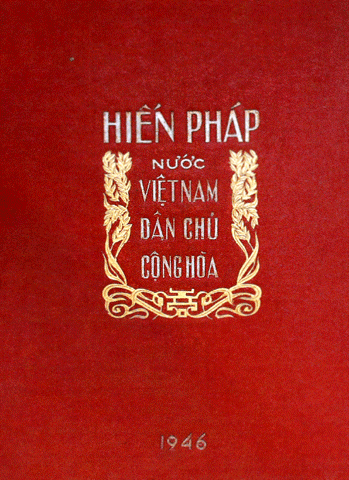
One of the most prominent values of the 1946 Constitution is that it not only established the foundations for organising state power but also embodied the principle of limiting that power to protect human rights and freedoms. At the heart of constitutionalism is the principle that state power must derive from a legitimate source and be constrained and controlled by the Constitution to safeguard human rights and freedoms. From this perspective, the 1946 Constitution embodied several noteworthy constitutional choices.
The principle of the People's supreme sovereignty in constitution-making
First and foremost was the principle of popular sovereignty. Article 1 affirmed: “All powers in the country belong to the entire Vietnamese people.” This principle went beyond a mere declaration. It was institutionalised through the establishment of a democratic republic, universal suffrage and mechanisms enabling the People to exercise their right to mastery. Citizens were also granted democratic freedoms, including the right to vote on the Constitution and matters affecting the destiny of the nation.
Another notable feature was the way the Constitution organised state power, delineated functions and established constraints on the exercise of authority. It defined the positions and powers of the People's Parliament, the Government and the Courts, while establishing certain mechanisms of accountability and oversight among these institutions. It also stipulated the Government's accountability to the Parliament, mechanisms for confidence votes on the Cabinet, and the President's authority to request that the Parliament reconsider a law.
Article 69 provided: “In adjudicating cases, judges shall only comply with the law; other agencies shall not interfere.” These provisions demonstrate that state power must not only be organised and clearly divided in terms of jurisdiction, but must also operate within defined legal frameworks and accountability mechanisms.
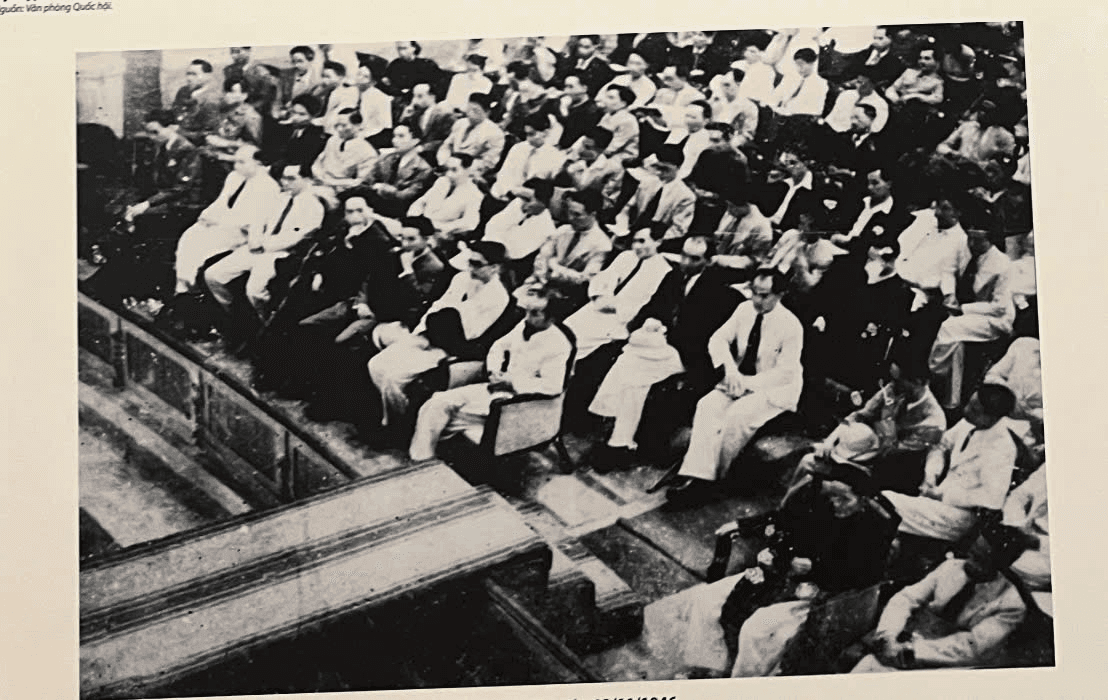
The 1946 Constitution also accorded an important place to rights and freedoms, including equality before the law, gender equality, freedom of speech, the press, association, assembly, religion and movement, as well as the inviolability of the person and the home.
These were not merely a catalogue of citizens' rights. They also reflected recognition of areas of individual freedom that public authorities were required to respect, even as the State faced enormous demands for governance and resource mobilisation.
In addition, Article 70 established a special procedure for constitutional amendments, stipulating that “Any amendments, once approved by the Parliament, must be submitted to a nationwide referendum.” This provision implicitly recognised both the principle of the People's supreme sovereignty in constitution-making and the supremacy of the Constitution.
Selective and appropriate assimilation of intellectual traditions
Following the August Revolution, the revolutionary government faced the dual task of defending national independence and consolidating its legitimacy while establishing a legal foundation for the new State. The general election, the establishment of the National Assembly and the adoption of the Constitution were important steps towards establishing state power on the basis of the People's choice and mandate. Popular sovereignty was therefore directly linked to the goal of building a democratic government.
At the same time, the country needed to mobilise the strength of different social classes, religious communities, forces and political tendencies to consolidate national unity and defend the newly won independence. The Constitution had to provide a common framework for a country emerging from colonial and feudal rule. The emphasis on solidarity, the recognition of fundamental freedoms and the organisation of the state apparatus therefore stemmed from practical political and legal requirements, rather than simply representing the adoption of an external doctrine.
The 1946 Constitution reflected the convergence of Vietnam's patriotic tradition, early 20th-century Vietnamese constitutional thought, progressive democratic and rule-of-law values from around the world, and Ho Chi Minh's ideas on the State and the law. Its distinctive feature was the selective assimilation and creative application of these values to Vietnam's specific historical, political and social circumstances.
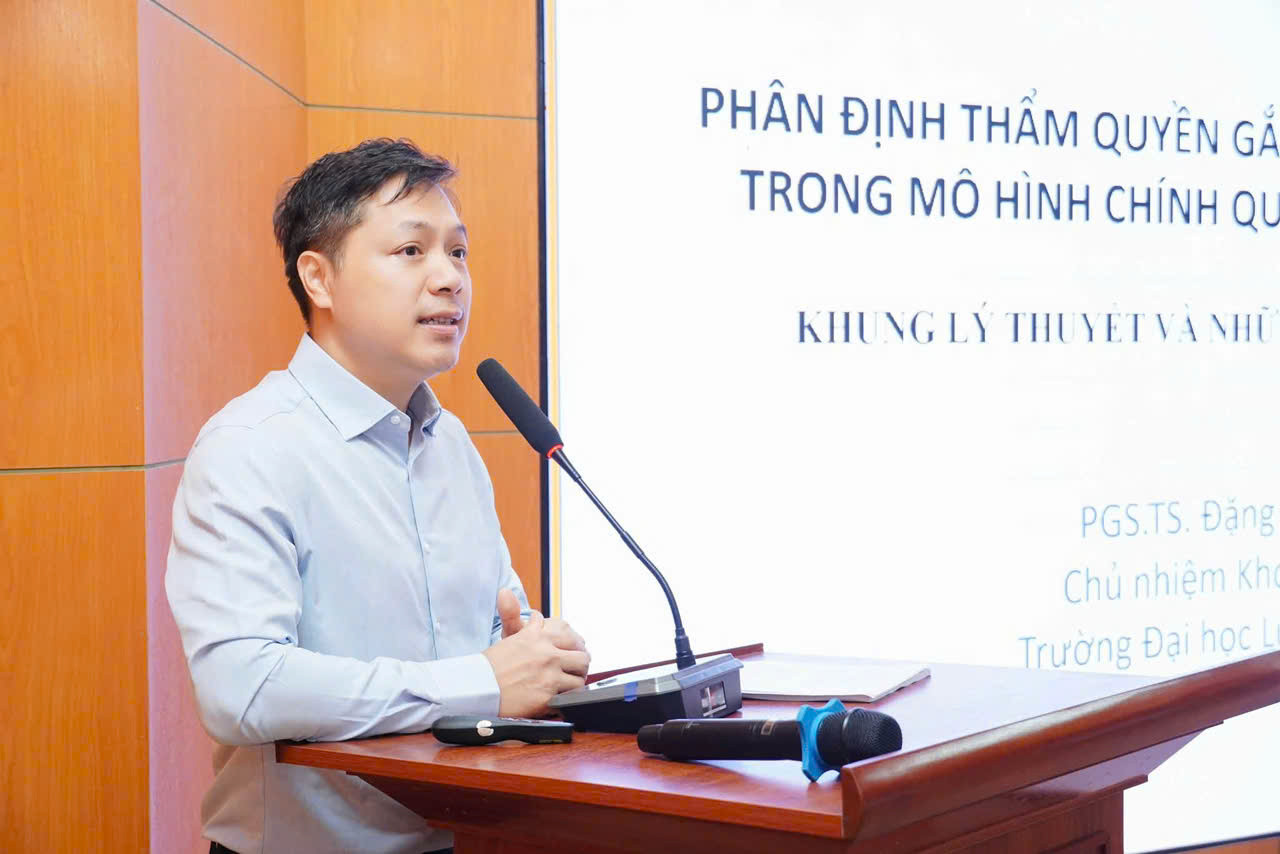
Even as the country faced the threat of war and the urgent need to consolidate a government capable of defending independence and preserving national unity, the Constitution continued to give prominence to citizens' freedoms, the responsibilities of state agencies and the requirement that public authorities operate within the framework of the law.
This was a choice of lasting significance: a government capable of defending independence and organising and administering the country must also be built on the foundations of democracy, the rule of law and accountability to the People.
The legacy for contemporary constitutional and legislative thinking and practice
The legacy of the 1946 Constitution lies first and foremost in its underlying philosophy: the Constitution provides both the legal foundation for the State to exercise power and the constraints necessary to protect people's rights and freedoms. These values should continue to be studied and selectively inherited in the process of improving the Constitution and the legal system to meet the country's development requirements in a new context.
First, the Party's policy of comprehensively revising the 2013 Constitution to meet the demands of development in a new era calls for further study and application of enduring constitutional values. In this regard, the 1946 Constitution offers a valuable reference in terms of both constitutional thought and methodology. Particularly noteworthy are its democratic spirit, emphasis on public participation, openness to discussion, and the responsibility to consider and provide explanations for substantive public contributions during the constitution-making process.
Second, mechanisms must continue to be improved to ensure the principle that state power belongs to the People within the socialist rule-of-law State of Vietnam. State power is exercised under the People's mastery, derives from the authority entrusted by the People and must be exercised within the framework of the Constitution and the law, subject to oversight and control.
The law must reflect the will and aspirations of the People and protect their legitimate rights and interests. At the same time, all individuals and organisations, including state agencies, must operate within the framework of the Constitution and the law. In other words, no entity may stand above the Constitution and the law. The Constitution has the highest legal authority and serves as the foundation for establishing and controlling the exercise of state power.
Alongside this, mechanisms for constitutional protection must be further strengthened to safeguard the supremacy of the Constitution and ensure the full exercise of recognised human and citizens' rights. Research should be undertaken into improving judicial review and mechanisms for protecting constitutional rights and addressing violations of human and citizens' rights. At the same time, state agencies must be held to higher standards of accountability in respecting, protecting and guaranteeing these rights.
In particular, the principle set out in Clause 2, Article 14 of the 2013 Constitution must be strictly observed: human rights and citizens' rights may only be restricted by law when necessary for reasons of national defence, national security, social order and safety, social morality or public health.
In the current context, these values remain relevant to improving mechanisms for the assignment, coordination and control of state power under the Constitution. Legislative activities must not merely grant authority to state agencies to carry out their duties; they must also clearly stipulate the conditions for exercising that authority, the resources required, accountability obligations, and mechanisms for inspection, supervision and handling cases in which power is misused.
The greater the authority, the stricter the requirements for oversight must be. This is particularly important as Vietnam accelerates decentralisation and delegation of powers and operates its two-tier local government model. The delegation and decentralisation of authority must go hand in hand with clear delineation of responsibilities, adequate resources for implementation and effective controls over the exercise of power, ensuring that no legal gaps emerge and that accountability is not weakened.
Eighty years on, the enduring message of the 1946 Constitution is not merely that state power belongs to the People, but also that such power must be organised, controlled and exercised for the benefit of human beings. The core values of constitutionalism continue to offer guidance for institutional reform today: building a State capable of effective action while operating within the framework of the Constitution and the law, subject to public oversight and accountable to the People.
Translated by Hong Nhung