

Message from General Secretary and President To Lam at the Third Plenum of the 14th Party Central Committee:Creating new development capacity, with the people’s happiness as the measure
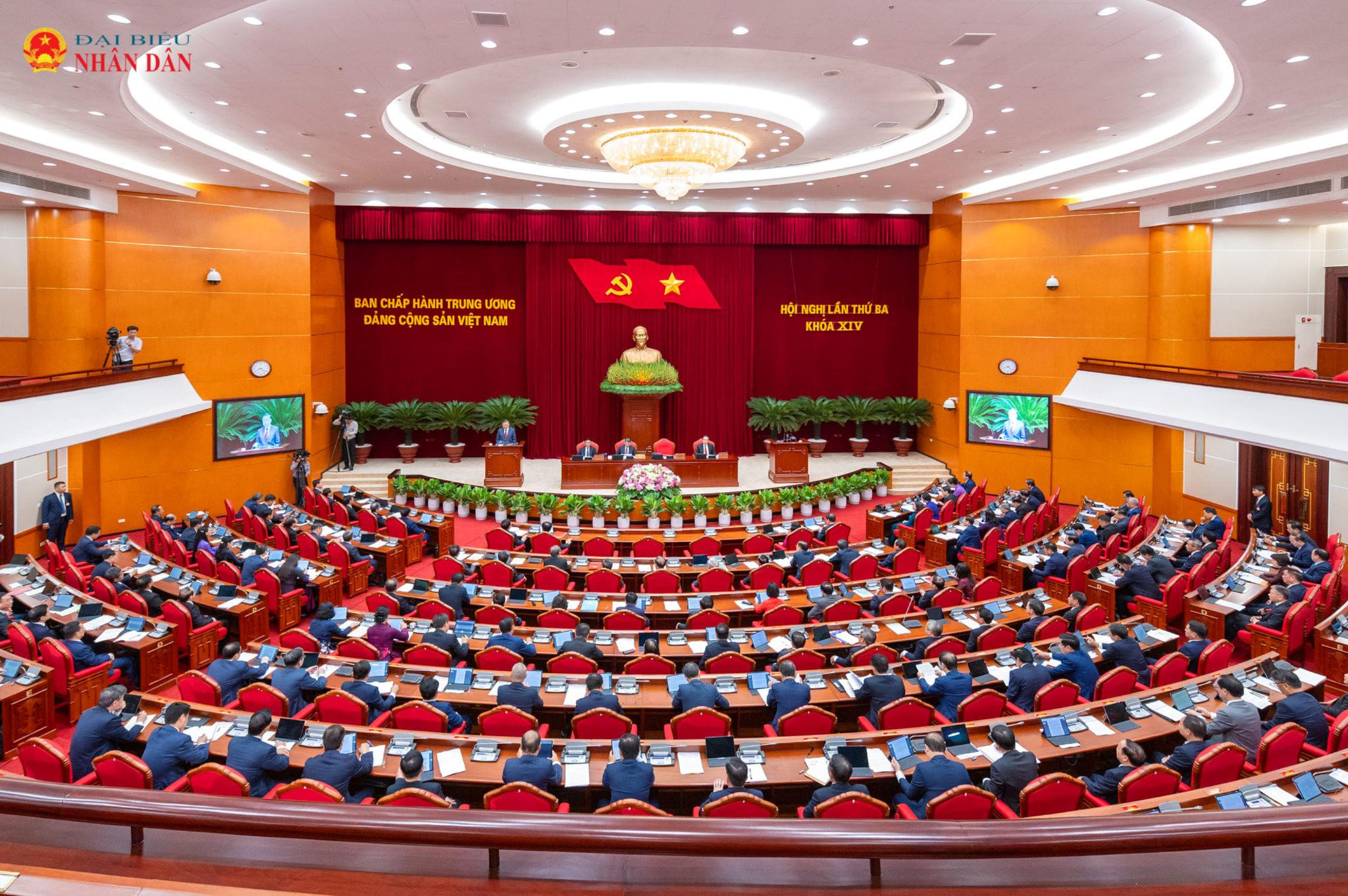
In his opening address to the Third Plenum of the 14th Party Central Committee on the morning of July 20, General Secretary and President To Lam called for a decisive shift from setting guidelines to making policy decisions and taking concrete action; from restructuring the apparatus to enhancing its operational capacity; and from growth heavily reliant on capital, natural resources and low-cost labour to development driven by productivity, knowledge, technology and people.
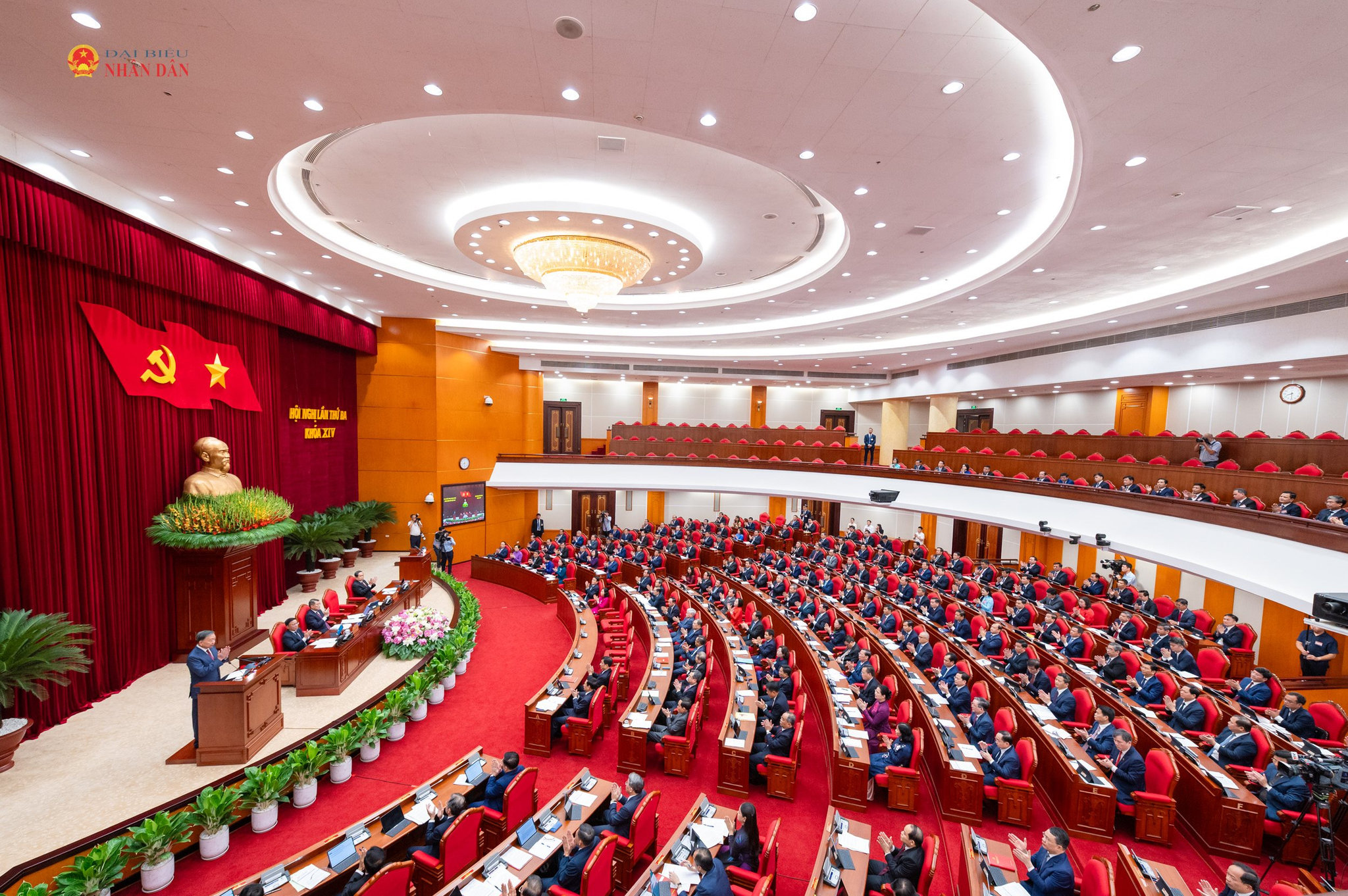
The overarching message of the address was that every policy decision must create new capacity for the country, while every development achievement must ultimately be measured by the people’s quality of life, development opportunities and happiness.
From organisational restructuring to creating new development capacity
The Third Plenum of the 14th Party Central Committee took place amid rapid, complex and unpredictable changes in the world and the region. Strategic competition, geopolitical conflicts, fragmentation of the global economy and transformations in technology, energy, data, climate change and artificial intelligence are reshaping the development environment. This context requires the country to strengthen its strategic autonomy, resilience, adaptability and national capacity for action.
Domestically, following the 14th National Party Congress’s adoption of the major guidelines, objectives and strategic directions, the task of the Third Plenum was to translate those orientations into policy decisions capable of removing bottlenecks, unlocking resources and creating new development capacity.
The General Secretary and President posed three clear questions for every policy decision: Which bottleneck will it remove? What new capacity will it create? And what conditions are required for its effective implementation?
This is a highly practical approach. Sound policies are necessary, but they are not sufficient. The value of a policy decision must be demonstrated through its ability to solve problems, mobilise resources, generate change and deliver tangible results in people’s lives.
.jpg)
This message is reflected first and foremost in the requirement to move from organisational restructuring towards enhancing the Party’s leadership and governing capacity and improving the operational quality of the political system. Streamlining the apparatus is only a prerequisite. The real goals must be for the Party to exercise more effective leadership, the State to govern better, the apparatus to operate more swiftly, the people to receive better services and their actual living standards to improve.
The results of organisational restructuring, therefore, cannot be assessed solely by the number of units reduced. More important questions must be answered: Does the apparatus operate smoothly? Are authority and responsibility clearly defined? Are decisions made quickly, correctly and in line with practical conditions? Are people and businesses receiving more convenient services?
Decentralisation and the delegation of authority cannot simply mean transferring more work to lower levels. They must be accompanied by adequate authority, resources, personnel, data, implementation tools and mechanisms for controlling power. Provincial-level administrations must be strong in planning and coordination, while commune-level administrations must remain close to the people, understand their needs and possess sufficient capacity to resolve matters directly at the grassroots level. Officials must be assessed based on their integrity, competence, performance, progress and credibility, while leaders must genuinely serve as the focal point of accountability.
Another important shift is the transition from fragmented management to unified governance of the country’s development space and national resources. The General Secretary and President emphasised that administrative boundaries must not constrain development thinking. Land, maritime space, urban areas, infrastructure, natural resources and data must be viewed as an integrated whole and organised in accordance with national strategies, regional advantages and overall efficiency.
This means that the development of each locality must be considered in connection with its region and the country as a whole. Every locality should capitalise on its distinct advantages while connecting them to create collective strength, avoiding parochial thinking, fragmented resources and inefficient competition.
In the field of land management, the address suggested a transition from managing individual land plots to governing development space; from an excessive focus on procedures to unlocking and creating resources; and from compensating for lost assets to rebuilding people’s lives. When development projects are implemented, the objective should not merely be to complete site clearance but also to ensure that affected people have housing, livelihoods and living conditions equal to or better than before.
This is a development mindset that is both modern and humane: resources must be utilised efficiently, but the lawful rights and interests of the people must also be protected, while the interests of the State, businesses and communities must be harmonised.
Creating new capacity for the country also requires renewing the growth model. Vietnam can no longer continue to rely primarily on capital, natural resource extraction, processing and low-cost labour. Instead, it must increasingly base its development on productivity, knowledge, data, technology, innovation, high-quality human resources and modern governance.
Science, technology, digital transformation and artificial intelligence cannot remain confined to programmes or slogans. They must be translated into labour productivity, product quality, added value and the competitiveness of the economy. Foreign investment must be associated with technology transfer and the enhancement of domestic capabilities. The State must fulfil its enabling role, the market must perform its role in mobilising and allocating resources, and the private sector must be given favourable conditions to become one of the foremost drivers of the national economy.
The first major message of the address, therefore, is the need to create a new national capacity for action: the apparatus must be leaner but stronger; decentralisation must come with clearer accountability; resource governance must become more effective; and the growth model must achieve higher quality and competitiveness.
Development must make society better and people happier
A profound point in the address was that development must not be viewed solely from an economic perspective. Growth is highly important, but it is only truly meaningful when it contributes to building a better society, enabling people to develop more comprehensively, strengthening community bonds and reinforcing public trust.
The General Secretary and President stressed that the country must not become materially wealthier while growing poorer in culture, morality and human compassion, nor should growth be allowed to exacerbate inequality.
This message carries major significance for shaping the development model in the new era. A country may achieve rapid growth, build many modern cities and major infrastructure projects, and acquire advanced technology. However, if people become more indifferent to one another, social divisions widen, culture and morality are eroded, and trust declines, such development cannot be regarded as a complete success.
Development must therefore place people at its centre, culture at its foundation, and law and discipline as its pillars. It must combine the rule of law with ethical governance, and rights with responsibilities. The ultimate measure is not merely the size of the economy or the rate of growth, but the people’s quality of life, development opportunities and happiness.
This perspective once again affirms the special position of culture. Culture is not an ornament of development, nor is it a field that should receive attention only after the economy has developed. Culture is the spiritual foundation, an endogenous resource and a regulatory system that helps development maintain a humane, balanced and sustainable direction.
Against the backdrop of a rapidly developing market economy, digital transformation and artificial intelligence, the role of culture is becoming increasingly important. Technology can help people work faster, generate more wealth and connect more widely, but culture enables us to answer fundamental questions: What is development for? Whom does it serve? And what kind of society will we leave to future generations?
People-centred development is also closely associated with the requirement to proactively defend the country and enhance national resilience. In a world where security, economic, environmental, technological and social risks are intertwined, we cannot simply wait for incidents to occur before responding. We must shift from reaction to anticipation, and from dealing with individual incidents to proactively preventing risks at an early stage and from afar.
The concept of security in the new era must also be viewed more comprehensively. In addition to safeguarding independence, sovereignty and territorial integrity, it is necessary to ensure human security, data security, the safety of critical infrastructure and public trust. Security is a prerequisite for development, but a sustainable, inclusive, equitable and resilient society is itself a solid foundation for security.
The four strategic shifts outlined by the General Secretary and President form a coherent whole: institutions and people create the capacity for action; development space and institutions unlock resources; the development model transforms resources into productivity, wealth and quality of life; and preventive and protective capacities ensure that development proceeds safely, continuously and sustainably.
The decisive factor, however, remains implementation. Following the Plenum, every resolution and conclusion must immediately be translated into programmes and action plans, with clearly defined objectives, tasks, authority, resources, responsibilities, deadlines, deliverables and outcomes.
This requirement reflects a clear spirit of action: sound policies must not be institutionalised slowly; comprehensive resolutions must not be implemented half-heartedly; responsibilities must not remain vague; and results must be measurable. Every policy decision must be tested by whether it enables the apparatus to operate more effectively, unlocks resources, produces tangible improvements in people’s lives, and enhances public satisfaction and trust.
The opening address to the Third Plenum of the 14th Party Central Committee can therefore be said to have conveyed a consistent message: as the country enters a new era, it needs not only ambitious goals but also a commensurate capacity for implementation; not only rapid growth but also sustainable and humane development; and not only a stronger economy but also a better society and happier people.
This is the highest purpose of development: every policy decision must be directed towards the people, every resource mobilised for the country, and every ultimate achievement translated into a better quality of life, greater development opportunities and stronger confidence in the future for every Vietnamese citizen.